
The Rip View Swim Classic
- Dec 30, 2026
- Distances from 600m to 3.8km
At a glance
- Next edition date
- December 30, 2026
- Distances
- 600 m · 1.4 km · 3.8 km
- Where
- Sea · Point Lonsdale Main Beach, Point Lonsdale, Victoria, Australia
- Entry fee
- 1.4 km: 82 AUD · 3.8 km: 105 AUD
- Registration
- rvsc.org.au
About the race
While The Rip, the entrance to Port Phillip, has earned a fearsome reputation for its churning waters, the courses of The Rip View Swim Classic are set inside Lonsdale Bay. This natural pocket is sheltered from prevailing winds and powerful ocean swells, blunting the force of the open sea and providing calm conditions right next to the wild channel. Swimmers enjoy the spectacle of the roaring heads while slicing through clean, manageable bay waters. The competition trace its roots to the 1980s, when a group of Point Lonsdale Surf Life Saving Club members and their companions met for dawn training sessions, jokingly calling themselves the Gruesome Groyne Gropers Group. In the early 1990s, Club President Barry Eastoe—the first club member to successfully swim across the Rip in 1990—organized these informal swims into a structured open water event originally christened the Springs to Swings Swim.
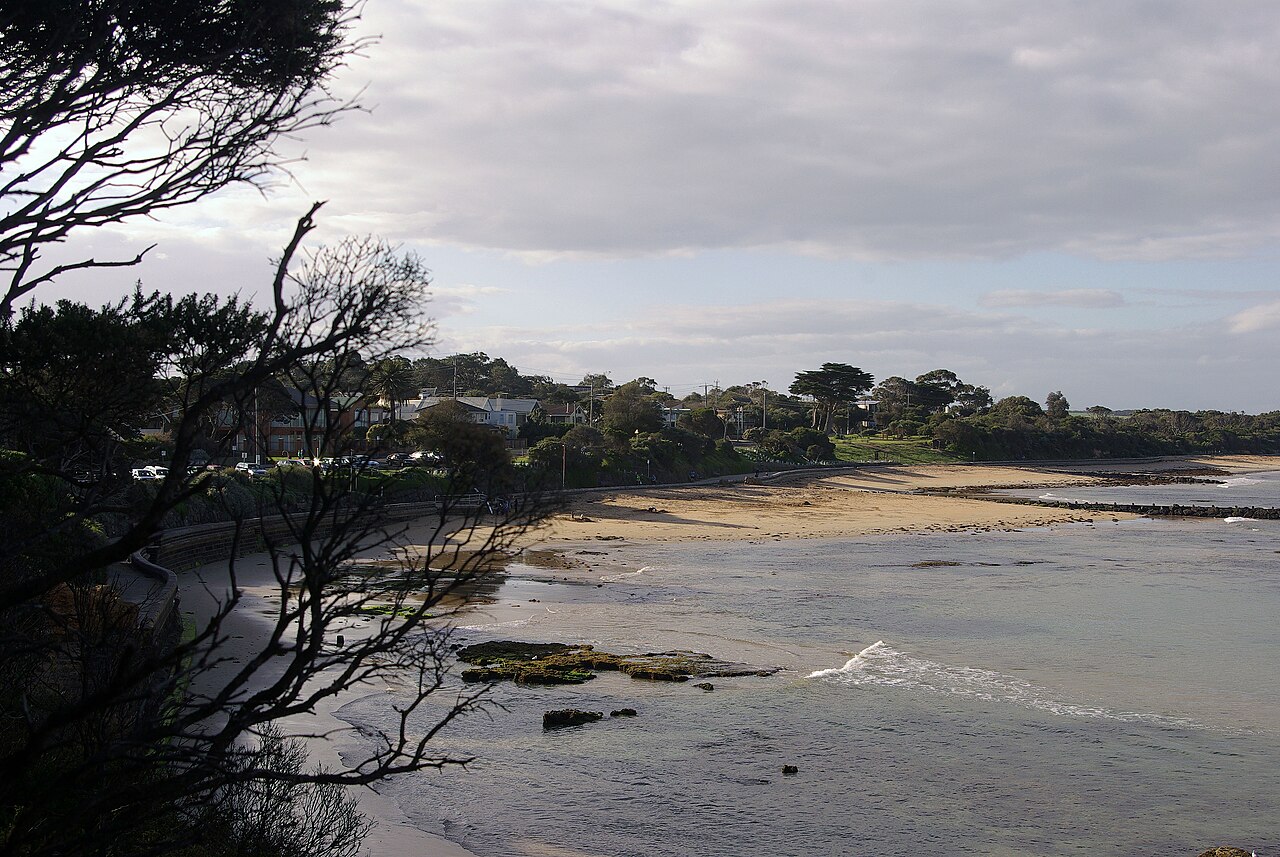
The race remains organized by the Point Lonsdale Surf Life Saving Club and has become an essential late-December summer tradition. Swimmers can choose between three distinct distances: a 600-metre sprint, a 1,400-metre swim, and a 3,800-metre test. The 600-metre Groyne2Groyne event features a handicap format that allows junior swimmers to race alongside celebrated swimming legends. For endurance swimmers, the 3,800-metre course offers the chance of fast, tide-assisted times as the coastal flow pushes along the shoreline.
The Rip: reefs, wrecks, and the Port Phillip entrance
Just beyond the shelter of Lonsdale Bay lies The Rip, the triangular passage between Point Lonsdale, Point Nepean, and Shortlands Bluff. Although the waterway looks expansive from shore, rocky reefs projecting from both headlands squeeze the navigable opening down to a bottleneck just one kilometre wide. Underwater depths plummet dramatically, shifting from shallow rocky reefs less than 5 metres below the surface to deep trenches plunging to 90 metres inside the heads. Tidal streams running at speeds of up to 6 knots have established The Rip as one of the most treacherous navigable waterways anywhere in the world. Several ships came to grief on these shoals, including the Sacramento in 1853 and the Cheviot in 1887. Standing on the sand at Point Lonsdale and looking out at the distant breaking lines, competitors feel the raw kinetic drama of the strait while resting easy in the bay's natural refuge.
Point Lonsdale and Queenscliff: the sentinels of the Heads
The historic Point Lonsdale Lighthouse precinct stands nearby. Navigation aids began here with a simple signal station raised in 1852. The preserved grounds retain an 1884 foghorn shed and an explosives shed dating to 1891. Even today, the vintage foghorn remains operational, releasing a resounding double blast every 30 seconds when thick ocean mists roll across the heads. Roughly 4 kilometres down the coast at Queenscliff, maritime traffic is guided by the Queenscliff High Light, part of the critical leading lines system that keeps ships off the rocks. Erected in 1862 to replace an earlier 1843 sandstone beacon, this striking tower is one of only four black lighthouses on the planet and the only one in the Southern Hemisphere.
Despite standing on a coastal bluff over 20 metres above the tide, its base was constructed with curved masonry specifically engineered to deflect wave shock. In its earliest decade, the only access into the tower was through an entry hatch 5 metres up, reached by hauling oneself up a rope ladder. {{h2:Port Phillip Heads Marine National Park: seals and marine sanctuaries}} The ocean flanking Point Lonsdale belongs to the Port Phillip Heads Marine National Park. About 9 kilometres out into the South Channel stands Chinaman's Hat, an octagonal structure that was originally equipped with underwater indicator loops to monitor for submarines during World War II. In 2002, Parks Victoria built a dedicated replacement platform on the site, which has become a lively haul-out territory for a bachelor colony of Australian fur seals. Around 7 kilometres inland lies Swan Bay, a protected 30-square-kilometre shallow marine basin separated from the main bay by barrier islands and sand spits. Charted by explorer Matthew Flinders, the salt marshes, seagrass meadows, and tidal flats host up to 2,700 black swans each summer. These internationally significant wetlands are also a vital habitat for the rare orange-bellied parrot and thousands of migratory waterbirds.
Point Lonsdale seafront: Front Beach, pier, and rock pools
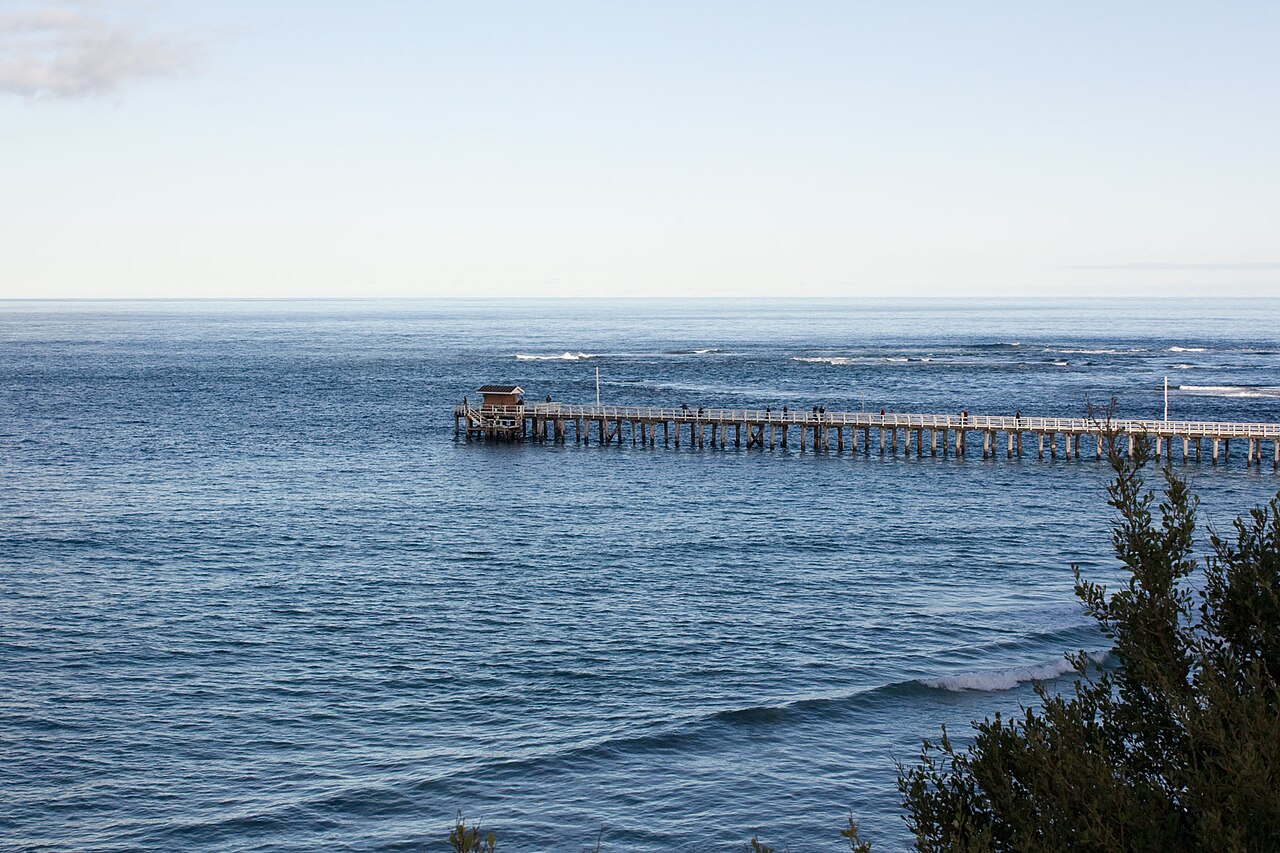
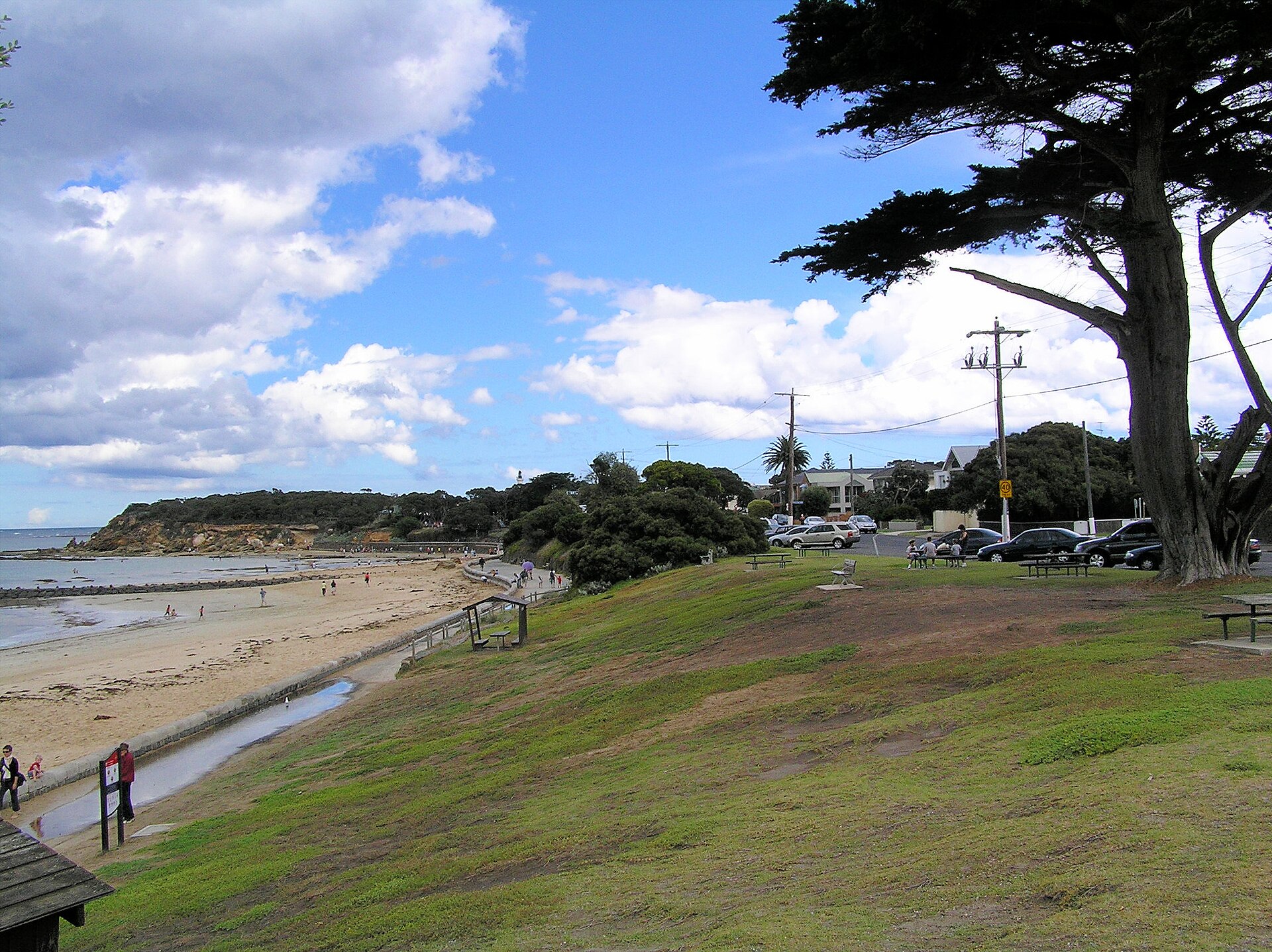
After finishing on the sand, the Point Lonsdale foreshore offers ideal spots to warm down and explore. While the ocean-facing Back Beach behind the high dunes is known for powerful surfing breakers and permanent rips that demand caution, Front Beach right by the race precinct is wonderfully gentle and safe for casual swimming. At low tide, the rock platforms around the headland reveal vast cavernous spaces and rock pools bursting with invertebrate life. Extending over the water, the Point Lonsdale pier provides open views across the entrance to Queenscliff. The pier planks and shoreward rocks are popular angling perches where locals cast lines for salmon, barracouta, and mullet. Because the race is held at the end of December, the seaside town carries a distinctive summer holiday charm. A landmark 100-year-old Norfolk Pine, known as The Christmas Tree, is decorated with lights each December into the festive atmosphere of the village.
Sources: Point Lonsdale · The Rip · Point Lonsdale Lighthouse
Course
Previous editions
- 2025results
How to get there
The Rip View Swim Classic
Frequently asked questions
- When is The Rip View Swim Classic?
- The Rip View Swim Classic takes place on December 30, 2026.
- What distances does The Rip View Swim Classic offer?
- The Rip View Swim Classic offers 600 m, 1.4 km, and 3.8 km.
- How much is the entry fee for The Rip View Swim Classic?
- Entry fees by distance: 1.4 km: 82 AUD · 3.8 km: 105 AUD. Standard prices listed. Early bird rates apply until Dec 1. All proceeds support Point Lonsdale SLSC.
- Where does The Rip View Swim Classic take place?
- The Rip View Swim Classic is a sea swim. Location: Point Lonsdale Main Beach, Point Lonsdale, Victoria, Australia.
- How do I register for The Rip View Swim Classic?
- The reference page for registering for The Rip View Swim Classic is https://rvsc.org.au/.
Where to stay
Point Lonsdale offers a range of stays, from classic coastal camping grounds near the beach to quiet, family-run holiday rentals. For a more refined experience, look for small boutique guesthouses tucked away near the lighthouse area. Prices vary significantly based on the season, typically ranging from $150 per night for simple camping or basic apartments to over $400 for premium seaside holiday homes. Explore local lodging options to find a spot that matches your pre-race needs.
Things to do nearby
Beyond the water, the area is defined by the history of the Port Phillip forts and the serene beauty of the Lonsdale Lakes Nature Reserve. You can spend the weekend exploring local coastal trails, visiting the historic fortification at Queenscliff, or taking a kayak into the nearby saline wetlands to spot migratory birds. Local wineries and cellar doors are also within easy reach for post-swim recovery. Discover activities around the coast to round out your race weekend.
Swimmers
Similar races


Comments
Transparency: some links on this page (stays, flights, experiences, gear) are affiliate links — if you book or buy through them, Omniathlon may earn a commission from the partner at no extra cost to you. As an Amazon Associate we earn from qualifying purchases.