
UltraSwim 33.3 Milos
- Jun 3, 2027
- Distance: 33.3km
At a glance
- Next edition date
- June 3, 2027
- Distances
- 33.3 km
- Where
- Sea · Milos, Greece, Milos, Cyclades, Greece
- Entry fee
- 2057 €
- Registration
- ultraswim333.com
About the race
UltraSwim 33.3 Milos is an open water swimming race set in the open sea waters surrounding Milos in the Cyclades archipelago of Greece. Organised by UltraSwim33.3, this event brings swimmers together for a challenging maritime journey across sculpted coastlines. Swimmers immerse themselves in an ancient geological landscape. The entire competition is headquartered in the quiet fishing village of Pollonia on the north-east coast of the island. Swimmers arrive on a Wednesday to complete registration before taking to the Aegean for race stages running from Thursday through Sunday. Across every day of the itinerary, athletes benefit from constant boat escorts alongside them on the water, supported by organized refuel lunches on swim days and full event logistical assistance.
In late spring and early June, the sea provides mild, refreshing swimming conditions with water temperatures settling comfortably in the low twenties. Every participant tows an official drybag and tow float provided on deposit, keeping gear secure and maintaining essential visibility as the pack cuts through the deep Aegean swells. These bright floats trace a moving line along the coast, offering safety and confidence as swimmers tackle the long daily crossings.
The submerged caldera and the volcanic shores of Milos
The vast natural harbour of Milos is formed by the submerged hollow of the island's primary volcanic crater, dropping to dramatic depths between 55 and 130 meters beneath the surface. Thermal activity remains active along the shoreline, where hot sulfurous springs bubble into the sea on the eastern shore of the island's main harbour. Farther around the southwestern coast, the island's volcanic character reveals itself in vivid colors at Paliochori. Towering sea cliffs tinted with intense red and yellow minerals drop vertically toward a shoreline made of sand mixed with small, colorful volcanic pebbles. Near the northern entrance of the bay and Plathenia Beach, the rocky monoliths of the Arkoudes rise twenty feet sheer out of the open sea. Accessible only by boat, these dramatic stone stacks stand guard over the outer waters of the bay.
The white fossil beds and sea caves of Sarakiniko
Along the northern coast, the stark and surreal shoreline of Sarakiniko unfolds in brilliant white volcanic rock completely stripped of vegetation. This blinding formation was originally laid down beneath the surface of the sea before tectonic forces gradually pushed it upward into the Aegean sunlight. Over millions of years, marine life left an indelible mark in the white stone, which contains fossilized bivalves, scaphopods, sea snails, brachiopods, barnacles, and ancient sea urchins. Microscopic diatoms dating back nearly two million years are preserved directly within the chalky strata. Centuries of relentless wave action and Aegean winds have hollowed out the soft volcanic rock, carving deep marine tunnels and arched grottos along the waterline.
Kleftiko coves and monk seal shelters in the south
On the southwest coast of Milos, Kleftiko forms another spectacular labyrinth carved from volcanic stone, stretching across three consecutive coves. Towering white cliffs, freestanding islets, and vaulted sea arches frame water that has been sculpted by marine and wind erosion over countless ages. The area draws its name from the age of Mediterranean piracy, when outlaws established a secluded base within the coves to ambush passing merchant vessels. When harsh storms raged, pirate crews maneuvered their ships inside the cavernous grottos to shelter safely from rough seas. Today, this historic pirate lair is protected as a pristine marine sanctuary under the Natura 2000 conservation network. The secluded caves now serve as essential breeding refuges for Mediterranean monk seals, as local fishermen have long documented. Gliding through the bays, open water swimmers experience quiet cathedral-like spaces where natural history has replaced the turbulence of the past.
Phylakopi and the maritime history of the northern bays
Milos has occupied a vital hub in Aegean maritime routes for 15,000 years, beginning when ancient navigators first quarried and traded its dark volcanic obsidian across the sea. About five kilometres along the northern coast from the race base, the Bronze Age stronghold of Phylakopi was founded directly by tuna fishermen. Within the excavated ruins of the Pillar room, archaeologists uncovered the celebrated flying fish fresco, highlighting the deep bond early islanders maintained with marine creatures. Successive settlements at Phylakopi were rebuilt following catastrophic earthquakes before the city was ultimately abandoned, and today marine erosion has swept away a large section of the ancient ruins beneath the waves. The surrounding sea also witnessed dramatic conflict in later eras, including the major naval battle of 1661, when Venice and the Knights Hospitaller fought an Ottoman fleet about eleven kilometres offshore. Swimming along this coast connects every stroke to millennia of seafaring trade, survival, and maritime naval clashes.
The syrmata boathouse villages of Klima and Fyropotamos
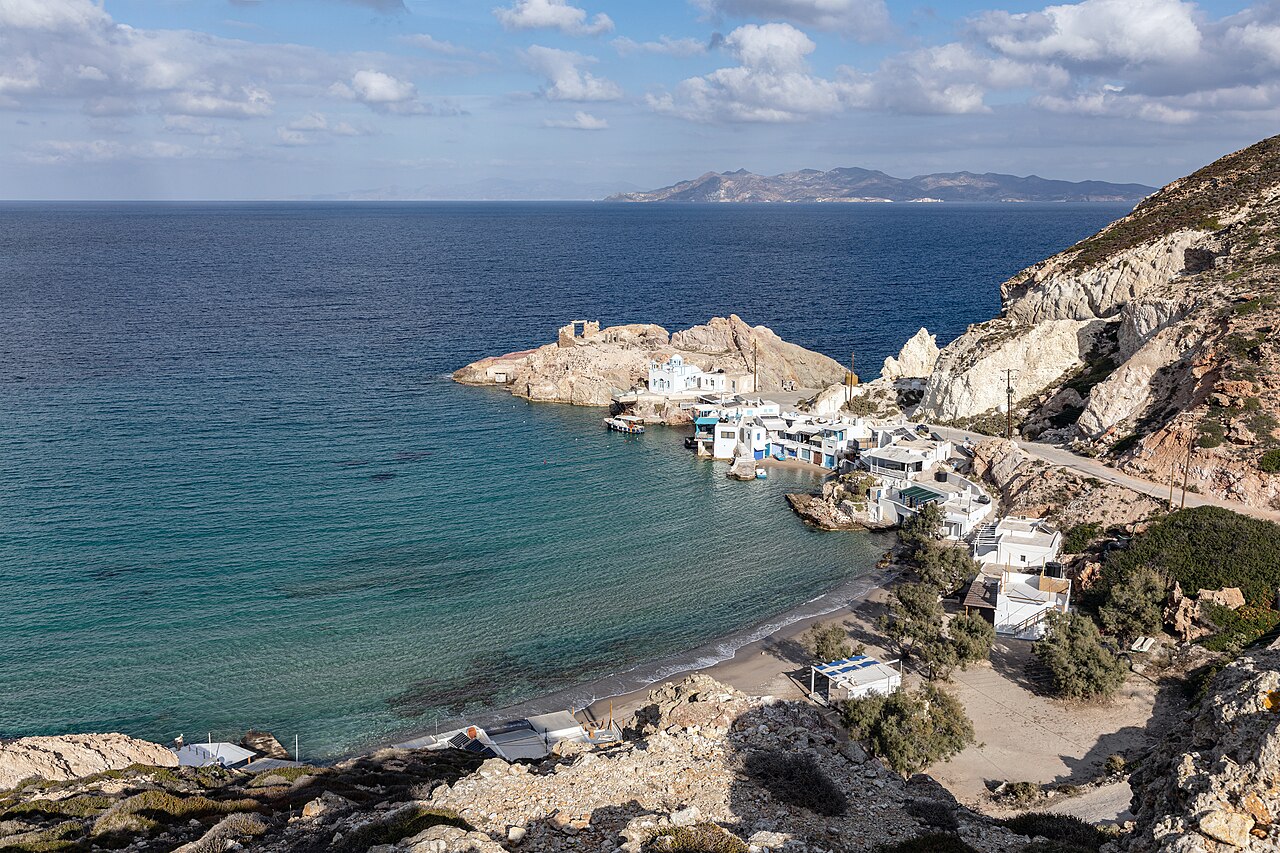
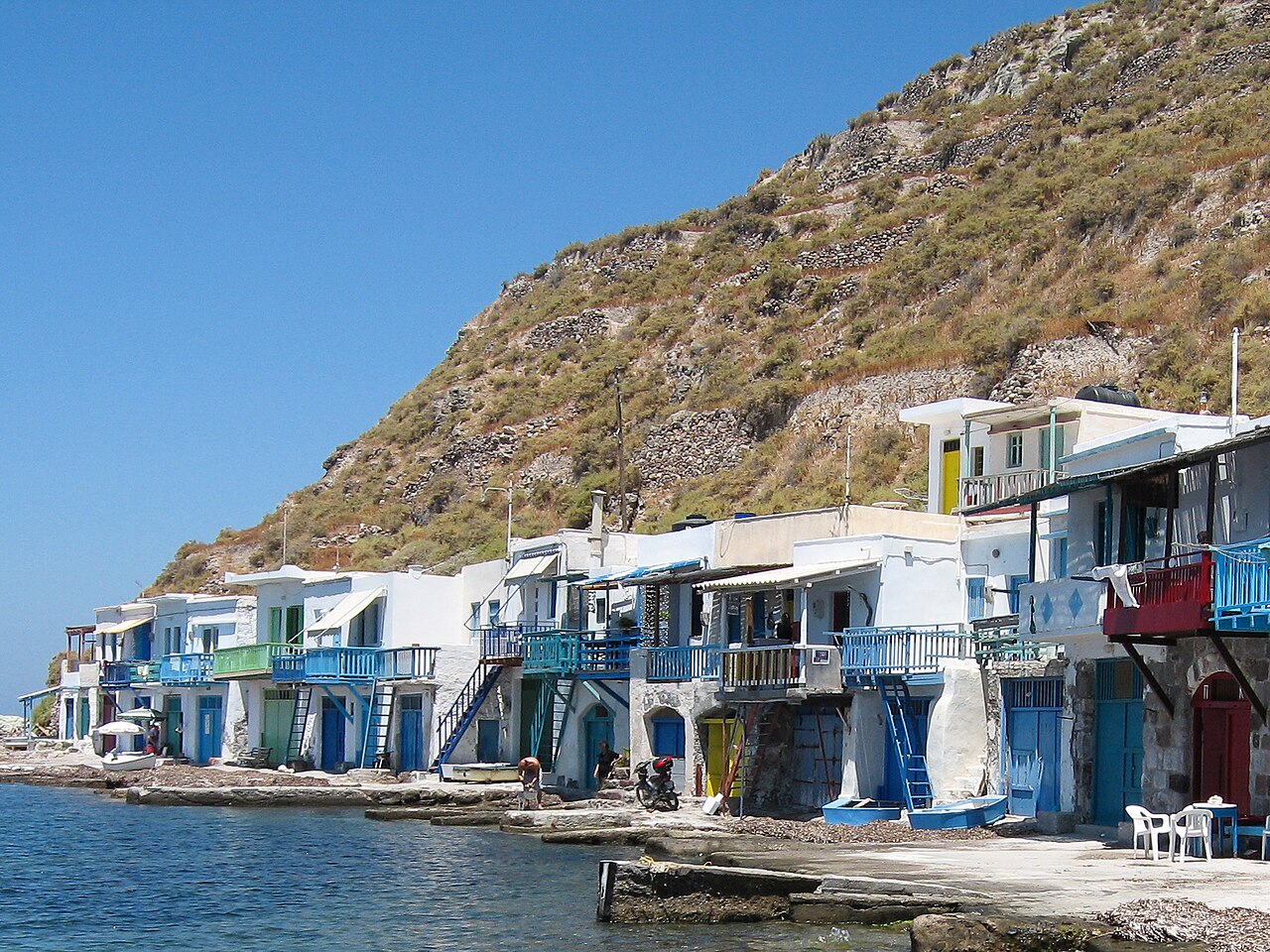
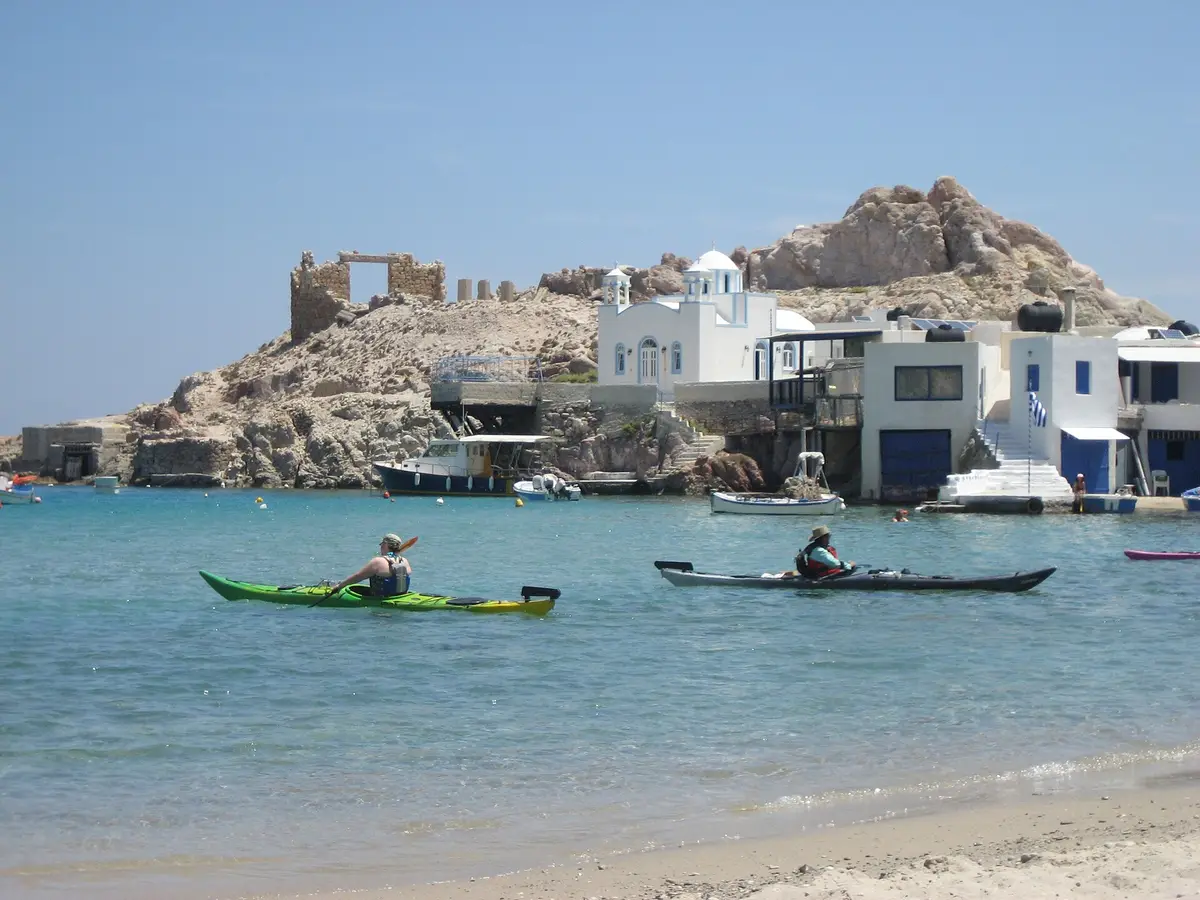
At the entrance of the natural bay, situated just below the ancient theater of Milos, lies the traditional settlement of Klima. The village is celebrated for its syrmata, traditional two-story fishermen's dwellings built straight into the shoreline, featuring ground floors designed to store wooden skiffs during winter storms. Similar clusters of syrmata shelter in picturesque coves across the northern shoreline at Fyropotamos and Fourkovouni. At Fyropotamos, a charming harbor lines a natural cove where boathouses serve both as winter storage and as scenic summer residences hovering over the tide. Just around the entrance to the gulf, Fourkovouni retains the same authentic maritime rhythm, with traditional boat sheds standing as a refuge for local fishermen.
For recovery after challenging coastal swims, nearby villages offer protected beaches shaded by nature. At Mandrakia, a 150-meter shoreline of dark gray pebbles and tamarisk trees provides a quiet, unhurried place to rest right in front of the fishermen's homes. Farther along the northern coast at Mytikas, a protective barrier of outer rocks shields the beach from strong prevailing winds, forming a tranquil natural haven. These sheltered coves and calm waters make Milos a singular stage for endurance swimming.
Sources: Φυροπόταμος Μήλου · Κλήμα Μήλου · Σαρακήνικο Μήλου · Milos · Action of 27 August 1661 · Arkoudes
Course
Route around the volcanic coastlines of Milos, in the Cyclades. Includes lunar landscapes, offshore rock formations, and blue bays. Swim along the volcanic coast with conditions varying between calm mornings and sunny afternoons. An intimate event focused on exploring new marine scenery.
Previous editions
Useful info
'Founders' Pioneer' event limited to 20 swimmers. Full payment required within 7 days of confirmation. No refunds or rollovers. Accommodation not included (3*-5* options available as extras). Recommended arrival by May 28, 2026, at 16:00. Contact sales@ultraswim333.com for details on costs and registration.
How to get there
Milos Airport (MLO) is 5km from the center. Ferry connections from Piraeus (Athens) take 3-5 hours. Renting a car or scooter is essential for getting around the island. Parking is available at the port of Adamas and the main beaches. The race is easily accessible by car via the main road network connecting the villages.
UltraSwim 33.3 Milos
Frequently asked questions
- When is UltraSwim 33.3 Milos?
- UltraSwim 33.3 Milos takes place on June 3, 2027.
- What distances does UltraSwim 33.3 Milos offer?
- UltraSwim 33.3 Milos has a single distance: 33.3 km.
- How much is the entry fee for UltraSwim 33.3 Milos?
- The entry fee is 2057 €. Prices are for all-inclusive packages (accommodation, meals, support). Group of 4 discount available (4th swimmer half price). Loyalty discount of €100 for multiple events.
- Where does UltraSwim 33.3 Milos take place?
- UltraSwim 33.3 Milos is a sea swim. Location: Milos, Greece, Milos, Cyclades, Greece.
- How do I register for UltraSwim 33.3 Milos?
- The reference page for registering for UltraSwim 33.3 Milos is https://ultraswim333.com/2026greece-1.
Where to stay
Pollonia serves as the primary base for this event, offering a selection of intimate boutique residences and whitewashed villas that reflect local Cycladic architecture. You will also find traditional fishermen's dwellings converted into high-end guest houses, providing direct access to the sea. Expect to pay between €150 and €300 per night depending on the proximity to the waterfront and the level of service.
Things to do nearby
Beyond the race, the island invites exploration of its volcanic geology and maritime heritage. You can arrange guided kayak excursions to access the otherwise unreachable sea caves, or hike the rugged trails leading to the ancient catacombs near Trypiti. Wine lovers can visit local vineyards to taste varieties grown in the mineral-rich volcanic soil, while those interested in archaeology can walk the ruins of the Bronze Age settlement at Phylakopi, where ancient fishing culture first took root.
Swimmers
What to see around
1. Sarakiniko Beach (unique lunar landscape). 2. Kleftiko (boat excursion through sea caves). 3. Plaka (scenic village with sunset at the castle). 4. Ancient Theatre of Milos and the site where the Venus de Milo was discovered. 5. Fishing village of Klima with its traditional colorful 'syrmata'.
Other races by this organiser
- UltraSwim 33.3 Greece [Skopelos]Skopelos, GR
- #17BARCELONA [Costa Brava]Barcelona, ES
Similar races


Comments
Transparency: some links on this page (stays, flights, experiences, gear) are affiliate links — if you book or buy through them, Omniathlon may earn a commission from the partner at no extra cost to you. As an Amazon Associate we earn from qualifying purchases.