
UltraSwim 33.3 Greece
- Jun 3 – 6, 2027
- Distance: 33.3km
At a glance
- Next edition date
- June 3 – 6, 2027
- Distances
- 33.3 km
- Where
- Sea · Milos Island, Milos, South Aegean, Greece
- Entry fee
- 2057 €
- Registration
- ultraswim333.com
About the race
Covering 33.3 kilometres in open water replicates the historic channel crossing from Dover to Cap Gris Nez, but around Milos Island the distance unfolds across translucent Aegean waters and lunar volcanic cliffs. The UltraSwim 33.3 Greece marathon event sets its operational headquarters in the fishing village of Pollonia under the title of the Aphrodite edition. Swimmers take on this endurance challenge divided into six distinct stages, pacing their stamina through calm seas and open passages. Held in early June, the maritime climate brings comfortably mild water that allows for long-distance swimming without extreme thermal stress. The stages route swimmers through natural sea channels measuring up to one hundred metres in length, dipping in and out of shadowy caverns and opening into deep blue open stretches.
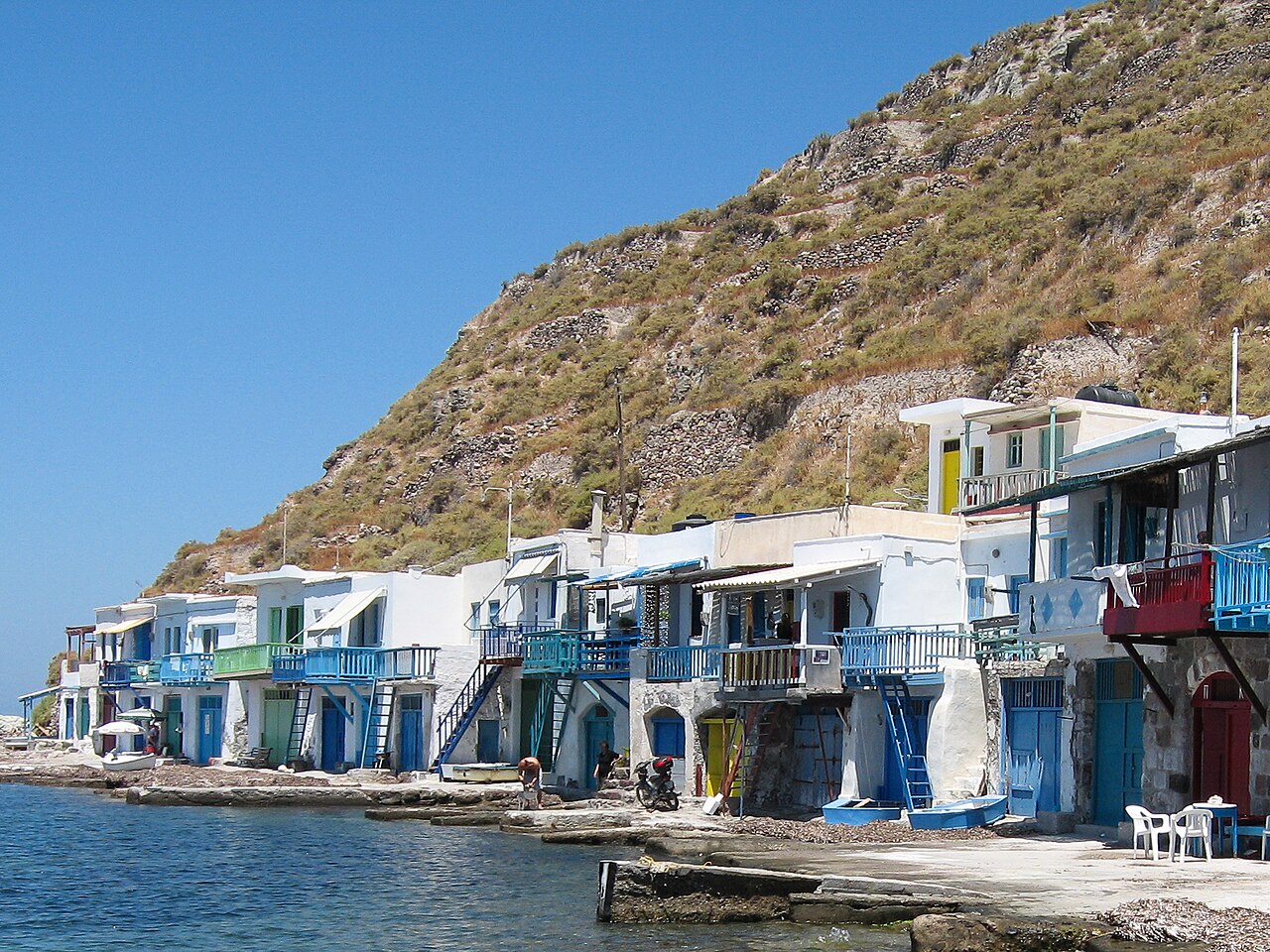
Looking down through the glass-clear sea, the seabed shifts to deep Aegean blue depths. In the pioneer test swims around the island, participants shared the coastal water with numerous sea turtles surfacing. Dolphins are known to frequent the offshore waters surrounding the island. Each stage delivers the rare feeling of exploring a wild coastline accessible almost exclusively from the water.
Six swims in four days around Milos
UltraSwim 33.3 Greece splits the English Channel distance of 33.3 km into six swims over four days, and the swims range from 2 km to a marathon-length third day of 10 to 11 km. On the Milos edition the daily distances build from 4 km, the third day brings a marathon swim of 10 km or more if the weather permits, and the last day is a course of about 4 km. The organisers say the Milos course has more hidden cave and narrow channel passages than any other UltraSwim 33.3 edition. The Milos edition runs from Thursday to Sunday in early June, which the organisers describe as unusual for UltraSwim 33.3. UltraSwim 33.3 is based in the fishing village of Pollonia on the north-east coast of Milos, a 25-minute drive from the airport. In Pollonia everything is within a maximum 10-minute walk of the village centre and the dock where the swimmers board on most days. Pollonia's accommodation is not one big hotel but a number of whitewashed villas, boutique residences and micro hotels. The water around Milos is given as 20 to 21 degrees Celsius in early June.
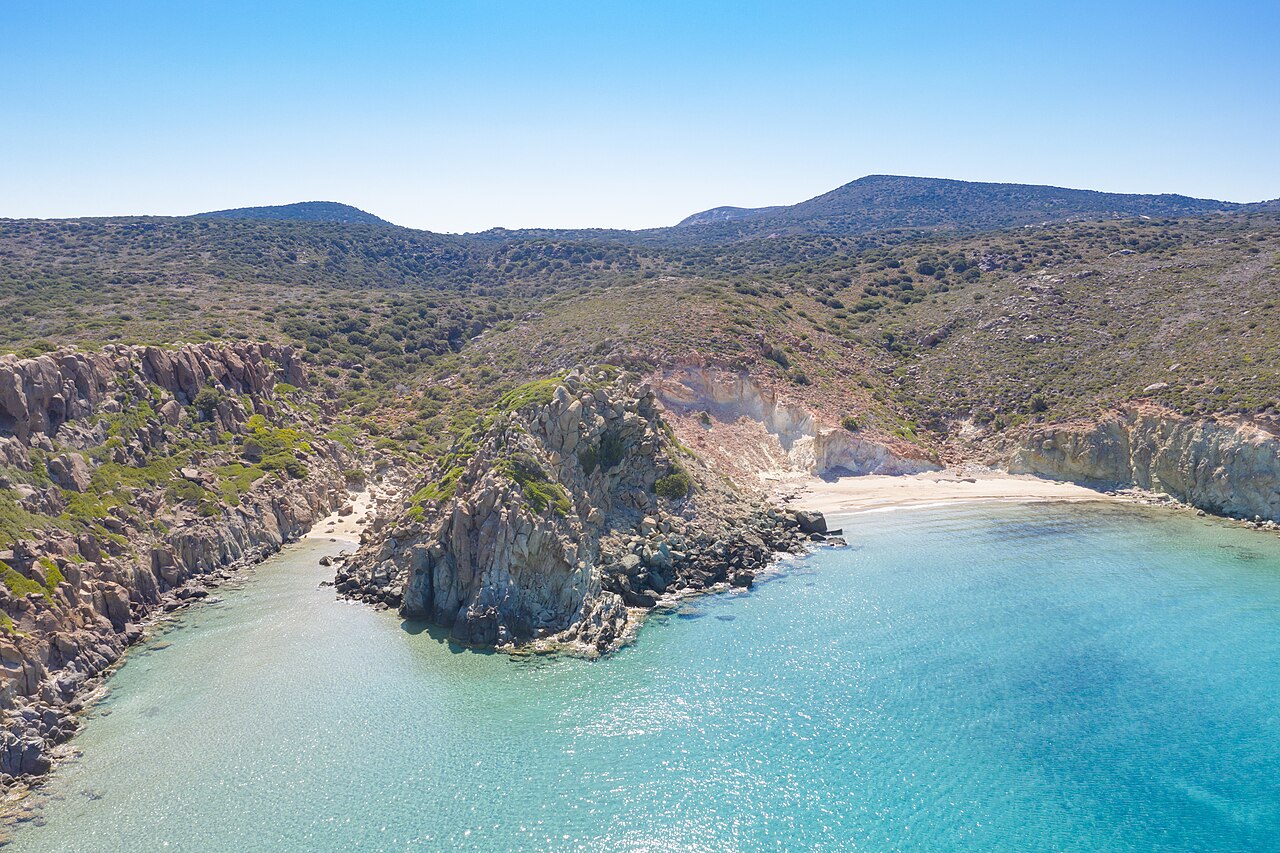
Sarakiniko: bleached volcanic ash and prehistoric seabed
Milos owes its extraordinary coastal shapes to prehistoric volcanic eruptions that fell silent roughly 90,000 years ago. Subterranean geological shifts gradually lifted ancient marine layers out of the sea to form Sarakiniko. Over millennia, persistent Aegean swells sculpted deep cavities devoid of any land vegetation. Gliding beneath these gleaming chalk-like bluffs feels like navigating a submerged moonscape carved by the tide. Today, the smooth pale stone provides a serene natural arena where swimmers track the contrast of white rock against electric blue water.
Kleftiko coves: pirate labyrinths and monk seal grottos
About eight kilometres away on the southwestern edge of the island, the coastal scenery shifts into the soaring sea stacks of Kleftiko. Continuous wave action and scouring Aegean winds hollowed deep cavities and caverns straight through the volcanic rock. The haven takes its name from the era of Mediterranean piracy, when corsair crews hid their light vessels inside the sea passages to surprise passing trade ships. These deep vaulted caverns also functioned as reliable natural storm shelters when open Aegean gales made navigation impossible. Today, this once-feared corsair anchorage enjoys rigorous ecological protection under the European Natura 2000 conservation network. The clean currents and isolated grottos around the southwestern cliffs provide undisturbed breeding grounds for the endangered Mediterranean monk seal.
Phylakopi to the outer islets: submerged history and sea lanes
Although the island's volcanoes have been dormant for ninety thousand years, undersea geothermal vents still release gentle streams of gas bubbles that drift up through the clear water column. About twelve kilometres along the northern coast stand the ruins of the Bronze Age citadel of Phylakopi. Centuries of wave impact have gradually eroded and submerged substantial sections of the ancient city's defensive masonry beneath the tideline. The third historical city at Phylakopi arose after earlier fortifications collapsed following major seismic shocks. Further seaward, uninhabited rocky outcrops sentinel the entrance to the main island gulf. At Mikri Akradia, a seven-metre-tall lighthouse has stood watch over passing sea traffic since 1898, having been rebuilt after wartime destruction in 1941 to resume service in 1945. About eleven kilometres away at the uninhabited islet of Paximadi, the reefs claim a more modern shipwreck: the Greek naval destroyer Navkratousa I, which ran aground on the treacherous shallow shoals in 1921.
Milos Bay and the shore: ancient theater and fishing havens
Inside the sheltered curve of the central gulf between Trypiti and Klima, the ancient city of Milos looks out across the broad bay. When the day's distance is completed, the seaside village of Pollonia offers a tranquil haven to unwind. The anticipation builds for the next morning's leap back into the sea.
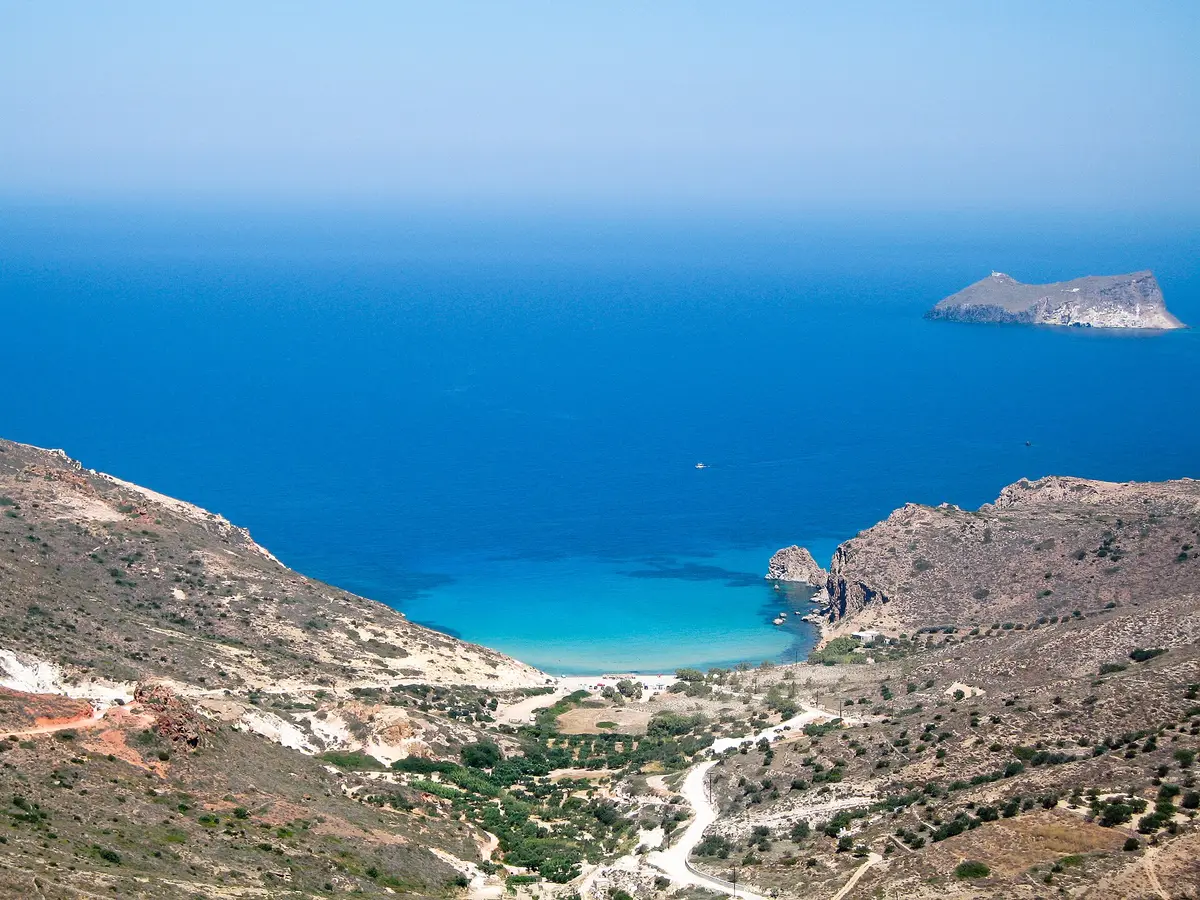
Sources: Μήλος · Κλέφτικο Μήλου · Σαρακήνικο Μήλου · Action of 27 August 1661
Course
The racecourse follows the unspoilt wild coastlines of Milos, featuring both exposed and sheltered sections subject to north winds, and passes notable landmarks including the clifftop church of Agios Ioannis.
Previous editions
Useful info
Event runs Thursday-Sunday. Includes accommodation, transfers, and logistical support. Use of a safety buoy is mandatory (available for rent). Registration via the official website with a €500 deposit. Payment deadline: 6 months before the event. F3 package available for accompanying persons. Recommended preparation via a dedicated pre-event camp.
How to get there
Milos Airport (MLO) is 5km away, connected via Athens. Alternative: ferry from Athens (Piraeus) in 3-5 hours. Renting a car or scooter is essential for getting around the island. The race site is accessible by road; parking is available at the main beaches and the port of Adamas.
UltraSwim 33.3 Greece
Frequently asked questions
- When is UltraSwim 33.3 Greece?
- UltraSwim 33.3 Greece takes place on June 3 – 6, 2027.
- What distances does UltraSwim 33.3 Greece offer?
- UltraSwim 33.3 Greece has a single distance: 33.3 km.
- How much is the entry fee for UltraSwim 33.3 Greece?
- The entry fee is 2057 €. Prices are for all-inclusive 4-day packages. Group of 4 discount available (4th swimmer half price). Loyalty discount of €100 per event for multiple entries in the same year.
- Where does UltraSwim 33.3 Greece take place?
- UltraSwim 33.3 Greece is a sea swim. Location: Milos Island, Milos, South Aegean, Greece.
- How do I register for UltraSwim 33.3 Greece?
- The reference page for registering for UltraSwim 33.3 Greece is https://ultraswim333.com/2027greece.
Where to stay
Milos offers a variety of stays ranging from traditional 'syrmata'—fishermen's dwellings converted into seaside studios—to boutique hotels overlooking the main port of Adamas. Prices fluctuate significantly by season, typically ranging from €90 to €350 per night. Camping options are also available near the island's coastal stretches for those preferring direct beach access. View recommended local stays.
Things to do nearby
Beyond the water, the island is defined by its geological history. Visitors often explore the lunar-like rock formations of Sarakiniko, or take guided kayak trips to reach sea caves inaccessible by land. The island also hosts significant archaeological sites, including the discovery location of the Venus de Milo, and offers local Aegean culinary experiences centered on traditional volcanic-soil agriculture and seafood. Explore weekend activities.
Swimmers
What to see around
1. Sarakiniko Beach (unique lunar landscape). 2. Kleftiko (sea caves accessible by boat). 3. Plaka (traditional village with sunset views). 4. Ancient Theatre of Milos. 5. Catacombs of Milos (early Christian archaeological site).
Other races by this organiser
- UltraSwim 33.3 NevisCharlestown, KN
- UltraSwim 33.3 SwitzerlandGenève, CH
- UltraSwim 33.3 Bay of KotorHerceg Novi, ME
- UltraSwim 33.3 #12 Croatia — HvarStari Grad, HR
- UltraSwim 33.3 GreeceSkopelos, GR
Similar races


Comments
Transparency: some links on this page (stays, flights, experiences, gear) are affiliate links — if you book or buy through them, Omniathlon may earn a commission from the partner at no extra cost to you. As an Amazon Associate we earn from qualifying purchases.