
UltraSwim 33.3 Bay of Kotor
- Oct 1 – 4, 2027
- Distances: 16.6km and 33.3km
At a glance
- Next edition date
- October 1 – 4, 2027
- Distances
- 16.7 km · 33.3 km
- Where
- Sea · Adriatic Sea, Montenegro, Herceg Novi, Montenegro
- Entry fee
- 500 €
- Registration
- ultraswim333.com
About the race
At the entrance to the Bay of Kotor, sheer limestone cliffs plunge straight into the Adriatic Sea. This dramatic coastal arena in Herceg Novi, Montenegro, sets the stage for #21MONTENEGRO, an endurance open water swimming event that bridges open maritime passages and sheltered fiord-like channels. Swimmers take to these storied waters organized by UltraSwim 33.3, facing either the signature marathon distance of 33.3 kilometers or a half-distance route of 16.65 kilometers. The route traces the rugged contours of the Luštica peninsula, navigating the shifting boundary between the open swell of the Adriatic and the calmer embrace of the inner gulf. Swimmers launch their journey from a start line set inside a vast blue sea cave, gliding through illuminated waters before circumnavigating the perimeter of the fortress island of Mamula.
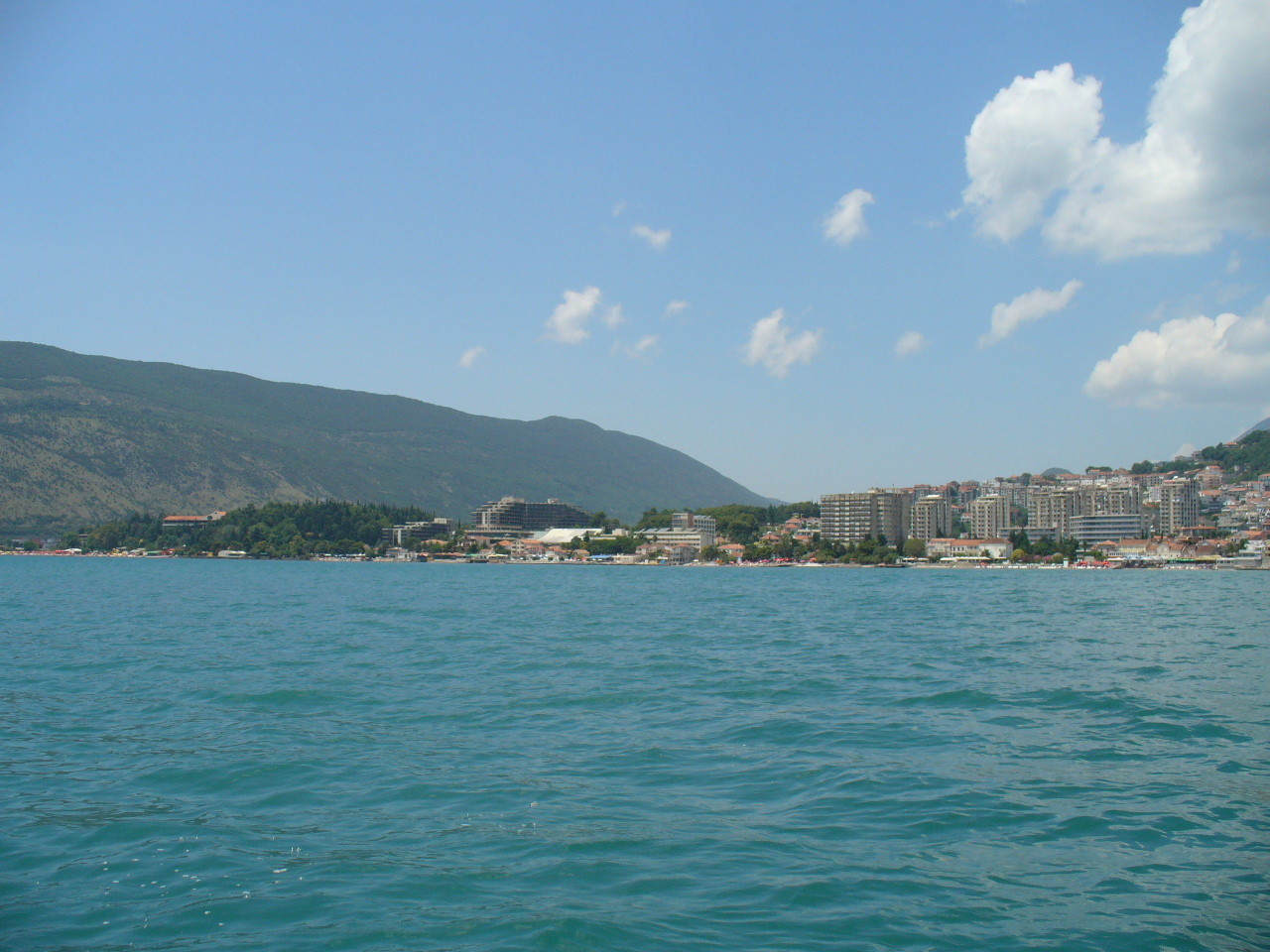
The course steers into maritime history with swims passing through abandoned Cold War submarine pens carved into the shoreline cliffs, and features an ambitious cross-border passage leading from Croatia back into Montenegrin waters. Held in early October, the event benefits from comfortable, lingering autumn warmth across the bay, offering mild sea temperatures that make long-distance marathon sets accessible without the bite of summer heat.
The Bay of Kotor: drowned river valleys and limestone cliffs
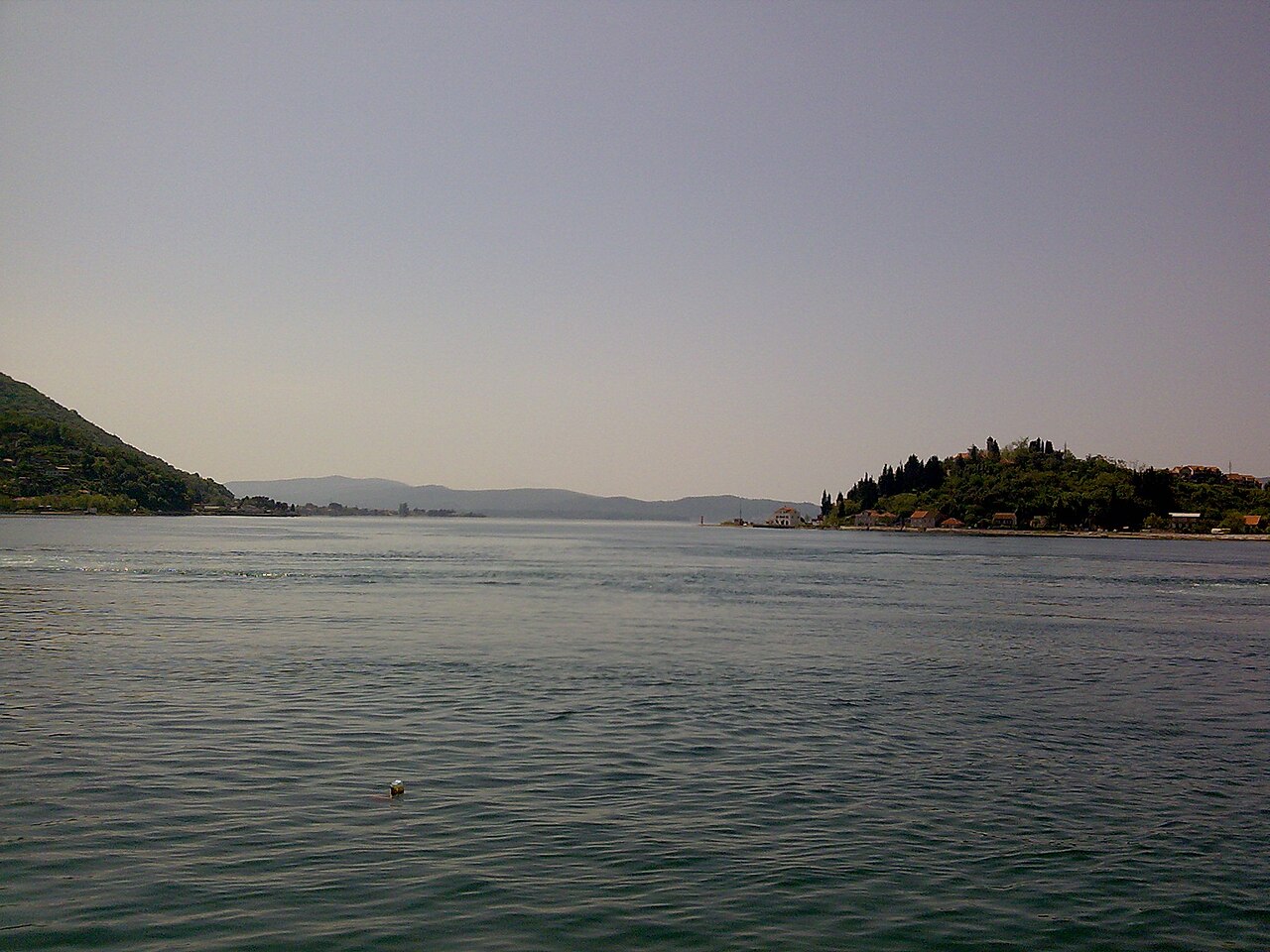
The striking setting of the Bay of Kotor is not a true glacial fiord, but an ancient ria formed by the gradual tectonic drowning and karstification of the ancestral Bokelj river system. Towering limestone massifs rise immediately from the shoreline, framing an enclosed basin that holds an average depth of around twenty-seven meters, descending to sixty meters in its deepest channels. As water moves inward from the sea, the gulf compresses drastically at the Verige Strait, a narrow sea gate only 340 meters wide. This drowned karst landscape remains dynamically connected to subterranean waterways that surge beneath the mountains. Following heavy mountain rains, subterranean flows erupt into coastal springs like Sopot, which surges from a high cave to send a roaring twenty-meter waterfall straight into the sea, churning the saltwater surface into white froth. Nearby cavern systems, such as the Spila cave, discharge winter rivers directly from the limestone rock face, constantly refreshing the bay with sweet underground mountain runoffs.
Mamula Island and the fortresses guarding the sea gate
Standing guard right at the entrance of the gulf between the Prevlaka and Luštica peninsulas lies Mamula, a circular islet measuring just two hundred meters in diameter that was known to Venetian sailors as Rondina. Built in 1853 under Austrian General Lazar Mamula, an imposing stone fortress sprawls across ninety percent of the island's rocky surface. Designed as a strategic stronghold alongside complementary batteries at Cape Oštro and Cape Arza, the outpost was built to seal the maritime mouth of Kotor against invading fleets. Directly across the sound on the northern mainland shore, the historic town of Herceg Novi anchors the entrance to the bay. Founded in 1382 by King Tvrtko I of Bosnia on the footprint of an ancient fishing settlement, the citadel grew under successive Mediterranean powers, including Spanish forces who erected the elevated Hispaniola fort during their brief presence between 1538 and 1539.
The passage saw heavy naval combat in June 1539 when an Ottoman fleet of thirty galleys blockaded the strait, leading to nearly a century and a half of Ottoman rule until Venetian commander Girolamo Cornaro retook the port in 1687.
Our Lady of the Rocks and the sacred waters of Boka
Venturing deeper into the inner bay reveals an extraordinary monument of seafaring devotion at Our Lady of the Rocks. Unlike the natural terrain surrounding it, this sanctuary is an artificial island built by sinking seized and scuttled ships laden with heavy rocks. The work began after local mariners discovered an icon of the Virgin Mary upon the rock on July 22, 1452, establishing a spiritual beacon in the center of the water. That connection between mariners and the sea persists today during the annual fašinada on July 22, when bay residents cast stones into the sea and reinforce the island foundation. The island is capped by a navigational light at its northern tip.
Herceg Novi and the Pet Danica coastal promenade
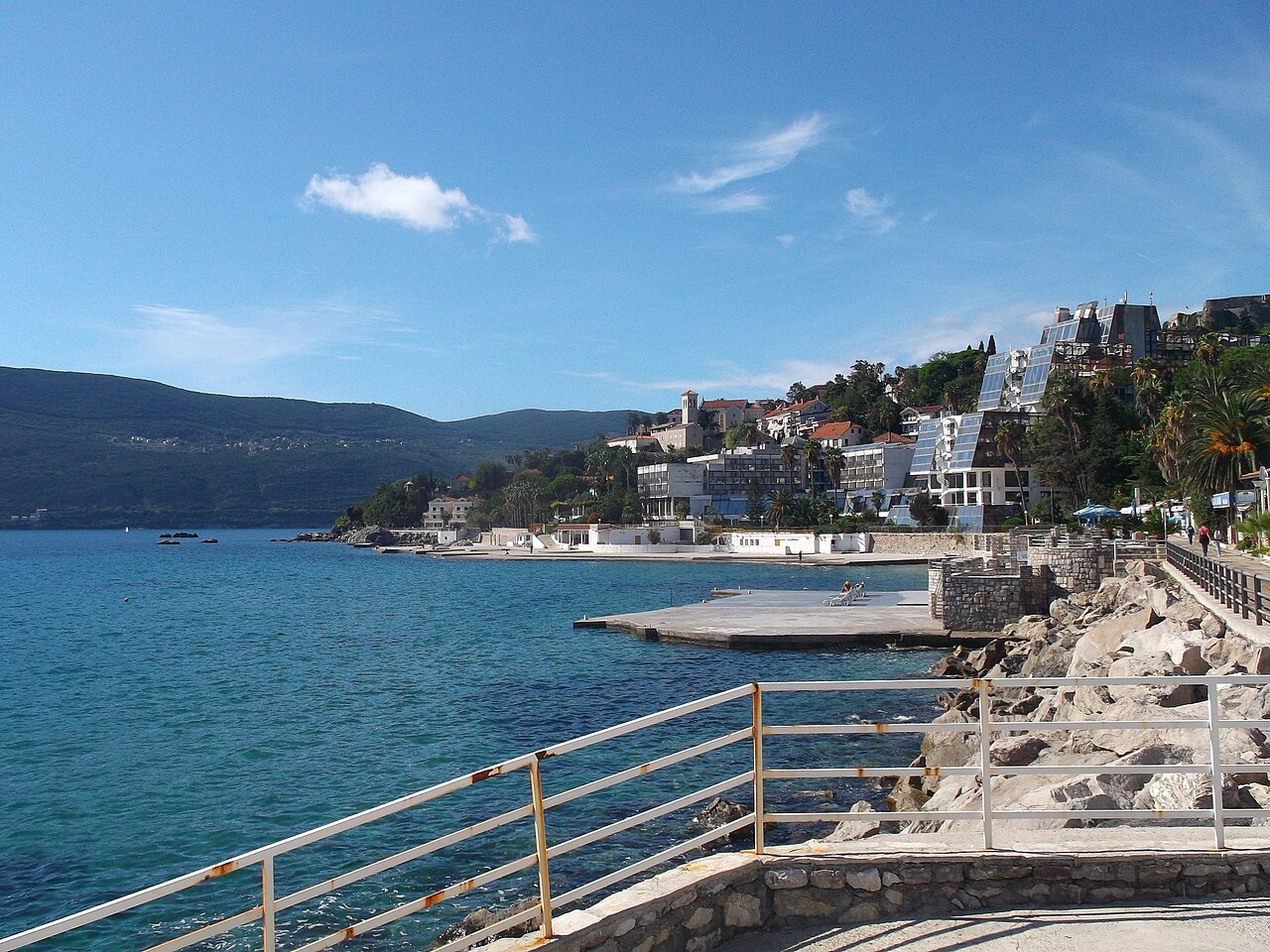
Back on the coastal rim of Herceg Novi, the Pet Danica promenade stretches for seven flat kilometers along the waterfront, linking Meljine to Igalo. The path serves as the social heartbeat of the shoreline, where swimmers and locals stroll, dine at waterside taverns, and slip into the sea. Rising behind the water is the tiered village known as the city of steps, where steep stone staircases wind. A south-facing exposure against warming limestone bluffs grants Herceg Novi an exceptionally sheltered microclimate, fostering a swimming season that stretches across five months of the year. At Igalo, natural mineral springs and therapeutic sea mud offer an effortless natural ritual for tired muscles after hours of open water swimming.
Course
33.3km point-to-point course over 4 days (6 swims) around the Lustica peninsula. Includes a start in a blue cave, passage through a former submarine bunker, circumnavigation of the Mamula fortress island, and a final Croatia-Montenegro crossing. Conditions vary between calm fjords and the open Adriatic Sea. Unpredictable currents are possible.
Previous editions
Useful info
Multi-day event (Oct 1-4, 2027). Formats: 33.3 Classic (competitive) or 33.3/2 Build (non-competitive). Wetsuit optional (also suitable for 'skins'). Includes logistics, hotels, and transfers from Dubrovnik/Tivat. Booking requires a €500 deposit. Payment deadline: 6 months before the event. Pre-race briefing and webinars included.
How to get there
Tivat Airport (TIV) is 15km away or Podgorica (TGD) is 80km away. There is no extensive rail network; the best way to reach the site is by taxi or rental car. The area is served by the E80 coastal road. Parking is available at accommodation facilities in Budva/Kotor; it is recommended to check availability with your hotel.
UltraSwim 33.3 Bay of Kotor
Frequently asked questions
- When is UltraSwim 33.3 Bay of Kotor?
- UltraSwim 33.3 Bay of Kotor takes place on October 1 – 4, 2027.
- What distances does UltraSwim 33.3 Bay of Kotor offer?
- UltraSwim 33.3 Bay of Kotor offers 16.7 km and 33.3 km.
- How much is the entry fee for UltraSwim 33.3 Bay of Kotor?
- The entry fee is 500 €.
- Where does UltraSwim 33.3 Bay of Kotor take place?
- UltraSwim 33.3 Bay of Kotor is a sea swim. Location: Adriatic Sea, Montenegro, Herceg Novi, Montenegro.
- How do I register for UltraSwim 33.3 Bay of Kotor?
- The reference page for registering for UltraSwim 33.3 Bay of Kotor is https://ultraswim333.com/2027montenegro.
Where to stay
Herceg Novi offers a mix of historic stone villas, family-run guesthouses in the old town, and modern boutique hotels overlooking the harbor. Options range from budget-friendly apartments at approximately €50-€80 per night to premium waterfront rooms reaching €150-€250 during the shoulder season. Many properties are located along the 'Pet Danica' promenade, providing direct access to the sea and proximity to the race assembly points.
Things to do nearby
Beyond the water, the region offers extensive hiking trails in the Orjen mountain range, which provide panoramic views of the bay. Visitors can explore the 14th-century fortifications, take boat trips to the Blue Cave, or participate in local olive oil and wine tastings in the nearby hinterlands. The area's history is best experienced through the various maritime museums and preserved Ottoman and Venetian architectures within the city walls.
Swimmers
What to see around
1. Old Town of Kotor (UNESCO) and the climb to the Fortress of Saint John. 2. Lovćen National Park for hiking and panoramic views. 3. Boat trip to the Blue Cave. 4. Visit to the islet of Sveti Stefan. 5. Excursion to Lake Skadar National Park.
Other races by this organiser
- UltraSwim 33.3 NevisCharlestown, KN
- UltraSwim 33.3 GreeceMilos, GR
- UltraSwim 33.3 SwitzerlandGenève, CH
- UltraSwim 33.3 #12 Croatia — HvarStari Grad, HR
- UltraSwim 33.3 GreeceSkopelos, GR
Similar races


Comments
Transparency: some links on this page (stays, flights, experiences, gear) are affiliate links — if you book or buy through them, Omniathlon may earn a commission from the partner at no extra cost to you. As an Amazon Associate we earn from qualifying purchases.