
UltraEbre Swim Marathon
- Jul 3, 2027
- Distance: 30.8km
At a glance
- Next edition date
- July 3, 2027
- Distances
- 30.8 km
- Where
- River · Ebro River, Tortosa, Catalonia, Spain
- Entry fee
- 220–330 €
- Registration
- ultraebre.com
About the race
Organized under the banner of the Marathon River Swim Series, which links three of Europe's premier river courses, this Catalan classic follows the most powerful river in the Iberian Peninsula and the only major peninsular waterway draining directly into the Mediterranean. The route is an unrelenting journey covering precisely 30,830 metres between the stone landing pier of Tivenys and the riverfront piers of Amposta. Held in midsummer during the heat of July, the river runs around a temperate 24°C (75 °F), offering comfortable immersion for an effort that lasts several hours. Swimmers take on this immense challenge either in the solo category or as a tandem couple, with every registration tethered to an escort kayak that tracks beside the swimmer stroke for stroke to provide pacing and river navigation.
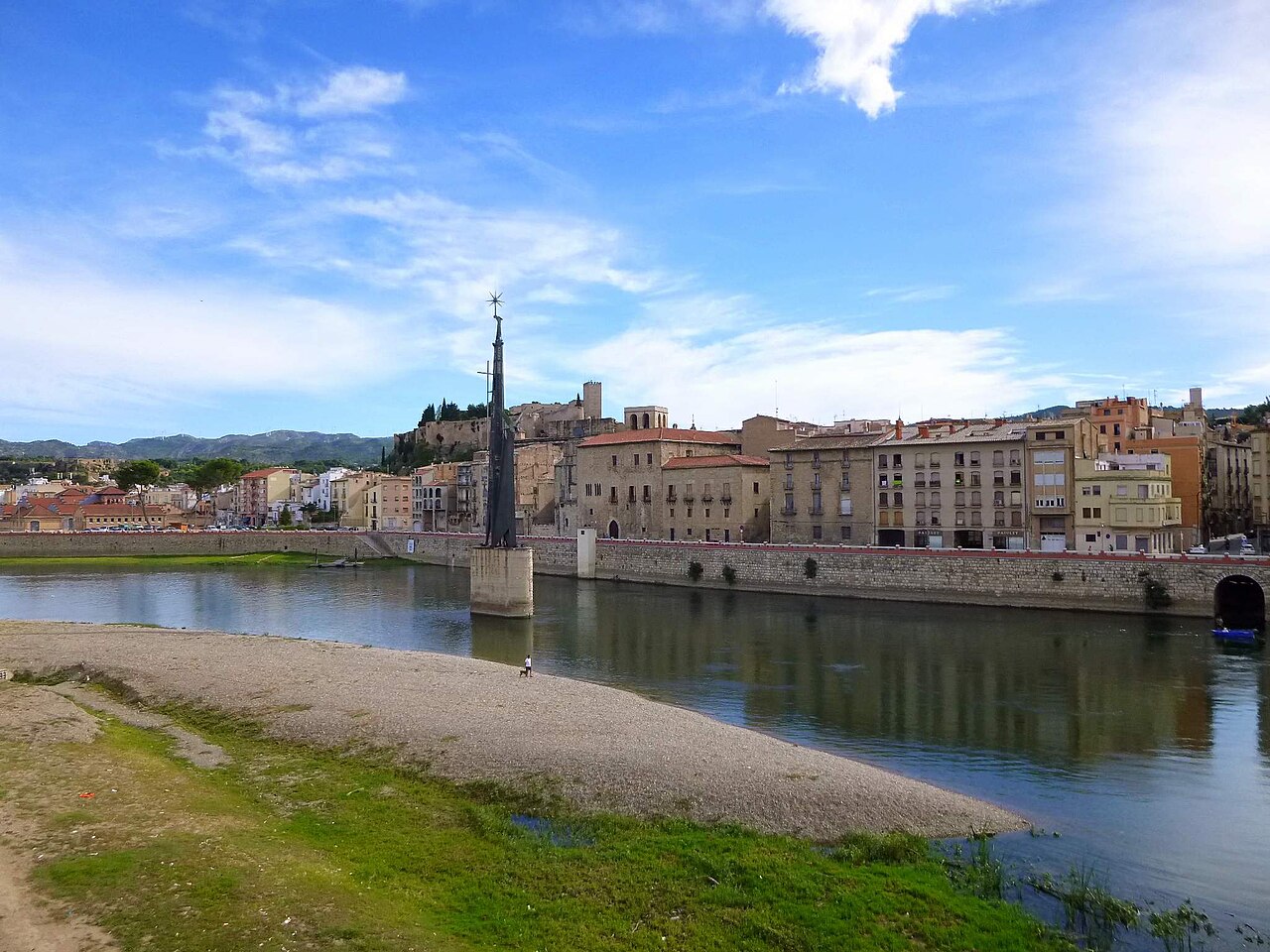
The course divides naturally into three hydrographic stages. Swimmers launch into a narrow, fast-flowing channel where the current runs strong and helps build early momentum down toward Tortosa. Once past the urban pier in Tortosa, the riverbed widens and the flow noticeably slackens, demanding steady pacing across the middle sector. In the final sector into Amposta, the river broadens into a wide corridor where swimmers frequently meet afternoon headwinds and surface chop, though having a dedicated kayaker riding on your shoulder keeps you firmly on course through the ruffled water to the finish line.
The Ebro gorge and the inland salt wedge
The character of the water is dictated by ancient geology. Upstream of the start, the river cuts cleanly through limestone bedrock originally formed within a prehistoric seabed, carving steep karst gorges flanked along their eastern flank by the towering calcareous cliffs of the Serra de Cardó. As the river levels out below Tortosa, a remarkable hydrodynamic shift occurs whenever river discharge drops below one hundred cubic metres per second. Denser Mediterranean seawater slides inland along the riverbed beneath the outflowing fresh water, creating an estuarine salt wedge that can push up to 32 kilometres upstream from the sea. Centuries of natural transport have seen the river continuously sweep mountain sediments down this channel to build the massive 340-square-kilometre wetland of the Ebro Delta. This vast accumulation of silt has gradually altered the coastline over the centuries, stranding the finish town of Amposta—which prospered as an active Roman marine seaport as late as the 4th century—many miles inland across fertile alluvial plains.
Dertosa and the naval battles of the Ebro
Following the First Punic War, the Ebro River was formally recognized as the strategic border separating Roman territory from the advancing Carthaginian sphere of influence in Hispania. Further upriver, Tortosa itself flourished as the ancient Roman settlement of Dertosa, serving as a dual maritime and river port where merchant goods transferred between seagoing galleys and river barges. The city minted coins under Tiberius featuring engravings of both riverboats and marine galleys, and a stone funerary stele carved with a deep-bellied merchant corbita ship was later discovered embedded within the defensive masonry of the castle walls.
From the Genoese blockade to the Cinta bridge
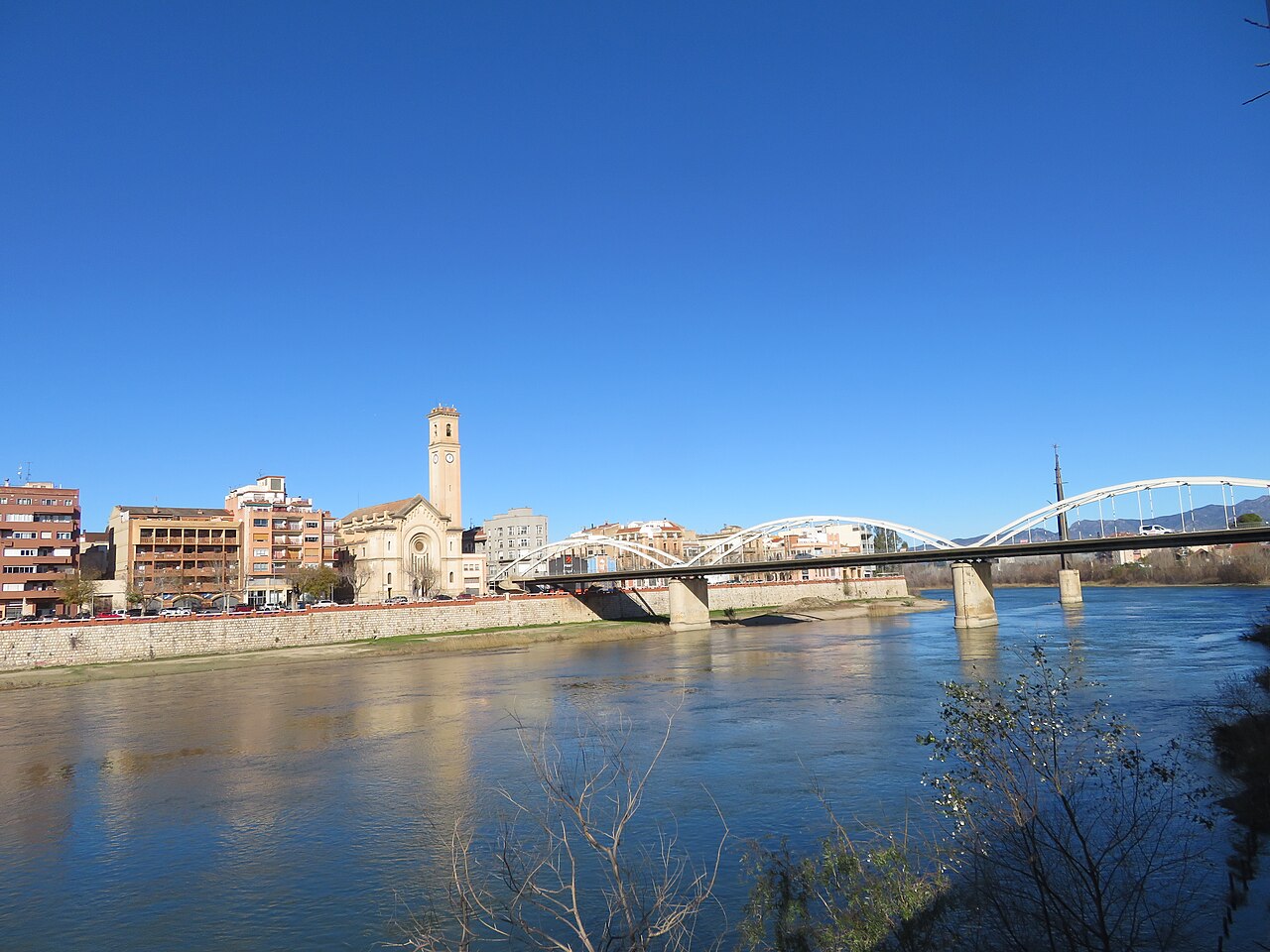
During the siege of Tortosa in 1148, an allied Genoese fleet entered the Ebro to mount a total river blockade, sealing off waterborne escape routes and securing the city's capitulation. For centuries afterward, the crossing between the city's two banks relied on a historic bridge of boats, which remained in service until it was consumed by fire in 1892. In its place rose the Cinta bridge.
The Tortosa promenade and the right-bank canal
Just outside the urban reach, hydraulic engineering reshaped the banks in 1857 with the opening of the Canal de la Derecha del Ebro. Originating fifteen kilometres upstream at the Cherta weir, this monumental 52-kilometre aqueduct channels river water downstream past Tortosa and Amposta to irrigate the sprawling delta flatlands. Along the city waterfront today, a wide promenade stretches beside the water, providing panoramic views across the river toward the historic quarter and the bridges. Visitors and spectators frequently board Lo Sirgador, cruising the Tortosa channel, exploring the city’s maritime heritage while tracking the rhythm of the river.
Wildlife of the lower Ebro: catfish and black flies
The deep waters of the lower Ebro house formidable aquatic fauna, most notably the giant Wels catfish, an introduced species established in upstream reservoirs in 1974 that drove out native Iberian barbel. Reaching massive proportions, these bottom-dwellers prefer deep, slow-moving pools where they shelter under submerged tree trunks and hollows in the riverbed. Along the riparian banks, black flies represent another feature of the local ecosystem, laying their eggs in swift running water where larvae anchor to submerged stones. Adult females bite mammals during daylight hours on areas of thin skin like the neck or ankles to nurture their eggs.
Course
River course: Tivenys - Xerta - Tortosa - Amposta
Awards
The event features a 'Couple' category competing for the 'Tragamilles' Jordi Cervera trophy.
Previous editions
How to get there
UltraEbre Swim Marathon
Frequently asked questions
- When is UltraEbre Swim Marathon?
- UltraEbre Swim Marathon takes place on July 3, 2027.
- What distances does UltraEbre Swim Marathon offer?
- UltraEbre Swim Marathon has a single distance: 30.8 km.
- How much is the entry fee for UltraEbre Swim Marathon?
- The entry fee ranges from 220 € to 330 €.
- Where does UltraEbre Swim Marathon take place?
- UltraEbre Swim Marathon is a river swim. Location: Ebro River, Tortosa, Catalonia, Spain.
- How cold is the water at UltraEbre Swim Marathon?
- The organizer states a water temperature of 26 °C (79 °F).
- How do I register for UltraEbre Swim Marathon?
- The reference page for registering for UltraEbre Swim Marathon is https://www.ultraebre.com/index.php/es/.
Where to stay
The Terres de l'Ebre region offers a variety of stays ranging from renovated historic farmhouses to small boutique hotels located directly along the riverfront in Tortosa. Many swimmers opt for family-run guesthouses or camping sites near the delta, which provide easy access to the water for early morning training. Prices typically range from €60 to €150 per night, depending on the proximity to the river and the level of amenities offered.
Things to do nearby
Beyond the race, the region is defined by its deep agricultural and historical roots. You can explore the Ebro Delta through guided kayak tours, which provide a closer look at the local birdlife and wetlands. The area is also famous for its olive oil and wine production, with numerous vineyards offering tastings. For those preferring land-based activities, the rugged trails of the Ports de Tortosa-Beseit mountains provide excellent trekking opportunities with panoramic views of the river basin.
Swimmers
Other stages of this series
- Le Flow des GabarriersCognac, FR
- GlommaDyppenFetsund, NO
- Marathon River Swim SeriesEU
Similar races


Comments
Transparency: some links on this page (stays, flights, experiences, gear) are affiliate links — if you book or buy through them, Omniathlon may earn a commission from the partner at no extra cost to you. As an Amazon Associate we earn from qualifying purchases.