
Le Flow des Gabarriers
- Jun 12, 2027
- Distances from 1km to 33km
At a glance
- Next edition date
- June 12, 2027
- Distances
- 1 km · 3 km · 16 km · 33 km
- Where
- River · Charente river, Cognac, Nouvelle-Aquitaine, France
- Entry fee
- 39–149 €
- Registration
- leflowdesgabarriers.com
About the race
Flat-bottomed wooden boats called gabares navigated the Charente, carrying barrels of wine, salt, and cognac. Le Flow des Gabarriers revives that working waterway as an open water swimming event held on the Charente river around Cognac, in the Nouvelle-Aquitaine region of France. Organized by Le Flow des Gabarriers, the gathering was created by Grégory Lécrevisse to allow swimmers of all levels to take on a personal endurance challenge along the historic trade route. The centerpiece of the event is the 33-kilometre ultra-marathon, recognized as the longest non-stop open water swimming marathon in France. Starting at Le Bain Des Dames in Châteauneuf-sur-Charente, the marathon follows the river through twelve different riverside villages across the Charente countryside before finishing in Cognac.
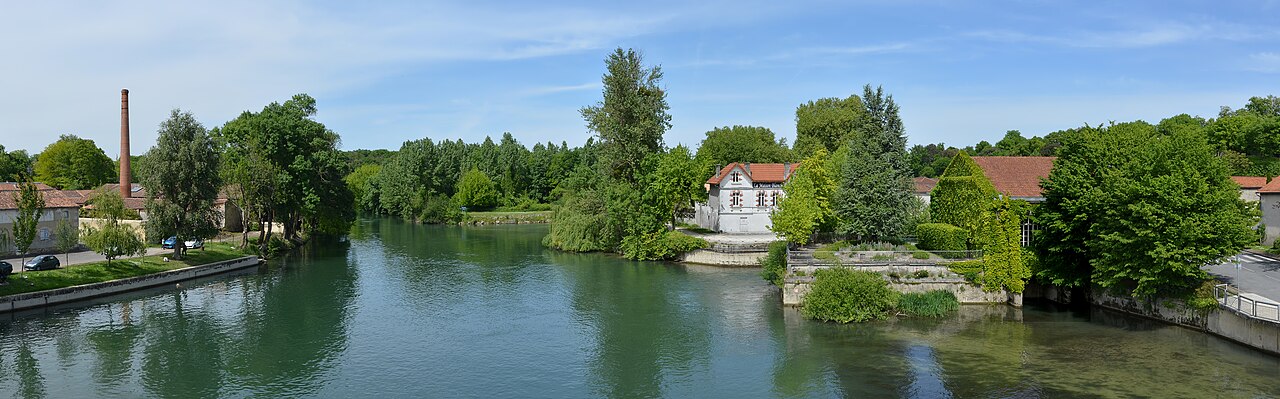
Over such an immense distance, keeping a consistent rhythm stroke after stroke becomes both a physical test and a prolonged journey across the valley. For swimmers seeking an intermediate river distance, a 16-kilometre race launches midway down the valley from Jarnac. Shorter distances are staged right in town, offering 1,000-metre and 3,000-metre options that start from Place du Solençon in Cognac. Both of these courses are laid out as two-way loops, requiring participants to swim downstream before turning back to cover the same distance upstream against the river. The 1-kilometre distance is open to participants aged 12 to 99, giving young swimmers and veterans alike the chance to test their river stroke. The meeting takes place in June, and in past editions participants have found near-perfect conditions, with clear weather and an enthusiastic atmosphere along the banks.
The Charente between Angoulême and Cognac: meanders, cuestas and peat
The Charente river stretches 381.4 kilometres from its source in Haute-Vienne to its ocean outlet near Rochefort, where it enters the Atlantic waters of the Gulf of Biscay. So striking was the valley's winding elegance that King François I praised the Charente as the most beautiful river in the kingdom. Flowing for eight kilometres through the municipality of Cognac, the river runs past a town built on a plateau, forming an expansive curve to the north. The lowest point of the commune drops to just five meters above sea level at the junction where the Antenne stream meets the Charente. Over the entire stretch between Angoulême at 27 meters altitude and Cognac at 5 meters, the riverbed displays an exceptionally gentle gradient.
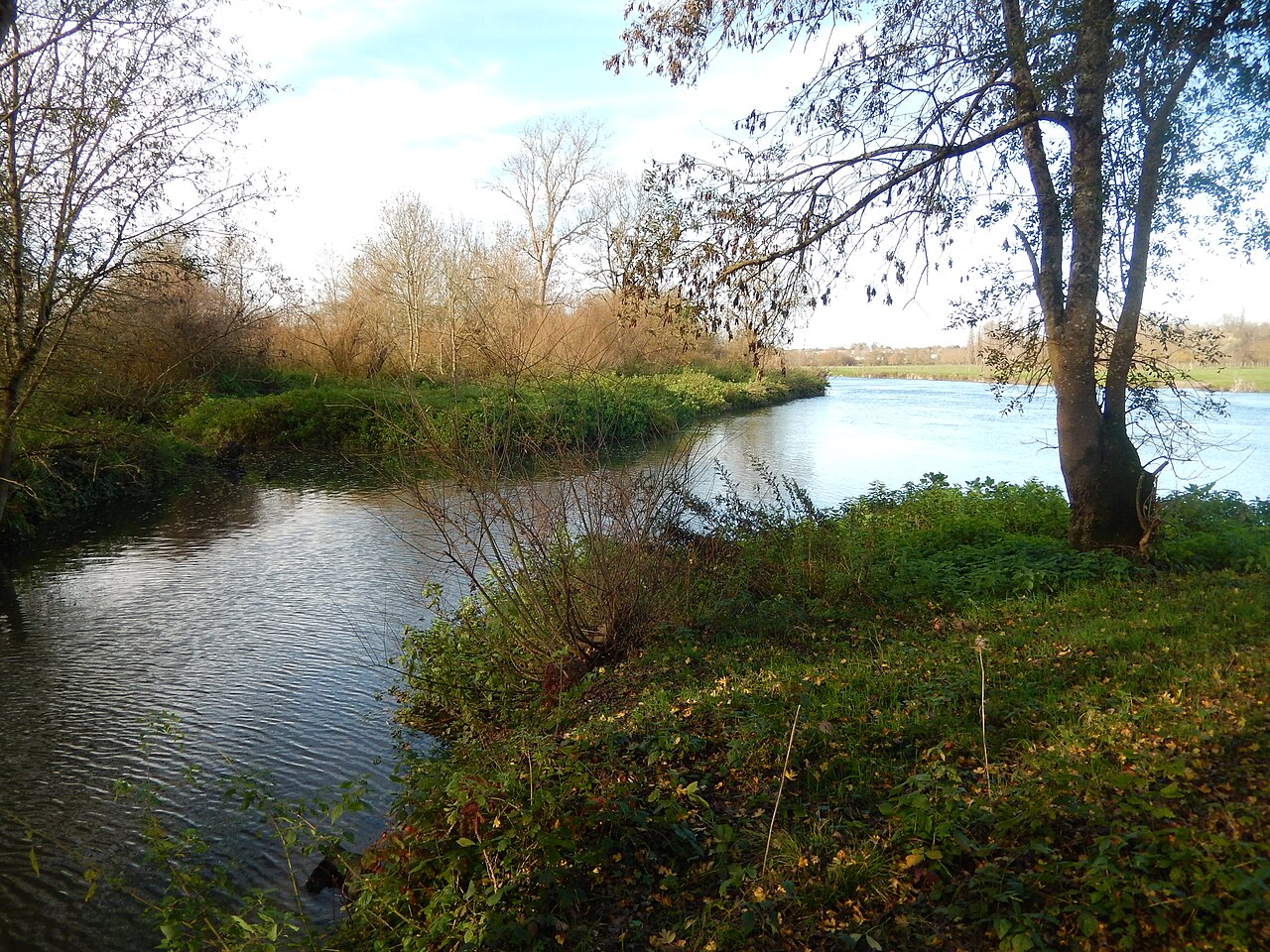
This minimal slope causes the river to loop continuously into sweeping meanders, branching arms, and quiet mid-stream islands. The river's flow is subject to sharp natural variations across the seasons, dropping to a tranquil 1 cubic meter per second during dry summer low-water periods and surging during major winter rises, such as the historic peak of 595 cubic meters per second recorded in December 1982. Further notable floods have submerged the banks in Cognac in 1994, 2007, and 2021, yet during the early summer race the water settles into a smooth, steady course ideal for marathon swimming. Downstream from Jarnac, the Charente acts as a sharp geological boundary, dividing the Jurassic formations on the right bank from the Cretaceous left bank marked by prominent cuestas. Île de la Reine is an island about 900 meters in length. A weir connects the northern shore of Île de la Reine to neighbouring Île David.
Wars of Religion and royal troops along the river
The Charente served as an indispensable line of communication and freight transport from antiquity until the nineteenth century. In early centuries the river ran unobstructed, remaining navigable in its natural state until the fourteenth century, when a proliferation of watermills, fisheries, and navigation tolls began interrupting boat passage. On March 10, the Duke of Anjou captured Châteauneuf on the left bank, then worked through the darkness of night to repair and double the river bridge, moving his forces to the right bank. Royal scouts advanced downstream toward Jarnac, while the Huguenot vanguard marched as far as Cognac. After the Huguenots seized Jarnac, royal forces retreated once more across the water to the left bank.
Control of the waterway remained decisive in the following century during the 1651 siege of Cognac, when Cognac stood as the sole fortified town securing the Charente's banks. On November 9, besieging troops constructed a makeshift bridge of boats across the river and seized the Pont suburb on the opposite bank. Just four days later, a sudden flood tore the boat bridge apart, stranding 500 soldiers cut off from the main royal army. To revive reliable navigation, an extensive canalisation project was completed in 1835 under the Restoration, before commercial freight was definitively abandoned on the waterway in 1957. Today, that historical transport route has been preserved entirely for leisure and sport across a 164-kilometre navigable corridor extending all the way upstream to Angoulême.
Vieux-Port and the limestone quays of Cognac
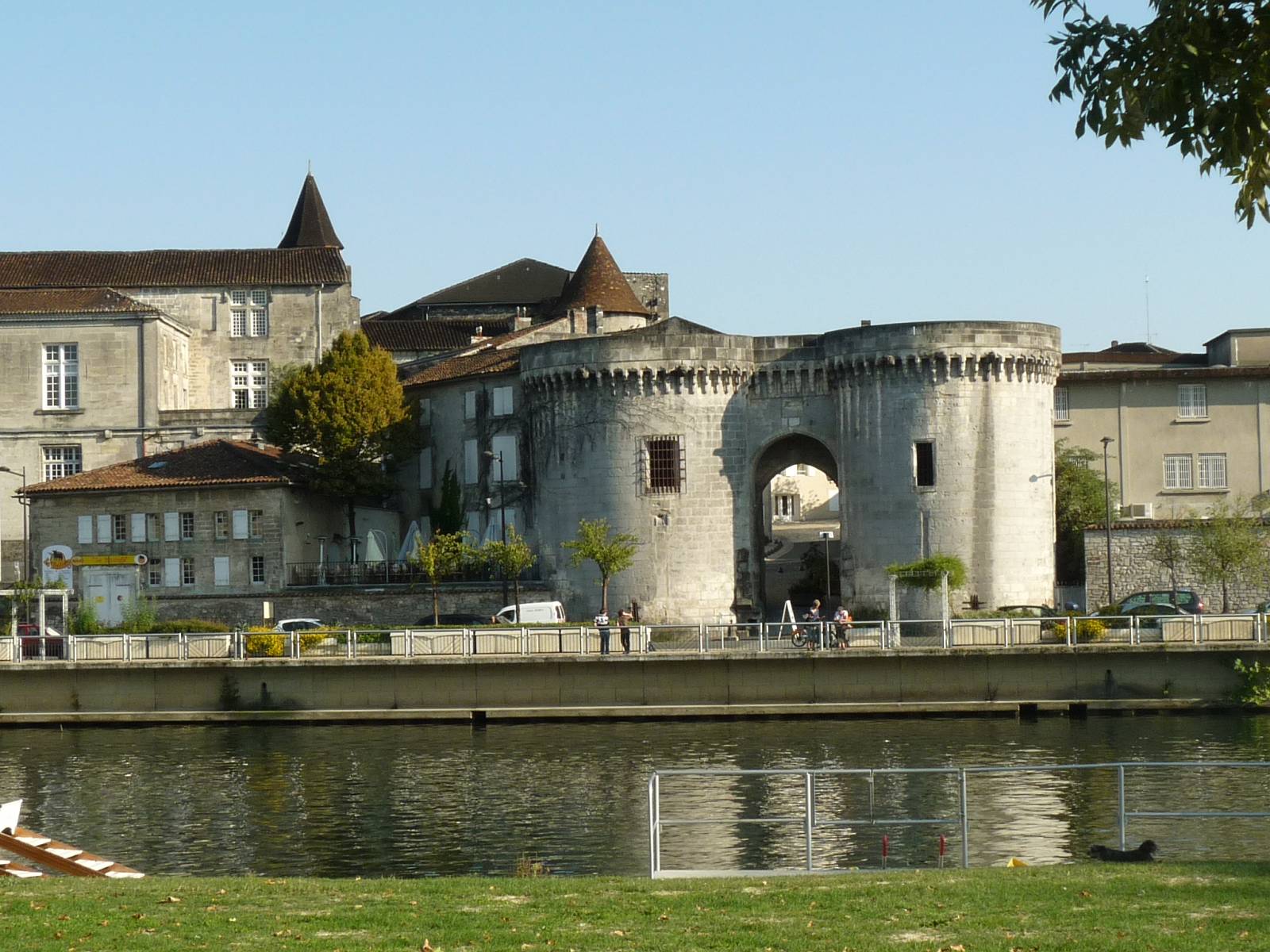
Cognac's riverfront is anchored by the historic Château de Cognac, standing right on the riverbank overlooking the quays. Originally rebuilt in stone around 1200 by the Taillefer family, the fortress was significantly expanded around 1517 by King Francis I, who added a grand residential wing featuring a long facade facing the water. The castle incorporates the thirteenth-century Count Jean tower, which preserves an unusual interior well fitted with stone curbs on every level. Cognac was enclosed by defensive walls backed by the river during the Middle Ages. The original square defensive towers date back to the twelfth century, while the surviving round stone towers flanking the gate were constructed around 1500.
A stone medieval bridge once crossed from this gateway to the Saint-Jacques district on the opposite bank, before being dismantled in 1855 following the completion of a replacement bridge in 1850. Saint-Jacques was historically established as a refuge where pilgrims travelling along the Charente valley toward Santiago de Compostela could rest. Walking along the waterfront reveals reminders of the river's nineteenth-century industrial and domestic life, including the site of a floating laundry boat built along the quays in 1855 to serve local laundresses. Further along the banks lies the Château de Bagnolet, a distinguished riverside residence linked to the Hennessy estate, where regional maritime ties even inspired the Charente Maritime cocktail named after the boat of sailor Isabelle Autissier.
Just off the quays, the public gardens redesigned by landscape architect Édouard André offer a lush retreat, complete with a gothic tower from 1835 in a stone basin, artificial waterfalls, caves, and ducks swimming beneath imitation-wood mortar footbridges. Today, the riverfront at Place de la Salle Verte provides a shaded, tree-lined promenade for spectators, while the town's marina rents small license-free boats and cyclists trace the old towpath along the Flow Vélo route, celebrating the same current that carries marathon swimmers safely home.
Sources: Cognac (Charente)
Course
Course in the heart of Cognac. Features 500 meters downstream followed by 500 meters upstream.
Features 1500 meters downstream followed by 1500 meters upstream.
Long-distance swim for confirmed solo swimmers, following old towpaths starting from Jarnac.
The longest open water marathon in France without stages. Starts at Le Bain des Dames in Châteauneuf-sur-Charente.
Previous editions
- 2026Jun 13, 2026
- 2025results
How to get there
Le Flow des Gabarriers
Frequently asked questions
- When is Le Flow des Gabarriers?
- Le Flow des Gabarriers takes place on June 12, 2027.
- What distances does Le Flow des Gabarriers offer?
- Le Flow des Gabarriers offers 1 km, 3 km, 16 km, and 33 km.
- How much is the entry fee for Le Flow des Gabarriers?
- The entry fee ranges from 39 € to 149 €.
- Where does Le Flow des Gabarriers take place?
- Le Flow des Gabarriers is a river swim. Location: Charente river, Cognac, Nouvelle-Aquitaine, France.
- How do I register for Le Flow des Gabarriers?
- The reference page for registering for Le Flow des Gabarriers is https://leflowdesgabarriers.com/.
Where to stay
Cognac offers a refined selection of stays, ranging from boutique hotels converted from 18th-century trading houses along the river quays to traditional guesthouses tucked into the old town. For a more immersive experience, look for charming local bed-and-breakfasts near the city center. Prices generally range from €90 to €220 per night, depending on the proximity to the historic riverfront. During the race weekend, early booking is recommended to secure spots within walking distance of the start and finish lines.
Things to do nearby
Beyond the water, the region is defined by its viticultural heritage; exploring the historic cognac cellars for tastings is a local essential. For those seeking active recovery, the banks of the Charente offer extensive cycling paths and walking trails that trace the ancient towpaths. Kayaking and paddleboarding are popular ways to explore the river's quieter tributaries, while the Cité du Dolmen allows for a quick visit to Neolithic sites like the Dolmen de Séchebec for a dose of regional archaeology.
Swimmers
Other stages of this series
- UltraEbre Swim MarathonTortosa, ES
- GlommaDyppenFetsund, NO
- Marathon River Swim SeriesEU
Similar races


Comments
Transparency: some links on this page (stays, flights, experiences, gear) are affiliate links — if you book or buy through them, Omniathlon may earn a commission from the partner at no extra cost to you. As an Amazon Associate we earn from qualifying purchases.