
Reto Acapulco La Prueba Reina
- Nov 7, 2026
- Last edition date
- Distances from 6.4km to 22km
At a glance
- Last edition date
- November 7, 2026
- Distances
- 6.4 km · 11 km · 22 km
- Where
- Sea · Bahía de Acapulco, Acapulco, Guerrero, Mexico
- Registration
- retoacapulco.mx
About the race
Across Bahía de Santa Lucía, eight kilometres of Pacific water lie framed between the steep slopes of the Sierra Madre del Sur. Reto Acapulco La Prueba Reina is an open water swimming race held in the sea of Acapulco Bay, in the state of Guerrero on Mexico's Pacific coast. Rather than a conventional mass competition, the event is conceived as a solitary personal test against the expanse of the ocean. Organised by the Comité Organizador del Reto Acapulco La Prueba Reina, the swim began in 1990 as an informal crossing among friends, leading to an official event in 1991 when twelve swimmers from Parque Arturo Mundet A.C. set out across the open bay.
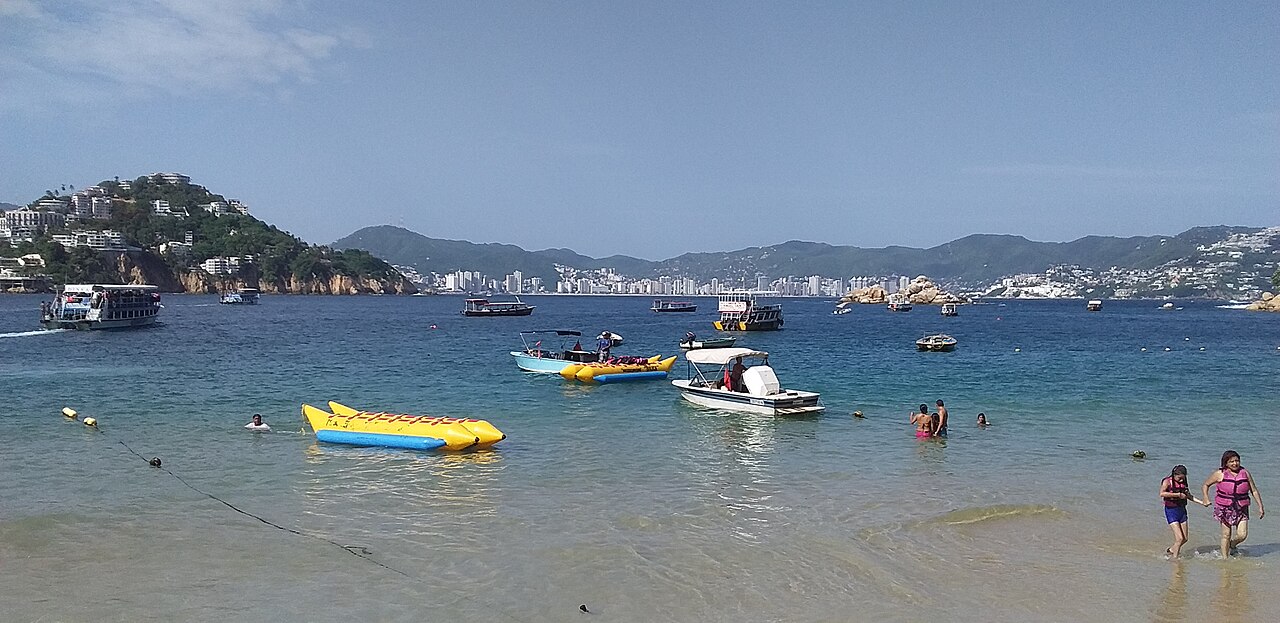
That inaugural 1991 route established the classic 6.4-kilometre line of the event, striking out from Playa Icacos to Playa Honda on the opposite shore. Today the event includes distances of 6,400 metres, 11,000 metres, and an ultramarathon course of 22,000 metres, offered both for solo swimmers and as a relay. Swimmers taking on the classic crossing navigate the full width of the bay, steering by landmarks along the shoreline while Pacific swells roll beneath them. The 22-kilometre marathon was created in 2004 at the request of open water swimmer Mariel Hawley Dávila, requiring two full 11-kilometre segments across the bay. Swimmers tackling the full distance enter the ocean in the deep dark of 3:30 in the morning.
Solitary night swimming in open water is made safe by the event's hallmark feature: a dedicated escort boat accompanies every single competitor from shore to shore. In 2018, the limits were pushed further when a local swimmer completed an extended 33-kilometre course in three segments linking Puerto Marqués and Playa Honda.
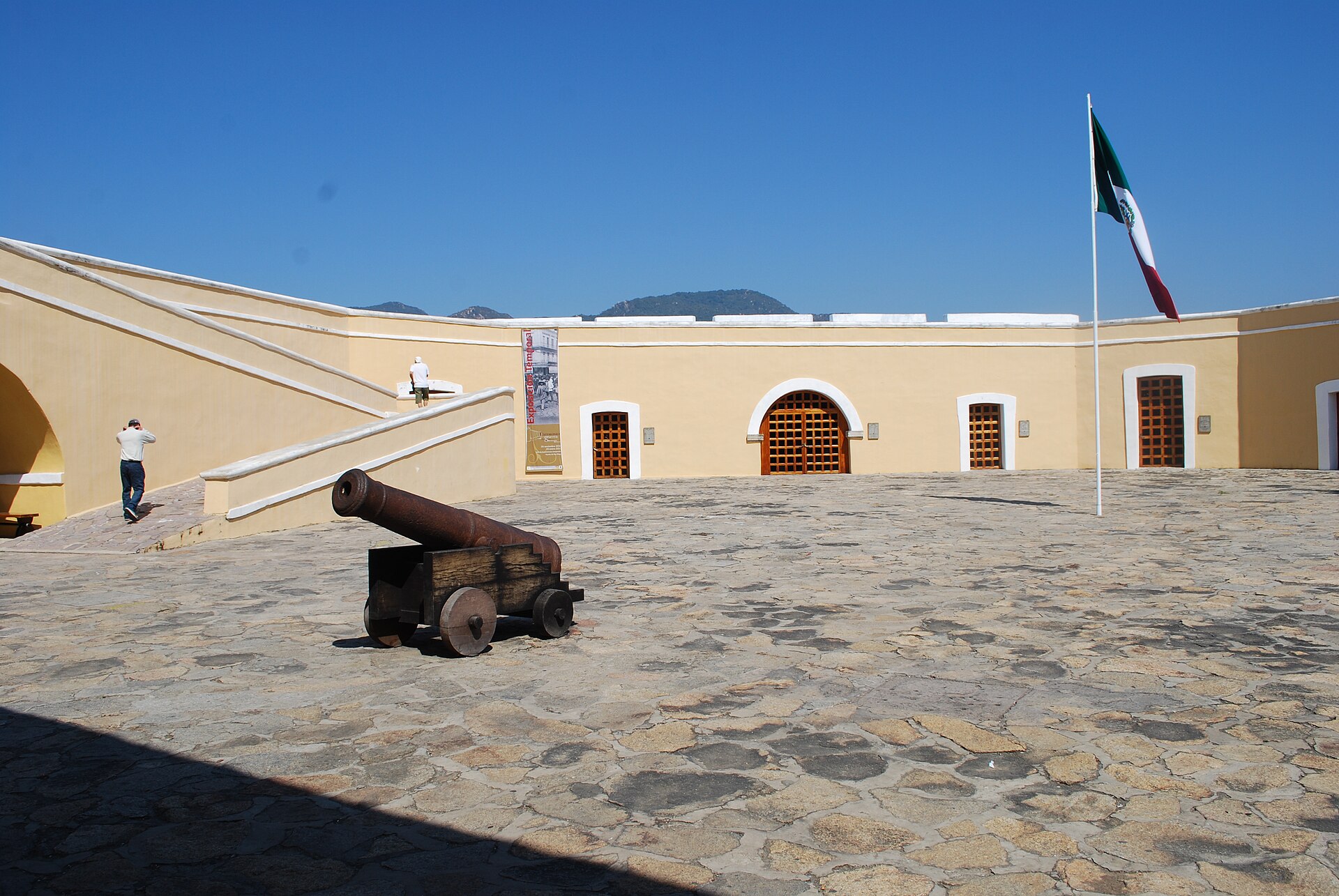
Fuerte de San Diego: galleons, corsairs, and naval bombardment
About one kilometre from the race area stands the Fuerte de San Diego. Built in the seventeenth century, the fortress was erected after sixteenth-century English and Dutch corsairs repeatedly raided the coast of New Spain to intercept the riches of the Manila Galleon. Artillery trials proved that the fort's cannons could reach the headland of Punta del Grifo, allowing colonial gunners to seal off entry to the deep harbour completely. About two kilometres away, the Fortín Álvarez was constructed between 1615 and 1617 to secure the gunpowder and ammunition supplies needed to feed those coastal batteries. By 1783, a reconstructed and enlarged fortress was capable of sheltering two thousand defenders with supplies of fresh water and rations to withstand a full year of siege.
During the Mexican War of Independence, Spanish royalist troops held the stronghold until forced to surrender to insurgent general José María Morelos on August 16, 1813. Decades later, on the morning of January 10, 1863, a French naval squadron including the warships Diamant, Bayonnaise, Galathée, and Pallas entered the bay and opened fire on the fortifications. Coastal gunners scored fifteen to sixteen direct hits into the hull of the Pallas, and before withdrawing, the attacking forces dismantled several fort cannons and threw them directly into the sea.
Isla de La Roqueta: ancient trade and the Bocachica Channel
Isla de La Roqueta is an island of volcanic intrusive igneous rock. The island is separated from the Acapulco mainland by the Bocachica Channel, a sea passage nearly two kilometres long with average depths reaching twenty-five metres. On the southern side of this passage, the island forms part of an expansive biological corridor that stretches along the Pacific coast from Mexico down to Peru. Beneath its scrub-covered slopes, INAH archaeological surveys have recorded seven archaeological sites and a paleontological deposit, revealing ancient coastal habitations tied to the Olmec and Toltec traditions. The channel has witnessed its own daring maritime crossings. On June 9, 1813, Mexican insurgent troops launched an amphibious assault across the Bocachica Channel, seizing the island from royalist defenders to choke maritime supply routes. Today, the waters near the islet of Yerbabuena shelter a bronze statue of the Virgin of the Seas, submerged beneath the Pacific surface.
La Quebrada: the blasted chasm and the incoming swell
In 1799, engineers began blasting through La Quebrada in a bid to open an artificial channel that might funnel cooling sea breezes into the sweltering colonial harbour, though the project stalled. Colonel José María Lopetegui resumed excavating the cliff gap in 1876 before work was abandoned for good, leaving behind a sheer rock gorge battered by Pacific waves. In 1934, local divers turned the abandoned engineering cut into an extraordinary aquatic arena by establishing the La Quebrada Cliff Divers. Athletes leap out from ledges set at heights of 12 and 24 metres, with historical jumps launched from up to 45 metres into an inlet where the water is no deeper than 4 metres. Surviving such an impact requires extreme precision: divers must read the ocean rhythm and release their dive at the precise second an incoming Pacific wave surges into the narrow canyon to provide adequate water depth.
Costera Miguel Alemán: golden beaches from Icacos to Tlacopanocha
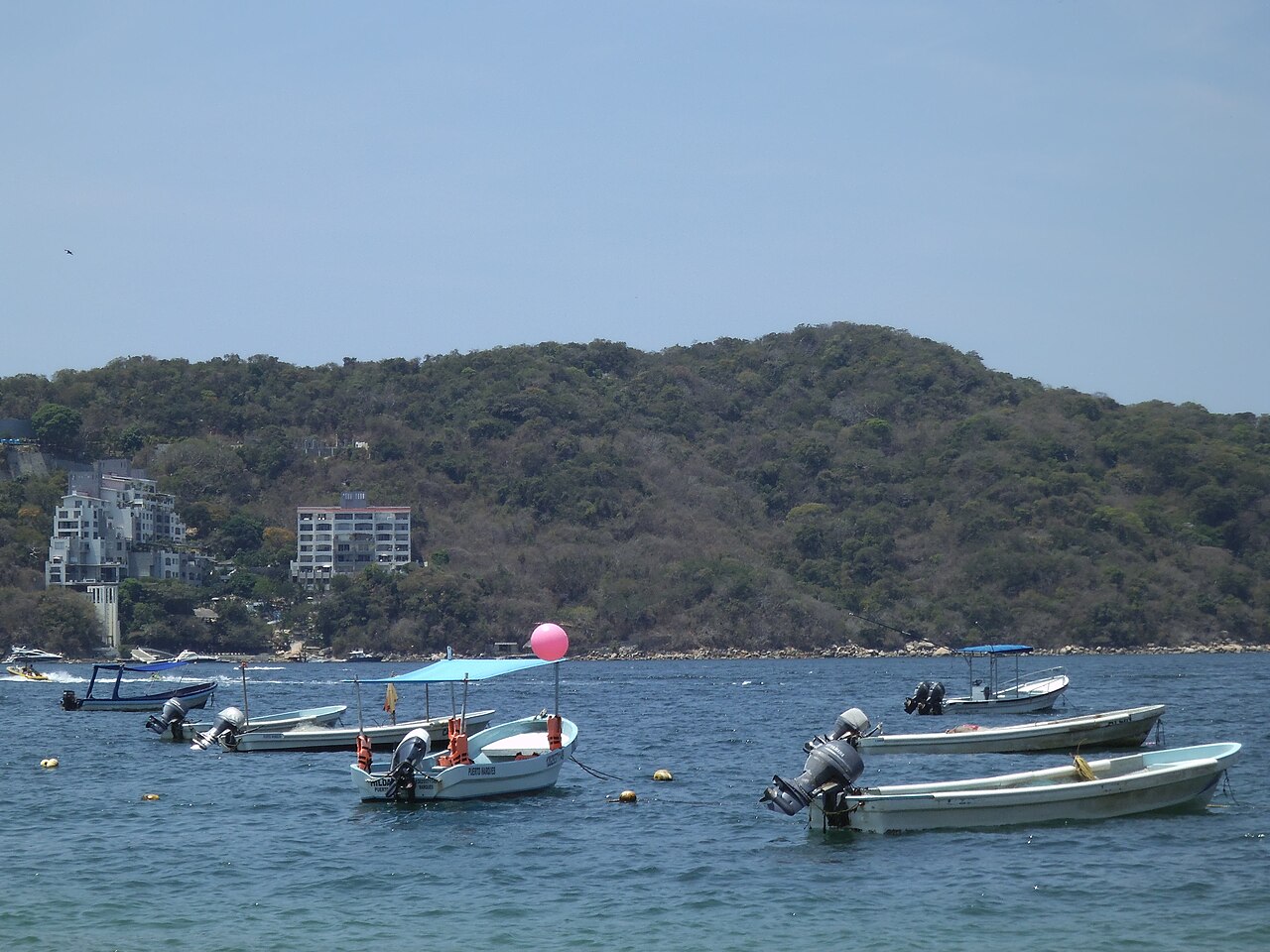
Back along the sheltered sweep of the inner bay, the Costera Miguel Alemán traces the shoreline beneath the mountain backdrop, offering open sea views and constant marine breezes. The avenue borders Playa Icacos, where the swim sets off, which ranks as the longest stretch of sand in the Bahía de Santa Lucía at over two kilometres in length. Towards the southern end of the bay sits Playa Tlacopanocha, a sheltered pocket beach measuring roughly one hundred metres in length. The cove takes its name from ancient barter traditions, named after the wooden currency known as Tlaco and a sweet called Panocha once traded along its shore. Playa Tlacopanocha remains an active artisanal fishing harbour, dotted with wooden hulls and outboard engines resting on the sand.
Its protected position creates calm waters with very low wave activity, contrasting with the heavier swells of the outer Pacific headlands. After completing their journey across the bay, swimmers head down the coast to the rustic beachfront open-air kitchens of Barra Vieja. There, fresh fish and seafood are chosen directly from the daily catch and grilled over wood fires, the perfect finish to an endurance morning in the deep water of Acapulco.
Sources: Fuerte de San Diego · Isla de La Roqueta · Fortín Álvarez · Playa Tlacopanocha · La Quebrada (Acapulco)
Course
How to get there
Reto Acapulco La Prueba Reina
Frequently asked questions
- When was the last edition of Reto Acapulco La Prueba Reina?
- The last edition of Reto Acapulco La Prueba Reina took place on November 7, 2026.
- What distances does Reto Acapulco La Prueba Reina offer?
- Reto Acapulco La Prueba Reina offers 6.4 km, 11 km, and 22 km.
- Where does Reto Acapulco La Prueba Reina take place?
- Reto Acapulco La Prueba Reina is a sea swim. Location: Bahía de Acapulco, Acapulco, Guerrero, Mexico.
- How do I register for Reto Acapulco La Prueba Reina?
- The reference page for registering for Reto Acapulco La Prueba Reina is https://retoacapulco.mx/formatos-inscripcion/.
Where to stay
Acapulco offers a wide spectrum of lodging, from high-end resorts along the Costera Miguel Alemán to smaller boutique hotels nestled near the old port area. Budget-conscious swimmers can find functional apartments or guesthouses starting around $50 per night, while beachfront hotels with direct bay access range from $120 to over $300 per night depending on the proximity to the historic center. Find your base for the race near the bay to minimize morning travel time on race day.
Things to do nearby
Beyond the water, the region offers deep cultural and active exploration. Visitors often explore the ancient Olmec archaeological sites located at Tambuco or visit the historic San Diego fort museum. For those looking to stay active, the local coastline is popular for kayaking and SUP, while the surrounding hills offer trails with panoramic views of the Pacific. Discover local activities that provide a deeper look into the history of the Manila Galleon trade and the indigenous heritage of Guerrero.
Swimmers
Similar races


Comments
Transparency: some links on this page (stays, flights, experiences, gear) are affiliate links — if you book or buy through them, Omniathlon may earn a commission from the partner at no extra cost to you. As an Amazon Associate we earn from qualifying purchases.