
Rottnest Channel Swim
- Feb 20, 2027
- Distance: 19.7km
At a glance
- Next edition date
- February 20, 2027
- Distances
- 19.7 km
- Where
- Sea · Cottesloe Beach (Mudurup) to Rottnest Island (Wadjemup), Perth, Western Australia, Australia
- Wetsuit
- Wetsuit and non-wetsuit categories are separated for awards. Refer to official event rules for specific temperature-based gear regulations.
- Registration
- rottnestchannelswim.com.au
About the race
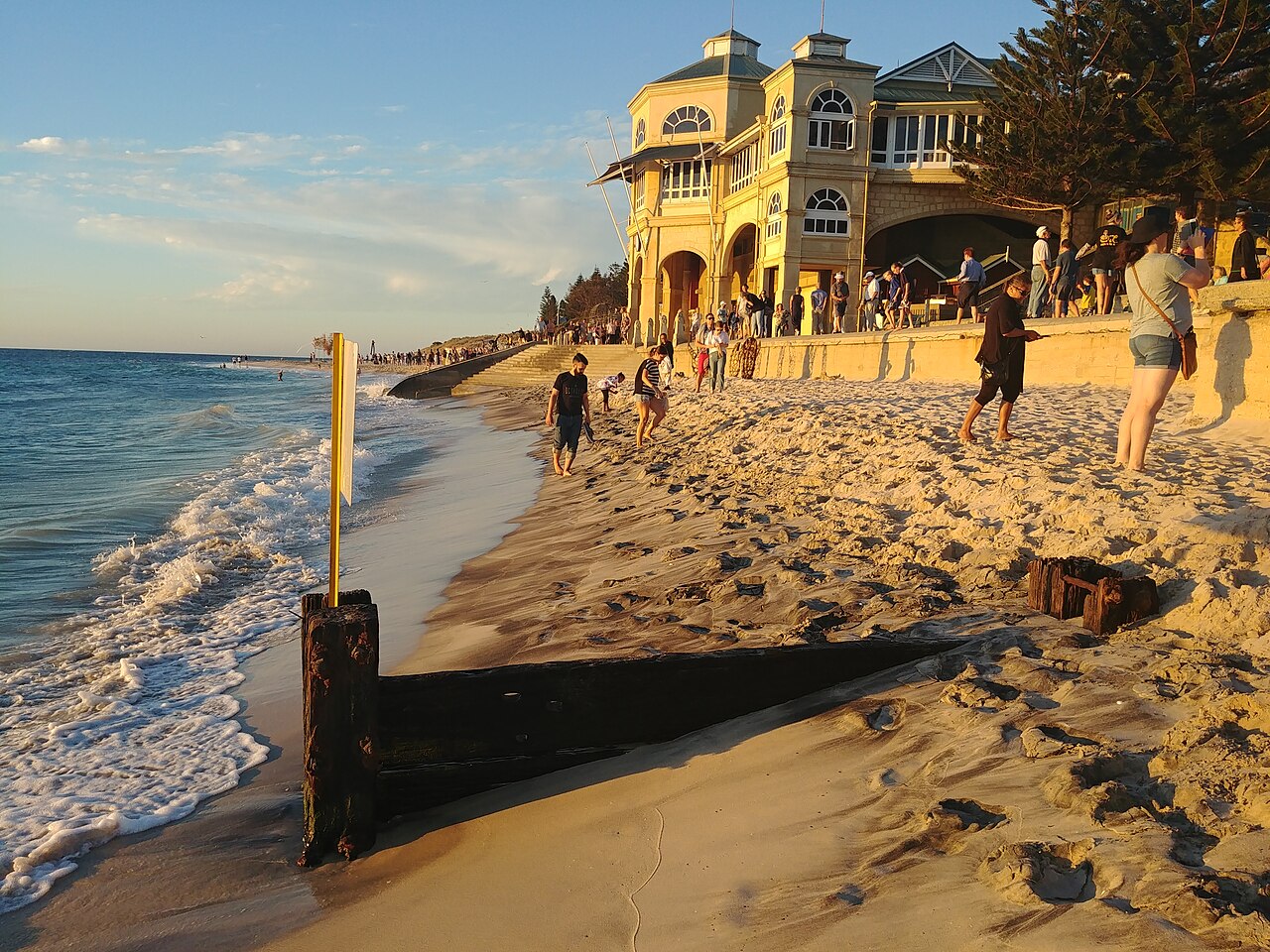
On the white sands of Cottesloe Beach, open water swimmers gather along the Indian Ocean to prepare for an iconic sea journey toward Rottnest Island. This is the Rottnest Channel Swim, an open water swimming race across the sea from Cottesloe Beach to Rottnest Island, off the coast of Perth in Western Australia. Held annually in February, the event centers on a demanding 19.7-kilometre open-water course across the open sea of the Rottnest Channel between the mainland beach, known in the Noongar language as Mudurup, and the island, known as Wadjemup. The crossing is organized by the Rottnest Channel Swim Association and offers solo, duo, and team registration categories. The race begins with rolling departures.
The lineage of the channel crossing traces back to 24 January 1956, when Gerd von Dincklage-Schulenburg completed the first documented solo crossing in 9 hours and 45 minutes. An organized race quickly followed in March 1956. Years later, the Rottnest Channel Swim Association was established in 1990, and by 1998 the event achieved global recognition as the world's biggest open water swimming event with 1,150 competitors. Taking on the 19.7-kilometre stretch across the channel means facing an evolving ocean environment. In past editions, swimmers have encountered water temperatures of 24 degrees Celsius alongside air temperatures reaching up to 38 degrees, with sloppy surface conditions. In clear water, swimmers can see straight to the bottom and witness abundant marine life, including diverse fish and gliding manta rays.
Gage Roads and the submerged aeolianite ridges
Cockburn Sound is a 10,000-hectare inlet that stretches 25 kilometres from the Swan River mouth to Cape Peron and is sheltered by Garden Island and Carnac Island.
Fremantle Harbour, maritime storms, and the wartime submarine net
In 1622 the Dutch galleon Leeuwin discovered the south-east coast of Western Australia. In May 1829, Captain Charles Fremantle arrived at the mouth of the Swan River, raising a flag on its south head to claim the territory for King George IV. Before a sheltered haven was engineered, fierce winter storms routinely caused shipwrecks along this exposed stretch of coastline. In 1894, work began to build the south mole using quarried rock from Arthur Head and Rocky Bay, followed in 1896 by harbour dredging that provided fill to form the embankment of Victoria Quay on the river's south bank. To complete Fremantle Harbour, engineers blasted and dredged a rocky bar blocking the mouth of the Swan River and constructed two shielding moles.
Navigation was soon aided by the South Mole Lighthouse, opened in 1903, and the North Mole Lighthouse, completed in 1906. Nearby, HMAS Leeuwin was relocated in 1942 to Preston Point on the Swan River, about 4 kilometres from the race start, where the Royal Australian Navy still maintains wharves and boatsheds. During World War II, coastal defenses were reinforced underwater by laying a 9,370-metre anti-submarine net directly on the seabed between Woodman Point and Garden Island. Upstream from the river mouth at Fremantle lie sheltered swimming havens and historical river waters. Five kilometres from the river mouth sits Freshwater Bay, framed by western and eastern limestone cliffs between Point Walter to the south and Point Resolution to the east, where the high rock walls and a long spit create calm water protected from winds.
At Point Walter, a sandbar formed by sediment along an aeolianite band reaches over one kilometre into the river. In 1837, workers cut a canal through the bar to shorten boat journeys between Perth and Fremantle by 3.2 kilometres, while just northeast of the spit rests the river's oldest known shipwreck, the 1882 limestone barge Dearden's flat. Today, the sandbar provides nesting territory for fairy terns, red-capped plovers, pied oystercatchers, and black swans. Further along the river bank, Bicton Baths occupies a tidal gorge called Kwoppa Kepa by the Whadjuk Noongar people, meaning beautiful water. The gorge experiences a steady inflow of ocean water, supporting a rich community of dolphins, fish, sponges, nudibranchs, sea anemones, starfish, shrimp, and crabs.
The Melville Amateur Swimming Club originally utilized a quarantine station jetty as a swimming platform before the current wooden U-shaped jetty and swim ladders were constructed. Further upstream, the Dalkeith Hot Pool emerged in 1922 when an artesian well casing burst, prompting locals to build limestone walls to contain the thermal water on the foreshore. The pool became known for early nude bathing in 1935 that brought police intervention, before being converted during World War II into a concrete facility for US Navy rest and recuperation, eventually closing and being filled in during 1953.
Cottesloe Beach: Mudurup Rocks, heritage pavilions, and the pylon
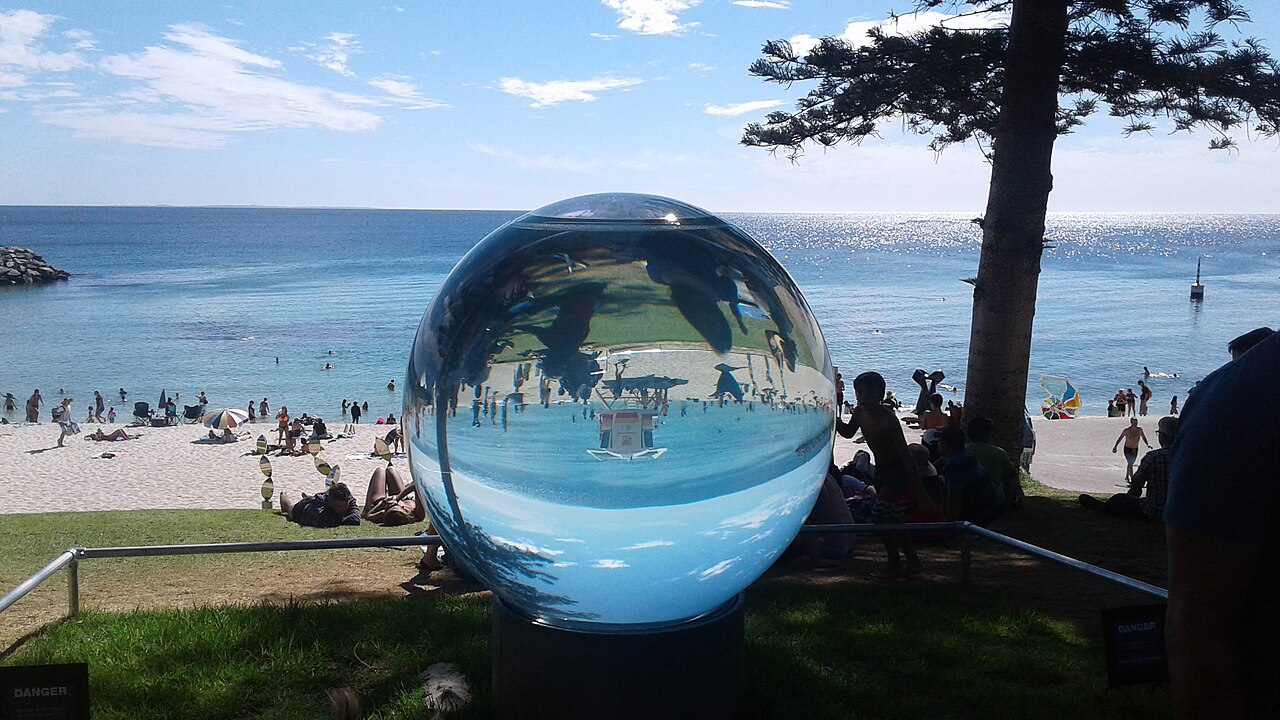
At Cottesloe Beach, the race starting line sits on a 1.5-kilometre ribbon of white sand that drops into the clear turquoise waters of the Indian Ocean. The beach is divided into distinct zones: North Cottesloe provides sheltered snorkeling at Peters Pool, while South Cottesloe features rocky reefs popular with local surfers. Immediately south of the surf club stands Mudurup Rocks, an ancient landmark historically utilized by the Nyoongar people as a productive coastal fishing ground. In 1904, a local jetty was built on the beach, only to be destroyed by winter storms within the same year. Five years later, in 1909, the Cottesloe Surf Life Saving Club was established as the very first surf lifesaving organization in Western Australia.
Presiding over the sands is the Indiana Tea House, a neotraditional architectural landmark fronting the shore. The present structure incorporates a 1983 bathing pavilion into its ground level, and in 2021 both the Indiana Teahouse and Cottesloe Beach were formally inscribed on the State Register of Heritage Places.
The crossing: support boats and the finish channel
Every entrant in the Rottnest Channel Swim must organise their own support boat and paddle craft, and personal watercraft such as jet skis are not permitted. The skipper sets the course, and the paddler and the swimmer follow the boat across the channel. Boats of 10 metres or more must stay north or south of the fleet at all times, and they need a tender to get close to the swimmers. Near Rottnest Island a boating exclusion channel leads the swimmers from Phillip Rock to the finish line next to the Hotel Jetty. On event day the beaches between the Hotel and Fuel Jetties are closed and anchoring is restricted. A first-time solo swimmer, or one without a solo crossing in the last two years, must first complete a 10 km qualifying swim in 4 hours and 15 minutes.
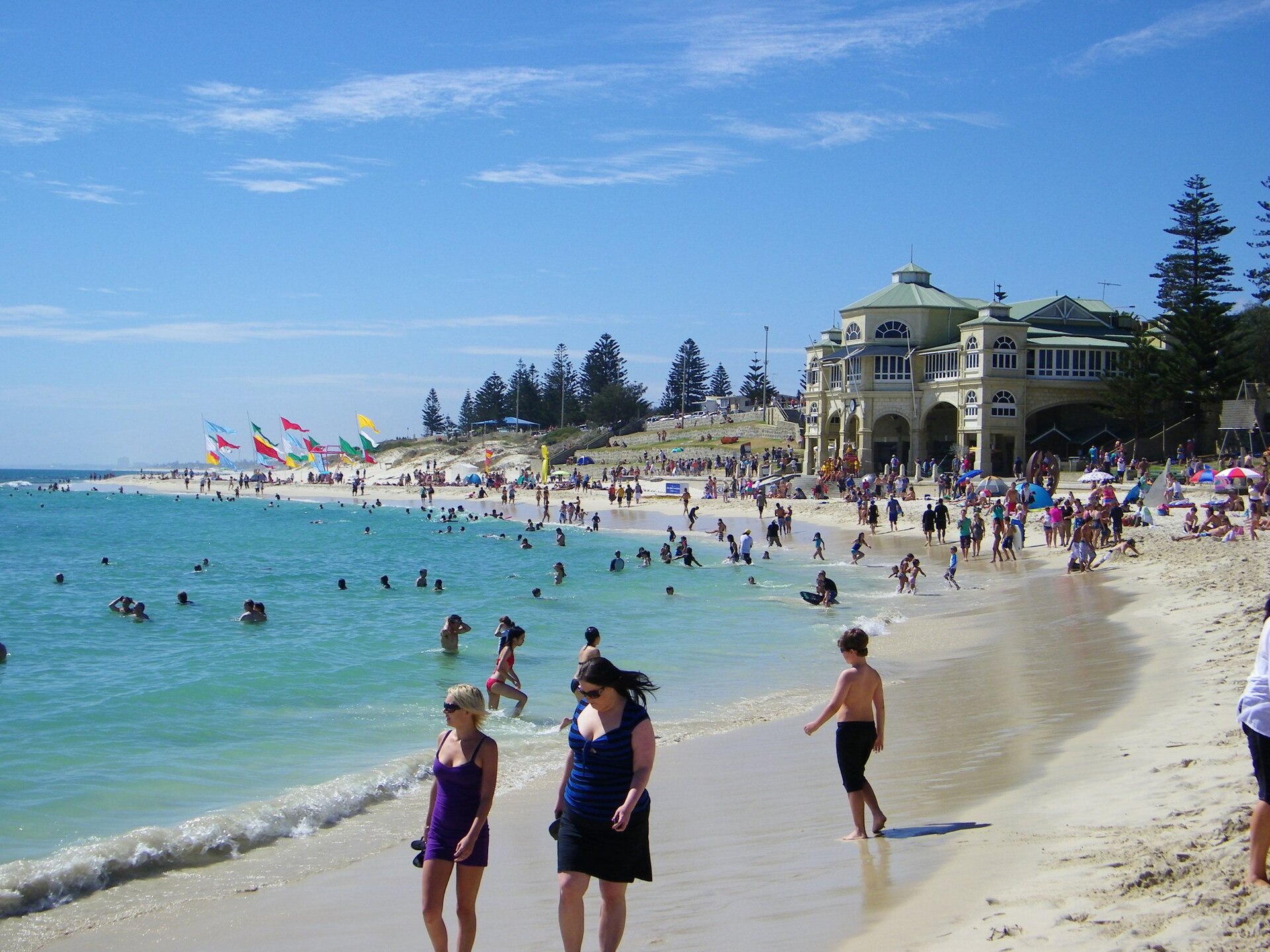
Sources: Cottesloe Beach · Indiana Teahouse
Course
Starts at Cottesloe Beach (Mudurup) and finishes at Rottnest Island (Wadjemup).
Awards
- Age group awards
- Wetsuit/No-wetsuit separated
Awards provided for various categories including Solo, Duo, and Teams, with distinctions for wetsuit and non-wetsuit swimmers.
Aid stations
Support boats are mandatory for all solo swimmers and are responsible for providing nutrition and hydration throughout the crossing.
Previous editions
Useful info
Iconic 19.7km event. Support (skipper/boat) is required for solo swimmers. Qualifying rounds are scheduled for solo participants. Transport (ferries) to the island must be planned in advance. Deadlines and details available on the official website.
How to get there
Parking around Cottesloe Beach is limited. Ferries to Rottnest Island are available and should be booked early.
Rottnest Channel Swim
Frequently asked questions
- When is Rottnest Channel Swim?
- Rottnest Channel Swim takes place on February 20, 2027.
- What distances does Rottnest Channel Swim offer?
- Rottnest Channel Swim has a single distance: 19.7 km.
- Is a wetsuit required at Rottnest Channel Swim?
- Wetsuit and non-wetsuit categories are separated for awards. Refer to official event rules for specific temperature-based gear regulations.
- Where does Rottnest Channel Swim take place?
- Rottnest Channel Swim is a sea swim. Location: Cottesloe Beach (Mudurup) to Rottnest Island (Wadjemup), Perth, Western Australia, Australia.
- How do I register for Rottnest Channel Swim?
- The reference page for registering for Rottnest Channel Swim is https://rottnestchannelswim.com.au/.
Where to stay
The Cottesloe area offers a mix of heritage-listed guesthouses and modern apartments within walking distance of the beach. Further inland, boutique hotels near the port of Fremantle provide a more urban base. Expect to find a range of options from simple beachside holiday flats to upscale rooms, typically costing between $180 and $450 per night depending on the proximity to the ocean and the time of year.
Things to do nearby
The region is defined by its maritime culture and natural landscape. Weekend visitors can explore the Swan River via kayak to spot native black swans or take a ferry to Rottnest Island for cycling and snorkeling in protected bays. Local trekking paths along the Darling Scarp offer panoramic views of the coastal plain, while the historic streets of Fremantle provide access to museums documenting the area's colonial and maritime past, including its history as a major port for convict-era vessels.
Swimmers
Similar races


Comments
Transparency: some links on this page (stays, flights, experiences, gear) are affiliate links — if you book or buy through them, Omniathlon may earn a commission from the partner at no extra cost to you. As an Amazon Associate we earn from qualifying purchases.