
Port to Pub
- Mar 20, 2027
- Distances: 19.7km and 25km
At a glance
- Next edition date
- March 20, 2027
- Distances
- 19.7 km · 25 km
- Where
- Sea · Leighton Beach / Hotel Rottnest, Fremantle, Western Australia, Australia
- Entry fee
- 19.7 km: 436.36 AUD · 25 km: 454.55 AUD
- Registration
- porttopub.com.au
About the race
The Port to Pub is an open water swimming race held in the coastal waters off Fremantle in Western Australia, organized by the Port To Pub Committee. Swimmers set out directly from the sands of Leighton Beach, right in front of the Fremantle Surf Lifesaving Club, taking on a marathon voyage to the shores of Rottnest Island where the course finishes at Hotel Rottnest. The competition features two primary options: a direct crossing of 19.7 kilometres and a 25-kilometre ultramarathon that ranks among the longest open water events in the Southern Hemisphere. Undertaking the crossing requires rigorous preparation, especially for solo entrants who must be at least 14 years old.
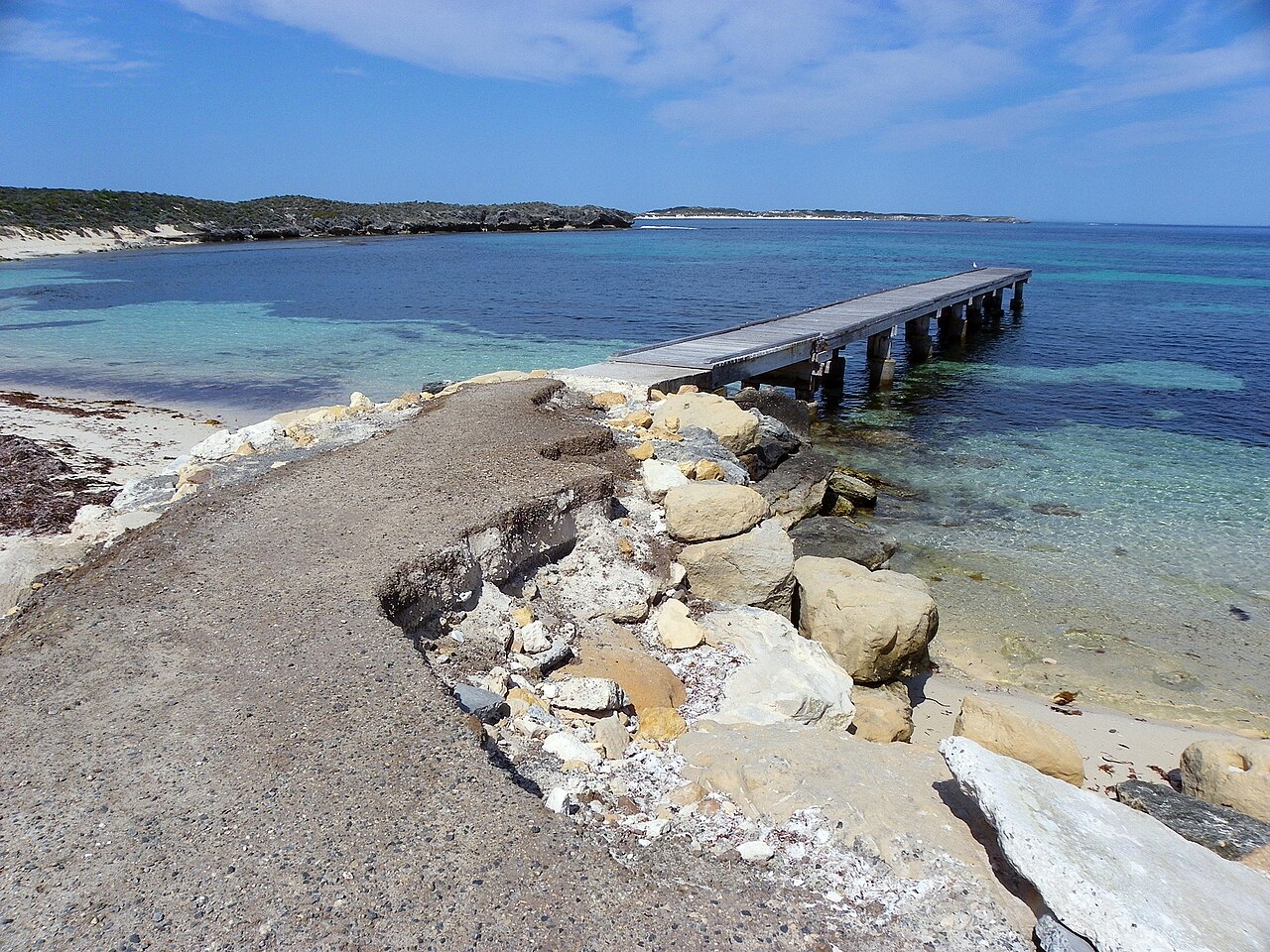
Team participants can join from the age of 13, sharing the relentless work across the ocean swell. It stands as a pinnacle test of endurance, where every solo swimmer must trust months of dedicated channel training before stepping into the surf. The swim is celebrated as an exacting westward journey across the open Indian Ocean, an environment shaped by swell, wind, and complex currents. Yet the ocean can offer astonishing clarity; competitors have swum through remarkably clear seas, reporting that they could look down and see the rippled ocean floor stretching beneath them for the entire crossing.
When the water opens up like that, the endless blue beneath your strokes turns the arduous ocean passage into pure rhythm. The finish line was alive with music while swimmers gathered on the sand in their finisher hats and wrapped in fresh towels.
The Port to Pub line: buoys, boats and the last 400 metres
The next Port to Pub race day is 20 March 2027. The first Port to Pub was held in 2016, when 24 swimmers attempted the 19.7km course as solos, 12 solos attempted the 25km ultramarathon and 616 more swam in duos and teams of 4 and 6. Buoys alternating orange and yellow mark the direct line at 4km, 7km and then every kilometre from 10km to 19km. Ultramarathon swimmers add a 5km loop before joining the direct course, and a paddler must accompany them on that loop because support boats are not allowed there. Support boats must meet their swimmer after the 1000m green buoys and must not approach within 1000 metres of shore. The last 400 metres to Rottnest run between marked float lines through the mooring area and Thomson Bay, and swimmers finish under an arch on the beach.
Fremantle and Gage Roads: historic roadstead and whaling shore
Long before modern markers lined the coast, the Whadjuk Noongar people gathered at Manjaree, around Arthur Head and Anglesea Point, meeting to trade and feast on local fish and game along the natural shoreline. European vessels later cast anchor in the passage, beginning in 1697 when Dutch explorers led by Willem de Vlamingh visited the site and mapped the mouth of the Swan River. In September 1829, the merchant vessel Anglesea ran aground at Gage Roads and was subsequently adapted to serve as Western Australia's very first prison hulk. Along the mainland waterfront at Bathers Beach, nineteenth-century bay whalers hauled their catch ashore, utilizing an access tunnel constructed directly beneath the Round House.
The coastline was transformed permanently in 1897 when engineer C. Y. O'Connor dredged and deepened Fremantle Harbour, blasting away the natural limestone bar and shifting sand shoals that blocked the Swan River mouth. During the twentieth century, Fremantle took on a critical strategic posture as a naval sanctuary in the Indian Ocean. Throughout World War II, the port operated as the largest Allied submarine base in the Southern Hemisphere. At its height, the base accommodated up to 125 American, 31 British, and 11 Free Dutch submarines operating across remote southern waters.
Rottnest Island: ancient dunes and Dutch landfall
The low, windswept silhouette of Rottnest Island rises on the horizon as the destination of every swimmer who pushes off from Leighton. The island was cut off from the Western Australian mainland approximately 6,500 years ago when melting ice sheets caused sea levels to rise. The earliest recorded landing took place on 19 March 1658, when Dutch sailors came ashore while scouring the surrounding reefs for survivors of the wrecked Vergulde Draeck. Decades later, in 1696, Dutch captain Willem de Vlamingh explored the island and bestowed its name, 't Eylandt 't Rottenest—meaning "Rats' Nest Island"—after confusing the native quokkas for unusually large rats. During the Second World War, coastal defense batteries were constructed to guard the ocean approaches toward Fremantle, mounting massive 9.2-inch artillery guns at Oliver Hill alongside six-inch batteries stationed at Bickley Point.
The Basin and marine bays of Rottnest
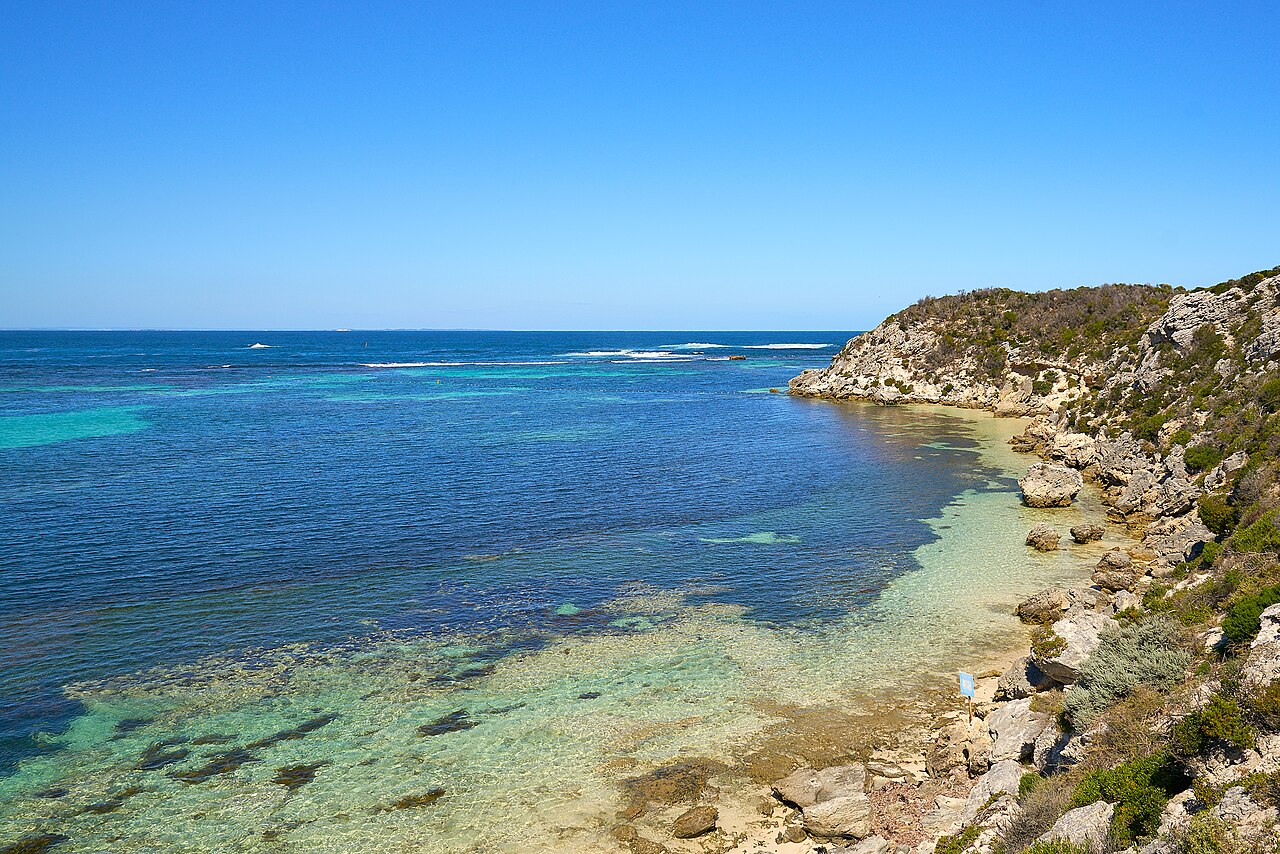
After completing the race, swimmers often venture to the island's celebrated swimming havens, such as The Basin, nestled in the northeast between Pinky Beach and Longreach Bay. Protected on either flank by two jagged headlands, the cove forms a serene natural amphitheatre sheltered from strong ocean swells. The water inside glows in shifting shades of green, washing gently across submerged limestone reefs where snorkelers float above marine life. Other bays around Rottnest Island experience the raw energy of the open ocean. On Rottnest Island's far western tip sits Fish Hook Bay, a dramatic coastal indentation measuring 120 metres in width and 170 metres in depth. Opening northward to the open sea, Fish Hook Bay features a 430-metre rocky shoreline completely devoid of sand. It served as a traditional nesting ground for mutton birds.
Rottnest Island salt lakes: bathing groynes and inland waters
Beyond the beaches, Rottnest's interior holds an unusual network of landlocked saline waters. Salt lakes make up fully ten percent of the island's total land area, creating a distinctive landscape of reflective, quiet basins. Lake Baghdad is a permanent salt lake framed by its own pale sandy beaches, offering a still and tranquil contrast to the restless surf of the ocean coast. Nearby lies Government House Lake, another saline water body steeped in island history. During the 1920s, the lake hosted yachting regattas across its sheltered inland surface. In the 1930s, visitors swam from a dedicated stone jetty known as the old bathing groyne, where rustic steps were carved directly into the limestone cliff to grant swimmers easy access to the buoyant brine.
Sources: Fremantle · The Basin (Rottnest Island) · Rottnest Island · Lake Baghdad · Government House Lake (Rottnest) · Fish Hook Bay
Course
Starts from Leighton Beach in front of Fremantle Surf Lifesaving Club, finishing at the shores of Rottnest Island in front of Hotel Rottnest.
Starts from Leighton Beach in front of Fremantle Surf Lifesaving Club, finishing at the shores of Rottnest Island in front of Hotel Rottnest.
Awards
K&L Gates Corporate Cup: Awarded to any duo or team representing a corporation that finishes in the fastest time.
Aid stations
At the finish, swimmers are provided with a towel, hat, water, and fruit.
Previous editions
- 2026Mar 21, 2026
How to get there
Port to Pub
Frequently asked questions
- When is Port to Pub?
- Port to Pub takes place on March 20, 2027.
- What distances does Port to Pub offer?
- Port to Pub offers 19.7 km and 25 km.
- How much is the entry fee for Port to Pub?
- Entry fees by distance: 19.7 km: 436.36 AUD · 25 km: 454.55 AUD.
- Where does Port to Pub take place?
- Port to Pub is a sea swim. Location: Leighton Beach / Hotel Rottnest, Fremantle, Western Australia, Australia.
- How do I register for Port to Pub?
- The reference page for registering for Port to Pub is https://porttopub.com.au/.
Where to stay
Fremantle offers a range of stays reflecting its maritime heritage, from converted boutique hotels inside repurposed colonial-era warehouses near the harbor to independent beach apartments along the Leighton coastline. Camping options are limited near the urban core, but short-term rentals are plentiful. Expect to pay between $180 and $350 AUD per night during the race weekend, depending on proximity to the Fremantle Port area and the availability of amenities for athletes.
Things to do nearby
The weekend centers on the intersection of maritime history and local culture. Visitors can explore the UNESCO-listed prison grounds, participate in guided coastal treks that trace the Noongar heritage of the area, or book kayak expeditions around the limestone reefs. The local harbor district is known for its specialized seafood markets and small-batch breweries, providing a grounding post-race experience that highlights the region's connection to the Indian Ocean.
Swimmers
Similar races


Comments
Transparency: some links on this page (stays, flights, experiences, gear) are affiliate links — if you book or buy through them, Omniathlon may earn a commission from the partner at no extra cost to you. As an Amazon Associate we earn from qualifying purchases.