
Ischia – Italian Open Water Tour
- Oct 3, 2026
- Last edition date
- Distances from 926m to 6km
At a glance
- Last edition date
- October 3, 2026
- Distances
- 926 m · 1.9 km · 3 km · 6 km
- Where
- Sea · Ischia, Campania, Italy
- Entry fee
- 20–55 €
- Registration
- italianopenwatertour.com
About the race
The stone ramparts of the Aragonese Castle rise directly out of the sea, providing a monumental turning mark for swimmers in the waters of Campania. Known as the Ischia – Italian Open Water Tour, this open water swimming race takes place in the Mediterranean Sea around the island in October. Organized by the Italian Open Water Tour, the competition is also known locally as the Traversata di Nettuno after the surrounding marine protected area. Inaugurated in 2019, the event brings open water swimmers to coastal circuits. Competitors can choose from a wide range of distances, including a 926-metre dash, a classic nautical mile of 1852 metres, a 3000-metre course, and an endurance test spanning 6000 metres.
Alongside these distance events, the weekend program features a 500-metre breaststroke contest nicknamed the 'gara impavida', or fearless race. Swimmers planning an extended stay can also enter the Periplo Isola d'Ischia, an adjacent race held five kilometres away that can be completed during the same trip. Throughout the race weekend, the fortified islet of the Aragonese Castle serves as the central buoy for all courses. The swimming route channels athletes through a narrow passage under the bridge of the 'corrente', where the sea flows between the island mainland and the rock outcrop.
Cartaromana Bay: submerged Roman Aenaria and the castle bridge
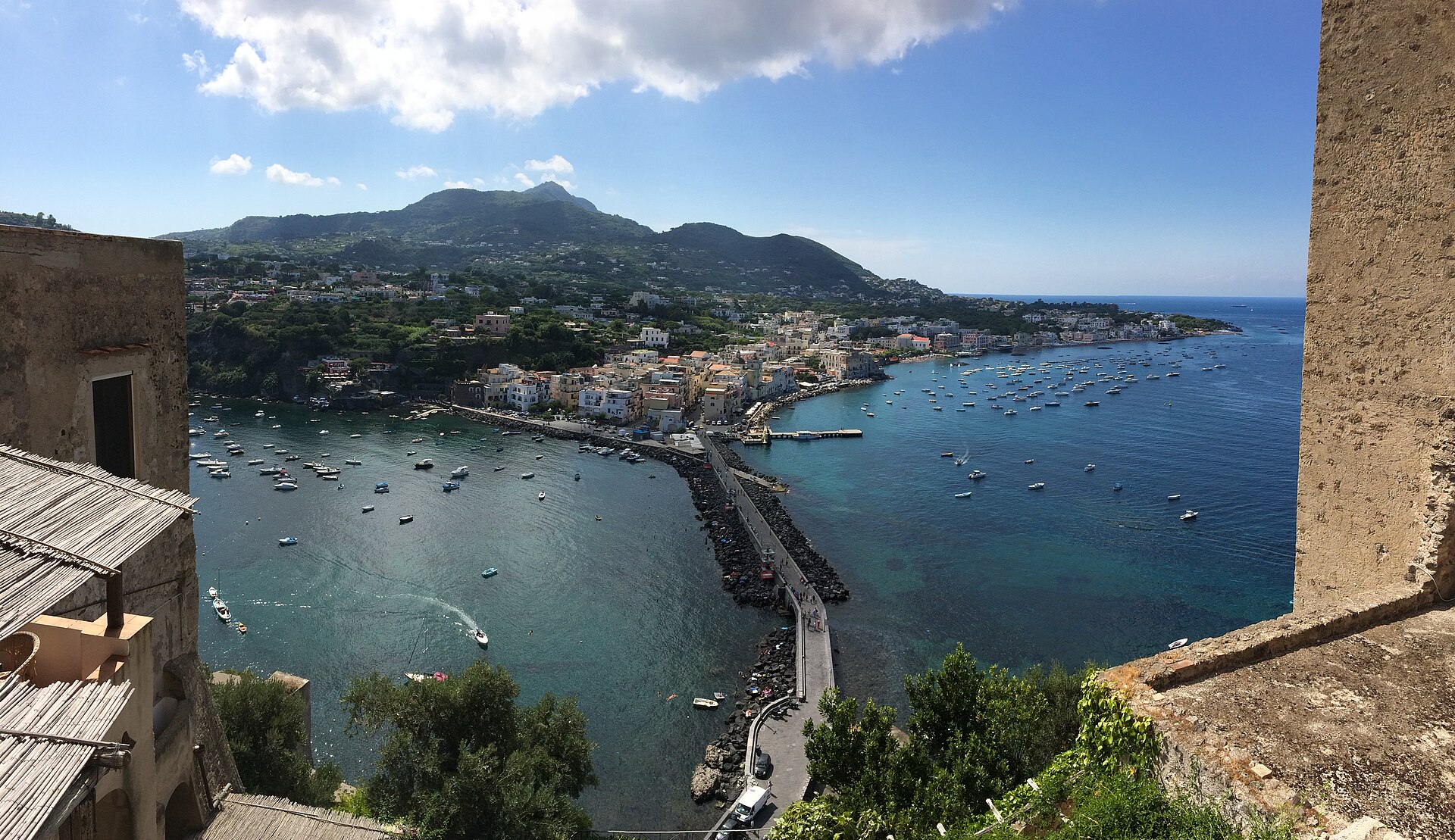
The fortress rock at Ischia Ponte is an islet of trachytic stone connected to the island by a 220-metre masonry bridge. Before the bridge was constructed, the crag had served as a fortified position since 474 BC, when Hiero I of Syracuse built the first stronghold on the outcrop. That early garrison followed centuries of prior habitation dating back to the Bronze Age, as well as the eighth or ninth century BC when Greek traders founded the emporium of Pithekoūsai, followed by Greek-Roman settlers arriving around 780 BC. In the sheltered waters of Cartaromana Bay, just off the fortress rock, lies the submerged Roman city of Aenaria. Over the centuries, local volcanic bradyseism caused the ground to subside, leaving the ancient settlement preserved beneath the water.
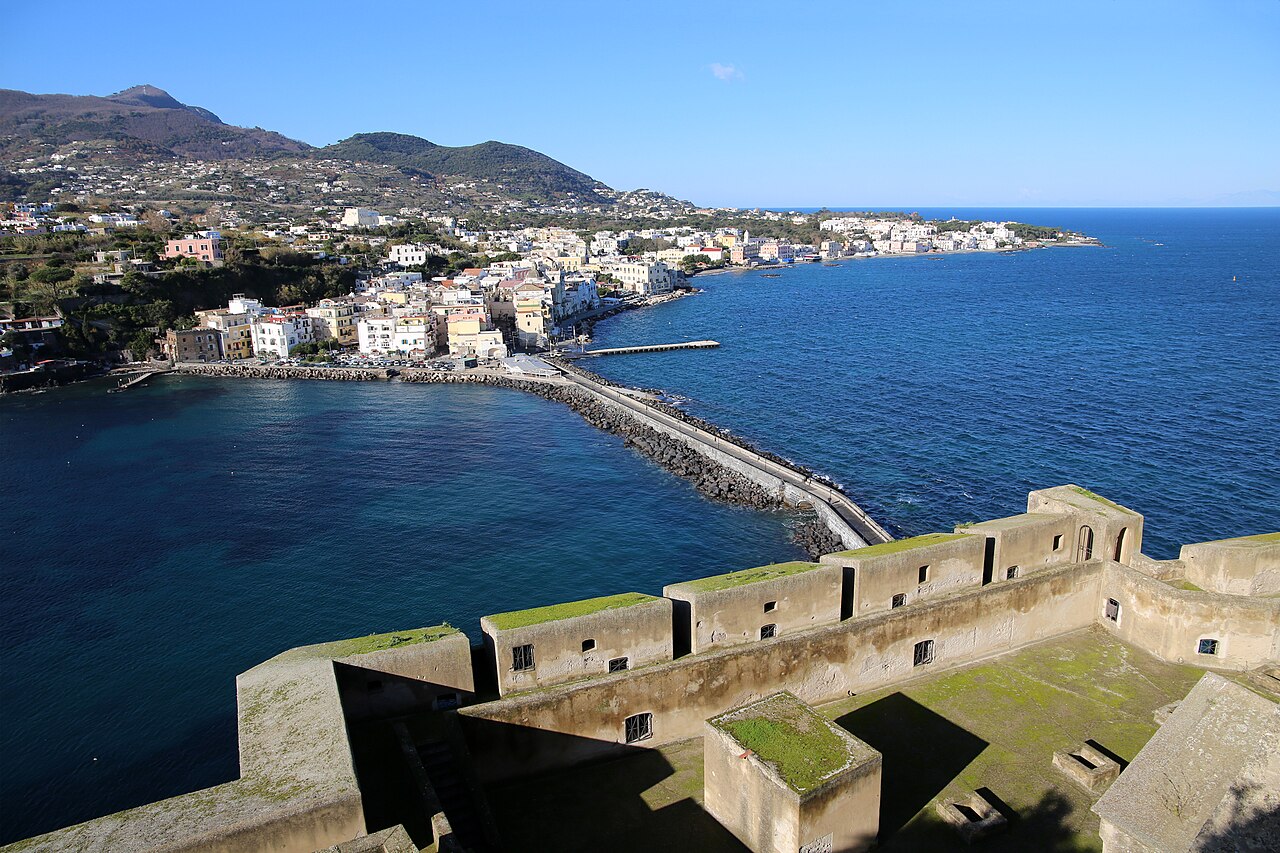
On the shoreline enclosing the Cartaromana area stands the Torre di Guevara, a coastal watchtower built in the first half of the sixteenth century by Giovanni de Guevara. A permanent crossing to the castle rock was initiated in 1438, when Alfonso V of Aragon ordered the construction of a bridge linking the fortress to the island. While the connection was originally built in wood, Alfonso V ordered a masonry structure in 1441, creating the 220-metre stone causeway that stands today. The citadel provided a vital refuge for the island's population during pirate raids throughout the sixteenth century, an era of coastal assaults that lasted until 1796, when the last resident was captured by corsairs.
Regno di Nettuno: posidonia meadows and the cetacean corridor
The race unfolds within the waters of the Regno di Nettuno Marine Protected Area, which encloses both Ischia and Procida. Ischia belongs to the Campanian Archipelago, historically recorded as the Parthenopaean Islands. The archipelago consists of five main islands: Capri, Ischia, Nisida, Procida, and Vivara, and was historically considered to encompass the Pontine Islands as well. The Campanian Archipelago forms an important natural habitat for Mediterranean sperm whales. The nearby Canale di Procida measures about seven kilometres in maximum length and narrows to roughly 3.4 kilometres in width. At its narrowest stretch, the channel reaches depths of 14 to 15 metres, punctuated by shallow shoals including the central Secca del Torrione at just over four metres and the Secca di Marsiglia closer to Procida at just over six metres.
In 1799, a naval engagement occurred in the Canale di Procida between the fleet of the Neapolitan Republic and the Anglo-Bourbon navy. Later, in 1957, the waters saw the installation of Europe's first underwater aqueduct, connecting Miliscola to the island of Procida.
The volcanic coast: green tuff crags and thermal sea springs
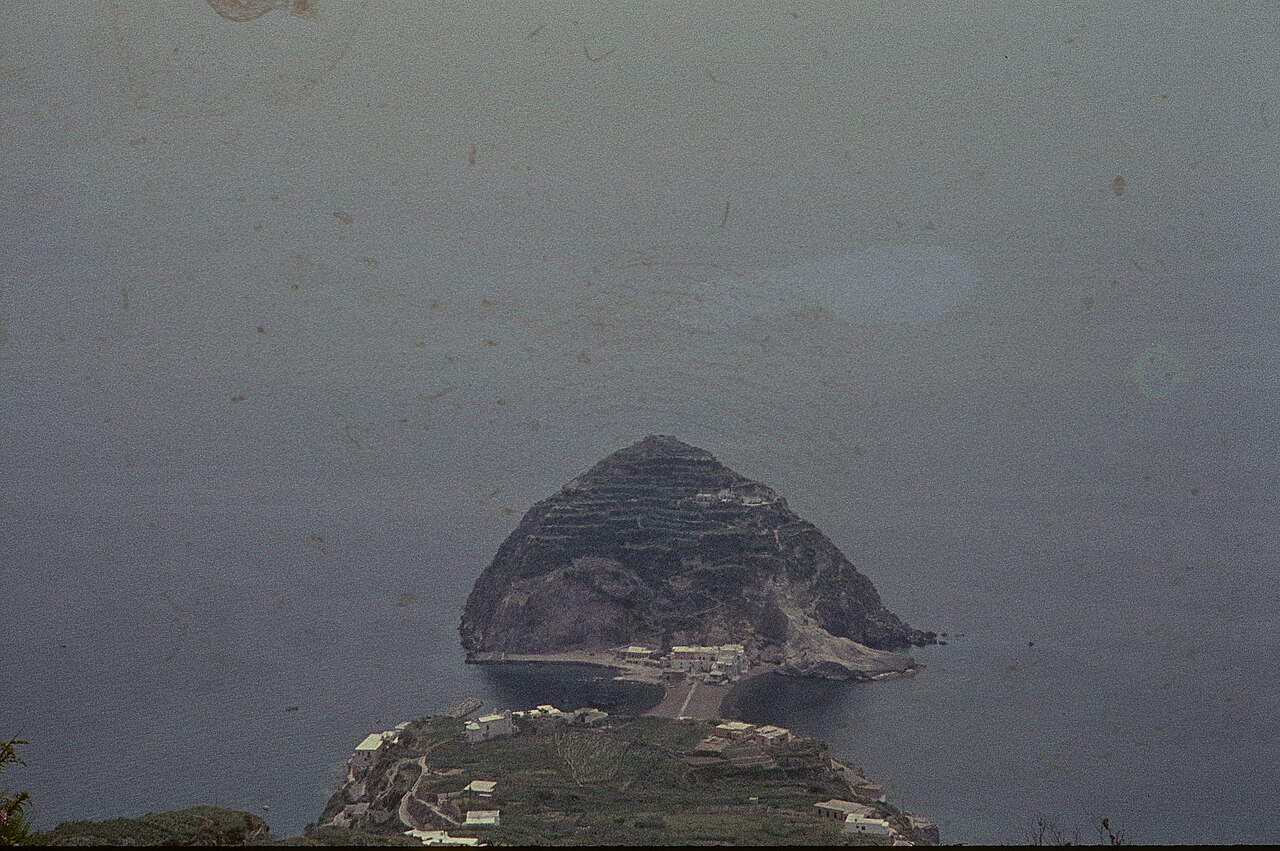
The coastal terrain around Ischia is the product of complex volcanic activity. The island was formed primarily by the eruption of trachytic Green Tuff Ignimbrite approximately 56,000 years ago. A well-known coastal formation shaped from this deposit is Il Fungo, an isolated rock located a few tens of metres off the shore of Lacco Ameno. Standing ten metres high, this green tuff boulder fell into the sea from Mount Epomeo in prehistoric times, where wave action and wind gradually carved its distinctive mushroom shape. The island's seismic history also includes a severe earthquake on July 28, 1883, which destroyed the northern villages of Lacco Ameno and Casamicciola Terme. Near Punta Imperatore and the village of Panza lies the beach of Citara.
Volcanic thermal springs flow directly into the sea along this coastline, supplying the thermal pools of the Poseidon gardens with waters that range from 28 to 40 degrees Celsius. A white marble statue of Venus Citarea was discovered at Citara, alongside a local legend stating that the rocks off the beach are sailors turned to stone by Venus for assisting Odysseus. At the main port of Ischia Porto, the modern harbour was originally a shallow lake called Pantaniello, measuring little more than two metres deep with an islet inside, until King Ferdinand II of the Two Sicilies opened it to the sea in September 1854.
Sources: Ischia (comune) · Ischia Ponte · Ischia
Course
Part of the IOWT circuit, featuring the Aragonese Castle as a central buoy. Includes a passage under the 'current' bridge and views of the protected marine area of Nettuno.
Part of the IOWT circuit, featuring the Aragonese Castle as a central buoy. Includes a passage under the 'current' bridge and views of the protected marine area of Nettuno.
Part of the IOWT circuit, featuring the Aragonese Castle as a central buoy. Includes a passage under the 'current' bridge and views of the protected marine area of Nettuno.
Part of the IOWT circuit, featuring the Aragonese Castle as a central buoy. Includes a passage under the 'current' bridge and views of the protected marine area of Nettuno.
Previous editions
- 2025results
How to get there
Hydrofoil discount available with ALILAURO to facilitate your travel.
Ischia – Italian Open Water Tour
Frequently asked questions
- When was the last edition of Ischia – Italian Open Water Tour?
- The last edition of Ischia – Italian Open Water Tour took place on October 3, 2026.
- What distances does Ischia – Italian Open Water Tour offer?
- Ischia – Italian Open Water Tour offers 926 m, 1.9 km, 3 km, and 6 km.
- How much is the entry fee for Ischia – Italian Open Water Tour?
- The entry fee ranges from 20 € to 55 €. Registration is managed via the dedicated Italian Open Water Tour app.
- Where does Ischia – Italian Open Water Tour take place?
- Ischia – Italian Open Water Tour is a sea swim. Location: Ischia, Campania, Italy.
- How do I register for Ischia – Italian Open Water Tour?
- The reference page for registering for Ischia – Italian Open Water Tour is https://italianopenwatertour.com/ischia/.
Where to stay
Ischia offers a range of stays, from traditional 'fishermen's houses' in the historic districts to 'boutique hotels on the harbor' offering views of the Aragonese Castle. For a more immersive experience, camping options are available near the beach areas. Prices typically range from €120 to €350 per night depending on the proximity to the coast and the level of service provided. Find your base for the race to ensure you are close to the morning start line.
Things to do nearby
The weekend provides opportunities to explore the island's volcanic legacy. You can join guided kayak or SUP excursions to get a closer look at the coastal rock formations, or take a trekking route up to the summit of Mount Epomeo for a panoramic view of the Gulf. For a more relaxed afternoon, local thermal spas offer mineral-rich waters, while archaeological sites near the harbor recount the island's Greek and Roman heritage. Discover activities around the island to round out your visit.
Swimmers
Other stages of this series
- Genova – Italian Open Water TourGenova, IT
- Tremiti – Italian Open Water TourIsole Tremiti, IT
- Monate – Italian Open Water TourTravedona Monate, IT
- Gaeta – Italian Open Water TourGaeta, IT
- Leggiuno – Italian Open Water TourLeggiuno, IT
- Camogli – Italian Open Water TourCamogli, IT
Similar races


Comments
Transparency: some links on this page (stays, flights, experiences, gear) are affiliate links — if you book or buy through them, Omniathlon may earn a commission from the partner at no extra cost to you. As an Amazon Associate we earn from qualifying purchases.