
Genova – Italian Open Water Tour
- May 16, 2026
- Last edition date
- Distances from 926m to 7km
At a glance
- Last edition date
- May 16, 2026
- Distances
- 926 m · 1.9 km · 3 km · 4 km · 6 km · 7 km
- Where
- Sea · Boccadasse / Priaruggia, Genova, Liguria, Italy
- Entry fee
- 29–68 €
- Registration
- italianopenwatertour.com
About the race
Notes of Fabrizio De André's dialect ballad 'Crêuza de Mä' drift as swimmers wade into the Ligurian Sea. This open water swimming event, known as the Traversata Crêuza de Mä, takes place along the city's Mediterranean shore in Genoa, Liguria. Staged in May by the Italian Open Water Tour, the competition gathers athletes across the Genoese coastline between Boccadasse, Priaruggia, and Bagni San Nazaro. The gathering marks the opening stage of the Trittico dei Caruggi, an endurance circuit uniting open water swims in Genoa, Camogli, and Noli. Across its wider calendar, the organization presents diverse swimming distances for competitors of different backgrounds, spanning courses from 926 meters and 1,000 meters up to 1,852 meters, 3,000 meters, 4,000 meters, 6,000 meters, and 7,000 meters.
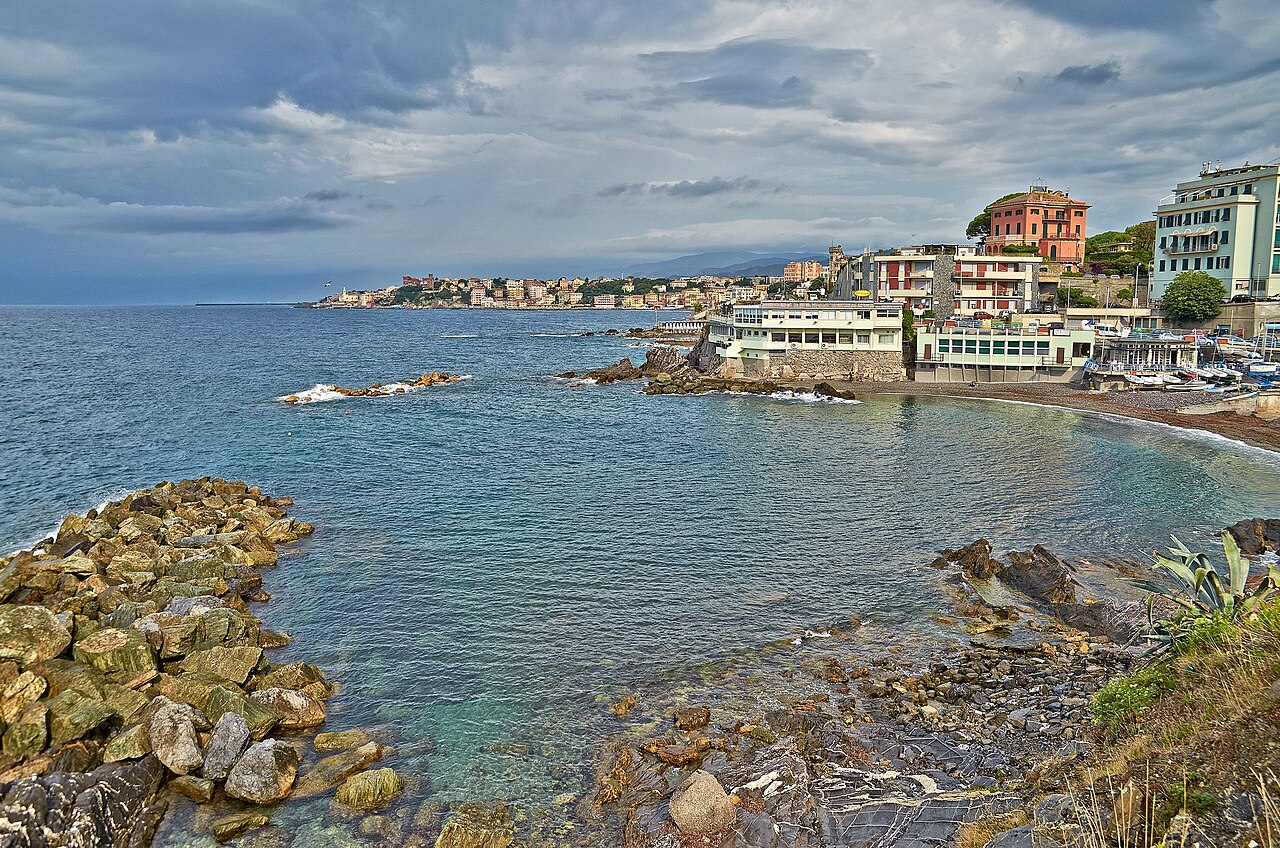
At the Genoese stage, the schedule focuses on three coastal challenges linking local shores. The longest individual journey is the 4-kilometer Hard Swim, starting from Priaruggia and charting a continuous coastal route to the finish at the San Nazaro baths. Finding your stroke in the open swell requires settling into a steady tempo through the salt spray. Swimmers seeking a traditional distance can enter the Smile Swim, an event covering a classic nautical mile of 1,852 meters that sets out from Boccadasse and concludes at Bagni San Nazaro. For relay squads, the event organizes the Relay Swim directly offshore from San Nazaro, where three swimmers complete consecutive laps of a 926-meter circuit. Rounding the course buoys demands sharp turns and rapid handoffs right outside the historic bathing establishment.
Boccadasse: the three-century fishing village and pebble beach
The Smile Swim begins in the sheltered cove of Boccadasse, a compact fishing village grouped tightly around a curved pebble beach. Its pastel houses rise straight from the waterline, preserving an authentic maritime layout that has remained virtually unchanged for at least three hundred years. Swimmers line up at the water's edge before entering the sea.
The Pelagosa minelayer wreck off Quarto dei Mille
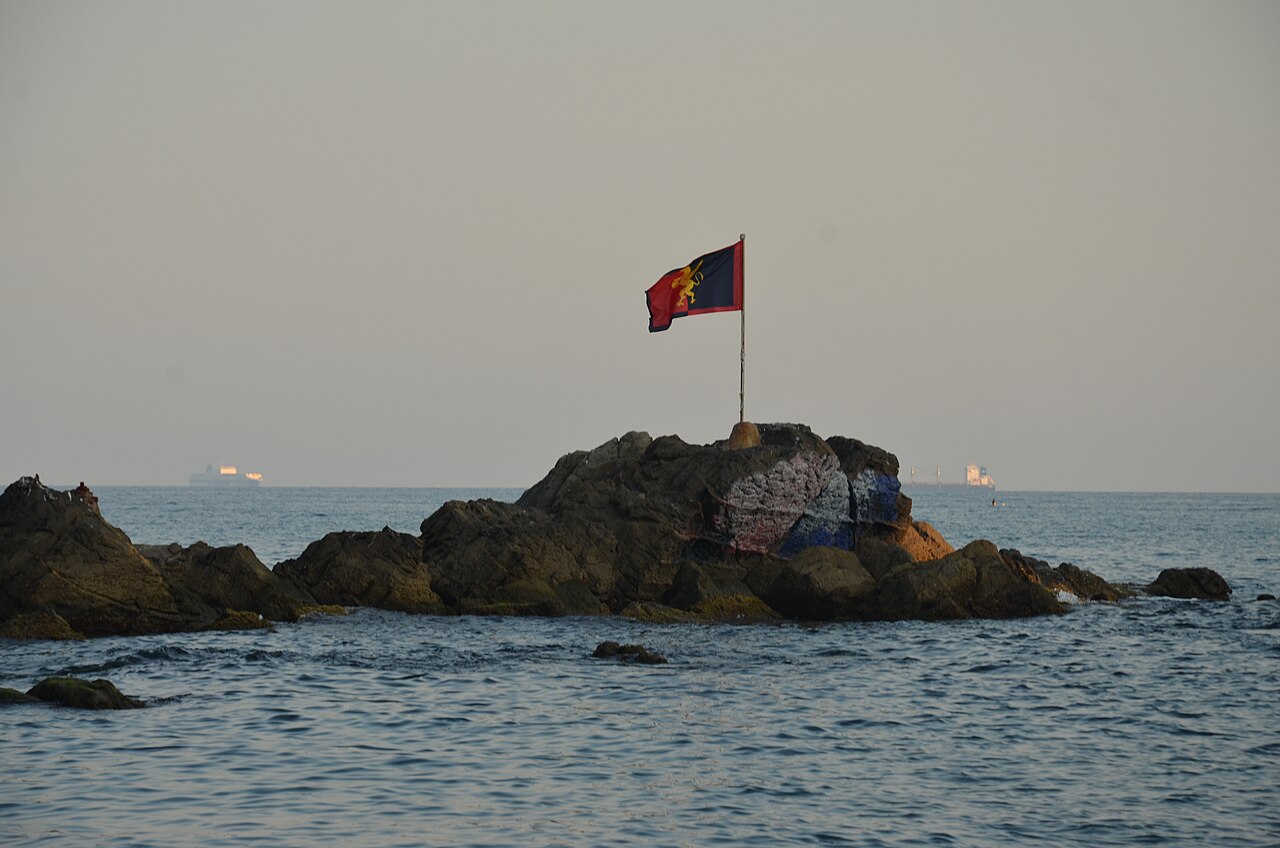
About four kilometres from the race area, the coastal heights of Monte Moro overlook the surrounding waters. During wartime, this promontory was integrated into the Vallo Ligure defensive network, which fortified the coastal perimeter with machine gun bunkers, anti-tank barriers, and concrete anti-landing walls set into the beaches. The 200th Coastal Battery at Monte Moro featured underground halls and tunnels excavated directly into the rock to safeguard ammunition and personnel. The clifftop battery mounted heavy 381/40 caliber guns that had originally been manufactured for Italian Francesco Caracciolo-class battleships. On September 9, 1943, coastal artillery from the Monte Moro installation engaged and sank the minelayer Pelagosa. The sunken vessel rests one and a half miles off the coast of Quarto dei Mille at a depth of 35 meters beneath the surface of the sea.
Batteria del Vagno and Forte San Giuliano: the cliff defenses
The shoreline along which swimmers make their way toward Bagni San Nazaro possessed a very different character in earlier eras. Before road construction began in 1908, the coastal strip between Foce and San Giuliano was formed of steep, natural cliffs plunging into the sea. Between 1909 and 1915, engineering works excavated those rock bluffs and demolished several seaside chapels to lay out the coastal avenue. About one kilometre from the race area stands Forte San Giuliano, erected between 1827 and 1836 over the site of the Sopranis coastal battery built in late summer 1745. The fort was constructed to defend the eastern flank of Genoa against maritime attacks, featuring subterranean passages that allowed defensive personnel direct access down to the sea.
About two kilometres from the race area, the Genoese built Batteria del Vagno in 1746 upon a small plateau wedged between coastal rocks overlooking the water. In 1796, the installation fired upon British warships attempting to close in on the beach. To supply the guns, crews hauled shells along tracks using a hand-cranked hoist fitted with a metal basket to roll ammunition to the firing platforms. During the siege of 1522, artillery fire struck near the Genoa Lighthouse, prompting the French fleet to flee the harbor for Savona. Genoese admiral Andrea Doria brought four galleys into the port to counter the assault, but enemy forces turned captured harbor guns against his vessels, compelling him to retreat to Monaco.
Hostilities returned in February 1625 when an invading Franco-Savoyard army occupied the western Ligurian riviera, leading Spanish admiral Santa Cruz to destroy three French warships at the Hyères islands in a counter-attack by sea. In 1746, a British fleet commanded by George Townshend imposed a naval blockade against the city. That blockade was renewed in February 1747 to cut off maritime transport and isolate Genoa from the water. About four kilometres along the coast, the port was besieged again during the siege of 1800, when British warships including HMS Minotaur, Phoenix, Mondovi, Entreprenante, and the tender Victoire sealed off the harbor. British gunboats bombarded Genoa's coastal forts on April 30, 1800.
Following Genoa's surrender on June 4, 1800, British ships evacuated the French sick, wounded soldiers, and artillery, bringing the brutal siege to a close. Naval bombardments returned on February 9, 1941, during Operation Grog, when the British Royal Navy struck the harbor of Genoa. Shells sank four cargo vessels and the civilian training ship Garaventa, damaging eighteen other ships and destroying fourteen lighters while the battleship Duilio lay in dry dock north of Molo Giano, with carrier aircraft striking Livorno and laying mines off La Spezia. Built in 1931 on the ground previously occupied by Batteria del Vagno, the lighthouse was destroyed during World War II and reconstructed in 1948 at the eastern harbor entrance. Its lantern rises 26 meters above sea level and emits three long white flashes every fifteen seconds across the Ligurian Sea, visible to approaching vessels up to sixteen nautical miles offshore.
Abbazia di San Giuliano and the Corso Italia promenade
Less than one kilometre from the race area stands the medieval Abbey of San Giuliano. Documented in an archival sales deed dating back to 1282, it is the sole survivor among several monastic churches that once stood along this coast. Other coastal shrines disappeared over time, including a chapel dedicated to Saint Peter located on the beach at Foce, which was destroyed by a sea storm in 1821. Before modern roadworks transformed the shoreline, the abbey occupied a prominent position on the coastal rocks, reachable only from the hill by following narrow paths. When major excavations carved the seaside avenue in 1914, neighboring sanctuaries such as Santi Nazario e Celso on the cliffs of Punta Vagno were leveled, while San Giuliano was preserved.
A pedestrian walkway called Lungomare Lombardo skirts the seaward side of the abbey, passing right beside local bathing facilities. Swimmers join the vibrant waterfront of Corso Italia. This 2.5-kilometer promenade links Boccadasse to Foce with Art Deco architecture and historic bathing establishments, offering a welcome place to rest after completing a race in these storied Ligurian waters.
Course
Part of the relay format (1K x 3). Iconic start from the beaches of Boccadasse and Priaruggia, characterized by the coastal landscape of Genoa.
Smile Swim distance (marine mile). Coastal route along the Genoese waterfront, starting from iconic locations like Boccadasse.
Hard Swim distance. A challenging coastal route starting from the iconic beaches of Genoa, designed for experienced open water swimmers.
Hard Swim distance. Extended coastal course along the Genoese Riviera, featuring iconic start points and scenic views.
Hard Swim distance. The longest course of the event, following the Genoese coastline with starts at iconic city beaches.
Awards
- Age group awards
Part of the 'Trittico dei Caruggi' cumulative ranking for Ligurian events.
Previous editions
- 2025results
How to get there
Genova – Italian Open Water Tour
Frequently asked questions
- When was the last edition of Genova – Italian Open Water Tour?
- The last edition of Genova – Italian Open Water Tour took place on May 16, 2026.
- What distances does Genova – Italian Open Water Tour offer?
- Genova – Italian Open Water Tour offers 926 m, 1.9 km, 3 km, 4 km, 6 km, and 7 km.
- How much is the entry fee for Genova – Italian Open Water Tour?
- The entry fee ranges from 29 € to 68 €. Registration fees are managed via the official Italian Open Water Tour app. Please check the app for specific pricing per distance.
- Where does Genova – Italian Open Water Tour take place?
- Genova – Italian Open Water Tour is a sea swim. Location: Boccadasse / Priaruggia, Genova, Liguria, Italy.
- How do I register for Genova – Italian Open Water Tour?
- The reference page for registering for Genova – Italian Open Water Tour is https://italianopenwatertour.com/genova/.
Where to stay
Genoa offers a mix of traditional and modern lodging options. You can choose from small, colorful 'fisherman's houses' in the Boccadasse area, which provide an authentic local feel, or opt for contemporary 'boutique hotels by the port' for easier access to the city center. For those preferring a more relaxed setting, there are 'beachfront campsites' located just outside the main urban cluster. Expect to pay between €120 and €250 per night depending on the proximity to the waterfront and the level of service provided.
Things to do nearby
The weekend in Genoa is characterized by its maritime culture. Beyond the swim, you can explore the historic 'caruggi' of the old town, engage in 'tastings' featuring local pesto and focaccia, or head out on the water for 'kayak/SUP' tours to view the cliffs from a different angle. The surrounding hills offer 'trekking' paths that reveal panoramic views of the entire gulf, while the city’s 'archaeological sites' and maritime museums provide deep insights into the region's long-standing nautical traditions.
Swimmers
Other stages of this series
- Tremiti – Italian Open Water TourIsole Tremiti, IT
- Monate – Italian Open Water TourTravedona Monate, IT
- Gaeta – Italian Open Water TourGaeta, IT
- Leggiuno – Italian Open Water TourLeggiuno, IT
- Camogli – Italian Open Water TourCamogli, IT
- Maccagno – Italian Open Water TourMaccagno, IT
Similar races


Comments
Transparency: some links on this page (stays, flights, experiences, gear) are affiliate links — if you book or buy through them, Omniathlon may earn a commission from the partner at no extra cost to you. As an Amazon Associate we earn from qualifying purchases.