
Fin Swim 2k Race
- Mar 21, 2026
- Last edition date
- Distance: 2km
At a glance
- Last edition date
- March 21, 2026
- Distances
- 2 km
- Where
- Sea · Ala Moana Beach Park, Honolulu, Hawaii, United States
- Entry fee
- 45 USD
- Wetsuit
- Wetsuits are explicitly prohibited.
- Registration
- haid.app
About the race
Slipping on a pair of swim fins or strapping into a monofin turns open ocean swimming along the Honolulu coast into a fast, hydrodynamic glide through clear saltwater. The Fin Swim 2k Race is an open water swimming race held in the sea at Ala Moana Beach Park in Honolulu, in Hawaii. Organized by the Waikīkī Swim Club, it is a fixture on the local ocean calendar. Centuries before swimmers took to Honolulu, Captain William Brown of Great Britain became the first foreigner to sail into Honolulu Harbor in November 1794.
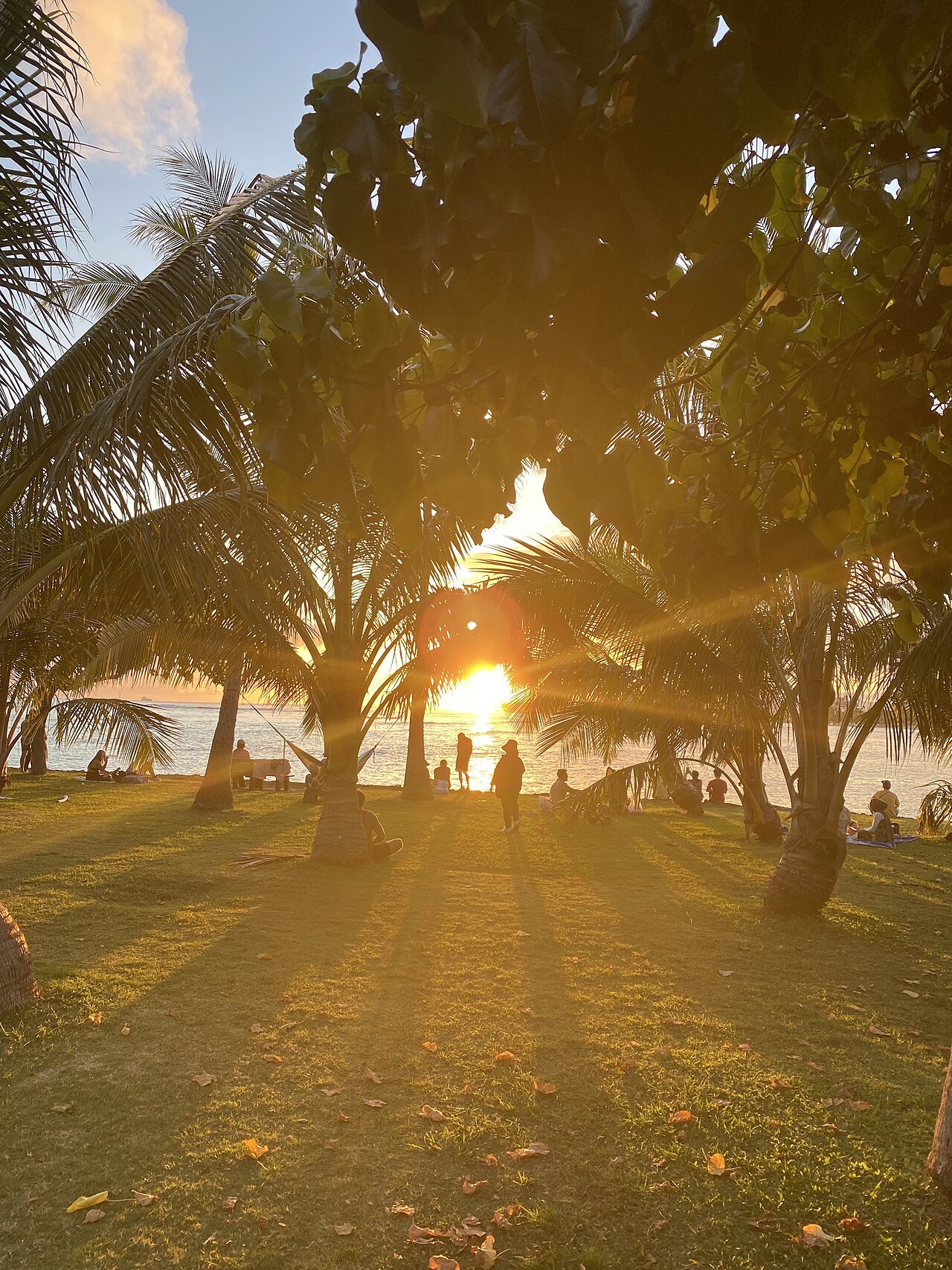
The Fin Swim: 2,000 meters along Ala Moana Beach
What distinguishes this event is its focus on propelled speed, as it stands as the only ocean swim race in Hawaii where competitors race using fins. Swimmers can enter either the Dual Fin category or the Mono Fin division, choosing their preferred propulsion for the course. The regulations allow competitors to race wearing fins, goggles, masks, and snorkels. In contrast, hand paddles, wetsuits, and flotation devices are strictly barred from the course. Every swimmer is required to wear a brightly colored swim cap so that safety personnel can maintain visual contact throughout the swim. The course spans 2,000 meters entirely within the ocean. The race begins directly in the water at the Magic Island end of Ala Moana Beach Park.
From there, swimmers head 1,000 meters parallel to the beach toward Kewalo Basin, navigating toward a turnaround buoy. After circling the buoy, competitors retrace the 1,000-meter line back toward the shore. Upon returning to the beach, swimmers exit the sea and sprint up the sand, passing through an arrival chute to reach the finish line. Held in March, the event takes place when the ocean around Honolulu is pleasantly warm, offering comfortable tropical water for swimming without the need for thermal gear.
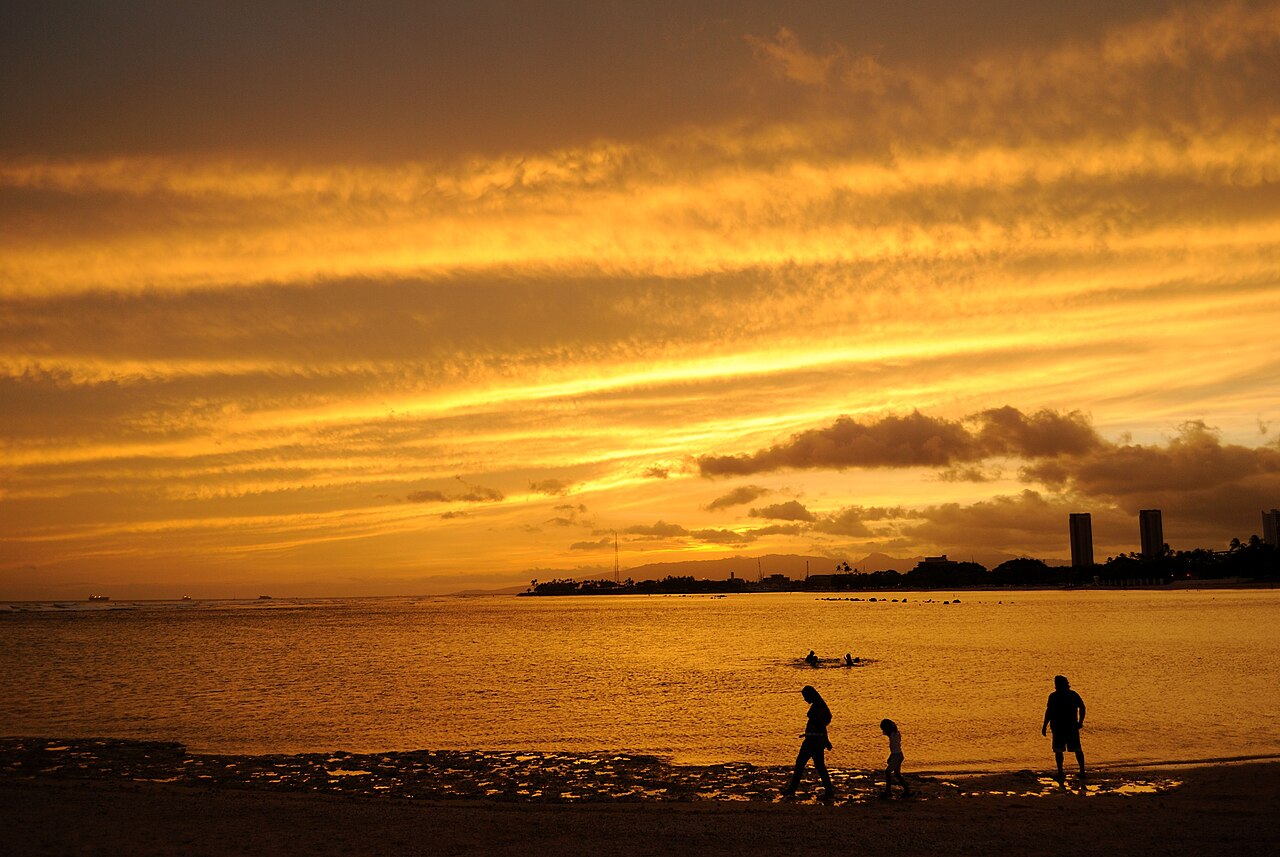
The Ala Moana channel: dredged coral and sheltered depth
The swimming channel itself is a former boat channel dredged directly through the coral reef in the late 1920s. It was originally excavated to establish a navigable waterway connecting Kewalo Basin with Ala Wai Harbor. Today, this historic channel provides an open swimming corridor that is 1,000 yards long and reaches depths between 20 and 30 feet. Swimming over this dredged corridor provides ample depth under every stroke. Beneath the surface, the seafloor changes along the route: the eastern end of the beach features a soft, sandy bottom, while the middle and western sections reveal rocks scattered across the nearshore floor. Because the channel sits tucked within the dredged reef cut, the water provides a protected environment for ocean racing.
Kūhiō Beach Park was originally the residential location of Prince Kūhiō and Princess Elizabeth Kahanu. Prince Kūhiō chose to open a section of that beach to the public in July 1918. Today, the park grounds preserve a monument featuring ancient basaltic stones that represent four legendary healers of Hawaiian tradition.
From marshland to Magic Island: Ala Moana's coastline
In the 1920s, the entire Ala Moana Beach Park area was a swampy marshland that was used as a municipal garbage dump. The park was eventually created by reclaiming that marshland, transforming a discarded expanse into an open coastal recreational space. During World War II, the park took on a strategic role, serving as a military staging area and battery equipped with barracks and fortifications. In 1962, thirty acres of shallow reef were reclaimed to create Magic Island. Completed as a man-made peninsula in 1964, Magic Island today anchors the eastern boundary of the park and serves as the starting point for the race. Just beyond this peninsula, Ala Wai Harbor was constructed in 1935 at the mouth of the Ala Wai Canal, after dredging opened a pathway to the sea through the reef.
A 1,460-foot-long breakwater was added to the harbor in 1967 to accommodate the mooring of yachts. The marina now provides 699 berths and 85 moorings for vessels up to 85 feet in length. Ala Wai Harbor has also been the home base of the Hawaii Yacht Club, an organization originally founded in 1901 at Pearl Harbor before moving to its current site. About two kilometres down the coast in the other direction, Kakaʻako Waterfront Park underwent a similar coastal evolution. Established in November 1992 on the site of a former municipal landfill, the park lacks a sandy beach, meaning that swimmers and ocean visitors enter the water via concrete stairs. That shoreline is widely recognized among local ocean athletes for two popular surfing locations named Point Panic and Flies.
Duke Kahanamoku Lagoon and the waterfront paddling heritage
On the south shore of Oahu sits the Duke Paoa Kahanamoku Lagoon, a man-made wading pool built during the 1950s. Constructed as part of Henry J. Kaiser's Hawaiian Village development project, the lagoon was named in honor of the iconic surfer and Olympic swimming champion Duke Kahanamoku. In 2006, a 15-million-dollar renovation project introduced a new water circulation system, a small island, palm trees, and a boardwalk, before the lagoon officially reopened to the public in October 2007. About two kilometres from the race course, the historic Moana Hotel reflects the oceanfront heritage of the island, where the Hawaiian word 'moana' translates to open sea or ocean. Designed with wide lānais facing out toward the water, the hotel was the site of the radio show 'Hawaii Calls', which broadcast the sound of waves breaking on the beach directly from the waterfront.
In 1920, the Prince of Wales frequently dove into the ocean from a private pier located on the hotel grounds. An Indian banyan tree planted in the hotel courtyard in 1904 now stands 75 feet high and spreads 150 feet across, designated as a protected Hawaii Millennium Landmark Tree. Ala Wai Harbor hosts a variety of waterman programs, with paddlers taking to the water in Hawaiian outrigger canoes and surf skis. For competitors in the Fin Swim 2k Race, powering through the deep coral channel with fins connects modern speed with this rich ocean heritage along the Honolulu shoreline.
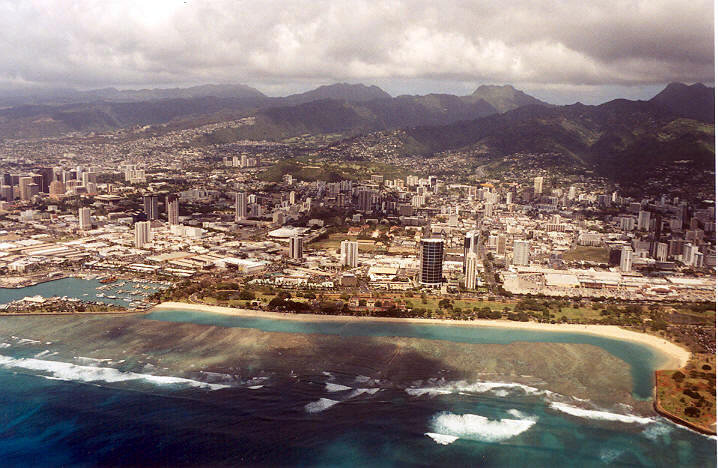
Sources: Honolulu · Ala Moana Beach Park · Magic Island (Hawaii) · Ala Wai Harbor
Course
Start in the water at Magic Island, Ala Moana Beach Park. Swim 1,000m toward Kewalo Basin, turn clockwise around an orange buoy, and swim 1,000m back to shore. Finish by running up the beach through the chute.
Awards
- Age group awards
Awards for top male and female overall and age group winners.
How to get there
Airport: Honolulu (HNL), 15 km away. There are no trains. The venue (Waikiki Beach) can be reached in 20 minutes by bus (TheBus) or taxi/Uber. Limited parking is available at the Waikiki Beach Center or in public garages (e.g., Honolulu Zoo). We recommend getting around on foot or using local shuttles due to the high tourist density.
Fin Swim 2k Race
Frequently asked questions
- When was the last edition of Fin Swim 2k Race?
- The last edition of Fin Swim 2k Race took place on March 21, 2026.
- What distances does Fin Swim 2k Race offer?
- Fin Swim 2k Race has a single distance: 2 km.
- How much is the entry fee for Fin Swim 2k Race?
- The entry fee is 45 USD. Early registration closes on March 19th, 2026. Fees increase by $5 on race day.
- Is a wetsuit required at Fin Swim 2k Race?
- Wetsuits are explicitly prohibited.
- Where does Fin Swim 2k Race take place?
- Fin Swim 2k Race is a sea swim. Location: Ala Moana Beach Park, Honolulu, Hawaii, United States.
- How do I register for Fin Swim 2k Race?
- The reference page for registering for Fin Swim 2k Race is https://haid.app/es/events/fin-swim-2k-race-145428.
Where to stay
Accommodations near Ala Moana range from high-rise boutique hotels overlooking the harbor to functional condos in the Waikiki district, a short distance away. Expect prices between 250 and 450 USD per night depending on ocean views and proximity to the park. For a quieter experience, some visitors opt for serviced apartments situated between the waterfront and the city center.
Things to do nearby
Beyond the race, the area offers extensive opportunities for outrigger canoe paddling and surfing lessons right off the Ala Moana reef. The local culinary scene is heavily influenced by Pacific Rim traditions, with fresh poke and local seafood markets lining the nearby docks. For those interested in history, the Iolani Palace provides a deep dive into the island's royal past, while the nearby trails offer a perspective of the volcanic topography from above.
Swimmers
What to see around
1. Diamond Head State Monument (trekking panoramico), 2. Pearl Harbor National Memorial (storia), 3. Snorkeling a Hanauma Bay Nature Preserve, 4. Surf a Waikiki Beach, 5. Escursione al cratere Punchbowl.
Other races by this organiser
- Turkey SwimHonolulu, US
- North Shore Swim Series — Waimea BayHaleiwa, US
- North Shore Swim Series — Chun's Reef to WaimeaHaleiwa, US
- North Shore Swim Series — Ehukai Beach Park to WaimeaHaleiwa, US
- Guess Your Time SwimHonolulu, US
Similar races


Comments
Transparency: some links on this page (stays, flights, experiences, gear) are affiliate links — if you book or buy through them, Omniathlon may earn a commission from the partner at no extra cost to you. As an Amazon Associate we earn from qualifying purchases.