
Anaeho'omalu Splash
- May 2, 2027
- Distance: 1.6km
At a glance
- Next edition date
- May 2, 2027
- Distances
- 1.6 km
- Where
- Sea · Anaeho'omalu Bay, Kohala Coast, Waikoloa, HI, United States
- Entry fee
- 45 USD
- Registration
- oceanswimhawaii.com
About the race
A ribbon of calm, turquoise water, shielded from open ocean swells by an offshore barrier reef, welcomes swimmers to Anaehoʻomalu Bay. The Anaeho'omalu Splash is an open water swimming race held in the sea at Anaehoʻomalu Bay, along the South Kohala coast of Waikoloa on the Big Island of Hawaii. Organized by Ocean Swim Hawaii, the event draws swimmers into the ocean waters of Waikoloa Beach, situated directly on the ocean side of the Waikoloa district. Competitors tackle a course measuring 1.0 mile, which corresponds to exactly 1,609 meters of saltwater swimming. Scheduled in May, the race serves as the opening event for the Triple Crown open water swim series in West Hawaii.
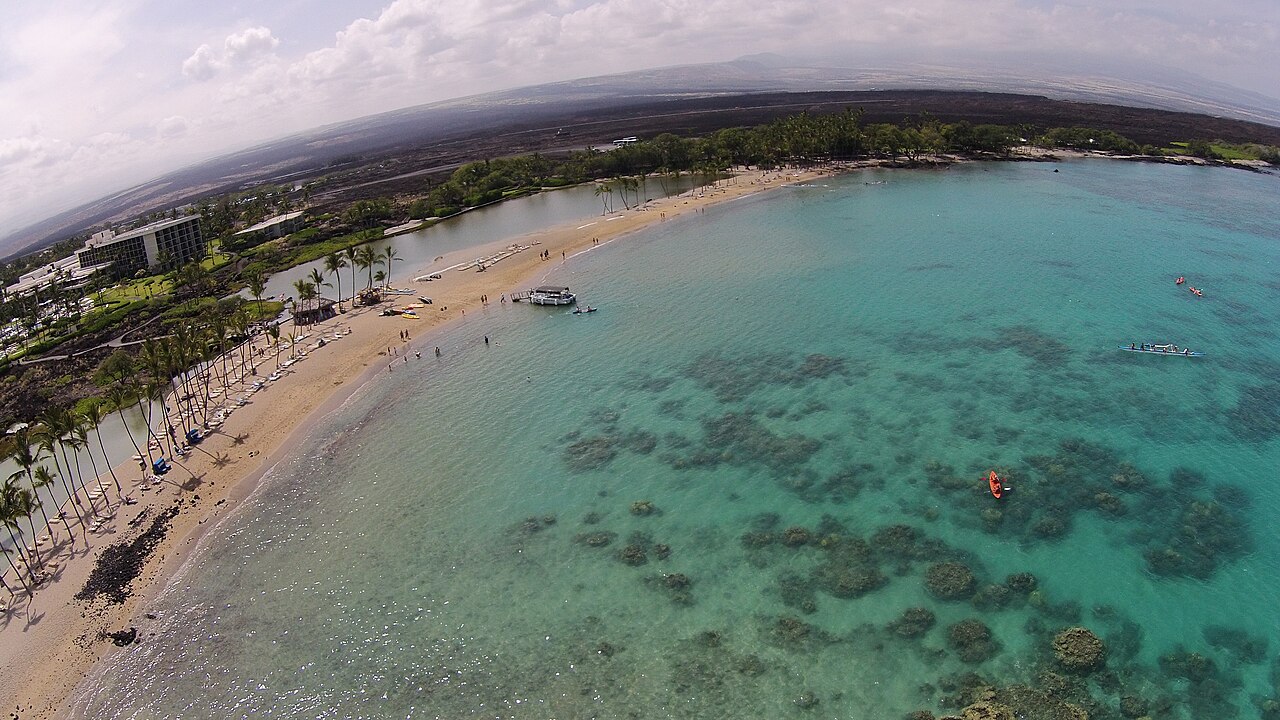
Entering the ocean on race morning, you feel the calm conditions created by the outer reef, which keeps the surface sheltered for swimming and water sports. The swim course across Anaehoʻomalu Bay passes over vibrant reefs and schools of tropical fish. With the outer barrier tempering the sea, you can maintain your rhythm across the shallows. As you navigate the course, it is common to see Hawaiian green sea turtles, known as honu, swimming along the underwater reefs alongside participants.
Race day at Anaehoʻomalu Bay: a one-mile out-and-back
More than 250 swimmers turned out at Anaehoʻomalu Bay for the 2026 Anaeho'omalu Splash, the opening event of the Big Island's Triple Crown Swim Race Series. Hosted by the Kona Aquatics Club, the series links three 1-mile ocean swims, and the title goes to the swimmer with the fastest combined time across all three. The Splash course is a one-mile out-and-back swim. In 2026 the day brought sunny skies and strong winds that bent the coconut palms around the bay, less ideal than the near-perfect water conditions of the year before. Women's winner Kiliheamaikalani Oka said she sighted on the strobe and the palm trees on the way in, because land is visible the whole way back.
Kuʻualiʻi and Kahapapa: royal fishponds and anchialine pools
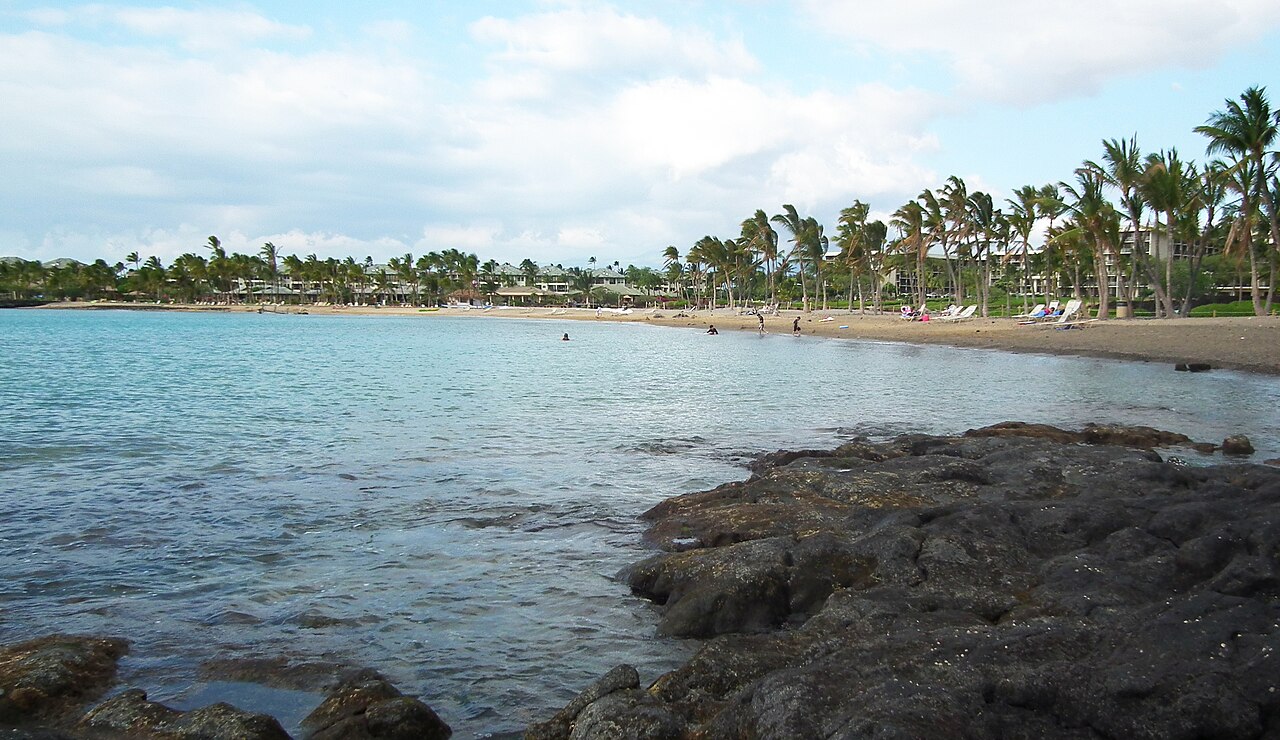
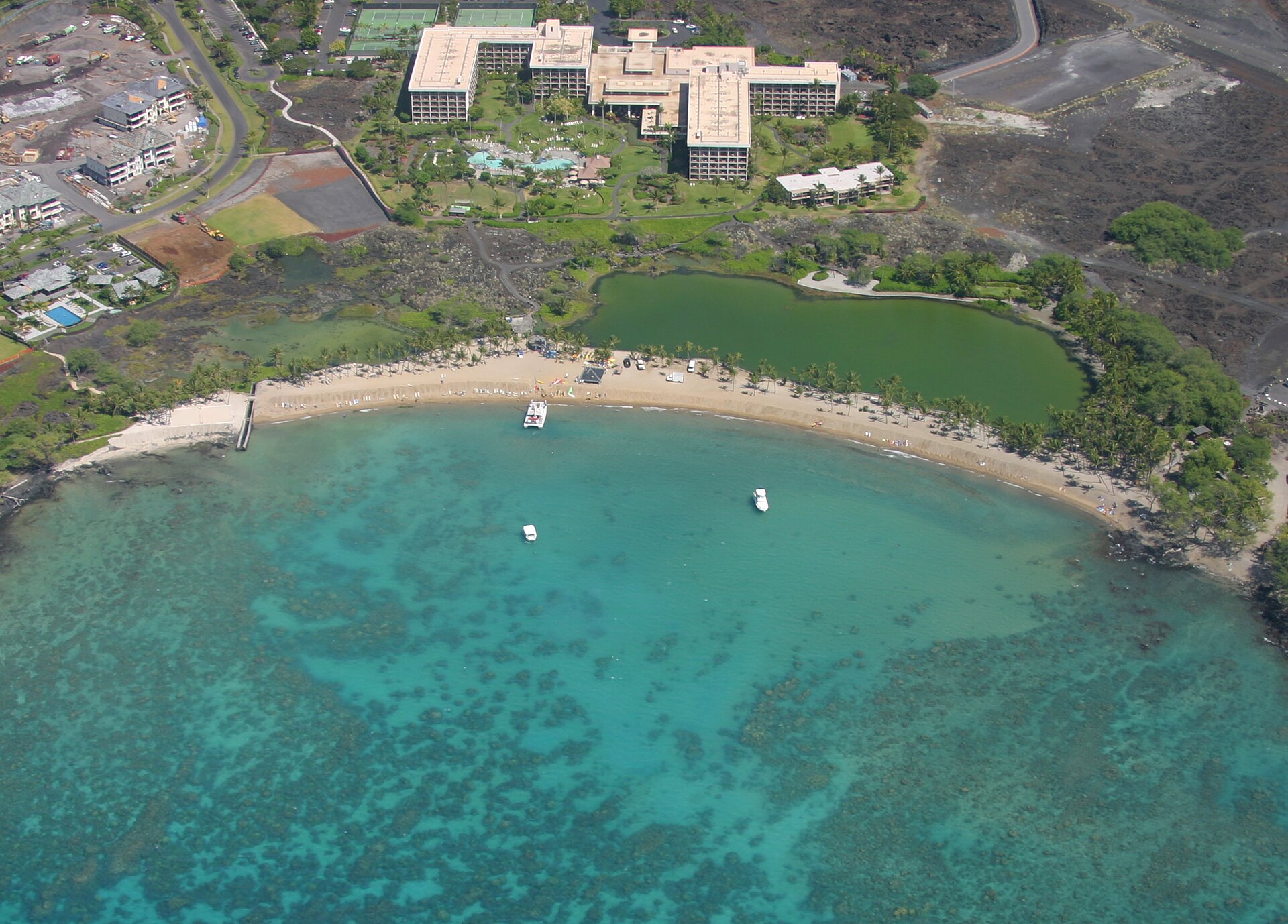
Anaehoʻomalu Bay is a shallow water bay on the South Kohala coast famous for its historic royal fishponds. Directly behind the sandy beach sit two ancient Hawaiian fishponds named Kuʻualiʻi and Kahapapa. These ponds formed an integral part of an ancient Hawaiian aquaculture complex, and local royalty historically used them to raise mullet. Adjacent to the shoreline, the Waikoloa Anchialine Pond Preservation Area was established in 1985 to protect the region's rare brackish lava pools. These anchialine ponds are fed simultaneously by underground freshwater springs and incoming seawater. This subterranean convergence creates a unique coastal microclimate that supports specialized populations of small crustaceans and fish.
The lava coast from Keawaiki to Kīholo Bay
Kīholo Bay is bordered by immense lava flows from Mount Hualālai in 1801 and Mauna Loa in 1859. Further along the coast at Keawaiki Bay, the area north of the bay was inundated by the 1859 Mauna Loa flow, which destroyed an ancient temple and village settlement. At Kīholo Bay, King Kamehameha the Great constructed an artificial fishpond in 1820, but the molten rock of 1859 destroyed it completely. The hardened basalt from that eruption formed black pebble beaches that define the bay today. Beneath the surface, approximately five million gallons of submarine groundwater discharge into the coastal waters of Kīholo daily. At the northern end of Kīholo Bay, the tranquil waters of Wainanaliʻi Pond serve as an important natural habitat for green sea turtles.
Further down at Keawaiki Bay, a seaside residential complex was constructed entirely from local lava rock. Swimmer Duke Kahanamoku assisted in designing swimming pools on that historic property. Keawaiki also endured the elements in the twentieth century, when animal pens near the beach were swept away by a tsunami on April 1, 1946. On October 15, 2006, a 6.7 magnitude earthquake struck just offshore of the Kona Airport, about six kilometers from the race area. The earthquake generated a minor, nondestructive tsunami of ten centimeters along the Big Island shoreline. The tremors caused dust from massive landslides to obscure Kealakekua Bay, brought down the historic Hawi sugarcane smoke stack, and shook coastal resorts, collapsing the south end of the Mauna Kea Beach Hotel and breaking water pipes that flooded the Hapuna Beach Prince Hotel.
The Ala Kahakai and ancient sanctuaries of Kohala
Tracing this shoreline is the ancient Ala Kahakai, a 175-mile coastal pathway that once connected native communities and fishing areas. The Ala Kahakai National Historic Trail runs past the property at Keawaiki Bay. Further north, it passes through Hāpuna Beach State Recreation Area, connecting Spencer Beach in the north with Puako to the south. Hāpuna Beach, whose Hawaiian name translates to spring or pool, is one of the few white sand beaches on the west coast of the Big Island. Unlike the sheltered basin of Anaehoʻomalu, Hāpuna lies directly exposed to the open ocean and can become dangerous when surf conditions are high. Kaunaʻoa Bay is another rare white sand beach along the Kohala Coast, where hawksbill turtles nested before modern hotel construction, and where Mauna Kea is visible across the landscape when the weather is clear.
About fourteen kilometers from the race venue, Hawaiian history stands preserved at Puʻukoholā Heiau, a temple likely built over an older shrine from around 1580. The red stones that make up its colossal walls were transported from Pololū Valley, fourteen miles to the east, along an uninterrupted human chain. Just 170 feet west of Puʻukoholā, John Young converted Mailekini Heiau into an artillery fort to protect the harbor. At Kaʻūpūlehu, located about fourteen kilometers away, an 1800 lava flow from Hualālai destroyed an entire bay and its fishponds. A decade earlier, in 1790, local warriors captured the schooner Fair American near Kaʻūpūlehu, an encounter that resulted in the deaths of four crew members.
King Kamehameha I salvaged the cannons and muskets from the captured schooner for his campaigns, mounting cannons onto double-hulled canoes during the naval Battle of Kepuwahaʻulaʻula north of Waipiʻo Valley. Just offshore from Puʻukoholā Heiau lies Hale o Kapuni, a submerged stone structure dedicated to sharks, accompanied on land by a stone post that marked where observers could watch the feeding of sharks. Swimmers at Anaehoʻomalu Bay, however, encounter a very different aquatic atmosphere, where the reef-sheltered shallows provide a calm haven inhabited by harmless green sea turtles and tropical fish.
Anaehoʻomalu Beach: sunset reflections and tables on the sand
Toward the late afternoon, green sea turtles are frequently seen swimming close to the reef or pulling themselves up onto the sand to rest. As daylight begins to fade, Anaehoʻomalu Bay turns into a location for sunset viewing. The still waters of Kuʻualiʻi and Kahapapa fishponds mirror the vivid colors of the evening sky. Right along the shoreline, the Lava Lava Beach Club offers open-air dining with tables set directly on the sand. Swimmers can sit with a post-race meal and look out over the tranquil bay where they completed their one-mile journey.
Sources: Kīholo Bay · Keawaiki Bay · 2006 Kiholo Bay earthquake · Waikoloa Beach · Waikoloa
Course
Previous editions
How to get there
Anaeho'omalu Splash
Frequently asked questions
- When is Anaeho'omalu Splash?
- Anaeho'omalu Splash takes place on May 2, 2027.
- What distances does Anaeho'omalu Splash offer?
- Anaeho'omalu Splash has a single distance: 1.6 km.
- How much is the entry fee for Anaeho'omalu Splash?
- The entry fee is 45 USD. Standard individual entry fee for the 1-mile ocean swim.
- Where does Anaeho'omalu Splash take place?
- Anaeho'omalu Splash is a sea swim. Location: Anaeho'omalu Bay, Kohala Coast, Waikoloa, HI, United States.
- How do I register for Anaeho'omalu Splash?
- The reference page for registering for Anaeho'omalu Splash is https://oceanswimhawaii.com/.
Where to stay
The Waikoloa area offers a range of stays from upscale beachside resorts to private villas nestled near the golf courses. For a more authentic experience, seek out vacation rentals in the Puakō community, where you can find small seaside cottages that offer direct access to the water. Prices vary significantly by season, typically ranging from $350 to over $900 per night for premium coastal properties during the peak spring window.
Things to do nearby
Beyond the race, the Kohala Coast is ideal for exploring the intersection of geology and culture. Visitors can hike the coastal trails to view ancient petroglyph fields or rent kayaks to observe the protected marine life in the bay’s sheltered tide pools. Local culinary experiences focus on traditional island ingredients, with several spots in Waikoloa Village offering fresh regional seafood, while the nearby historic sites provide a deeper look into the aquaculture practices that once dominated this shoreline.
Swimmers
Similar races


Comments
Transparency: some links on this page (stays, flights, experiences, gear) are affiliate links — if you book or buy through them, Omniathlon may earn a commission from the partner at no extra cost to you. As an Amazon Associate we earn from qualifying purchases.