
North Shore Swim Series — Waimea Bay
- Jul 10, 2027
- Distance: 2km
At a glance
- Next edition date
- July 10, 2027
- Distances
- 2 km
- Where
- Sea · Waimea Bay, Haleiwa, HI, United States
- Entry fee
- 95 USD
- Registration
- waikikiswimclub.org
About the race
Across the globe, Waimea Bay evokes images of colossal winter walls of water that dwarf the surfers daring to drop into them, but in midsummer the North Shore's most famous amphitheater turns glassy and tranquil. Set on the coast of Haleiwa on the island of Oʻahu in Hawaii, the North Shore Swim Series — Waimea Bay is an open water sea swimming race organized by the Waikīkī Swim Club. Known as the CHOLO’s Waimea Bay Swim 2K, the race covers a distance of 2 kilometers each July, when ocean conditions in the bay become typically flat, transparent, and calm. On race morning, competitors assemble on the sand before heading into the water for a floating start located near the river mouth.
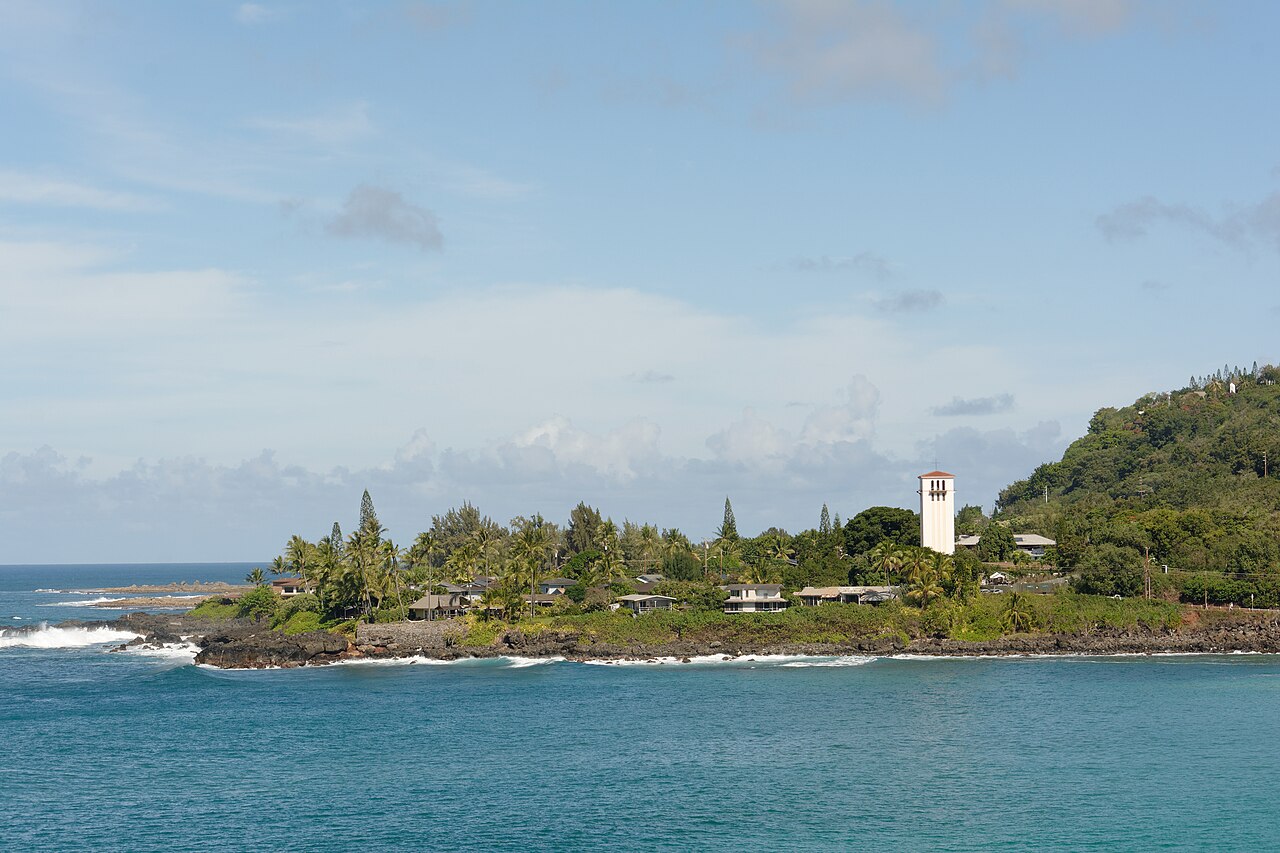
The route follows a 1.2-mile triangular course that takes the field diagonally across the bay and circles around the twin outer Wananapaoa islets. Swimmers pull through deep blue water toward the far eastern point of the bay where the final buoy marks the turn toward home. The swim typically attracts hundreds of swimmers across a wide range of ages, from young children to octogenarians. Wild dolphins are occasionally sighted by swimmers along the bay course, gliding easily through the clear ocean swells.
Ke Ahu Hapu'u and the ancient waters of Waimea Valley
Ancient Hawaiians practiced a traditional water sport called Wai Pu'uone, riding ocean waves directly into the river mouth whenever it was blocked by shifting sand bars. A similar wave appears at the river mouth today when the beach is dredged to create an open drainage channel. Today, the trail through the valley ends at a freshwater waterfall and a deep swimming hole where cliff diving exhibitions are held. Right along the water's edge of Waimea Bay stands Ke Ahu Hapu'u, a sacred temple and fishing shrine dedicated to the shark god Kaneaukai. Swimmers in July have little reason to worry about ocean predators, as the bay instead fills with calm, transparent water where wild dolphins occasionally pass through.
High above on the bluffs, the historical stone remains of the Pu'u o Mahuka temple overlook the expanse of the bay. While these bluffs hold centuries of spiritual heritage, the shoreline is currently suffering from erosion caused by both natural and human factors.
From winter giants to summer glass on the North Shore
The North Shore of Oʻahu spans the coastline between Kaʻena Point and Kahuku. During the peak winter season, massive swells originating across the North Pacific generate waves measuring between 45 and 60 feet. These severe winter surf episodes and high tides cause regular flooding and coastal erosion that threaten shoreline homes and coastal wetlands. Big-wave riding at Waimea Bay was first achieved on November 7, 1957. The Quiksilver Big Wave Invitational requires consistent 20-foot waves before organizers will allow it to run. Further along the coast lies the world-famous Pipeline surf break off Ehukai Beach Park. Considered one of the deadliest waves on Earth with heights up to 20 feet, Pipeline breaks across a flat tabletop reef riddled with caverns and jagged lava spires.
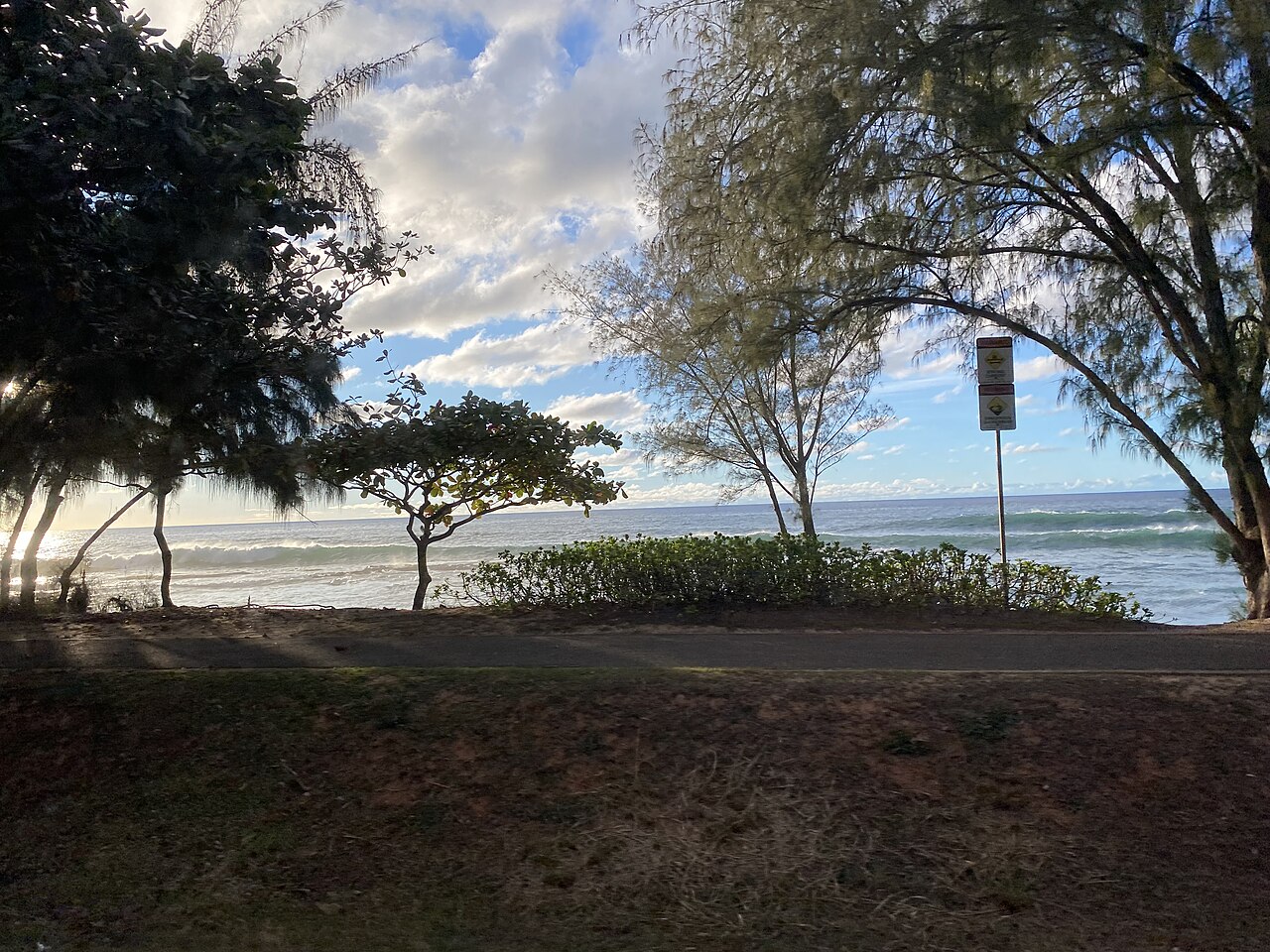
Three distinct reefs activate at progressively deeper depths as swells build, while sand accumulation causes unpredictable, violent collapses until west swells sweep the reef clean and north swells shape clean wave barrels. Nearby along the coast sits Sunset Beach, a 3.3-kilometer stretch of sand fueled by west-to-northeast North Pacific swells. It features extensive shallow coral formations near the surface that pose real injury risks to water users. In winter, enormous surf battered Sunset Beach so intensely that 2013 and 2014 storms swept staircases and swimming pools into the ocean, while December 2017 waves carved a 20-foot sand cliff beside the bicycle trail. Protected coastal coves provide gentle waters suitable for beginner surf lessons, and Waimea Bay transforms into a tranquil, crystal-clear sanctuary where swimmers and snorkelers glide over sand without fear of breaking waves.
Waimea Bay Beach Park: Da Rock and shoreline life
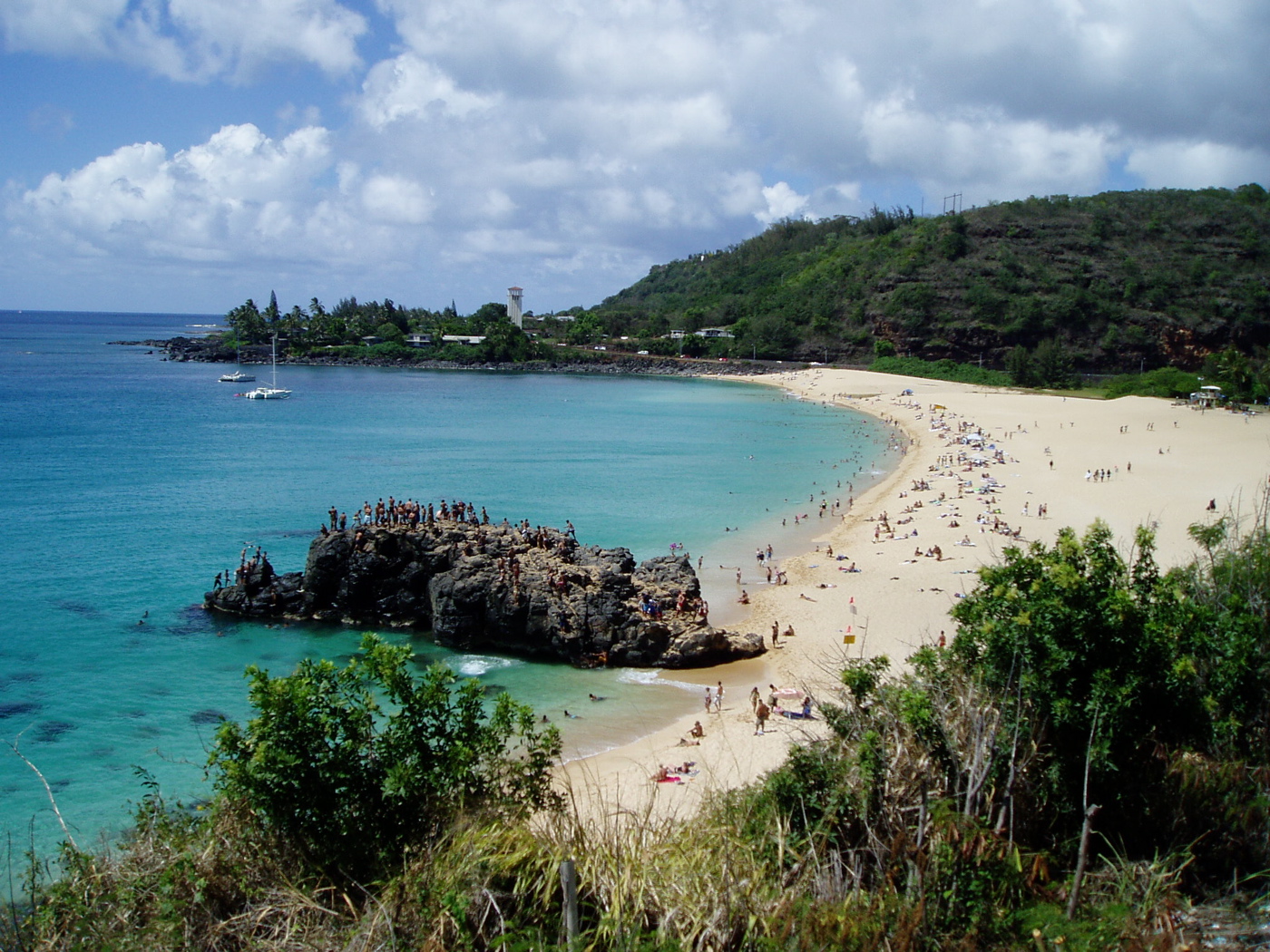
Waimea Bay itself forms a broad, crescent-shaped natural inlet with a wide sand beach that stays sheltered from harsh winds. Bordering the sand is a green park area complete with picnic tables and shaded trees, giving swimmers and families a comfortable space to relax on the grass. On the left side of the bay stands Da Rock, a massive rock that serves as a favorite local gathering point for cliff jumping. During the calm summer months, local families can often be seen fishing right from the water's edge. While the beach park does not have permanent food stalls, food trucks operate just outside the grounds for a post-race meal. After the midday crowds clear out, visitors stay along the shoreline to watch the sunset over the Pacific horizon.
Exploring beyond the bay reveals other distinct stretches of the North Shore coast. At Puaʻena Point, where an old airfield was once sited and is now known on maps as Puaʻena Beach Park, ocean currents wrap around an ancient surfing ground reserved for experts. Farther along the coast sits Papaʻiloa Beach, as well as Kawela Bay with the offshore islet of Kukaimanini near Waialeʻe Beach Park. Around Turtle Bay, green sea turtles feed in the water, giving the bay its popular name. A broad limestone shelf spans almost the entire length of Turtle Bay, creating a rocky ocean floor that makes swimming poor, while iridescent algae known as Martensia fragilis clings to rock surfaces in tide pools and reef flats.
The coast there also preserves a World War II concrete bunker perched on the western point, alongside ancestral Hawaiian burial grounds and a protected pond managed within the James Campbell National Wildlife Refuge. Back at Waimea Bay, calm waters offer open water swimmers ideal ocean conditions.
Sources: Waimea Bay · Sunset Beach (Oahu) · Haleiwa Fighter Strip · Waimea River (Oʻahu) · Banzai Pipeline · Waimea Valley · Papaʻiloa Beach
Course
Awards
- Age group awards
- Wetsuit/No-wetsuit separated
Awards typically provided for age group winners in both wetsuit and non-wetsuit categories.
How to get there
North Shore Swim Series — Waimea Bay
Frequently asked questions
- When is North Shore Swim Series — Waimea Bay?
- North Shore Swim Series — Waimea Bay takes place on July 10, 2027.
- What distances does North Shore Swim Series — Waimea Bay offer?
- North Shore Swim Series — Waimea Bay has a single distance: 2 km.
- How much is the entry fee for North Shore Swim Series — Waimea Bay?
- The entry fee is 95 USD.
- Where does North Shore Swim Series — Waimea Bay take place?
- North Shore Swim Series — Waimea Bay is a sea swim. Location: Waimea Bay, Haleiwa, HI, United States.
- How do I register for North Shore Swim Series — Waimea Bay?
- The reference page for registering for North Shore Swim Series — Waimea Bay is https://waikikiswimclub.org/ocean-races/.
Where to stay
Accommodations in the Haleiwa area lean toward authentic local experiences rather than large resorts. Swimmers typically find lodging in historic plantation-style cottages, small boutique guesthouses near the harbor, or well-maintained camping spots along the beach parks. Because the region is a tight-knit community, supply is limited during the peak summer months. Expect to pay between $250 and $450 per night for private guesthouses or ocean-view studios, with more modest local rentals available at lower price points depending on the proximity to the surf breaks.
Things to do nearby
Beyond the water, the North Shore offers a rich blend of history and outdoor activity. Visitors can explore the remnants of local agricultural heritage or take guided kayak tours up the Anahulu River to spot sea turtles. For those interested in regional history, the site of the Haleiwa Fighter Strip provides a tangible connection to the events of 1941, while the hills surrounding the bay offer hiking trails with panoramic views of the coast. Local farmers' markets provide a taste of the island's seasonal fruit and fresh poke bowls.
Swimmers
Other races by this organiser
- Turkey SwimHonolulu, US
- North Shore Swim Series — Chun's Reef to WaimeaHaleiwa, US
- North Shore Swim Series — Ehukai Beach Park to WaimeaHaleiwa, US
- Fin Swim 2k RaceHonolulu, US
- Guess Your Time SwimHonolulu, US
Similar races


Comments
Transparency: some links on this page (stays, flights, experiences, gear) are affiliate links — if you book or buy through them, Omniathlon may earn a commission from the partner at no extra cost to you. As an Amazon Associate we earn from qualifying purchases.