
Legend of the Lake
- Feb 27, 2027
- Distances from 100m to 3.5km
At a glance
- Next edition date
- February 27, 2027
- Distances
- 100 m · 200 m · 500 m · 1.5 km · 2 km · 3.5 km
- Where
- Lake · Lake Tikitapu (Blue Lake), Rotorua, Bay of Plenty, New Zealand
- Entry fee
- 500 m: 75 NZD · 1.5 km: 85 NZD · 2.5 km: 119 NZD · 3.5 km: 124 NZD
- Registration
- oceanswim.co.nz
About the race
Pale pumice and crushed rhyolite transform the deep waters of Lake Tikitapu into a luminous turquoise mirror, enclosed within the native bush and exotic conifers of the volcanic plateau of Rotorua. The Banana Boat Legend of the Lake – Rotorua is an open water swimming event held in the clear freshwater of Lake Tikitapu, also known as Blue Lake, in the Bay of Plenty region of New Zealand. Organized by the New Zealand Ocean Swim Series, the gathering invites swimmers into a sheltered volcanic basin where white rock catches the sun beneath the surface.
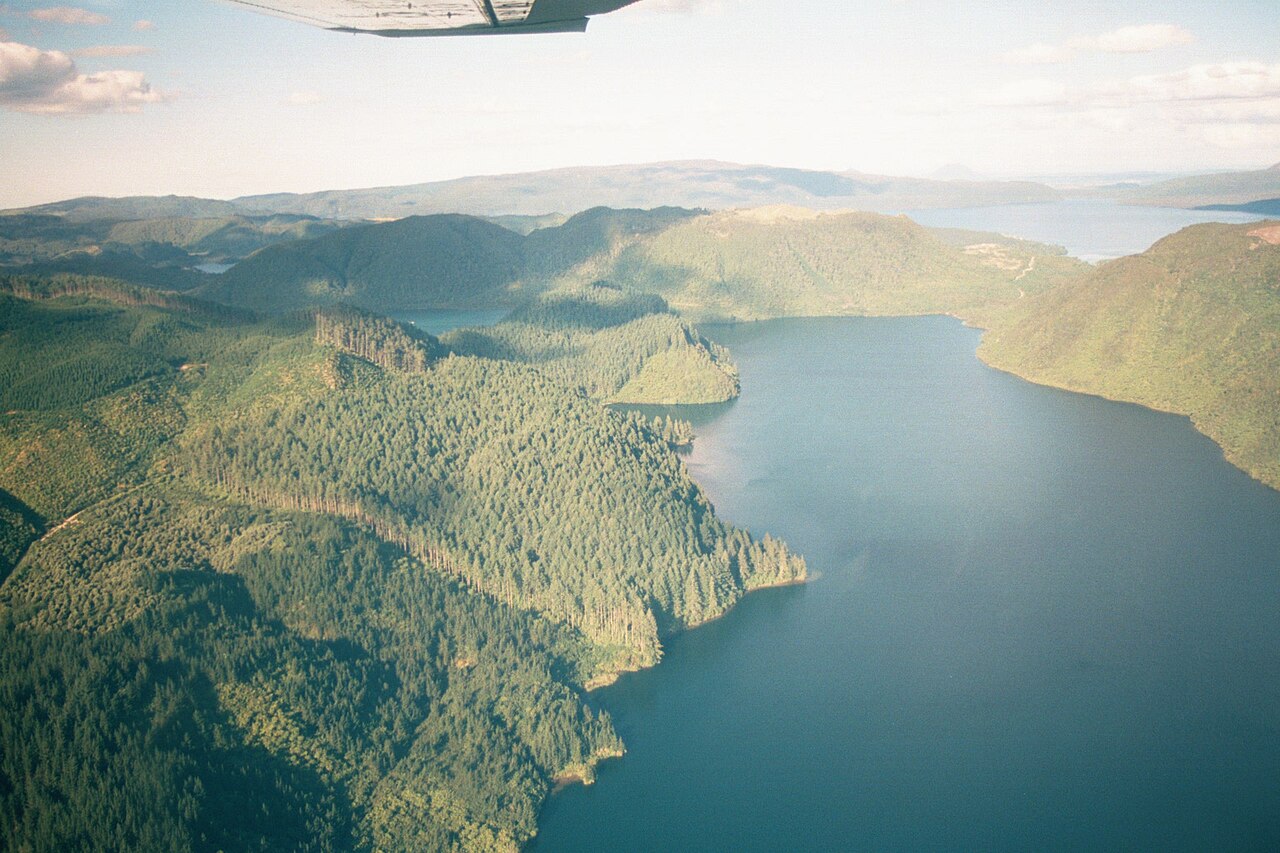
The Legend of the Lake: courses and night swims in Lake Tikitapu
The centerpiece of the race morning is the 3.5-kilometer Round the Lake, a premier distance in the national series that tasks competitors with a complete circumnavigation of the basin. Sighting off the forested skyline, swimmers trace the outer contour of the shoreline from one bay to the next, gliding across open stretches where the pale lakebed glows beneath their strokes. The full circuit delivers the rare satisfaction of navigating the perimeter of an entire volcanic bowl in one unbroken line of breathing and rhythm. Families and aspiring young swimmers join the lineup through the Banana Boat OceanKids events, offering 100-meter and 200-meter distances for ages five to twelve. Race mornings in late February often start beneath clear skies studded with bright stars, giving way to glass-calm conditions as the morning sun cuts through the water.
Sunlight filtering through the calm surface reflects off the pale volcanic rock, creating electric blue shallows that illuminate the path forward stroke after stroke. The clarity of the water allows swimmers to watch the ripples of white stone pass smoothly beneath their goggles. When twilight falls, the water opens to the Swim the Night event, a dedicated 2-kilometer night swim strictly capped at two hundred swimmers. Every participant is required to tow a personal safety float illuminated by an interior light, sending a quiet constellation of glowing lanterns floating across the dark lake. Swimmers are invited to pause, roll onto their backs, and float in absolute stillness while looking directly up at the star-filled southern sky.
To safeguard these pristine waters, Biosecurity New Zealand requires every competitor to complete the Check Clean Dry procedure before stepping in. This protocol cleans all wetsuits, goggles, and swim gear to stop the potential spread of invasive freshwater clams, ensuring the clear lakebed remains untouched for future seasons.
Lake Tikitapu and Lake Rotokākahi: volcanic origin and rhyolite lakebeds
The extraordinary setting of the swim is the result of violent geological upheaval. Lake Tikitapu occupies a collapsed volcanic crater that drops to a maximum depth of 27.5 meters, formed when a massive lava dam blocked the valley during the Rotoroa rhyolitic eruption sequence roughly 15,635 years ago. Its deep waters are exceptionally clear and undisturbed. That remarkable clarity interacts directly with the mineral geology of the floor. While swimming over the drop-offs, the change from shallow white stone to profound indigo offers an unmistakable sense of floating suspended above an ancient volcanic caldera. Just across the narrow divide sits Lake Rotokākahi, nestled along the western margin of the larger Ōkataina Caldera. While Tikitapu shines brilliant blue, Rotokākahi displays a striking emerald green tone across its surface at 394.9 meters above sea level. This vivid green coloration is caused by its shallow, sandy bottom, which reflects light through the water in an entirely different spectrum.
From the hei-tiki talisman to the 1886 Mount Tarawera eruption
The human story of these shores is rooted deep in ancestral memory. According to local tradition, the name Tikitapu commemorates a sacred greenstone necklace lost by the daughter of a chief while she was bathing in the lake's clear waters. Only about five kilometers down the road lies Te Wairoa, an early settlement established near the edge of Lake Tarawera. The aftermath of the 1886 eruption of Mount Tarawera, which buried Te Wairoa, altered the landscape for miles around. Earthquakes following the eruption cracked open a massive fissure 230 meters long and up to 30 meters deep right through the road connecting Rotorua to Te Wairoa. Nearby, the Wairoa Stream still courses through the lower edge of the ruined settlement, tumbling over the Wairere Falls to link Lake Rotokākahi down to the surface of Lake Tarawera.
The steaming hydrothermal rift of Waimangu and Whakarewarewa
The cataclysm of 1886 ripped open a 17-kilometer volcanic rift across the terrain, giving birth to Echo Crater and Inferno Crater Lake. Within Echo Crater sits Frying Pan Lake, recognized as the largest natural hot spring on the planet, spreading across 38,000 square meters. Along its northern edge rise the Cathedral Rocks, ancient precipices of rhyolitic lava that date back at least 60,000 years. Frying Pan Lake and Inferno Crater Lake share a remarkable subterranean connection, pulsing together on an interconnected hydrological cycle that repeats roughly every 38 days. During this rhythm, the water level of Inferno Crater Lake rises and falls by up to twelve meters, reaching maximum depths of thirty meters when completely full.
Its temperatures climb anywhere between 35 and 80 degrees Celsius, colored a brilliant, opaque turquoise by finely suspended silica particles. About six kilometers from the swim course, the geothermal activity surfaces again at Whakarewarewa. Here, the earth vents heat across roughly five hundred thermal pools and at least sixty-five active geysers. Chief among them is the famous Pōhutu Geyser, which reliably surges into the sky roughly every hour, driving boiling water up to thirty meters high against the valley backdrop.
Whakarewarewa Forest: trails, trout and shores of Lake Tikitapu
Back on the shores of Lake Tikitapu, the atmosphere shifts from steaming thermal vents to the deep green calm of the Whakarewarewa Forest. The crater rim is wrapped in a dense canopy of native bush and introduced conifers, woven through by a scenic 5.5-kilometer walking track that follows the water's edge. Supporters can follow the progress of the swimmers from the shaded trail beneath towering trees as the race moves across the water. Beneath the surface, the freshwater supports thriving populations of rainbow trout and brook trout that navigate the clear shallows. The clean, brisk water provides ideal swimming conditions without the swells, tides, or salt sting of the open ocean. The shore is equipped with picnic tables, barbecue areas, and children's playgrounds, turning the event into an unhurried day out on the grass. Swimmers linger beside the water long after their swim, enjoying a lakeside meal while watching the blue lake catch the afternoon light.
Sources: Lake Tikitapu · Te Wairoa, New Zealand · Lake Rotokākahi · Lake Ōkareka · Whakarewarewa · Ōkāreka Embayment
Course
OceanKids event at Lake Tikitapu.
OceanKids event at Lake Tikitapu.
RotoVegas course at Lake Tikitapu.
RotoVegas course at Lake Tikitapu.
Swim The Night 2km course at Lake Tikitapu. Night swim with mandatory tow float and light.
Round the Lake course at Lake Tikitapu (Blue Lake).
Awards
Refer to Series Competition and Prizegiving & Awards pages on official website.
Previous editions
Useful info
Mandatory 'Check Clean Dry' procedure for all participants to prevent freshwater clam spread. Bag storage available. Wetsuit hire/purchase options available via the website. Swim the Night requires a mandatory tow float with light. Te Arawa Lakes Trust beneficiaries receive 25% discount.
How to get there
Legend of the Lake
Frequently asked questions
- When is Legend of the Lake?
- Legend of the Lake takes place on February 27, 2027.
- What distances does Legend of the Lake offer?
- Legend of the Lake offers 100 m, 200 m, 500 m, 1.5 km, 2 km, and 3.5 km.
- How much is the entry fee for Legend of the Lake?
- Entry fees by distance: 500 m: 75 NZD · 1.5 km: 85 NZD · 2.5 km: 119 NZD · 3.5 km: 124 NZD. Te Arawa Lakes Trust Beneficiaries receive 25% off entry. Prices listed are standard rates.
- Where does Legend of the Lake take place?
- Legend of the Lake is a lake swim. Location: Lake Tikitapu (Blue Lake), Rotorua, Bay of Plenty, New Zealand.
- How do I register for Legend of the Lake?
- The reference page for registering for Legend of the Lake is https://www.oceanswim.co.nz/pages/banana-boat-legend-of-the-lake-rotorua.
Where to stay
Rotorua offers a diverse range of stays, from upscale boutique lodges overlooking the thermal reserves to family-friendly holiday parks and lakeside motels. You will find cozy 'kiwi baches'—traditional holiday homes—often available for rent near the lake shores, providing a quiet retreat. For those preferring proximity to the race site at Lake Tikitapu, camping and glamping options are available, while the city center features more conventional hotel chains. Expect to pay between 120 NZD and 350 NZD per night depending on the level of comfort and proximity to the geothermal attractions.
Things to do nearby
The region is defined by its geothermal activity and Māori heritage. Post-race, you can explore the Whakarewarewa thermal valley or visit the reconstructed village of Te Wairoa, which was buried during the 1886 Mount Tarawera eruption. For those with energy left, the surrounding lakes are prime spots for kayaking and stand-up paddleboarding, allowing you to view the landscape from the water at a slower pace. Numerous local operators offer cultural tours and traditional hāngī feasts, providing a deep dive into the history of the Te Arawa people.
Swimmers
Other stages of this series
- Bean Rock SwimAuckland, NZ
- Roberton Island HopRussell, NZ
- The Whanga SwimWhangamatā, NZ
- Lake Karapiro Swim FestCambridge, NZ
- Ocean Swim Series - Multi-event passAuckland, NZ
Other races by this organiser
- Swim the NightRotorua, NZ
- The Mount Ocean SwimMount Maunganui, NZ
- Ocean Swim Series - RotoVegasRotorua, NZ
Similar races


Comments
Transparency: some links on this page (stays, flights, experiences, gear) are affiliate links — if you book or buy through them, Omniathlon may earn a commission from the partner at no extra cost to you. As an Amazon Associate we earn from qualifying purchases.