
UltraOceanMan Tabarca
- May 28 – 29, 2027
- Distance: 21km
At a glance
- Next edition date
- May 28 – 29, 2027
- Distances
- 21 km
- Where
- Sea · Tabarca, Comunitat Valenciana, Spain
- Entry fee
- 500 €
- Registration
- oceanmanswim.com
About the race
UltraOceanMan Tabarca is an endurance open water swimming race held in the open Mediterranean Sea off the coast of Alicante in the Comunitat Valenciana region of Spain. Organized by OCEANMAN, this marathon crossing challenges swimmers with a demanding continuous distance of 21,000 meters. The marathon course departs directly from the island, requiring competitors to circle three-quarters of Tabarca's perimeter before turning outward across open water toward Santa Pola and on to Alicante. The marathon crossing takes place in late May. Completing such a distance demands steady mental discipline, as staying focused through difficult solitary stretches is essential to maintaining rhythm across hours of continuous swimming.
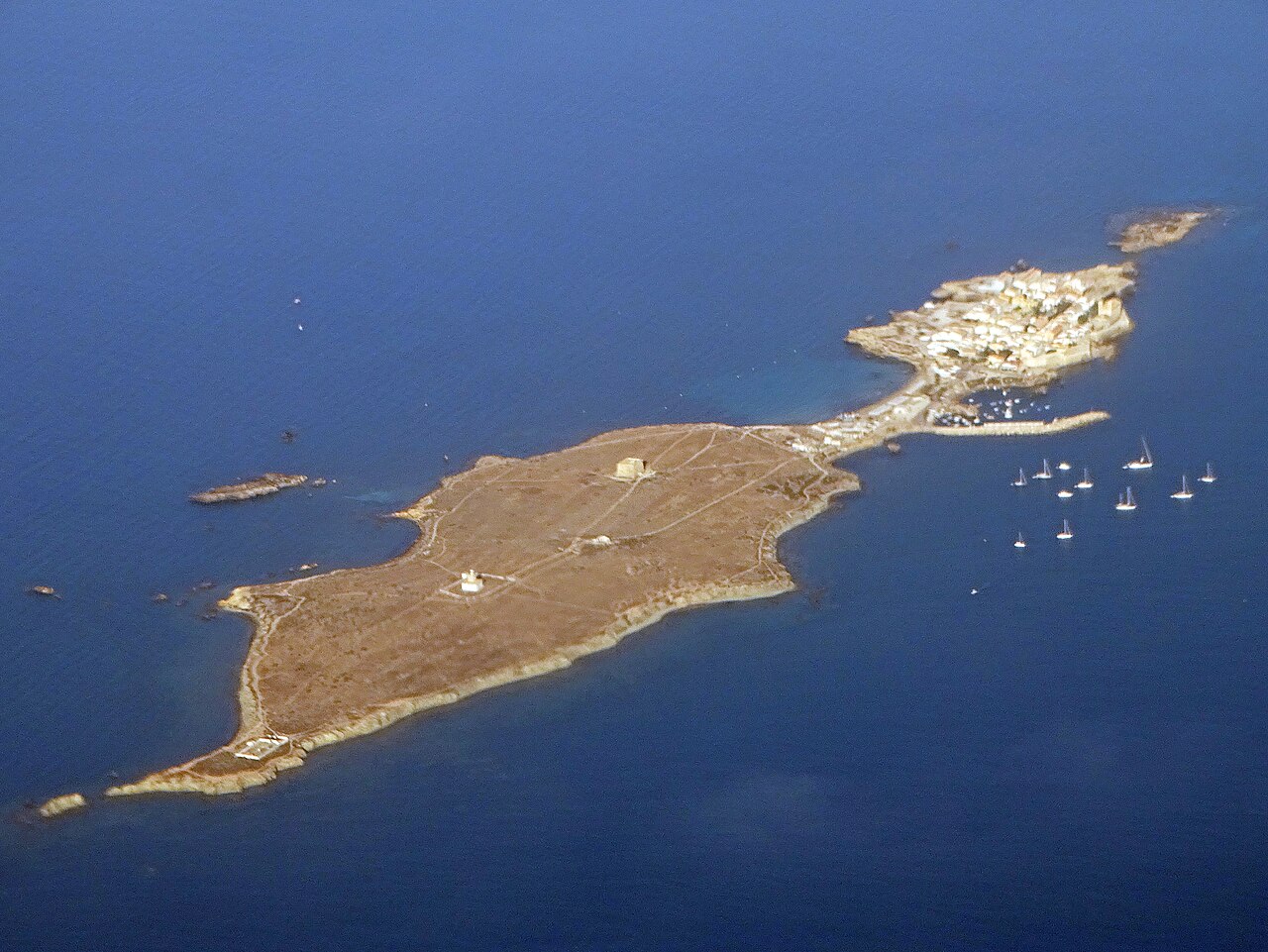
Tabarca Marine Reserve: Posidonia beds and volcanic reefs
Surrounding the island is a protected marine reserve that encompasses 1,400 hectares of coastal waters. First established in 1986 and officially recognized in 1995, it holds the distinction of being the very first marine reserve created in Spain. In the shallowest rocky sectors, bright green algae carpet the ledges, while dense clusters of red algae take over as the seabed descends into deeper offshore channels. Gliding above this underwater canopy allows you to track shifting bottom contours. Schools of dentex, gilt-head bream, common seabream, salema, and saddled seabream patrol the water column, alongside groupers, dusky groupers, and wreckfish cruising the rocky reefs. Along the deeper bottom terrain, lobsters, vermetid mollusks, pen shells, gorgonians, sea urchins, starfish, and sponges thrive undisturbed across the sanctuary.
Barbary corsairs and Genoese settlers within the Tabarca ramparts
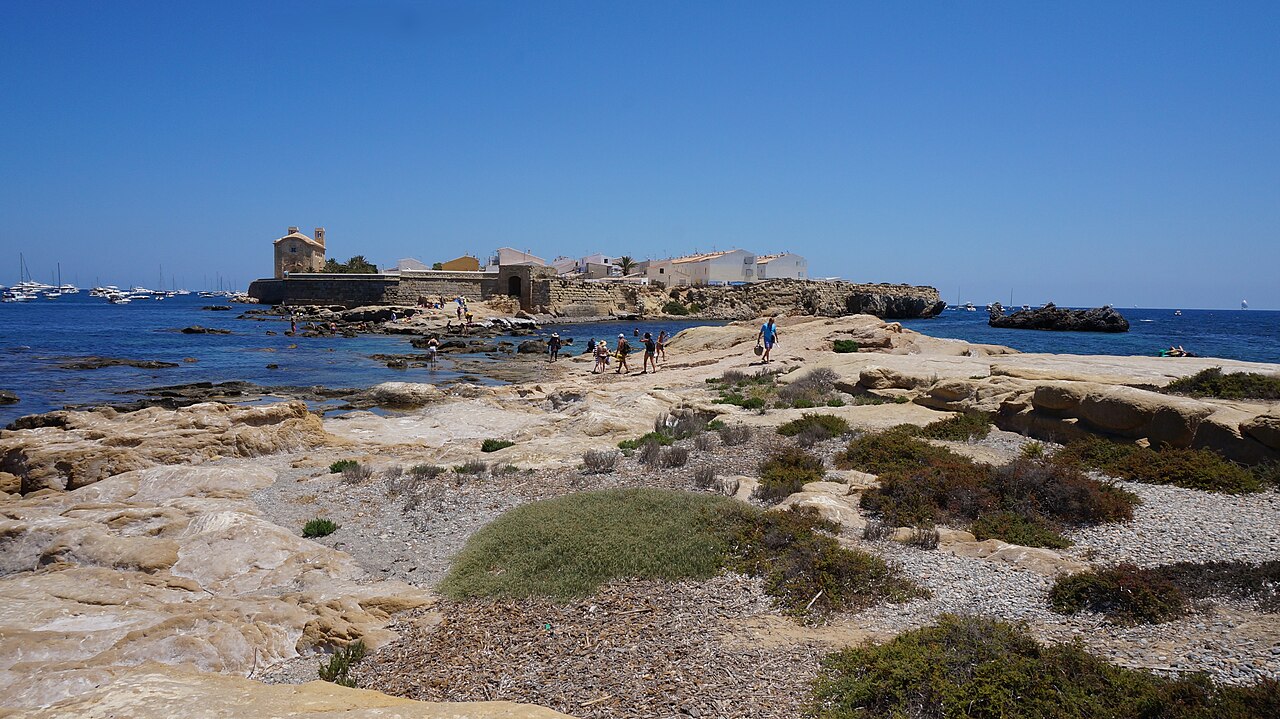
Human presence around the island traces back to antiquity, as evidenced by ancient Roman burials and dumps uncovered near the shoreline. By later centuries, the isolated rocky outcrop had become an infamous refuge and operational base for Barbary corsairs raiding maritime traffic along the coast. King Charles III of Spain ordered the island fortified in 1760 and repopulated it. Construction of the island's stone defensive walls began in 1769 according to plans drawn by military engineer Fernando Méndez de Ras. The perimeter of the fortification was built to adapt to the natural geometry of the coastline. The fortified gate of Puerta de la Trancada opens toward the ancient quarry where stone for the town was cut, while Puerta de Tierra leads to a small cove where a natural rock breakwater marks the old port.
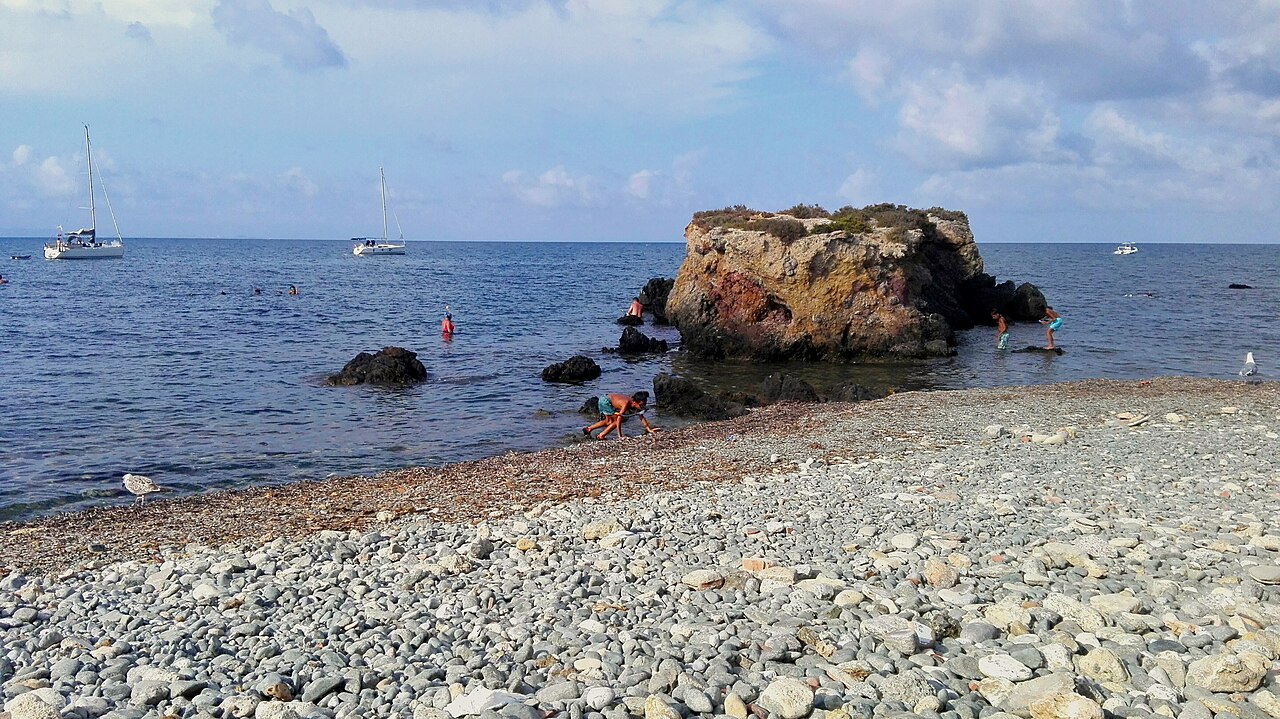
Although certain exposed sections of the stone wall have deteriorated and collapsed into the breakers, maritime safety here has long been secured by dedicated beacons. The stone Tabarca lighthouse was inaugurated in 1854 specifically to warn approaching mariners of the dangerous islets and shallow reefs encircling the island. A concrete tower built adjacent to it in 1971 was later demolished in 1998 to restore and preserve the original nineteenth-century heritage structure.
Cabo de Santa Pola and the ancient Portus Ilicitanus
Looking across the water toward the mainland, swimmers face Cabo de Santa Pola, the closest continental landmark to Tabarca at a distance of 4.5 kilometers. The towering headland represents a rare geological formation: a fossilized coral reef dating from the Mio-Pliocene period. Tracing this high promontory provides an unmistakable geographic reference point while navigating the open crossing. Crowning the high cliff is the Santa Pola lighthouse, constructed in 1858 upon the site of the sixteenth-century Atalayola watchtower. About seven kilometers from the race area on the adjacent mainland lies ancient Portus Ilicitanus, which was once one of the most prominent harbors on the coast alongside Cartago Nova. Roman archaeological remains from the first to fourth centuries reveal extensive shorebound facilities that were used for producing salted fish.
Near the old harbor basin, excavators also uncovered a substantial Roman necropolis dating from the second to fifth centuries. In 460, a major imperial Roman fleet assembling in the harbor to mount an attack on the Vandals was burned at anchor by enemy forces. More than a century later, between 612 and 621, the Visigoths stationed their own fleet here to repel a Byzantine invasion.
The walled village and turquoise coves of Tabarca
The island of Tabarca itself is remarkably compact, stretching only 1,800 meters in length and 400 meters in width, with a highest elevation of just 15 meters. At its narrowest point sits the village port, where small boats rest on transparent water like a watercolor painting. Stepping ashore reveals a network of narrow, cobblestone streets lined by whitewashed houses with red-tiled roofs that preserve an authentic Mediterranean atmosphere. Down on the shoreline, the Central Beach features clear turquoise waters and rocky shores where swimmers often rely on water shoes. Cala del Francés forms a protected rocky cove celebrated for its transparent water and rich snorkeling. As evening arrives and the day boats depart, Tabarca settles into a quiet and serene rhythm.
The historic walled town is illuminated gently by streetlights, accompanied only by the ambient sound of the sea lapping against the shore. Waking up on the island before the 21-kilometer marathon crossing, swimmers step into transparent waters defined by centuries of maritime history.
Sources: Cabo de Santa Pola · Faro de Santa Pola · Portus Ilicitanus · Tabarca
Course
Open water course around the island of Tabarca, Spain. Characterized by crystal-clear waters, protected seabeds, and variable currents typical of the Mediterranean. The route includes turn buoys positioned to circumnavigate the island, with start and finish on the main beach.
Previous editions
- 2026May 30, 2026
Useful info
Race part of the international Oceanman circuit. Registration via the official portal. Regulations based on age categories. Wetsuit usage subject to water temperature according to FINA/Oceanman rules. Mandatory pre-race technical briefing.
How to get there
Alicante-Elche Airport (ALC) is 15km from the port of Santa Pola. Reach Santa Pola by bus or taxi, then take the ferry (Tabarca Water Taxi or Lineas El Varadero) to the island (approx. 20-30 min). There are no cars on the island. Parking available in Santa Pola near the boarding area.
UltraOceanMan Tabarca
Frequently asked questions
- When is UltraOceanMan Tabarca?
- UltraOceanMan Tabarca takes place on May 28 – 29, 2027.
- What distances does UltraOceanMan Tabarca offer?
- UltraOceanMan Tabarca has a single distance: 21 km.
- How much is the entry fee for UltraOceanMan Tabarca?
- The entry fee is 500 €.
- Where does UltraOceanMan Tabarca take place?
- UltraOceanMan Tabarca is a sea swim. Location: Tabarca, Comunitat Valenciana, Spain.
- How do I register for UltraOceanMan Tabarca?
- The reference page for registering for UltraOceanMan Tabarca is https://oceanmanswim.com/races/ultraoceanmantabarca2027.
Where to stay
Accommodations in the Tabarca and Santa Pola area range from traditional fisherman-style guesthouses in the island village to modern boutique hotels overlooking the port. For those preferring a more rustic experience, camping facilities are available along the coast. Expect prices to fluctuate between €80 and €180 per night, depending on the proximity to the waterfront and the level of amenities offered during the late spring season.
Things to do nearby
Beyond the race, the area offers a deep dive into maritime heritage and natural beauty. Visitors can explore the Roman archaeological sites or take kayak and SUP tours through the Tabarca Marine Reserve to observe the underwater topography. Trekking paths along the Cabo de Santa Pola provide panoramic views of the coastline, while local culinary traditions center on fresh seafood and local salt-marsh delicacies. Guided bird-watching excursions in the ZEPA-protected salt marshes are also a popular way to engage with the region’s biodiversity.
Swimmers
What to see around
1. Tabarca Marine Reserve (snorkeling/diving), 2. Santa Pola Sea Museum, 3. Santa Pola Salt Marshes (birdwatching/flamingos), 4. Santa Pola Castle-Fortress, 5. Carabassí Beaches (natural dunes).
Other stages of this series
- Oceanman Phang-NgaPhang-Nga, TH
- Oceanman CórdobaCórdoba, AR
- Oceanman KrabiKrabi, TH
- Oceanman LimaLima, PE
- Oceanman MaafushiMaafushi, MV
- Oceanman Almaty KapchagayKapchagay, KZ
Other races by this organiser
- Oceanman GuanacasteGuanacaste, CR
Similar races


Comments
Transparency: some links on this page (stays, flights, experiences, gear) are affiliate links — if you book or buy through them, Omniathlon may earn a commission from the partner at no extra cost to you. As an Amazon Associate we earn from qualifying purchases.