
The Epic Swim
- Jan 10, 2026
- Last edition date
- Distances from 100m to 10km
At a glance
- Last edition date
- January 10, 2026
- Distances
- 100 m · 200 m · 500 m · 1 km · 2.5 km · 4 km · 5 km · 7.5 km · 10 km
- Where
- Lake · Lake Taupō, Taupō, Waikato, New Zealand
- Entry fee
- 500 m: 75 NZD · 1 km: 85 NZD · 2.5 km: 105 NZD · 5 km: 130 NZD · 7.5 km: 140 NZD · 10 km: 169 NZD
- Registration
- oceanswim.co.nz
About the race
The Epic Swim – Taupo is an open water swimming race held in the freshwater of Lake Taupō, in the Waikato region of New Zealand's North Island. Organized by the Ocean Swim Series, the event takes place across a weekend in midsummer January, taking full advantage of the southern hemisphere heat. The swimming schedule features an extensive slate of distances covering 100 m, 200 m, 500 m, 1,000 m, 2,500 m, 4,000 m, 5,000 m, 7,500 m, and 10,000 m. Ambitious endurance swimmers can take on the "Epic Epic", a multi-day challenge totaling 17.5 kilometres that combines the 10 km, 5 km, and 2.5 km races into a single weekend.
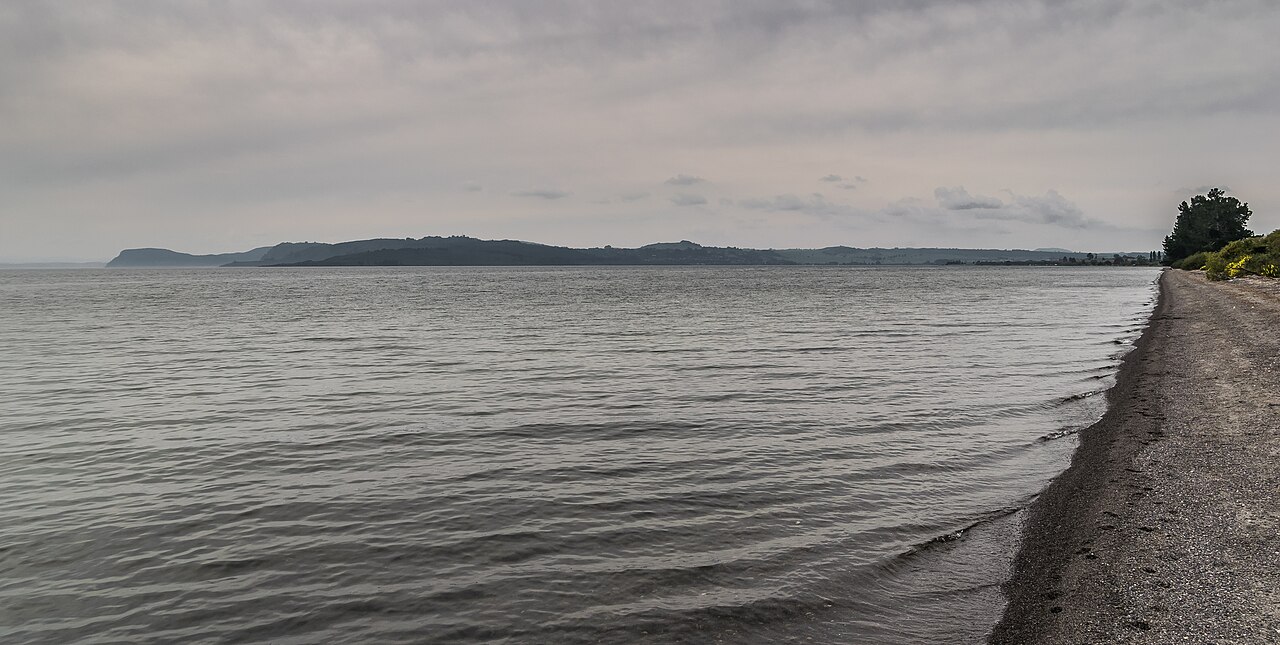
The competition course is mapped out over a 1.25-kilometre lap, turning the bay into an arena where spectators can follow the race continuously from shore. The event also hosts the NZ Masters 2.5km Swimming Championships, open to swimmers aged eighteen and over who belong to the NZ Masters Association. Race mornings on the lake commonly greet swimmers with glassy, crystal-clear water and crisp alpine air. In past editions, conditions on the water have ranged from mirror-smooth surfaces to light localized chop, with swimmers remarking on how the lake warmed pleasantly between race sessions.
The caldera of Lake Taupō: supervolcanoes and sunken valleys
Lake Taupō is the largest lake in New Zealand, occupying the central basin of the 350-kilometre Taupō Volcanic Zone that stretches from Mount Ruapehu in the southwest to the marine volcano of Whakaari in the northeast. Long before the modern lake formed, the ancient Lake Huka filled this rift valley to depths reaching 250 metres. That ancestral basin was erased roughly 25,500 years ago during the titanic Oruanui eruption of the Taupō Volcano, the most recent volcanic event on Earth to reach the maximum rating on the Volcanic Explosivity Index. A colossal freshwater basin now lies where the old rift valley once lay. Volcanic forces continued to reshape the lake perimeter, culminating around 232 CE with a massive eruption. The sheer volume of ejected pumice from that blast choked the lake's outlets, raising the water level so dramatically that it cut prominent wave terraces into the surrounding hillsides that still sit 34 metres above the modern waterline.
Horomatangi Reef and Mount Tauhara: underwater domes and taniwha legends
Beneath the surface of the lake lies a complex submerged topography shaped by the caldera's ongoing geothermal activity. In the heart of the lake rests the Horomatangi Reef, an underwater complex of rhyolitic lava domes where shallow volcanic shelves drop abruptly into submerged chasms plunging over 164 metres deep. Maori lore long associated this sunken reef with Horomatangi, a mythical water creature, or taniwha, believed to inhabit an underwater cave near Motutaiko Island. Mount Tauhara rises about eight kilometres from the race start. In Māori tradition, this solitary peak was a warrior who fled across the plateau after a battle, stopping in place on the shore as the dawn broke. Its summit provides a sweeping panorama of the entire caldera, tracing the vast expanses of water from the shore to the mountains.
The geothermal shores of Wairakei, Karapiti and Acacia Bay
The western flank of Tapuaeharuru Bay curves into Acacia Bay, where ancient volcanic promontories composed of lava more than 100,000 years old shelter the water from prevailing winds. Just four kilometres inland from the swim area lies the Craters of the Moon geothermal site, a 25-square-kilometre hydrothermal zone within the Wairakei field where volcanic heat escapes directly through the earth's crust. At the Karapiti Blowhole within the Wairakei field, vents release roaring pillars of steam so vast that nineteenth-century geologists recorded them from 20 kilometres away. For centuries, Māori navigators voyaging across Lake Taupō used this rising steam plume as a towering, natural beacon to steer their canoes back to shore.
The ground temperature around the thermal vents is so high that only specialized vegetation survives, including prostrate kānuka, tropical ferns, and rare mosses clinging to the heated soil. Bubbling mudpools form where sulfuric gases dissolve the bedrock, and thermal hot springs in the vicinity host resilient extremophile microorganisms adapted to thrive in scalding temperatures.
Where the Waikato leaves the lake: redoubts, falls, and trout
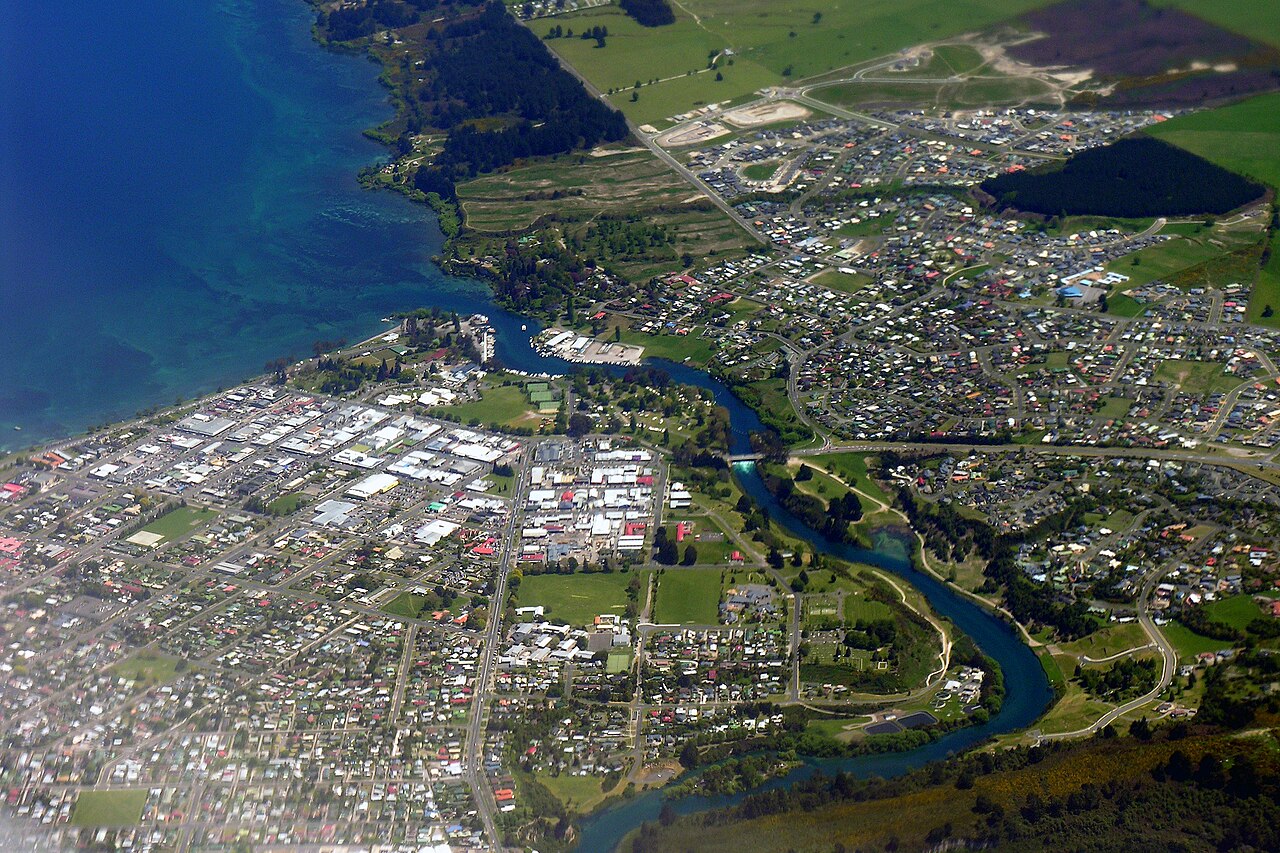
The outflow of Lake Taupō feeds the Waikato River. In 1870, an armed constabulary redoubt was erected on the riverbank to guard this strategic water crossing. That historic outpost was succeeded in 1941 by the control gates bridge, a major piece of civil engineering that regulates lake discharge to supply nine downstream hydroelectric power stations. Just north of town, the river surges through Huka Falls. In the 1890s, rainbow trout were introduced into Lake Taupō, quickly transforming the pristine waters of the lake and its feeder tributaries into an internationally renowned angling destination. For open water swimmers, this blend of deep caldera waters, ancient volcanic horizons, and alpine clarity makes slicing through the lake's calm morning surface a singular open water experience.
Sources: Taupō
Course
Action-packed 1.25km lap course designed to bring the excitement close to the shore.
Awards
- Age group awards
- Master/Elite separated
Prize giving for various categories including SNZ Championships and Masters. Results available live.
Aid stations
- Aid stations
- 8
- Interval
- 1.3 km
Feeding table positioned near the start line, accessible on every lap of the 1.25km course.
Previous editions
Useful info
Two-day event (January 10-11). Distances from 100m to 10km, including relays and NZ Masters championships. Online registration; mandatory pre-race briefing. Wetsuit not specified as mandatory (please consult Swimming NZ regulations). Participants must bring their own water bottle. Race pack collection at Lake Taupo Boat Club.
How to get there
Taupō Airport (TUO) is 8km away. Auckland International Airport (AKL) is 275km away (3.5h drive). There are no direct trains; InterCity buses connect Auckland/Wellington to Taupō. On-site: rental car recommended. Parking available at Taupō Domain and along the lakefront, often crowded during the event.
The Epic Swim
Frequently asked questions
- When was the last edition of The Epic Swim?
- The last edition of The Epic Swim took place on January 10, 2026.
- What distances does The Epic Swim offer?
- The Epic Swim offers 100 m, 200 m, 500 m, 1 km, 2.5 km, 4 km, 5 km, 7.5 km, and 10 km.
- How much is the entry fee for The Epic Swim?
- Entry fees by distance: 500 m: 75 NZD · 1 km: 85 NZD · 2.5 km: 105 NZD · 5 km: 130 NZD · 7.5 km: 140 NZD · 10 km: 169 NZD. OceanKids (100m/200m) is free. Multi-event 'Epic Epic' pass available.
- Where does The Epic Swim take place?
- The Epic Swim is a lake swim. Location: Lake Taupō, Taupō, Waikato, New Zealand.
- How do I register for The Epic Swim?
- The reference page for registering for The Epic Swim is https://www.oceanswim.co.nz/pages/the-epic-swim-taupo.
Where to stay
Taupō offers a diverse range of stays, from boutique lakeside lodges and hotels with views of the mountain to more casual holiday parks and motels near the town centre. Prices typically range from 150 NZD to 450 NZD per night depending on proximity to the water and the level of service. For those traveling for the event, securing your lodging in the town centre ensures easy access to the race headquarters at Redoubt Street.
Things to do nearby
Beyond the race, the region is defined by its geothermal activity and volcanic landscape. You can explore the steaming craters of nearby geothermal parks, go kayaking on the lake to view Māori rock carvings, or hike the trails around Mount Tauhara for a bird's-eye view of the caldera. Tasting local trout or visiting the surrounding vineyards provides a perfect way to relax after your swim. Explore more activities in the Taupō region to complete your visit.
Swimmers
What to see around
1. Huka Falls (spectacular rapids). 2. Craters of the Mountain Bike Park (MTB trails). 3. Otumuheke Natural Hot Springs (post-race relaxation). 4. Hike the Tongariro Alpine Crossing (1h away, iconic trekking). 5. Lake Taupō cruise to see the Maori rock carvings at Mine Bay.
Other races by this organiser
- Roberton Island HopRussell, NZ
- Lake Karapiro Swim FestCambridge, NZ
- The Big TāhunaNelson, NZ
Similar races


Comments
Transparency: some links on this page (stays, flights, experiences, gear) are affiliate links — if you book or buy through them, Omniathlon may earn a commission from the partner at no extra cost to you. As an Amazon Associate we earn from qualifying purchases.