
Round 1: Leighton 2026-27
- Nov 7, 2026
- Last edition date
- Distances from 500m to 5km
At a glance
- Last edition date
- November 7, 2026
- Distances
- 500 m · 1.3 km · 2.5 km · 5 km
- Where
- Sea · Leighton Beach, North Fremantle, Western Australia, Australia
- Entry fee
- 500 m: 32 AUD · 1.3 km: 62 AUD · 2.5 km: 68 AUD · 5 km: 87 AUD
- Registration
- openwaterswimming.com.au
About the race
Round 1: Leighton is an open water swimming race held in the sea at Leighton Beach in North Fremantle, Western Australia. Swimmers step from the pale sand into the open waters, where an expansive marine arena unfolds across clear, turquoise depths. The competition welcomes swimmers across a broad spectrum of abilities and generations, accepting participants from nine years of age and older. Four individual distances shape the day, ranging from an accessible 500-metre course to endurance challenges of 1,250 metres, 2,500 metres, and a 5,000-metre race. Along the course, swimmers glide over a clean sandy bottom, where a gentle ocean swell gives everyone ample room to find their stroke and maintain an uninterrupted pace.
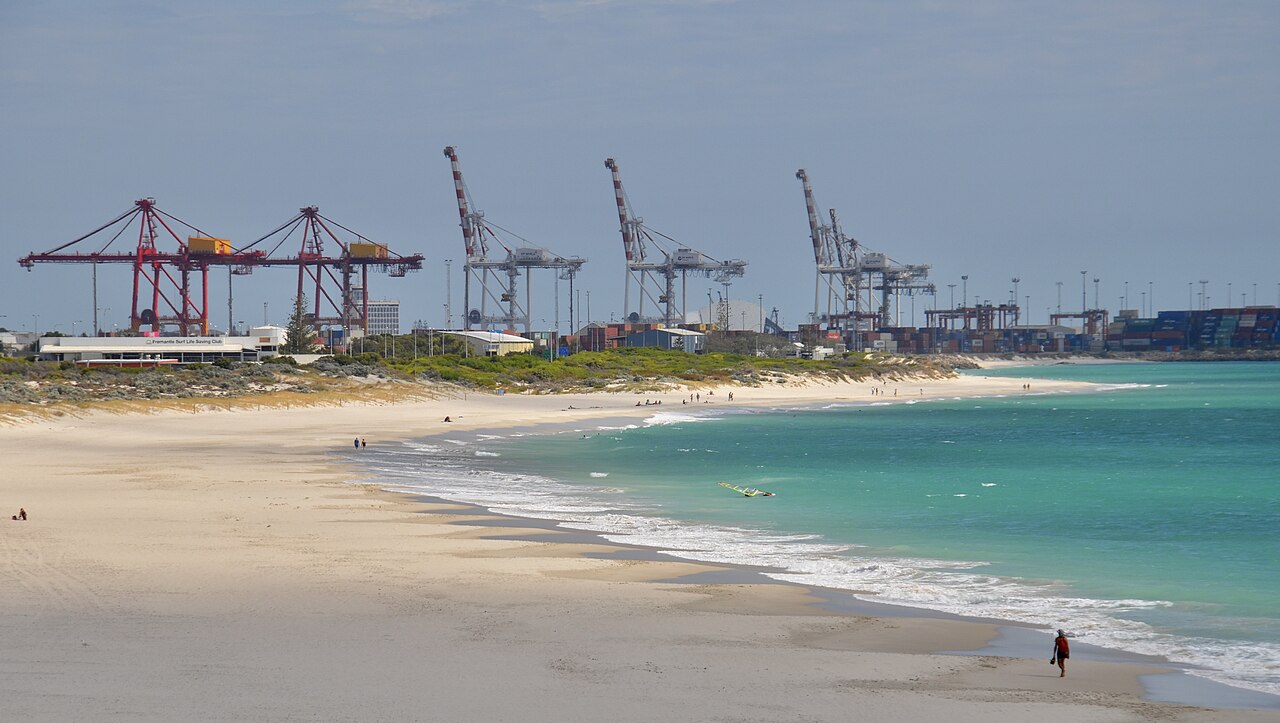
The finish funnel brings competitors back through the shoreline surge onto the soft sands of Leighton Beach. The post-race scene centers around a buzzing seaside gathering backed by low, grassy dunes and local beachside cafes. Swimmers mingle across the beach under the sun, sharing sunscreen, wide smiles, and spirited conversation in the coastal salt air.
The North Fremantle coast: swells, rips, and the Fremantle Doctor
Leighton Beach has earned an enduring reputation along the metropolitan coast for its sun-soaked setting, fine pale sand, and transparent waters. However, westerly winds can change the nature of the sea, generating strong rips and creating challenging southerly undertows along the coast. By the afternoon, the coastline feels the arrival of the Fremantle Doctor, a vigorous sea breeze that sweeps across the Indian Ocean. While open water swimmers prefer the gentler surface of the early morning hours, the building breeze and rising waves transform the beach into a destination for windsurfers and kitesurfers. Further along the sandy coast, Cottesloe Beach stretches for 1.5 kilometres along the Indian Ocean margin. Known to the traditional Noongar custodians as Mudurup, this shoreline has a long connection to ocean bathing.
The local surf culture gained formal footing in 1909 with the foundation of the Cottesloe Surf Life Saving Club, recognized as the very first lifesaving club in Western Australia. Safety measures along this open coast evolved directly in response to ocean hazards. Following a fatal shark encounter in 1925, municipal authorities constructed a solid concrete pylon in 1935 to anchor a protective shark net across the bay.
Leighton Beach: surf club, snorkel reefs and the Orange Box
Fremantle Surf Life Saving Club is based at Leighton Beach and has patrolled it since 1935. The northern end of Leighton Beach is known as Mosman's Beach and is managed by Mosman Park Council. The Mosman's Beach end of Leighton has reefs and marine life and is a sheltered snorkel spot. The Orange Box, a casual cafe next to Leighton Beach, is built from shipping containers painted orange. Leighton Beach can be reached by train or bus to North Fremantle station and an 800-metre walk. Satellite-based averages put sea temperatures at Leighton Beach at 22 to 23°C (72-73 °F) around 1 March and at 17 to 20°C (63-68 °F) around 9 September.
Arthur Head and Bathers Beach: maritime landings and the whaling shore
The Whadjuk Noongar people traditionally met and bartered goods on the beach at Manjaree, a coastal campsite known today as Bathers Beach. European settlement anchored on this ground in May 1829, when Captain Charles Fremantle landed and raised a British flag upon the limestone bluff of Arthur Head at the mouth of the Swan River, setting up a fortified camp on the sand. Before a safe harbour shielded the coastline, violent winter storms frequently drove passing ships directly onto the rocks and shallows. During a fierce gale on September 4, 1829, the sailing ship Marquis of Anglesea ran aground and broke up along Bathers Beach. The rocky headland at the southern edge of the sand was subsequently named Anglesea Point in memory of the lost vessel.
To transport heavy whaling gear between the beach and High Street, convict laborers from the nearby Round House excavated a 57-metre-long tunnel through the limestone bluff in 1838 under the direction of civil engineer Henry Willey Reveley. About three kilometres from the race grounds, along the southern shore of the river mouth, Victoria Quay was constructed. Workers quarried rock from Arthur Head and Rocky Bay in August 1894 to build the south mole breakwater, and harbor dredging in 1896 yielded spoil that formed the embankment beneath the quay.
The Swan River estuary: from Blackwall Reach to Bicton Baths
Preston Point, situated along the southern riverbank, was revered by the Noongar people as Niergarup, meaning the place of the salmon. It was used for ceremonial gatherings and riverside camping before explorer James Stirling named the point after Lieutenant William Preston in 1827. Today, the Royal Australian Navy continues to oversee the boatsheds and wharves situated along the river point. Blackwall Reach is flanked by dramatic limestone cliffs and remnants of original indigenous bushland. Known in Noongar Dreaming tradition as Jenalup, the deep reach holds sacred significance. Because of the reach's proximity to the open sea, marine species regularly push inland with the tide, resulting in unusual ocean catches in the river current.
Nestled inside a tidal gorge, Bicton Baths experiences a steady inflow of clean ocean water with every tide. Long before permanent enclosures were erected, swimmers from the Melville Amateur Swimming Club used the nearby quarantine station jetty as an open diving and swimming deck. Today, bathers step into the river via a wooden U-shaped jetty fitted with swim ladders. The tidal basin supports a rich marine habitat, where nudibranchs, anemones, sponges, sea stars, crabs, shrimp, schools of fish, and dolphins thrive in the clear current.
Fremantle Fishing Boat Harbour: the Mediterranean sea wall
In 1962, harbor authorities constructed an additional southern breakwater alongside reclaimed land to establish processing infrastructure, later adding a specialized boat-lifting yard in 1982. On race morning at Leighton Beach, swimmers enter the water, pulling through clean Indian Ocean swell above a wide floor of sand.
Sources: Preston Point
Course
Previous editions
- 2024results
How to get there
Round 1: Leighton 2026-27
Frequently asked questions
- When was the last edition of Round 1: Leighton 2026-27?
- The last edition of Round 1: Leighton 2026-27 took place on November 7, 2026.
- What distances does Round 1: Leighton 2026-27 offer?
- Round 1: Leighton 2026-27 offers 500 m, 1.3 km, 2.5 km, and 5 km.
- How much is the entry fee for Round 1: Leighton 2026-27?
- Entry fees by distance: 500 m: 32 AUD · 1.3 km: 62 AUD · 2.5 km: 68 AUD · 5 km: 87 AUD. Prices based on the 2025/26 Swimming WA Open Water Swimming Series standard entry fees. Non-members require a Day Licence ($5 for 500m, $25 for 1.25km+).
- Where does Round 1: Leighton 2026-27 take place?
- Round 1: Leighton 2026-27 is a sea swim. Location: Leighton Beach, North Fremantle, Western Australia, Australia.
- How do I register for Round 1: Leighton 2026-27?
- The reference page for registering for Round 1: Leighton 2026-27 is https://www.openwaterswimming.com.au/round-1-leighton-2026-27/.
Where to stay
North Fremantle offers a mix of modern boutique apartments and refurbished historic workers' cottages, often located within walking distance of the beach. For those preferring a more coastal vibe, proximity to the port area means many stays are in converted industrial buildings with harbor views. You can expect to find mid-range to premium options ranging from $180 to $450 per night, depending on the proximity to the water and the level of amenities offered in the converted heritage properties.
Things to do nearby
Beyond the water, the area is defined by its industrial heritage and river access. You can explore the history of the port through local walking trails or visit the nearby maritime museums. For an active recovery, the Swan River is ideal for kayak and SUP sessions, offering a calmer alternative to the ocean swell. Alternatively, the surrounding parklands provide excellent coastal trekking routes with views back toward the Indian Ocean, while the local dining scene in Fremantle highlights regional seafood and seasonal produce.
Swimmers
Other stages of this series
- SWA OWS Series: CoogeeCoogee, AU
- SWA OWS Series: RockinghamRockingham, AU
- SWA OWS Series: MullalooMullaloo, AU
- SWA OWS Series: SorrentoSorrento, AU
- SWA OWS Series: Koombana BayBunbury, AU
- New Town Toyota Round 6: City to ScarbsCity Beach, AU
Similar races


Comments
Transparency: some links on this page (stays, flights, experiences, gear) are affiliate links — if you book or buy through them, Omniathlon may earn a commission from the partner at no extra cost to you. As an Amazon Associate we earn from qualifying purchases.