
Oceanman Vouliagmeni
- Jun 20, 2027
- Distances from 750m to 10km
At a glance
- Next edition date
- June 20, 2027
- Distances
- 750 m · 1.5 km · 2 km · 2.3 km · 5 km · 10 km
- Where
- Sea · Vouliagmeni Beach, Vouliagmeni, Attica, Greece
- Entry fee
- 31–166 €
- Registration
- oceanmanswim.com
About the race
Vouliagmeni Beach is the setting for OCEANMAN Vouliagmeni, an open water swimming event hosted along the Athenian Riviera on the Attica coast of Greece. The race belongs to the global OCEANMAN series that began in 2015, which established its presence in Greece with an event in Limeni-Oitylo in East Mani. After staging earlier Greek editions in Oitylo and Chania on the island of Crete, the competition established its home in the waters of Vouliagmeni. Every June, the event brings open water swimmers to the organized beachfront of Vouliagmeni Beach. The race schedule caters to multiple endurance levels, offering swimming courses of 750 metres, 1,500 metres, 2,000 metres, 2,250 metres, 5,000 metres, and a 10,000-metre marathon. Swimmers launch directly into the bay. During past editions, the beach hosted an athlete village set up directly on the sand where competitors gathered before diving into the sea. Finishers celebrate at the beachfront ceremony.
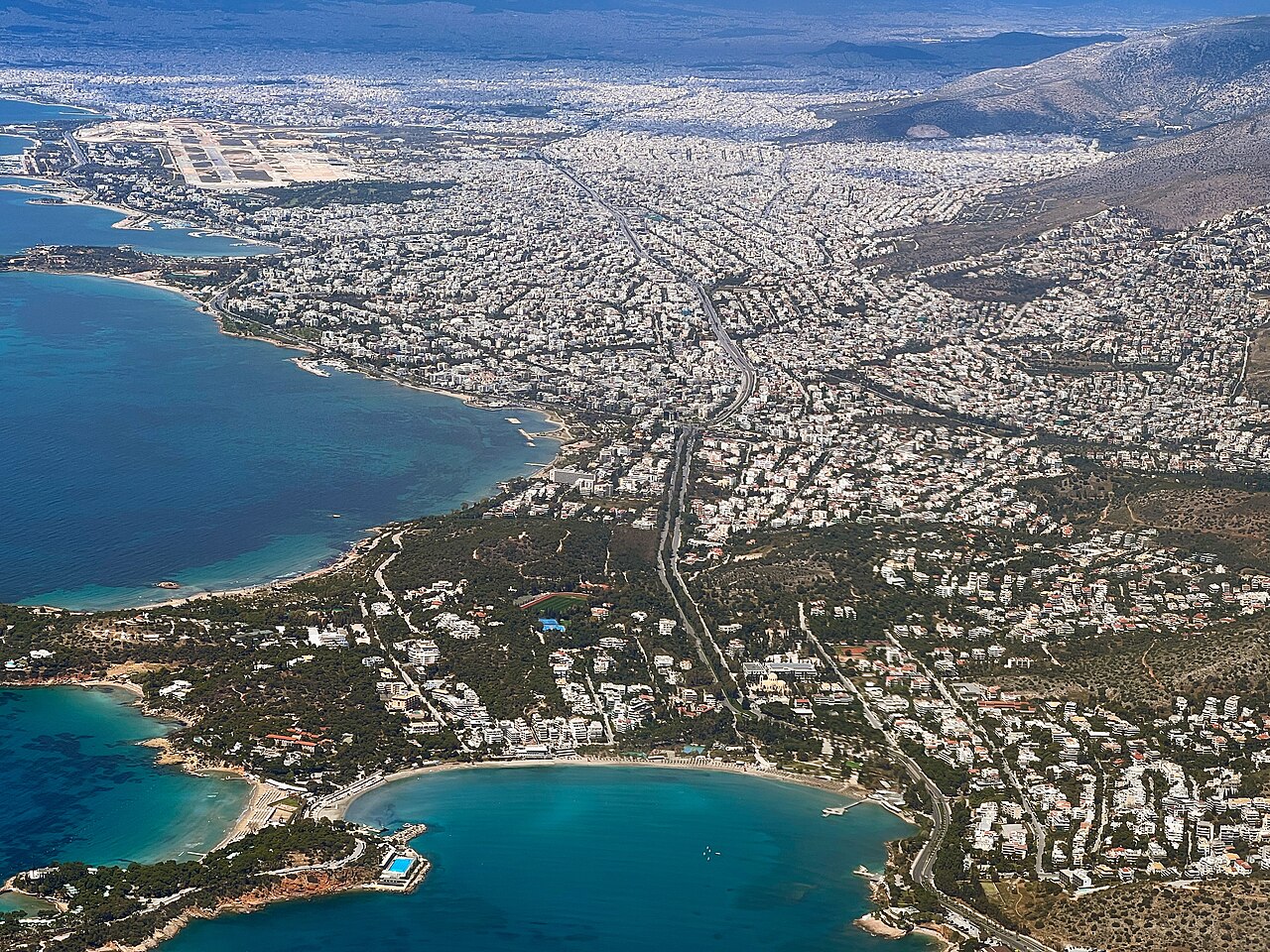
Lake Vouliagmeni: thermal springs and collapsed limestone caverns
Lake Vouliagmeni is a rare geological formation born roughly two thousand years ago. The lake was created when the roof of an enormous subterranean cavern collapsed following a powerful earthquake. Today, it sits nestled beneath sheer limestone cliffs, continually replenished by underground freshwater currents originating in Mount Hymettus as well as warm marine inflows that travel through flooded subterranean grottos. This continuous subterranean circulation keeps the water pleasantly warm throughout the year without ever dropping into winter chills, while fresh springs soften the seawater into a calm, brackish pool. Beneath the surface, the lake conceals an immense flooded cave network whose deepest tunnels remain unexplored despite repeated diving expeditions. The submerged passages weave far into the rock, creating a complex underground labyrinth.
Since the late nineteenth century, bathers have visited Lake Vouliagmeni as a natural spa, drawn by its soothing mineral warmth and hydrogen sulphide content. After finishing a challenging sea swim, visitors often wade into the tranquil water where tiny doctor fish cluster around swimmers' feet to gently nibble away dry skin, providing a natural and relaxing spa exfoliation before returning to the coastline.
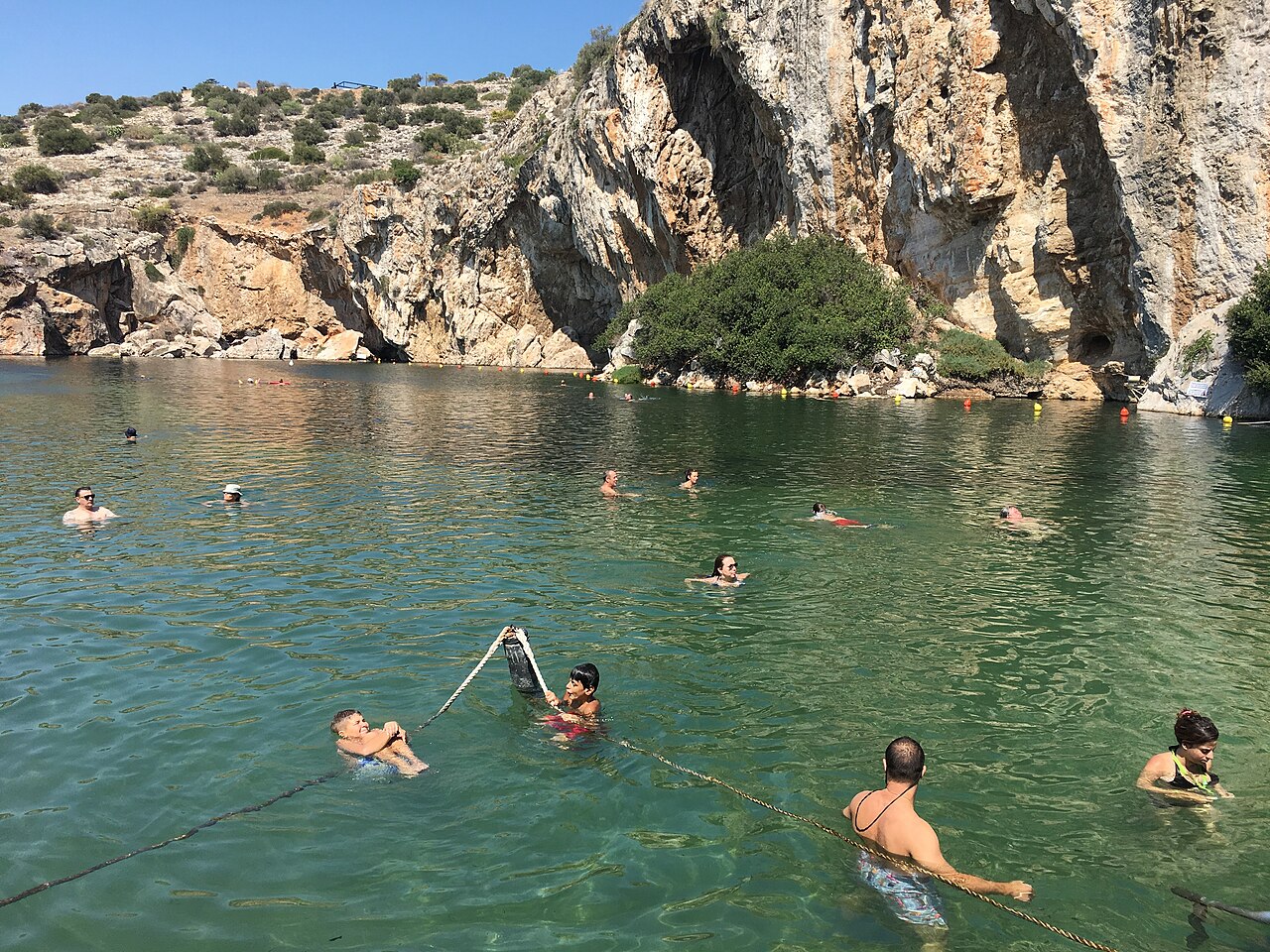
Cape Zoster, Apollo's sanctuary, and the islet of Fleves
Cape Zoster is a rugged headland extending into the Saronic Gulf. In classical antiquity, this cape marked the boundary between the settlements of Aexone and Anagyrous, forming part of the Athenian deme of Aixōnídes Halaí, known as the Saltfields of Aixōnē. Human presence here reaches back even further, with archaeologists uncovering stone foundations that date from the Neolithic and Bronze Ages, alongside the remains of a fifth-century BC military outpost. Directly along the shoreline, the ancient past meets the modern resort strip. Inside the grounds of Astir Beach stand the excavated ruins of the Temple of Apollo Zoster. In modern times, the rocky outcrop served as a naval fortress and an offshore training ground for the Hellenic Navy's underwater demolition teams.
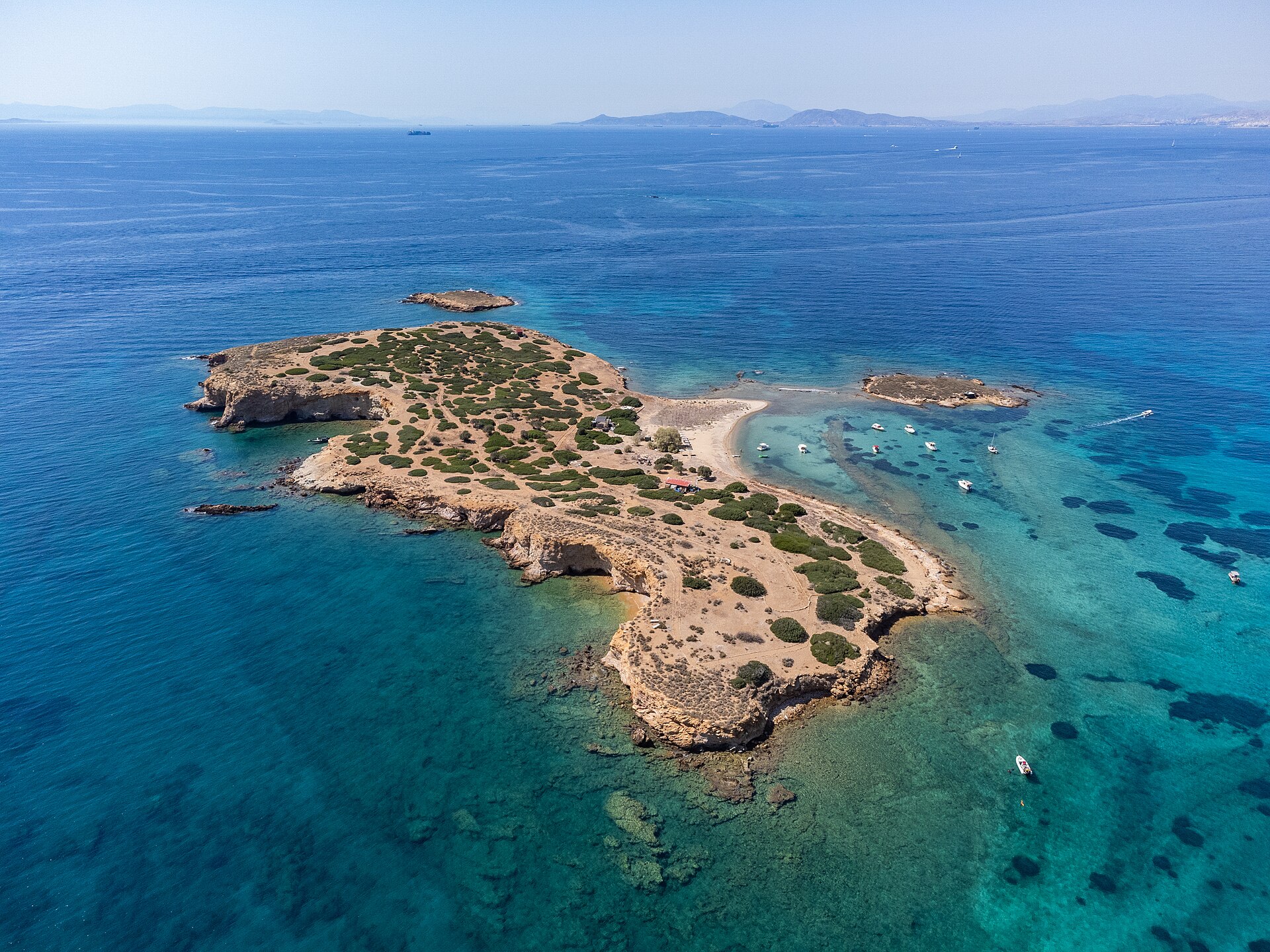
Much closer to shore, lying just 0.7 nautical miles off the coast, is the low-lying islet of Hydrousa. During the nineteenth century, the island was leased to local shepherds who ferried livestock across the channel to graze. Today, wild rabbits roam among the island's low Mediterranean scrub, which conceals a network of World War II military tunnels, storage chambers, and an underground balcony that peers directly over the Saronic Gulf.
Megalo Kavouri peninsula and the rocky Limanakia coves
The coast extends into the twin peninsulas of Mikro and Megalo Kavouri. Covered in maritime pine woods and scattered with private villas, the peninsulas feature a scenic shoreline where sandy swimming coves alternate with smooth pebbles and rocky points. Kavouri itself stretches out for 1,200 metres before ending in a forty-metre-high headland facing the tiny islet of Kavouronisi, with the Kakoulidi reef resting about one kilometre to the north. Along Megalo Kavouri beach, swimmers find a 900-metre shoreline with calm, remarkably shallow waters. The sandy bottom slopes so gently that bathers can wade entirely by foot across the water to reach a small offshore islet. Just inland from the tide line, archaeologists discovered an ancient coastal road spanning three hundred metres in length, revealing where ancient travelers once journeyed along the edge of the sea. In the Limanakia area, the rocks drop straight into clear, deep marine waters. Popular with local swimmers, these secluded rocky notches lack sandy beaches, inviting athletes to plunge straight from the sun-warmed rocks into the refreshing blue sea.
Akti Vouliagmenis and the pine-fringed Athenian Riviera
The reliably dry, sunlit summer weather creates consistent conditions for open water racing along the Attica shore. The start and finish venue at Akti Vouliagmenis carries a long heritage as an organized bathing beach. First developed in 1960, the municipal facility continues to earn a Blue Flag for environmental care, boasting golden sand and spotless waters. Water culture thrives along this shore, led by the Vouliagmeni Nautical Club, founded in 1937. After a morning of open-water competition, athletes can unwind beneath the maritime pines, or spend the evening at the open-air Akti Summer Cinema, which has screened films in a bougainvillea-framed courtyard since 1975.
Sources: Υδρούσα Αττικής (νησίδα) · Καβούρι Αττικής · Vouliagmeni · Lake Vouliagmeni · Zoster (Attica)
Course
Previous editions
- 2026Jun 19, 2026
How to get there
Airport: ATH
Oceanman Vouliagmeni
Frequently asked questions
- When is Oceanman Vouliagmeni?
- Oceanman Vouliagmeni takes place on June 20, 2027.
- What distances does Oceanman Vouliagmeni offer?
- Oceanman Vouliagmeni offers 750 m, 1.5 km, 2 km, 2.3 km, 5 km, and 10 km.
- How much is the entry fee for Oceanman Vouliagmeni?
- The entry fee ranges from 31 € to 166 €.
- Where does Oceanman Vouliagmeni take place?
- Oceanman Vouliagmeni is a sea swim. Location: Vouliagmeni Beach, Vouliagmeni, Attica, Greece.
- How do I register for Oceanman Vouliagmeni?
- The reference page for registering for Oceanman Vouliagmeni is https://oceanmanswim.com/races/vouliagmeni-greece-2027.
Where to stay
Vouliagmeni offers a spectrum of lodging options, ranging from luxury boutique hotels along the Laimos cape to smaller, family-run guesthouses further inland. For those seeking coastal proximity, the area features high-end resorts with private beach access, while residential apartments provide a more local experience. Expect nightly rates ranging from €180 for standard hotel rooms up to €600+ for premium waterfront properties during the peak summer month of June.
Things to do nearby
The weekend provides opportunities to explore the region’s intersection of geology and history. Beyond the race, visitors can participate in guided kayaking tours to reach the smaller, inaccessible islets or engage in thermal wellness sessions at the lake. Archaeological enthusiasts often prioritize visits to the ruins of the ancient carriage road near Megalo Kavouri, while the coastal trails offer light trekking with elevated views of the Saronic Gulf.
Swimmers
Other races by this organiser
- Oceanman Phang-NgaPhang-Nga, TH
- Oceanman GuanacasteGuanacaste, CR
- Oceanman CórdobaCórdoba, AR
- Oceanman KrabiKrabi, TH
- Oceanman LimaLima, PE
- Oceanman MaafushiMaafushi, MV
Similar races


Comments
Transparency: some links on this page (stays, flights, experiences, gear) are affiliate links — if you book or buy through them, Omniathlon may earn a commission from the partner at no extra cost to you. As an Amazon Associate we earn from qualifying purchases.