
Oceanman Ibiza
- Oct 18, 2026
- Last edition date
- Distances from 500m to 10km
At a glance
- Last edition date
- October 18, 2026
- Distances
- 500 m · 1.5 km · 2 km · 5 km · 10 km
- Where
- Sea · Es Port d’es Torrent, Sant Josep de sa Talaia, Illes Balears, Spain
- Entry fee
- 32–140 €
- Registration
- oceanmanswim.com
About the race
In mid-October, the western tip of Ibiza offers calm 22-degree waters and transparent inlets. Oceanman Ibiza is an open water swimming race in the sea off Es Port d’es Torrent, in the municipality of Sant Josep de sa Talaia in the Balearic Islands. Organized by OCEANMAN, the event brings open water swimmers together across five race distances: 500 meters, 1,500 meters, 2,000 meters, 5,000 meters, and a 10,000-meter marathon. During the mild autumn season, the sea remains pleasant for swimming, holding comfortable conditions long after the continental mainland has turned cold. The competition offers courses tailored to different levels of endurance, from short sprints across the cove to extended coastal journeys.
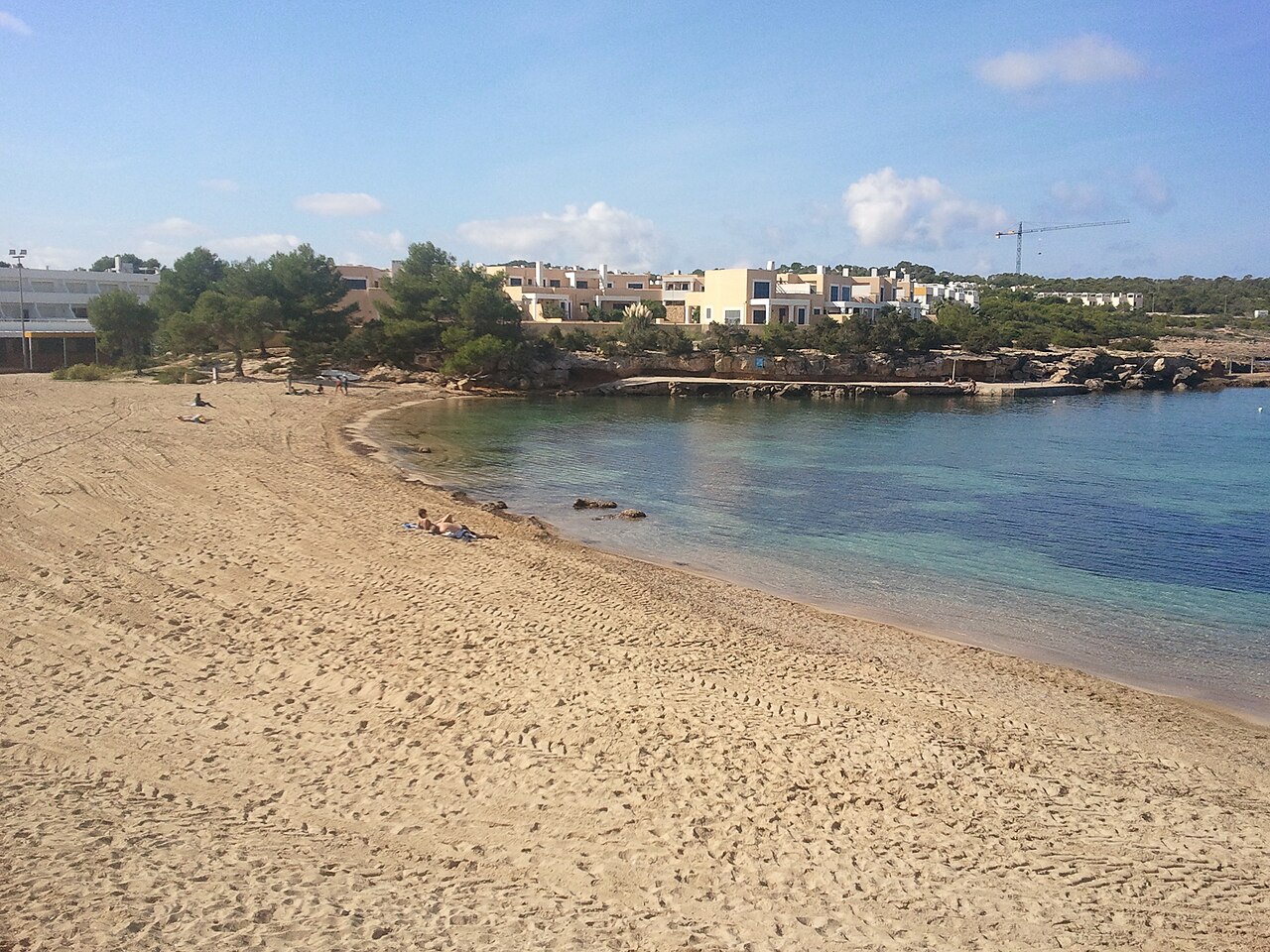
In past editions, the 5,000-meter race got underway at dawn with calm seas and a light coastal current, sending swimmers out into the morning light. The premier challenge is the 10,000-meter distance, where swimmers take on the open sea to circumnavigate the island of Sa Conillera. Swimmers have been amazed by the clarity of the water at Es Port d'es Torrent, where the rocky contours and pale sand of the seabed remain visible beneath every stroke.
The sheltered inlet of Es Port d’es Torrent
The staging ground for the event is Platja Port d'es Torrent, an inlet that takes its name from a seasonal stream that flows from the slopes of Sa Talaiassa into the sea. Over centuries, the torrent formed a deep natural breach into the coastline, creating quiet, protected waters that provide safe swimming conditions. The beach features fine-grained golden sand that slopes gently into the shallows, making entering the water comfortable for swimmers preparing on the shoreline. Out toward the mouth of the cove, the depth increases, opening into deep water well suited for swimming, scuba diving, and snorkeling. Rocky margins border the edges of the bay. In 2012, the cove earned a Blue Flag for its water quality and clean coastal environment, confirming the exceptional conditions of this sheltered stretch of sea.
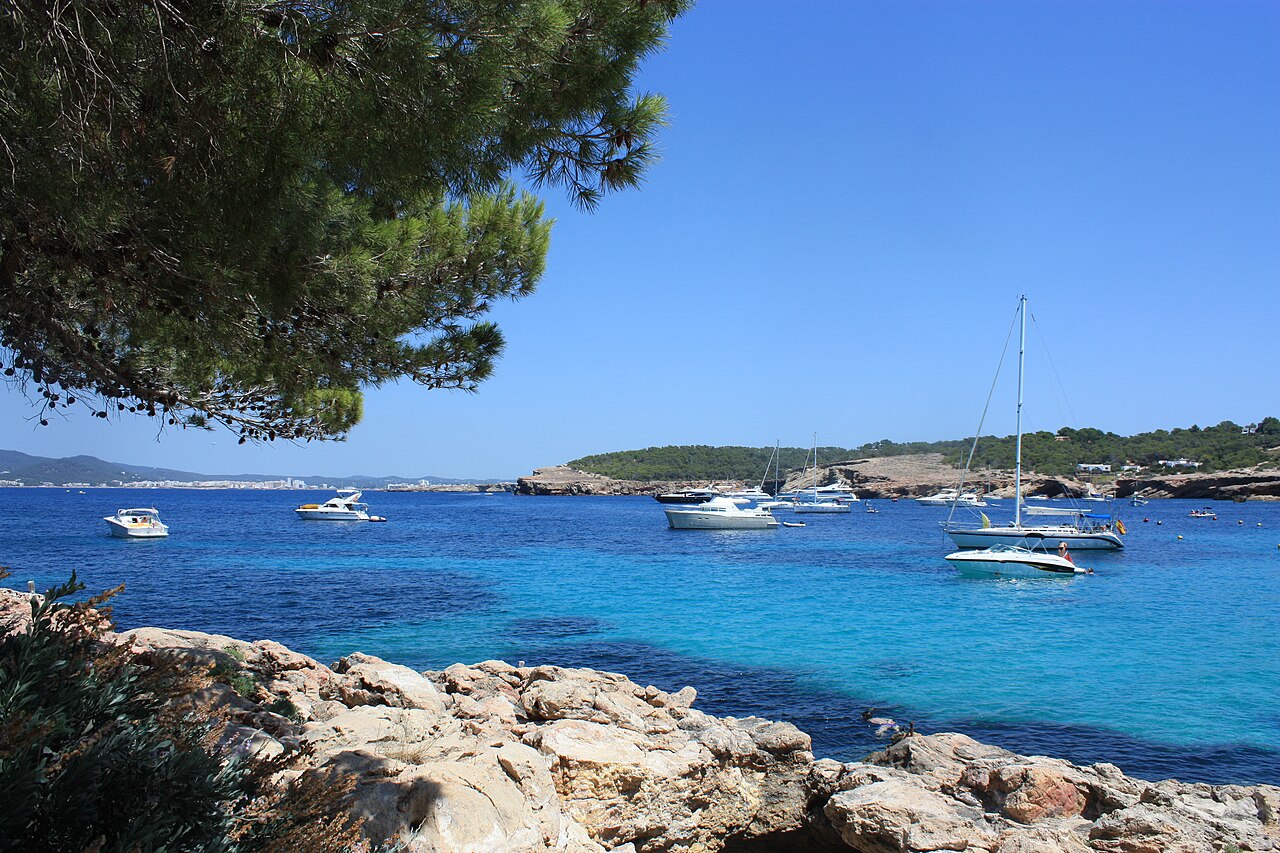
Sa Conillera and the western archipelago
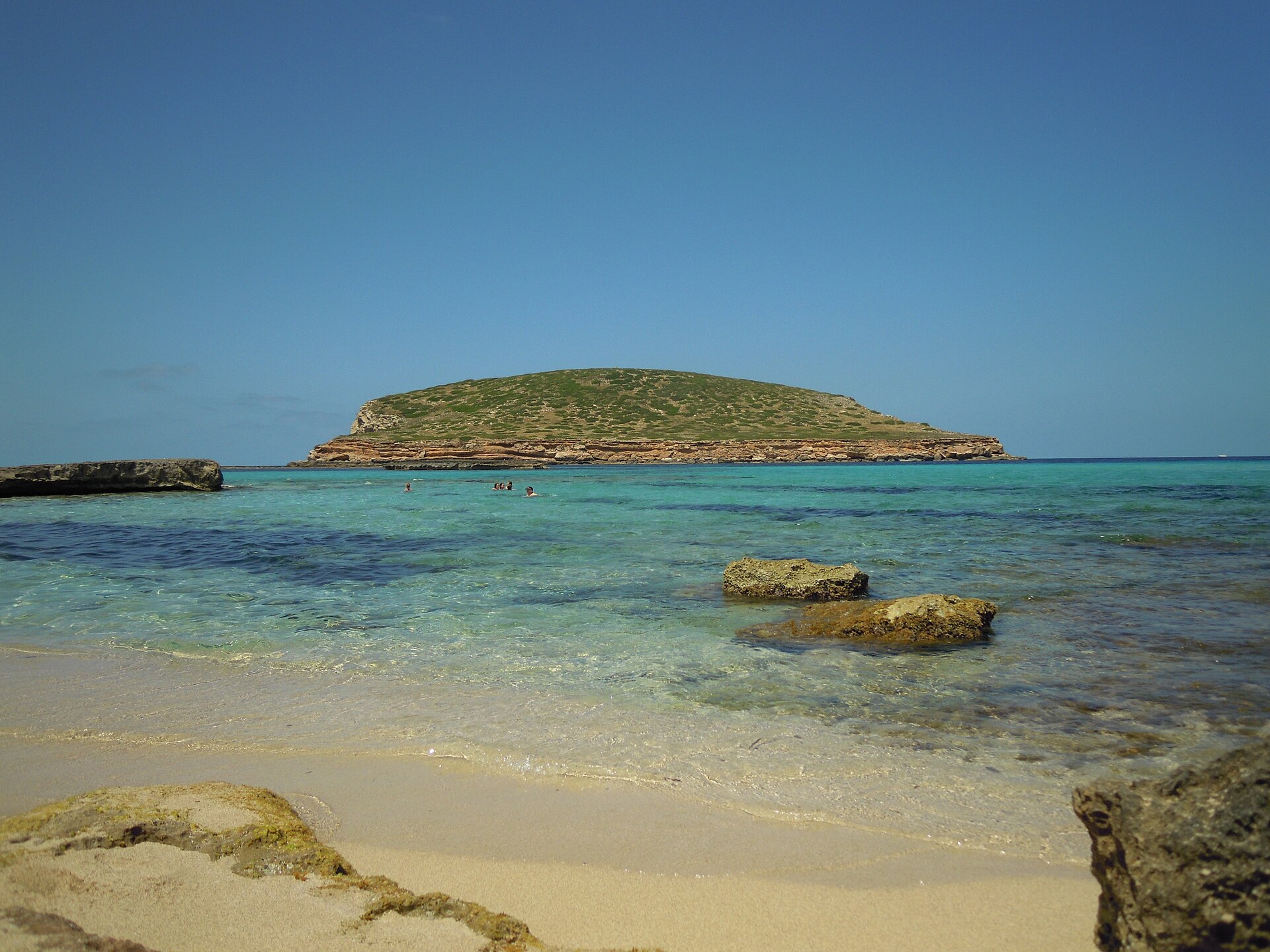
Rising offshore at the western end of Ibiza near Sant Antoni, the island of Sa Conillera forms the centerpiece of the marathon swimming course. It is the largest islet visible from the nearby beaches, with a surface area of approximately one square kilometer. Geological research indicates that Sa Conillera separated from the mainland of Ibiza approximately 6,000 years ago, splitting off simultaneously with neighboring islets. The island is marked by the Conejera lighthouse, which has been operational since 1857 to guide boats through the offshore passages. Despite the light on the island, several shipwrecks occurred in these waters before a companion beacon was established closer to town. That supplementary station, the Coves Blanques lighthouse, began its service in 1897 about four kilometres away after Portmany bay was declared a Port of General Interest of the Second Order in 1885.
In 1913, its light was modified to white with occultations to prevent vessels from confusing it with the growing town lights, and by 1926 its keepers also managed the beacons of Conejera, Bleda Plana, Punta Xinxó, and Es Vedrá. Automated in 1956, Coves Blanques was deactivated in 1963. Directly off the southern coast of Sa Conillera lies the companion islet of Illa des Bosc. Like its neighbor, this smaller island separated from Ibiza around 6,000 years ago and preserves traces of early human history. On its flatter ground near the sea, archaeologists discovered ceramics dating back to the 1st century AD, as well as an ancient stone wall once used as a shelter by local coastal inhabitants.
S'Espartar and the wildlife of the outer reserves
S'Espartar was named after the historical practice of soaking esparto grass in its seawater to strengthen the fibers. Nearby, Illa des Bosc takes its name from the vegetation that covers its surface. Isolated from development, S'Espartar shelters 131 plant species, including rare endemic shrubs and a rare flowering alfalfa plant adapted to the exposed maritime habitat. S'Espartar also provides safe refuge for marine bird life. Colonies of red-billed gulls and cormorants gather around the water, while endangered Eleonora's falcons nest. In the surrounding sea, the rocky outcrop known as Escull de Ses Punxes attracts divers and snorkelers. Further south, about twelve kilometres from the race area, the majestic silhouette of Es Vedrà rises 413 meters straight out of the sea, located 2.48 kilometers off the coast of Cala d'Hort.
This colossal rock formed 155 million years ago when seismic movements split the Betica Mountain Range. Rich in myth, Es Vedrà was identified in ancient legend as the home of the sirens and sea nymphs from Homer's Odyssey, and it served as a holy sanctuary to the Phoenician goddess Tanit, where sacrifices were allegedly made under full moons. Today, the crags of Es Vedrà harbor a subspecies of the Ibizan wall lizard and another colony of endangered Eleonora's falcons, maintaining the protected wild character of western Ibiza.
Fishermen slipways and coves around Sant Josep
The mainland coastline bordering the race area reveals a succession of inlets carved into the western coast. Cala Bassa sits on the northwestern seaboard. Cala Comte features 800 meters of beaches ranging from 15 to 30 meters wide, where one secluded cove can be reached only by descending steps carved directly into the natural rock. Continuing along the western shoreline, Cala Tarida sits tucked into a sheltered bay with a southerly aspect and fine, clean white sand. Its waters remain shallow for a significant distance over a smooth sandy bottom, with depth increasing along the right side of the bay while the left side turns rocky. Two smaller satellite beaches of fine sand sit close to the main shore, offering quiet corners to rest.
On the northern coast of the island, Cala Salada provides another scenic anchorage where visiting boats frequently gather in tranquil water. At Cala Vadella, steep cliffs topped with pine woods frame a narrow sea inlet. On the north side of the cove, the headland of Es’ Torraci shelters the satellite beach of Sa Torrasa.
Sources: Faro de Coves Blanques · Cala Comte · Isla Conejera (Ibiza) · Illa des Bosc · Cala Tarida · Cala Bassa · Platja Port d'es Torrent · Illa de s'Espartar
Course
How to get there
Airport: IBZ. Official Hotel: HOTEL SIRENIS SEAVIEW. Car rental: AUTOS MARÍ.
Oceanman Ibiza
Frequently asked questions
- When was the last edition of Oceanman Ibiza?
- The last edition of Oceanman Ibiza took place on October 18, 2026.
- What distances does Oceanman Ibiza offer?
- Oceanman Ibiza offers 500 m, 1.5 km, 2 km, 5 km, and 10 km.
- How much is the entry fee for Oceanman Ibiza?
- The entry fee ranges from 32 € to 140 €.
- Where does Oceanman Ibiza take place?
- Oceanman Ibiza is a sea swim. Location: Es Port d’es Torrent, Sant Josep de sa Talaia, Illes Balears, Spain.
- How do I register for Oceanman Ibiza?
- The reference page for registering for Oceanman Ibiza is https://oceanmanswim.com/races/ibiza-spain.
Where to stay
Accommodations in Sant Josep de sa Talaia vary from traditional whitewashed fincas to boutique hotels overlooking the port. For those seeking proximity to the race venue at Es Port d’es Torrent, beachfront apartments are available, while the surrounding hills offer secluded agrotourism estates. Expect to pay between €150 and €350 per night during the shoulder season, though prices fluctuate based on the proximity to the coast and the level of amenities provided in these local properties.
Things to do nearby
Beyond the race, the western coast is ideal for exploring the geological diversity of the island. You can rent a kayak or SUP to navigate the smaller inlets near the race course, or visit the Coves Blanques area to observe the maritime history of the bay. Local excursions often include trekking trails along the cliffs near the Torre d'en Rovira, where the terrain provides views of the islets. Additionally, the region is known for artisanal salt and wine production, with several vineyards offering tastings that highlight the island's agricultural evolution.
Swimmers
Other races by this organiser
- Oceanman Phang-NgaPhang-Nga, TH
- Oceanman GuanacasteGuanacaste, CR
- Oceanman CórdobaCórdoba, AR
- Oceanman KrabiKrabi, TH
- Oceanman LimaLima, PE
- Oceanman MaafushiMaafushi, MV
Similar races



Comments
Transparency: some links on this page (stays, flights, experiences, gear) are affiliate links — if you book or buy through them, Omniathlon may earn a commission from the partner at no extra cost to you. As an Amazon Associate we earn from qualifying purchases.