
Nuotiamo nell'Oasi
- Sep 13, 2025
- Last edition date
- Distances: 3.5km and 9km
At a glance
- Last edition date
- September 13, 2025
- Distances
- 3.5 km · 9 km
- Where
- Sea · Trieste, Friuli-Venezia Giulia, Italy
- Entry fee
- 58–75 €
- Registration
- abbracciamoli.it
About the race
Nuotiamo nell'Oasi is an open-water sea swimming race in the waters of Trieste, set against the coastal backdrop of Friuli-Venezia Giulia in north-eastern Italy. Held in late summer along this suggestive coastline, the event brings swimmers across open marine waters. Organised by Abbracciamoli APS, the gathering unites open-water athletes along scenic routes. Swimmers gathering in the morning air face the open expanse of the gulf before heading into the blue sea. The programme provides multiple distances to navigate the open bay, including a 3,500-metre swim and an endurance course reaching 9,000 metres. Swimmers tackling the 9 km race plunge into the sea from the OGS. From the start, the navigation leads out into open water, guiding competitors around offshore waypoints such as the OGS Mambo oceanographic buoy before setting a course toward the finish line at Molo Sticco.
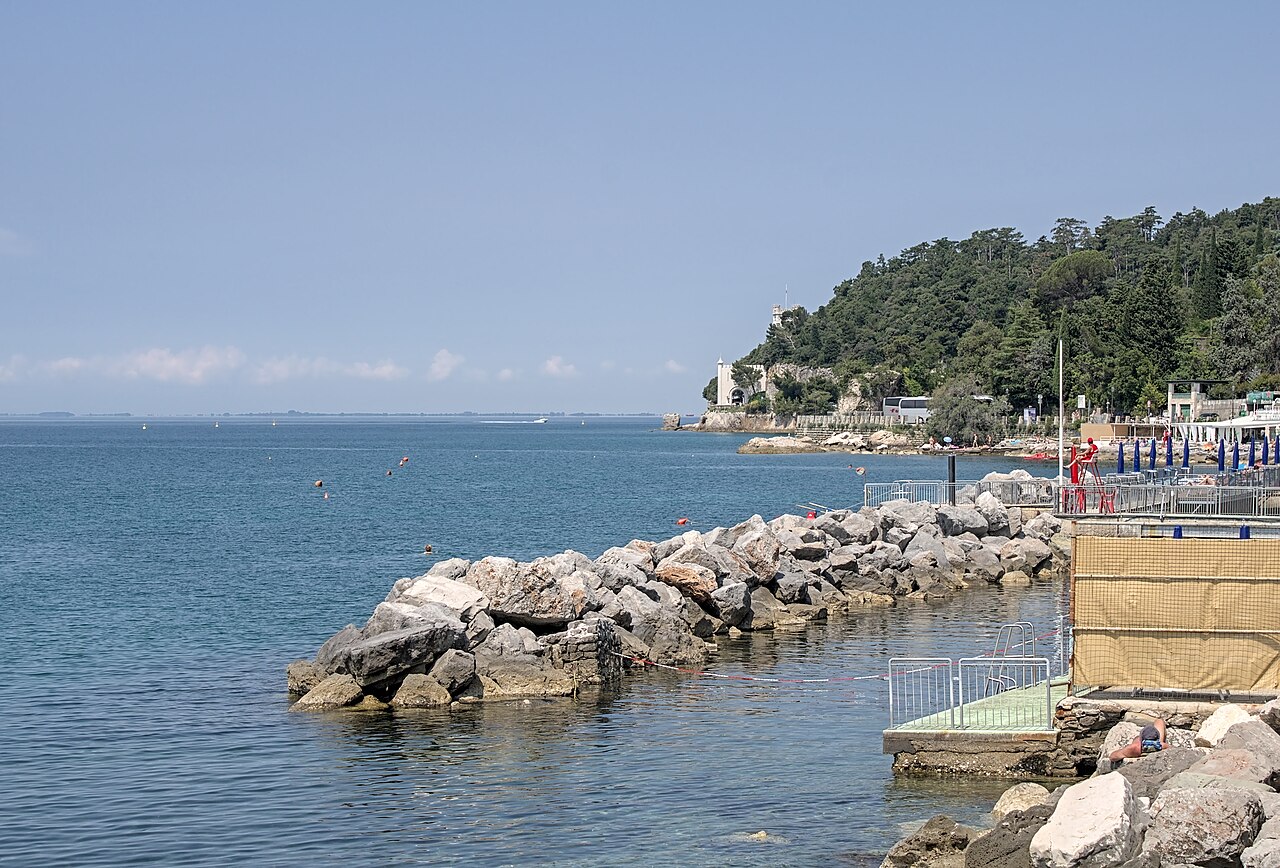
Sighting markers stand out against the vast sea, keeping the pack aligned as swimmers settle into their rhythm through the open Adriatic swell. Along the route, swimmers trace the outer edge of the local Marine Protected Area and pass close to Miramare Castle. Swimming along this historical coastline, participants describe the crossing as spectacular, sharing the water as part of a collective solidarity chain. After the final strokes bring swimmers ashore at the pier, the event winds down with a festive open-air gathering accompanied by a seaside DJ set.
Miramare Marine Reserve and the 2025 swims
The Miramare Marine Protected Area, the first established in Italy, extends around the Miramare promontory a few kilometres northwest of Trieste. Its fully protected zone covers 30 hectares, 200 metres wide along 1.8 km of coast. Around it runs a partial-protection buffer of 90 hectares and 400 metres in width, where professional fishing is banned. The deepest point inside the reserve is 18 metres, and the coast is made of limestone rock typical of the Carso. For Nuotiamo nell'Oasi 2025, Trieste Trasporti made 200 free day tickets available for reaching the starting points of the individual swims. Many swimmers on the 3.5 km course of that edition raised the bar of their abilities.
Barcola waterfront: Roman piers and the Topolini platforms
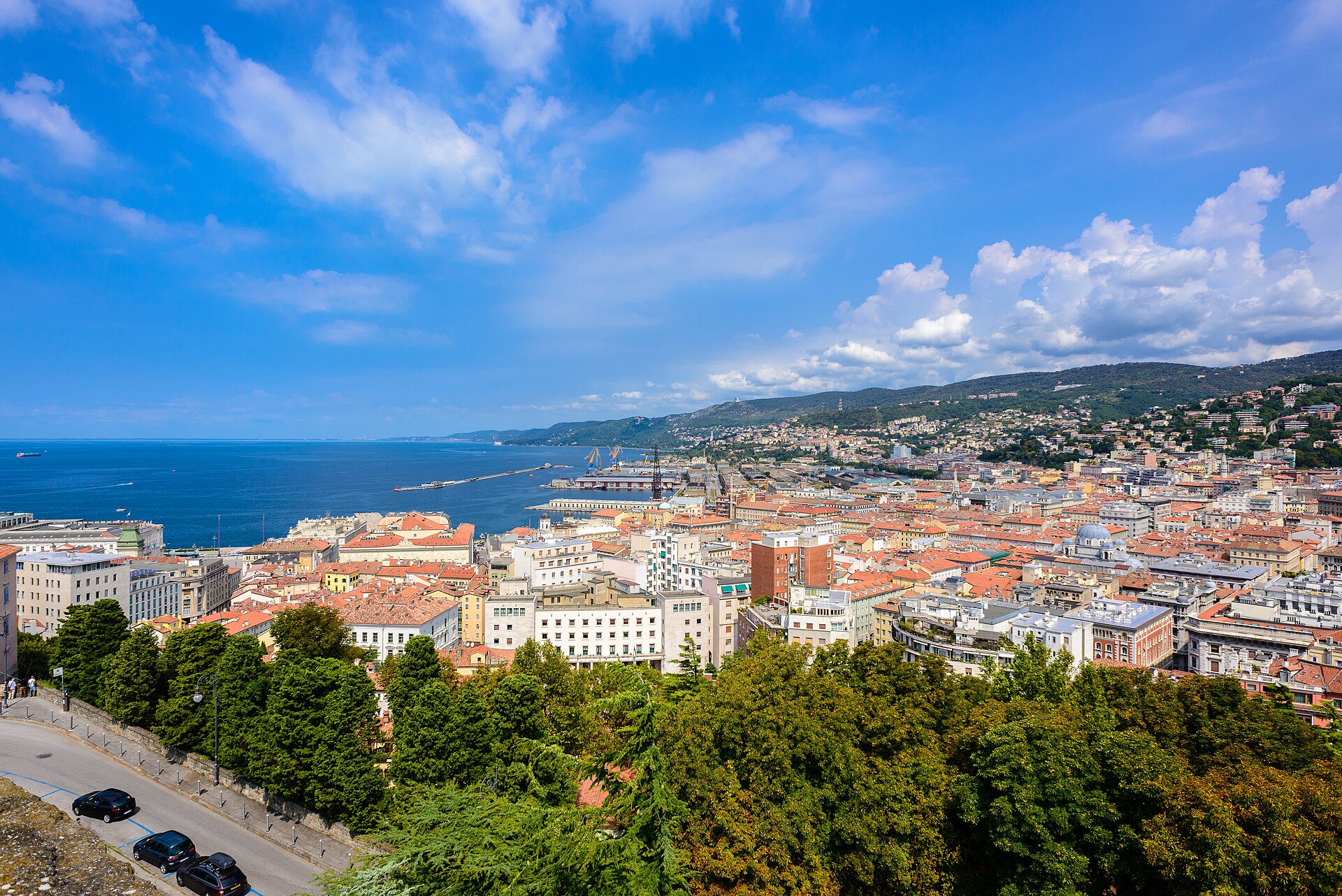
Barcola is an ancient seaside strip long cherished by local swimmers. During the Roman Empire, the shoreline hosted a maritime fishing village known as Vallicula, where wealthy Romans erected waterfront villas equipped with private stone piers and dedicated thermal bathing facilities. For centuries after antiquity, Barcola remained a quiet maritime settlement where generations of local fishermen hauled their wooden nets onto the beach until the mid-nineteenth century. Today, Barcola serves as the city's outdoor bathing salon, centred around the Topolini platforms that extend over the water. Swimmers gather between sets or chat after logging miles in the bay. Out in the open water directly facing these bathing terraces, the sea becomes a spectacle every autumn, when the vast sailing fleet of the historic Barcolana regatta fills the gulf, an annual competition established in 1969.
Porto Vecchio and Molo Audace: the Habsburg harbour
Continuing past the promenade brings you into the commercial heart of the Port of Trieste, nestled in the Upper Adriatic. Granted the status of a free port by Holy Roman Emperor Charles VI in 1719, Trieste grew rapidly into a maritime trade gateway linking Central Europe with world trade routes, and today stands as the maritime terminus of the Silk Road. The Porto Vecchio sector stretches from the Grand Canal entrance to the edge of Barcola, sheltering more than 3,000 metres of historic stone quays protected behind a breakwater. The modern port continues to expand its maritime reach, with the construction of Pier VIII engineered to receive mega-container vessels drawing up to 18 metres.
Nearby, the passenger terminal at Molo Bersaglieri has undergone deep dredging to bring the seabed to a depth of 11 metres. During World War II, between 1944 and 1945, Allied air raids targeted the harbour port facilities and oil refineries, inflicting severe damage across the waterfront before modern reconstruction reshaped the basin. The stone promenade of Molo Audace thrusts directly into the sea, dividing the San Giorgio basin from the San Giusto basin. Built between 1743 and 1751, the pier was raised upon the Austrian merchant ship San Carlo, which served as its foundation. Successive construction phases in 1778 and the 1860s lengthened the stone pier to its current length of 246 metres.
On November 3, 1918, the Italian Navy destroyer Audace became the first military vessel to dock at the jetty. The wreck of the sunken destroyer Audace was located in 1999. At the seaward tip of the pier, a bronze wind rose was placed in 1925 to commemorate the ship's arrival. The shoreline curves into the Vallone di Muggia, marking the northern geographical boundary of the Istrian peninsula in the Upper Adriatic. The northern pocket of the Muggia inlet, known as the Baia di Zaule, accommodates the marine terminal of the Transalpine Pipeline. From here, the Zaule Channel cuts inland toward the industrial hub of Trieste, while the fresh waters of the Rosandra stream empty into the inlet near the former grounds of the Aquila Refinery.
The southern coast of the inlet rises high against the hills above Muggia, cradling the tourist marinas of Porto San Rocco and Muggia harbour. At the far western tip of the Muggia peninsula, Cape Debeli Rtič points northwest, displaying flysch cliffs between 12 and 21 metres high that naturally erode at one to two centimetres each year, with 23.8 hectares protected as a natural monument since 1991.
Canal Grande and the Riva Nazario Sauro fish market
Stepping away from the stone quays, the Canal Grande was excavated between 1754 and 1756 by Venetian builder Matteo Pirona, carved along the central drainage collector of the old salt pans. A traditional squero was established near the canal entrance bridge to provide dry-docking and maintenance for small boats. The canal's original movable bridges were eventually replaced by fixed masonry arches, meaning modern boats can only navigate underneath during periods of low tide. The canal once stretched even further inland until 1934, when its terminal section was filled in using rubble from the demolition of the old city to construct Piazza Sant'Antonio. Local lore still claims that a small torpedo boat, abandoned following the war, was buried beneath the stone square during the 1934 infilling.
The monumental central fish market was erected in 1913. Since 1933, a wing of this grand market hall has housed the Civico acquario marino di Trieste, which features 25 exhibition tanks displaying Adriatic species. A centerpiece of the aquarium is its large octagonal tank housing Adriatic sharks and rays, while a dedicated terrarium recreates the delicate ecosystem of a karst pond for amphibians. For 31 years, the aquarium was also beloved as the home of Marco, an iconic resident penguin.
Sources: Trieste · Molo Audace
Course
Course for trained swimmers in the waters of Trieste.
Long distance race starting from the OGS (Istituto Nazionale di Oceanografia e di Geofisica Sperimentale) and passing by the Miramare Castle.
How to get there
Nuotiamo nell'Oasi
Frequently asked questions
- When was the last edition of Nuotiamo nell'Oasi?
- The last edition of Nuotiamo nell'Oasi took place on September 13, 2025.
- What distances does Nuotiamo nell'Oasi offer?
- Nuotiamo nell'Oasi offers 3.5 km and 9 km.
- How much is the entry fee for Nuotiamo nell'Oasi?
- The entry fee ranges from 58 € to 75 €.
- Where does Nuotiamo nell'Oasi take place?
- Nuotiamo nell'Oasi is a sea swim. Location: Trieste, Friuli-Venezia Giulia, Italy.
- How do I register for Nuotiamo nell'Oasi?
- The reference page for registering for Nuotiamo nell'Oasi is https://www.abbracciamoli.it/nuotiamo-nell-oasi-trieste-2025/.
Where to stay
Trieste offers a range of stays, from historic boutique hotels overlooking the port to comfortable apartments in the city center. You will find many options near the Barcola waterfront, which is ideal for easy access to the race start. Prices typically range from €90 per night for centrally located guesthouses to over €200 for premium seaside hotels with views of the Gulf.
Things to do nearby
Beyond the race, explore the historical depth of the region through visits to the Risiera di San Sabba or by taking a short boat trip to the coastal cliffs. The area is perfect for morning kayaking along the Barcola coast or enjoying local Prosecco and seafood in the historic cafes around the main square. Hiking trails on the Karst plateau offer panoramic views of the entire Gulf of Trieste.
Swimmers
Other races by this organiser
- Traversata Carloforte-CalasettaCalasetta, IT
- Lago d'EndineEndine Gaiano, IT
- Abbracciamoli Stretto di MessinaMessina, IT
- TriesteTrieste, IT
- Elba - Abbracciamoli Pro Swim RaceMarciana Marina, IT
- Nuotiamo lo strettoMessina, IT
Similar races


Comments
Transparency: some links on this page (stays, flights, experiences, gear) are affiliate links — if you book or buy through them, Omniathlon may earn a commission from the partner at no extra cost to you. As an Amazon Associate we earn from qualifying purchases.