
Nuotiamo lo stretto
- Distance: 3.5km
At a glance
- Distances
- 3.5 km
- Where
- Sea · Stretto di Messina, Messina, Sicilia/Calabria, Italy
- Entry fee
- 180 €
- Registration
- abbracciamoli.it
About the race
Nuotiamo lo stretto is an open-water sea crossing across the legendary Strait of Messina, connecting Sicily and Calabria under the guidance of the sports association Abbracciamoli APS. Swimmers entering this historic channel encounter highly variable currents and shifting waves that test physical and mental endurance, requiring you to constantly adjust your stroke mechanics to match the restless water. Sudden patches of frigid water can surprise you mid-crossing, and the final stretch toward the opposite shore frequently turns into a grueling fight against a stiff cold flow. Because the movement of water across the strait is famously unpredictable, each swimmer relies closely on an experienced boatman to read the eddies and pick a safe line across the channel. When turbulent weather or shifting tides disrupt an attempt, the challenge has a way of pulling swimmers back to take on the crossing a second time.
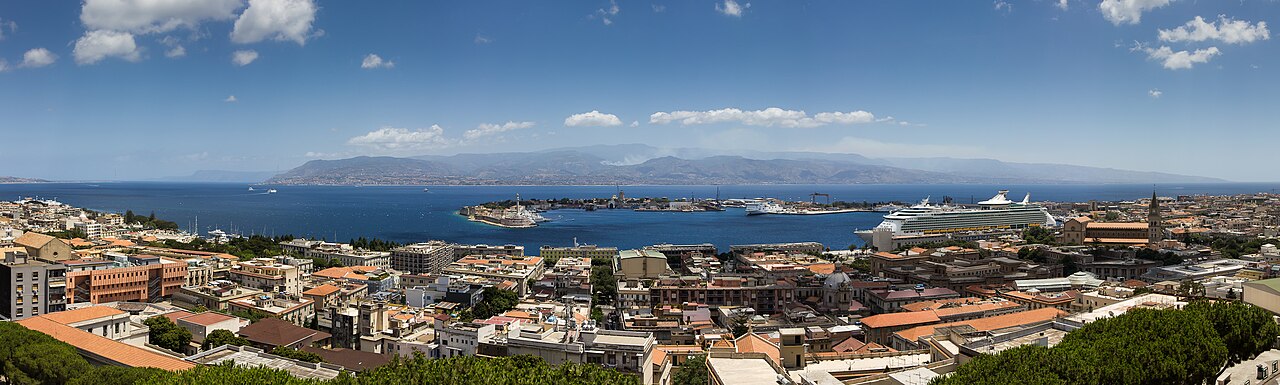
Crossing the Strait: width and mirage
Abbracciamoli lists its 2025 Nuotiamo lo stretto as a crossing of the Strait of Messina in which swimmers start from one coast and reach the other, symbolically carrying a message of solidarity. The Strait of Messina is 3.1 km wide at its narrowest point, between Torre Faro and Villa San Giovanni, and 5.1 km wide at the city of Messina. In some circumstances, the mirage of Fata Morgana can be seen when looking at Sicily from Calabria across the Strait of Messina. With its bottleneck shape, the Strait of Messina is a compulsory point of transit in the migration of many bird species.
The Messina Canyon: submarine saddle and deep upwelling
This turbulence is shaped by an extraordinary submarine topography. Beneath the surface lies a shallow underwater saddle stretched between Ganzirri in Sicily and Punta Pezzo in Calabria, where the seafloor sits between eighty and one hundred and twenty metres deep. Immediately south of this ridge, the bottom plunges into the Messina Canyon, a steep abyss descending past depths of five hundred metres toward the Ionian seabed. Powerful upwellings force frigid currents up to the surface, noticeably chilling the summer water in comparison to the open Tyrrhenian Sea. Rather than creating a barren gap, these deep, churning waters transport rich nutrients that support a unique marine ecosystem, turning the strait into a vital reservoir of Mediterranean biodiversity.
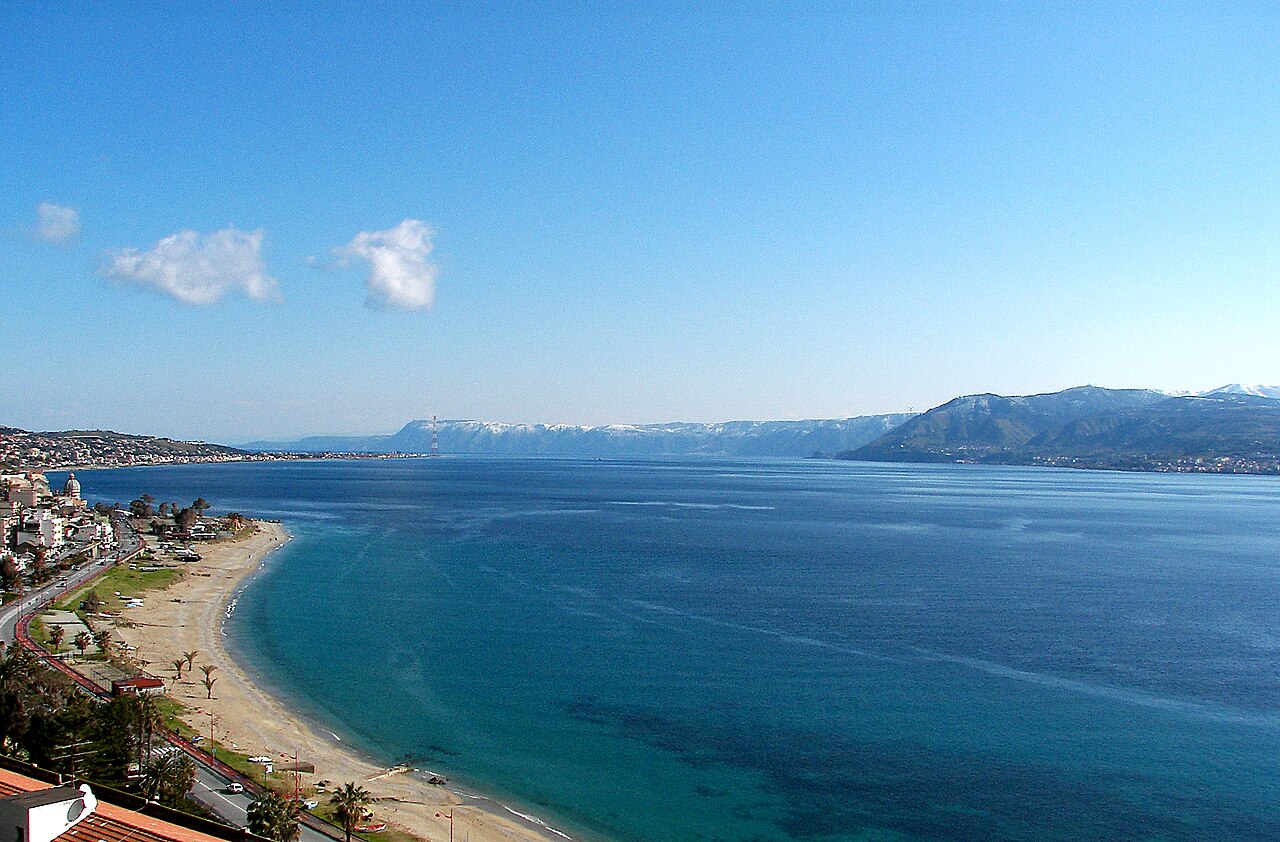
Scylla, Charybdis, and naval battles in the Strait of Messina
Ancient seafarers feared this restless water, naming the channel the Strait of Scylla and Charybdis after two mythical monsters said to terrorize passing ships. In antiquity, the nearby Sicilian promontory was also believed to be the mythical dwelling place of the Sirens. About one kilometre from the crossing area in 276 BC, a Carthaginian fleet intercepted the Sicilian fleet of King Pyrrhus of Epirus as he moved across the water toward the Italian mainland. Pyrrhus had assembled one hundred and ten warships accompanied by hundreds of transport vessels, but the Carthaginians ambushed the formation in the strait, sinking seventy Greek ships and damaging twenty-eight before the survivors found refuge ashore at Locri.
More than a thousand years later, in 965, the strait witnessed another decisive clash between the Byzantine Empire and the Fatimid Caliphate. Following an autumn campaign where Byzantine forces had captured Messina and regional strongholds, combat moved into the channel. Fatimid tactical combat swimmers slipped into the water, swimming out to the Byzantine ships to tie ropes around their rudders.
Capo Peloro and Lago di Ganzirri: sandbars and shellfisheries
Military tacticians recognized the geographic leverage of Capo Peloro early: in 425 BCE, Syracuse and its regional allies stationed their fleet and land forces on the headland, and in 396 BCE the Carthaginian general Himilco caught a favorable north wind off Pelorus to launch a surprise fleet attack on ancient Messana. Directly behind the beach, framed by the foothills, sits Lago di Ganzirri, an expansive coastal lagoon covering roughly 338,000 square metres with a maximum depth of around seven metres. Formed by the union of two smaller ancient basins named Ganzirri and Madonna di Trapani, these sheltered coastal waters have yielded eels and cockles since classical times. For centuries, frequent raids by Barbary pirates discouraged permanent settlements around the lagoon. As coastal security stabilized during the eighteenth century, the lakes transformed into an established center for traditional mussel and clam farming, later fortified in the 1830s when British engineers excavated tidal channels to flush the beds with clean sea water from the strait.
Punta Pezzo and Castello di Scilla on the Calabrian coast
Across the channel lies Punta Pezzo, the northernmost headland of the Calabrian shore. This exposed coastal corner is subject to intense, swirling currents, while heavy winter swells relentlessly rework the coastline and change the shape of its beaches year after year. Strabo recorded the crossing as spanning just six stadia, while Pliny the Elder placed the distance between Capo Peloro and the Calabrian cape at twelve stadia, or approximately 2,200 metres. Geological subsidence along the ancient headland has since widened the distance between the capes to more than three kilometres of open water. About four kilometres from the crossing corridor, the ramparts of Forte di Altafiumara crown a cliff high above the water near Cannitello.
Around eight kilometres up the coastline stands Castello Ruffo di Scilla, mounted on a towering sea crag that separates Marina Grande from Chianalea. First fortified in the early fifth century BC by Anaxilas of Reggio to suppress Etruscan sea raiders, the citadel fell to Dionysius of Syracuse after a prolonged siege, earned mention by Pliny as Oppidum Scyllaeum, and housed a Basilian monastery dedicated to San Pancrazio during the ninth century. Stroking through these mythic waters carries you straight onto a shoreline shaped by centuries of seafaring survival.
Sources: Stretto di Messina
Course
Useful info
The provided page does not contain specific technical, logistical, or regulatory details for the 2025 edition of the 'Nuotiamo lo stretto' race. The content is limited to general information on training and cookies.
How to get there
Reggio Calabria Airport (REG) at 10km or Catania (CTA) at 110km. Messina Centrale railway station is well connected. For the race site: frequent ferries between Messina and Villa San Giovanni (20 min). By car: A20/A18 to Messina, parking available near the port or the seafront. Local travel via tram or event-dedicated shuttle buses.
Nuotiamo lo stretto
Frequently asked questions
- What distances does Nuotiamo lo stretto offer?
- Nuotiamo lo stretto has a single distance: 3.5 km.
- How much is the entry fee for Nuotiamo lo stretto?
- The entry fee is 180 €.
- Where does Nuotiamo lo stretto take place?
- Nuotiamo lo stretto is a sea swim. Location: Stretto di Messina, Messina, Sicilia/Calabria, Italy.
- How do I register for Nuotiamo lo stretto?
- The reference page for registering for Nuotiamo lo stretto is https://www.abbracciamoli.it/nuotiamo-lo-stretto-2025/.
Where to stay
Messina offers diverse lodging, from historic boutique hotels located near the port and city center to family-run B&Bs in the surrounding coastal villages. For those preferring proximity to the water, small-scale camping facilities and guesthouses are available along the northern coastline near Ganzirri. Expect to pay between €80 and €150 per night for a double room, depending on the proximity to the shore and the level of service. The area is highly seasonal, so booking several months in advance is recommended for peak summer dates.
Things to do nearby
The area around the Strait provides extensive opportunities for active exploration. Visitors often engage in sea-kayaking or SUP tours to better understand the local tidal patterns, or trek the slopes of Mount Dinnammare for panoramic views of both the Ionian and Tyrrhenian seas. The city itself hosts several archaeological sites, such as the sunken church of Santissima Annunziata dei Catalani. Culinary experiences focus on traditional Sicilian seafood, with many local trattorias offering fresh catches from the deep-sea species found within the Strait.
Swimmers
What to see around
1. Pilone di Torre Faro (panoramic viewpoint over the Strait). 2. Laghi di Ganzirri (nature reserve). 3. Duomo di Messina with the Astronomical Clock. 4. Excursion to Mount Etna (1 hour away). 5. Village of Scilla (Calabria) for breathtaking views and swimming in Chianalea.
Other races by this organiser
- Traversata Carloforte-CalasettaCalasetta, IT
- Lago d'EndineEndine Gaiano, IT
- Abbracciamoli Stretto di MessinaMessina, IT
- TriesteTrieste, IT
- Elba - Abbracciamoli Pro Swim RaceMarciana Marina, IT
Similar races


Comments
Transparency: some links on this page (stays, flights, experiences, gear) are affiliate links — if you book or buy through them, Omniathlon may earn a commission from the partner at no extra cost to you. As an Amazon Associate we earn from qualifying purchases.