
Härön Simmet
- Jul 28, 2027
- Distances from 600m to 11km
At a glance
- Next edition date
- July 28, 2027
- Distances
- 600 m · 3.5 km · 11 km
- Where
- Sea · Härön, Kyrkesund, Bohuslän, Sweden
About the race
At the narrowest point of Kyrkesundet, Tjörn and Härön stand so close together. Härön Simmet is an open water swimming race held in the sea off Kyrkesund on the island of Härön, in the coastal province of Bohuslän in western Sweden. The event was created by Ian Hostetter, a summer visitor to Härön who decided to challenge himself by swimming all the way around the island. The competition offers three courses in the sea, topped by the full 11-kilometer circumnavigation of the island alongside shorter distances of 3,500 meters and 600 meters. Open water swimmers tackling the distance take to the water under the influence of the region's maritime climate.
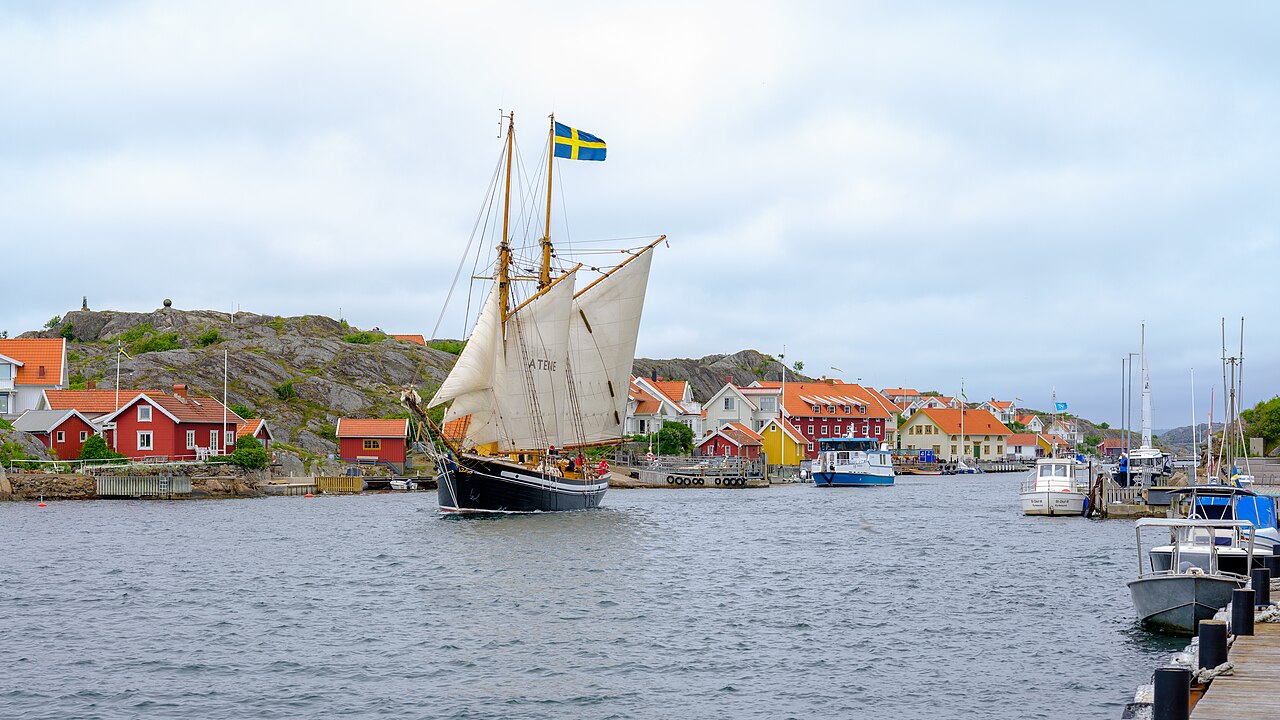
Further along the coast of Tjörn, the harbor town of Skärhamn serves as a guest harbor for yachts traveling along the western archipelago. In the waters around Härön, the island passage is also shared with a rowing event where participants set out at six in the morning where the sound is narrowest and row clockwise around the landmass. Reports from that island rowing circuit describe a morning on the water where one feels privileged to move at a slow pace along the shore. In a 2016 crossing, the sea surface lay calm like a mirror, even while remnant ocean swells gave hints of the brutal natural forces waiting in the open Kattegat and North Sea.
Kyrkesundet and the Kattegat: post-glacial uplift and marine life
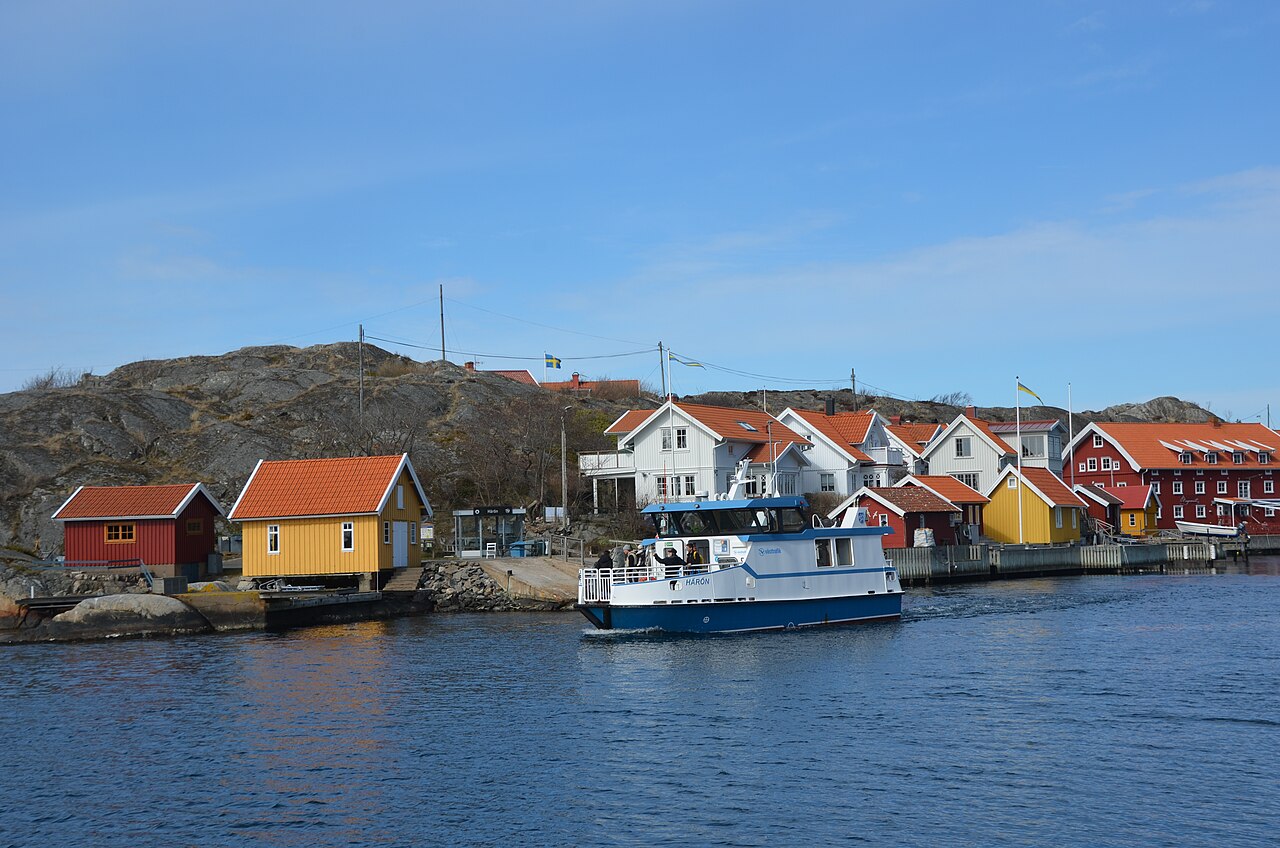
Härön is separated from Tjörn, the sixth-largest island in Sweden, by the narrow strait of Kyrkesundet, known locally as Rännan. The former island of Stavsundsholmen was joined directly to the southern end of Härön. Swimmers in these waters share the open coast with seals and jellyfish drifting through the offshore currents.
Kålhuvudet and Kråksunds gap: the herring periods and oat shipping
The settlement of Härön developed historically as a dedicated fishing village. Kyrkesund expanded rapidly during the lucrative Bohuslän herring periods of the 18th and 19th centuries, riding massive waves of economic growth fueled by seasonal fisheries. On the small neighboring islet of Kålhuvudet, a historic blubber boiling plant was constructed in 1780 to process herring and remains preserved today as a protected cultural monument. On Flatholmen, which was first settled in the 18th century thanks to the herring fishery, natural protected harbors provided prime access to open-sea grounds. A blubber boiling plant for rendering herring oil and a salting house operated on Flatholmen until the herring abruptly vanished around 1809, only to return during a second major period between 1877 and 1906.
Later, during World War II, Flatholmen served as an important military coastal surveillance post, and today it preserves approximately thirty residential houses and twenty boathouses. Other nearby islands share this deep fishing lineage. The island of Tjörnekalv historically supported the two fishing settlements of Storekalv and Lillekalv. On Härön, the maritime economy transformed during the 19th century into a major transit port exporting oats to Great Britain, prompting the construction of a large oat warehouse in 1847. Although sailing ships heading toward Lysekil used Kråksunds gap as a sheltered inside track, many ships were wrecked on its rocks over the centuries. Navigation aids were gradually established, including a combined keeper house and light on Högholmen operating from 1890 to 1911, and a kerosene lantern erected on Sollid in 1896 whose foundation survives today. Today the passage is marked by a 1941 southern lighthouse standing as a 13-meter white cylindrical tower on a black conical base, paired with a 1956 northern lantern set atop a white storage shed.
Härön Nature Reserve: artists, boathouses, and coastal trails
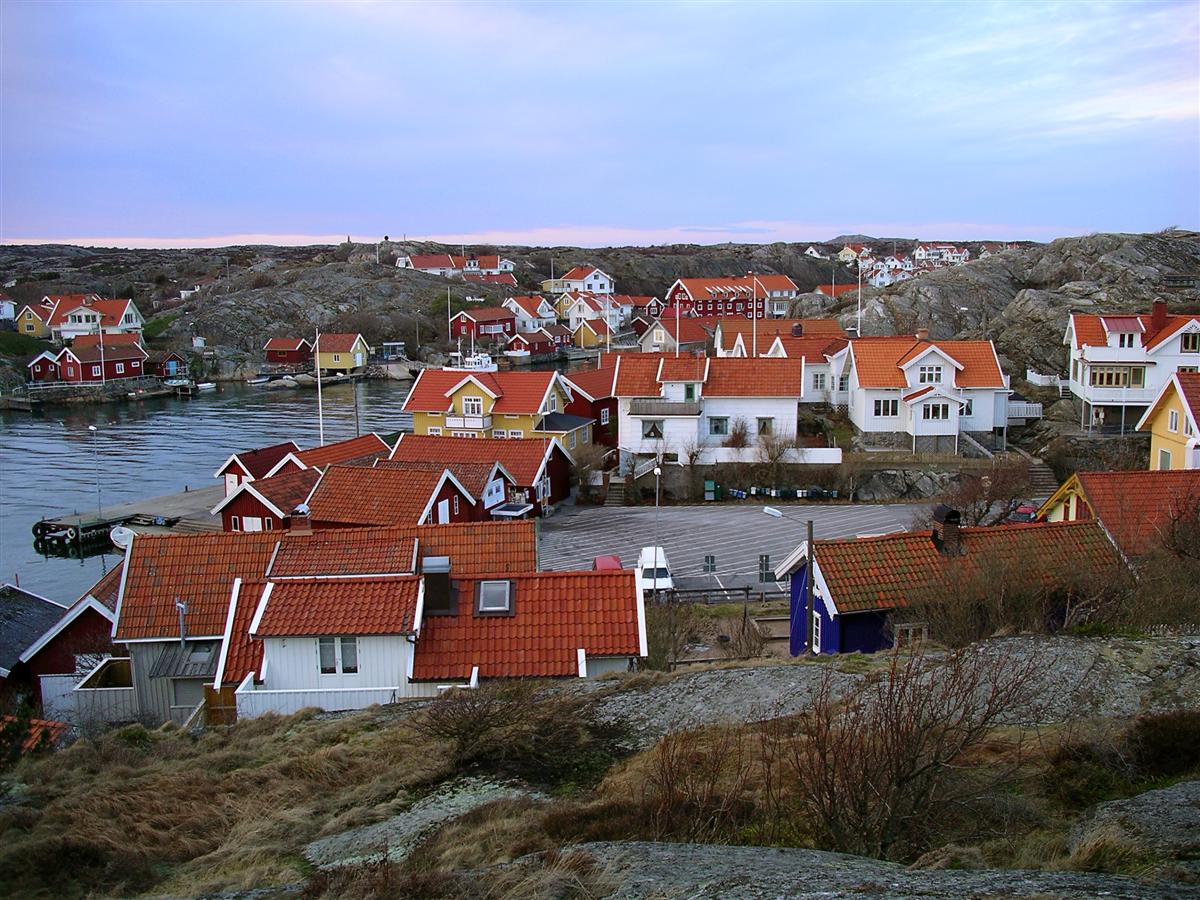
On Härön, the human settlement remains concentrated along the sheltered eastern shoreline directly fronting the strait. The rest of the island is preserved as the Härön Nature Reserve. Beginning in the late 19th century, this raw island landscape drew summer visitors and celebrated artists, including Anders Zorn and Carl Wilhelmson. Human settlement in the surrounding archipelago stretches back millennia. On the nearby island of Lyr, people have lived continuously since the Stone Age, leaving behind Bronze Age chieftain graves and stone cairns. One notable Bronze Age cairn, Ängerös, sits just north of the natural harbor at Ängehamn. During the 17th century, Lyr also supported a fishing settlement named Lyreleje at Brevik on its western shore, though the hamlet was later completely abandoned and left no visible trace.
Lyr's inhabitants subsequently turned to fishing and boat building as secondary occupations during the 19th and 20th centuries. On Härön itself, Brevik on the western shore holds its own gathering traditions, where participants stop for coffee and share stories about historical island life. Higher up on the island's southern peak, visitors have created a tradition of locking padlocks to a heart-shaped sculpture as a symbol of lasting love. Looking across the rocks from the water, that blend of wild stone and preserved maritime life provides the backdrop for every swimmer taking on the circuit of Härön.
Course
Course around the island of Härön.
How to get there
Härön Simmet
Frequently asked questions
- When is Härön Simmet?
- Härön Simmet takes place on July 28, 2027.
- What distances does Härön Simmet offer?
- Härön Simmet offers 600 m, 3.5 km, and 11 km.
- Where does Härön Simmet take place?
- Härön Simmet is a sea swim. Location: Härön, Kyrkesund, Bohuslän, Sweden.
Where to stay
The island of Härön and the adjacent mainland village of Kyrkesund offer intimate lodging options. Typical choices include restored 19th-century fishermen's cottages and small boutique hotels located directly on the harbor front. During the race period, expect to pay between 1,200 SEK and 2,500 SEK per night for double occupancy. Camping options are also available on the mainland side, providing proximity to the water's edge and the event staging areas.
Things to do nearby
Beyond the swimming, the region is defined by its maritime landscape. Visitors often engage in sea kayaking through the narrow channels to explore the skerries or take guided walks to the Pilane sculpture park. Local culinary traditions focus on coastal products, with several spots offering shellfish tastings. For those interested in history, the area contains numerous Bronze Age sites accessible via short hiking trails that overlook the Bohuslän archipelago.
Swimmers
Similar races


Comments
Transparency: some links on this page (stays, flights, experiences, gear) are affiliate links — if you book or buy through them, Omniathlon may earn a commission from the partner at no extra cost to you. As an Amazon Associate we earn from qualifying purchases.