
Husky Hop Ocean Swims
- Mar 29, 2026
- Last edition date
- Distances from 500m to 5.5km
At a glance
- Last edition date
- March 29, 2026
- Distances
- 500 m · 1 km · 3 km · 5.5 km
- Where
- Sea · Huskisson Beach, Huskisson, New South Wales, Australia
About the race
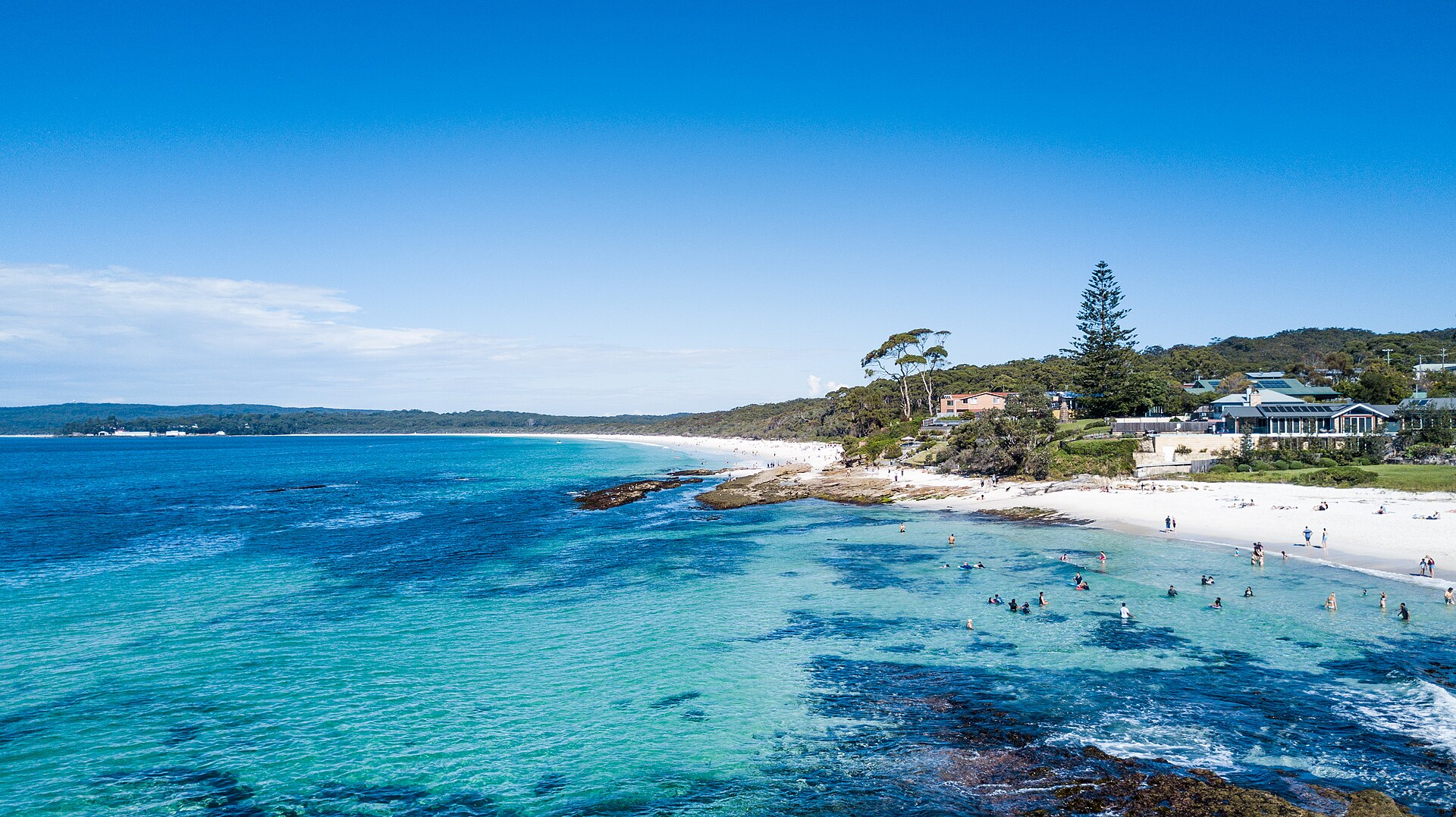
Across the pale turquoise shallows of Jervis Bay, the white silica sea floor reflects sunlight with an intensity found in few other ocean swimming spots on earth. This luminous stretch of sea on the South Coast of New South Wales hosts the Husky Hop Ocean Swims, an open water swimming event organized by Elite Energy that sets off from the sands of Huskisson Beach in Huskisson. Held in late March, the gathering brings swimmers together along a bright shoreline where the open ocean sweeps into an expansive coastal haven. Four distinct distances cater to swimmers of varied endurance: 500 meters, 1,000 meters, 3,000 meters, and a long-distance 5,500-meter course. Rather than turning around repeating buoys or circling inside a harbor, every single event is laid out as a continuous point-to-point course without laps across the bay.
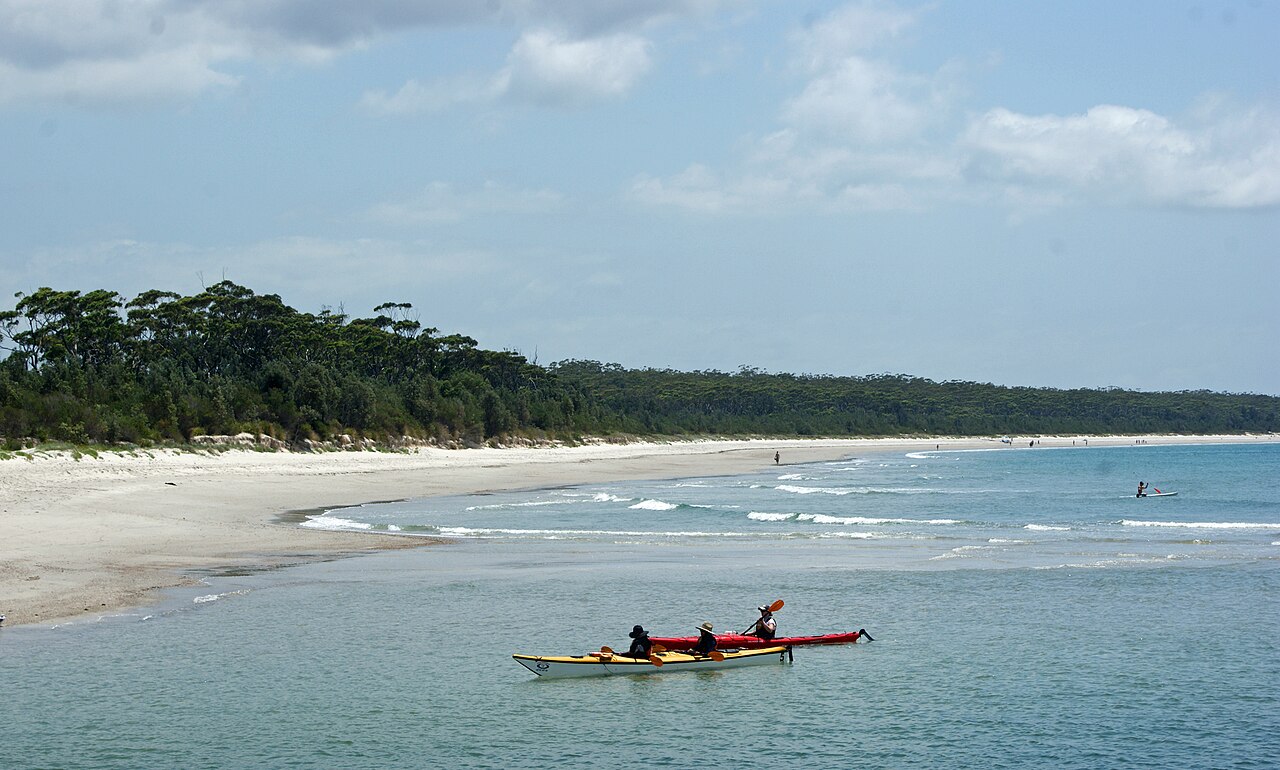
Out on the course, swimmers may encounter long, rolling ocean waves that lift and dip the field rather than breaking, creating an open swell that keeps competitors focused on their line. The water remains remarkably transparent, and even following overnight rain when the shallows turn slightly cloudy, the seabed stays clearly in view until the finish line on the golden sand of Shark Net Beach. For competitors who travel to the South Coast to make a full week of ocean swimming, the calendar aligns conveniently with another coastal classic. Just fifteen kilometers away, the Tilbury Classic takes place six days after the Husky Hop, offering the rare chance to combine two distinctive swims in the region across a single trip.
The course from Vincentia to Shark Net Beach
The organizers' course notes for the Huskisson ocean swims say swimmers start in deep water in line with the starter on the beach and hug the shoreline, which they call the fastest and safest route, until the start and turn buoys of the shorter swims. The 5.5 km swim starts at Barfleur Beach, off Vincentia Sailing Club, and finishes at Shark Net Beach in Huskisson. The 5.5 km course has optional hop points, where swimmers can either continue around the buoy or briefly exit onto the beach for a quick rest or refuel before re-entering the water. The 3 km swim starts from Collingwood Beach, behind 82 Elizabeth Drive, and also finishes at Shark Net Beach in Huskisson. Wetsuits and flippers are permitted, but swimmers using them are not eligible for podium medals. The organizers give an average water temperature of 22.9C for the bay swims.
Jervis Bay: a drowned river valley over pure silica
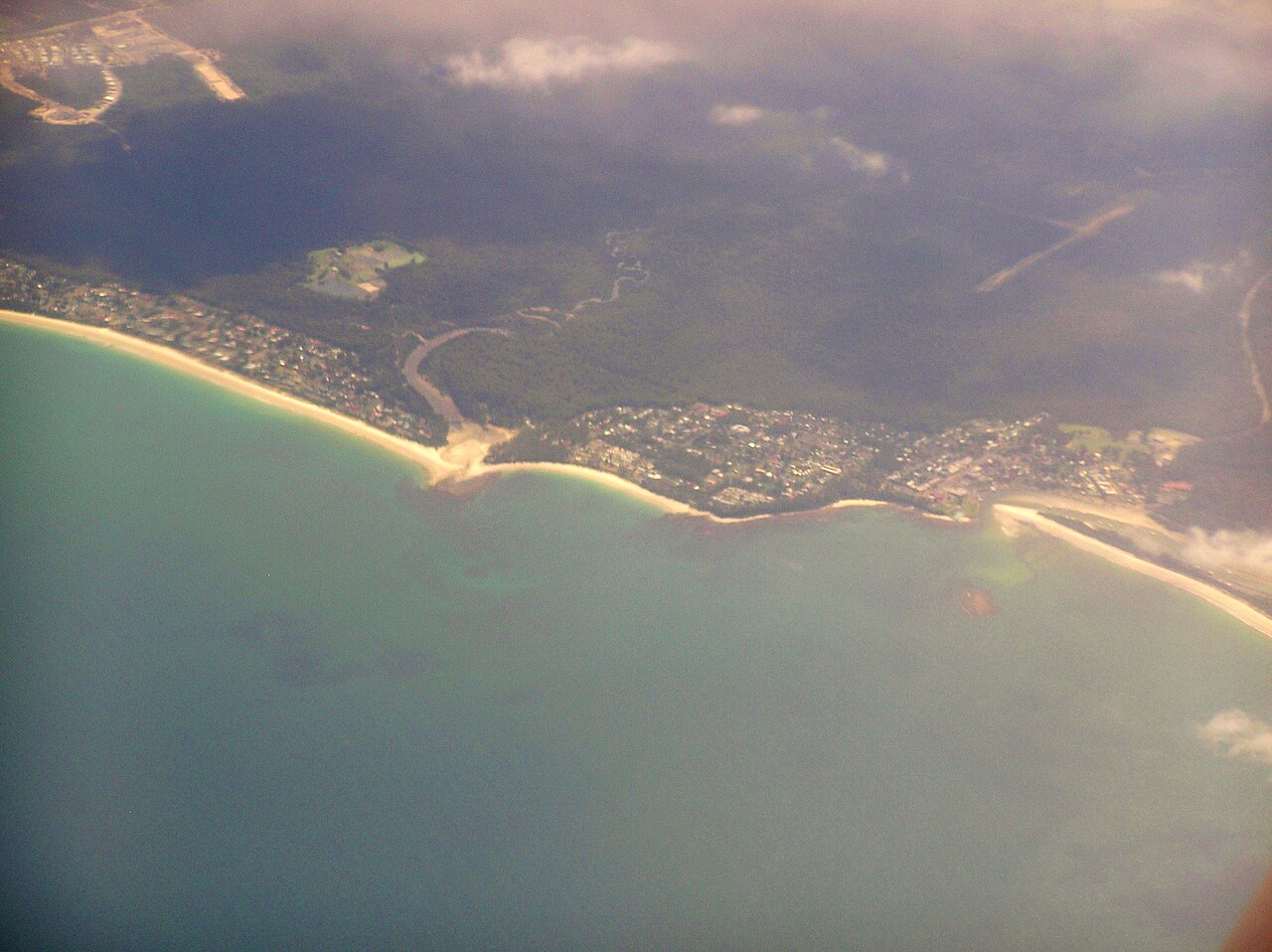
The landscape holding these clear waters was formed over immense geological epochs. Jervis Bay originated as a river valley that was drowned fifteen thousand years ago toward the close of the last ice age. Around 4000 BC, following a sea-level rise of 120 meters, the basin reached its modern configuration as a wide marine indentation. Today, a portion of the bay is preserved as a dedicated marine park, and its shores are recorded as having the whitest sand in the world. About ten kilometers from the race site, Jervis Bay National Park protects sections of the western and northern foreshores, preserving lands where Indigenous Aboriginal heritage reaches back across thousands of years.
On the northern shore of the bay, Callala Beach stretches beneath slopes that sit between 1 and 27 meters above sea level, showcasing aqua blue waters and bright white sands that extend out toward Callala Point where the headland confronts the open Tasman Sea. Beneath the surface of the bay, the clear conditions reveal a rich underwater terrain that attracts recreational divers. Multiple dive sites are scattered through the basin, among them the preserved underwater wreck of a Fairey Firefly aeroplane that rests on the sea bed.
Cape St George and Currambene: lighthouses, wrecks, and spotted gum
About fourteen kilometers from the race area, on a high clifftop, stand the ruins of the Cape St George Lighthouse, which became the earliest European settlement established on the Bherarerre Peninsula. Built in 1860, the light was meant to guide shipping, yet it was constructed four kilometers north of its approved location simply because the contractor preferred working closer to a local stone quarry. Between 1864 and 1893, twenty-three ships ran aground and wrecked in the immediate vicinity of Jervis Bay. Deemed an active hazard, the light was decommissioned in 1889, and between 1917 and 1922 the tower was shelled and destroyed during target practice exercises carried out by the Royal Australian Navy.
In 1981, the dramatic clifftop ruin was formally registered on the Register of the National Estate. On the banks of Currambene Creek was constructed the wooden ferry MV Lady Denman, built out of locally felled spotted gum timber. The vessel was given a specialized V-shaped hull and a shallow draft designed to navigate muddy, silted upstream river reaches, paired with a single-propeller configuration to minimize mechanical strain on the wooden frame. The ferry went on to experience an eventful career, running aground at Cremorne Point after an engine failure on April 21, 1951, and grounding again near Shark Island on August 29, 1965. During a tow back to Jervis Bay in 1981, the vessel encountered a severe storm off Wollongong and began taking on water when a bilge pump failed, surviving the voyage to return to its original birthplace. The bay also supported commercial pursuits in 1912 and 1913, when it operated as a seasonal base for whaling using two catcher boats and the factory ship Loch Tay.
Booderee and Bowen Island: sea cliffs and penguin burrows
Booderee National Park and Botanic Gardens, about twelve kilometers from the swim course, encompasses Bowen Island and the southern waters of Jervis Bay. The name Booderee comes from the Dhurga language, translating to 'bay of plenty' or 'plenty of fish'. Along the exposed ocean edge, the sheer cliffs at Steamers Head plunge 130 meters down to the sea, standing as the highest sea cliffs anywhere in New South Wales. Tucked within this coastal reserve about eleven kilometers from the race area, Greenpatch beach stretches for roughly 1.5 kilometers, noted alongside other bay shores for possessing the whitest sand in the world. Murrays Beach runs for 510 meters beneath massive sand dunes that soar thirty meters into the coastal canopy, terminating at its eastern edge in an ocean-carved sea cave.
Just a few hundred meters offshore, Bowen Island shelters the beach from raw open-ocean swell. While the narrow passage of deeper water between Bowen Island and Governor Head carries dangerous tidal currents, the boat ramp area gives swimmers and divers direct access to underwater reefs, sea caves, and sprawling seagrass meadows. From the clifftop trails nearby, visitors can look across the water to spot the sea cliffs of Governor Head and the breeding sanctuary of the fairy penguin colony on Bowen Island. Coastal heathland encircling the bay supports the largest known sub-population of the endangered eastern bristlebird. Just inland from the ocean shores lies St Georges Basin, an expansive open intermediate estuary spanning 40.9 square kilometres with an average depth of 5.3 meters.
Fed by Wandandian Creek and Tomerong Creek, the inland waterbody empties into the Tasman Sea through Sussex Inlet and contains six artificial reefs descending to depths of two meters. Long before European surveyor Thomas Florance renamed the basin on November 29, 1827, the traditional custodians from the Indigenous Yuin people lived along its shores, calling the waterway Bherwherrae or Bherwherree. Coming ashore at Huskisson after swimming across the bay, athletes emerge onto pale sand surrounded by one of the most pristine and storied marine settings on the Australian coast.
Sources: Jervis Bay · MV Lady Denman · Callala Beach
Course
A fun, family-friendly dash from Shark Net Beach into the finish at Huskisson.
Point-to-point swim starting from Moona Moona Beach, finishing at Huskisson Beach.
Mid-distance challenge starting at Collingwood Beach, Vincentia, across the bay to Huskisson.
Endurance swim from Vincentia Sailing Club to Huskisson Beach.
How to get there
Husky Hop Ocean Swims
Frequently asked questions
- When was the last edition of Husky Hop Ocean Swims?
- The last edition of Husky Hop Ocean Swims took place on March 29, 2026.
- What distances does Husky Hop Ocean Swims offer?
- Husky Hop Ocean Swims offers 500 m, 1 km, 3 km, and 5.5 km.
- Where does Husky Hop Ocean Swims take place?
- Husky Hop Ocean Swims is a sea swim. Location: Huskisson Beach, Huskisson, New South Wales, Australia.
Where to stay
Huskisson offers a variety of stays ranging from relaxed camping sites situated right at the water's edge to local holiday cottages and boutique apartments near the harbor. You will find options to suit different budgets, typically ranging from $150 to $450 per night depending on proximity to the beach and the level of amenities. Booking well in advance is advised for race weekend as the town remains a popular destination for coastal travelers. Discover your base for the weekend by checking out our local lodging options.
Things to do nearby
Beyond the swim, the region is defined by its natural environment and maritime history. You can spend your time exploring the Jervis Bay Maritime Museum, taking a kayak out into the calm reaches of the bay, or walking the scenic coastal tracks that offer panoramic views of the cliffs. Food enthusiasts will find plenty of local seafood and winery tasting experiences in the surrounding Shoalhaven region to round out the trip. Plan your post-race activities by browsing our curated local experiences.
Swimmers
Other races by this organiser
- Run Forster - Ocean SwimForster, AU
Similar races


Comments
Transparency: some links on this page (stays, flights, experiences, gear) are affiliate links — if you book or buy through them, Omniathlon may earn a commission from the partner at no extra cost to you. As an Amazon Associate we earn from qualifying purchases.