
Giro Isola Loreto
At a glance
- Where
- Lake · Monte Isola, Lombardia, Italy
- Registration
- nuotomasterbrescia.it
About the race
Rising straight out of the green waters off Marone, a neo-Gothic castle with crenellated ramparts and turrets crowns the crag of Isola di Loreto. The Giro Isola Loreto is an open water swimming race held in the freshwater of Lake Iseo, starting along the mainland shore of Marone in the province of Brescia, Lombardy. Taking place on a Saturday in June, the event features a single 1.8-kilometer course that loops out into the open basin, completely circling the private island before returning to the mainland. Organized by Nuoto Master Brescia, the race guides swimmers through waters marked by a distinctive deep-green tint, a color created in part by the massive silhouette of neighboring Monte Isola.
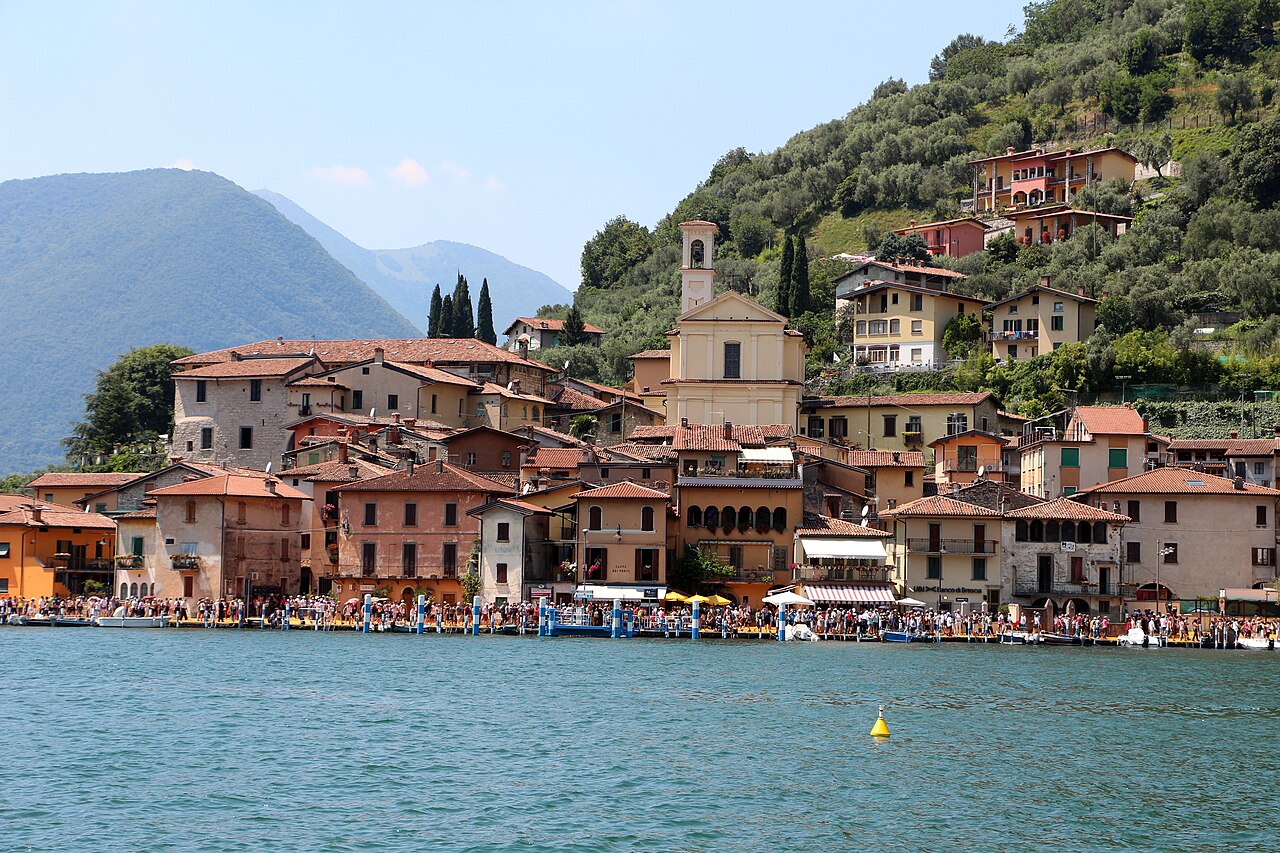
The Marone shore and Isola di Loreto in print
Marone lies on the eastern shore of Lake Iseo at about 200 meters above sea level. Il Giorno lists a small beach at Marone nicknamed "la piccola Tahiti del lago", the little Tahiti of the lake, for the golden reflections of its water. Lake Iseo is used for rowing, swimming, windsurfing, fishing, diving and sailing, and sailing is favored by regular winds. In 1696 the Venetian geographer Vincenzo Maria Coronelli recorded Isola di Loreto as owned by the heirs of Count Alessandro Martinengo. The writer Costanzo Ferrari set some scenes of his historical novel Tiburga Oldofredi, published in 1847, on Isola di Loreto.
Isola di Loreto: from hermitage to private castle
Located in Lake Iseo just north of Monte Isola, the island belongs to the municipality of Monte Isola but remains an entirely private sanctuary. In the late 15th century, the Sisters of Saint Clare of Brescia established a convent on the rocky outcrop. By 1580, however, that religious community had departed, leaving the abandoned convent inhabited solely by a solitary hermit named Pietro. By the late 19th century, the historic structures had crumbled into ruins of perimeter walls, two small square towers, and the remnants of a modest chapel. The island was entirely transformed in the early 20th century when Vincenzo Richeri built a neo-Gothic castle, a small private harbor, and two lighthouse turrets on the rock. Swimmers circle the island from the water.
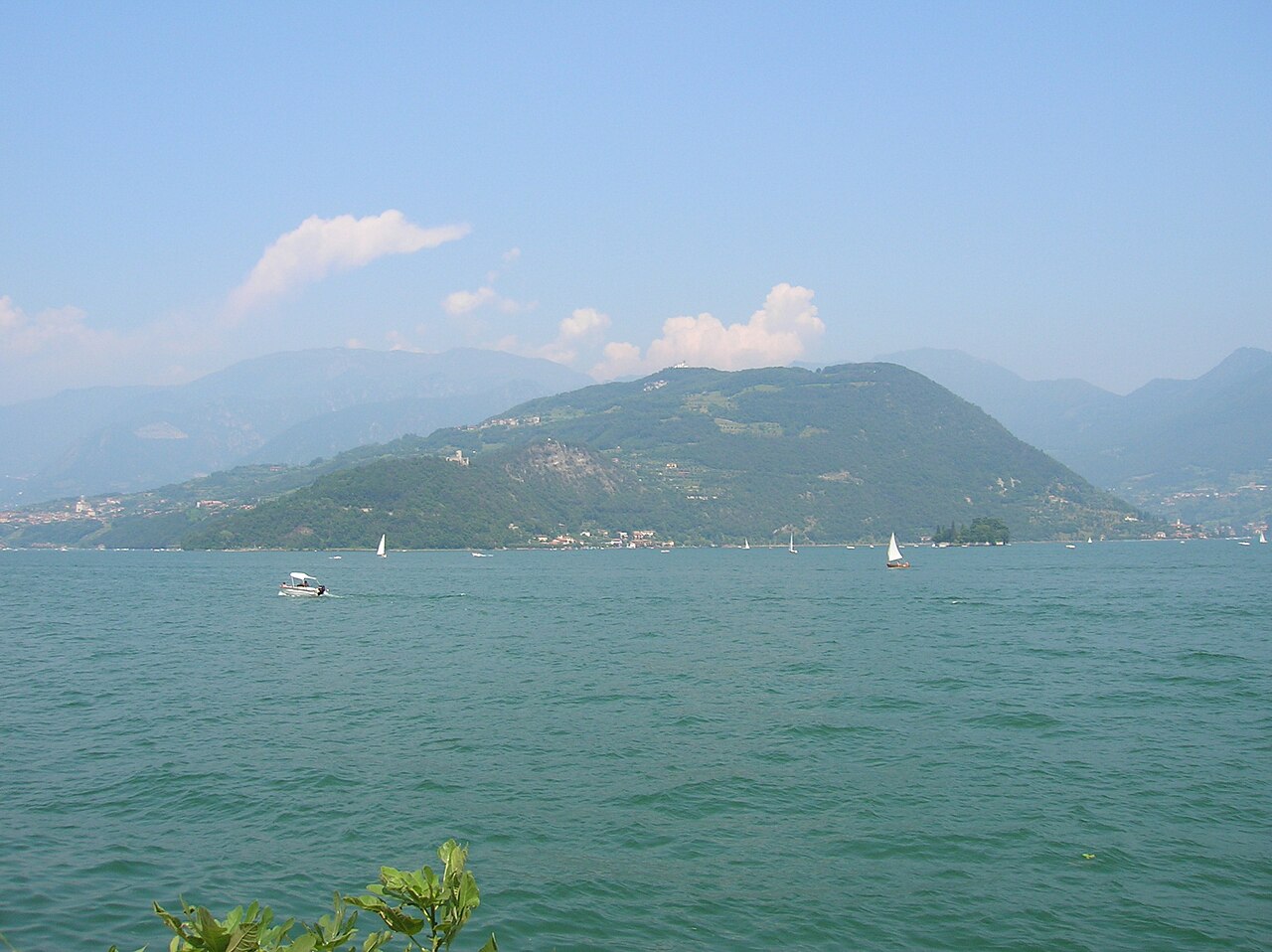
Lake Iseo: glacial depths, bögn ravines, and Trentapassi
Lake Iseo is a body of water of glacial origin situated at an altitude of 180 meters above sea level and plunging to a maximum depth of 251 meters. Further south, the Calchere stream empties into Lake Iseo just north of the center of Sulzano, a shoreline area historically known for eight lime production sites. Traces of early human settlement along Lake Iseo extend to the southern shore, where prehistoric pile dwellings were discovered in Sarnico. In modern times, the overall water level of the lake is regulated by the Sarnico dam, built in 1933 in the Fosio locality. Strategic control over these waters was contested during the Middle Ages, as in 1373 when Bernabò Visconti deployed two armed ships to patrol between Sarnico and Iseo to block supplies to rebels.
Swimmers looking to tackle a longer crossing of the basin can head six kilometres down the coast in August for the Traversata a nuoto del Lago di Iseo. Along the western shore near Castro and Zorzino, geological ravines are known locally as 'bögn'. About six kilometres from the race course is Corna Trentapassi. Formed of harsh limestone rock, this steep mountain stands isolated from neighboring peaks, projecting its stark cliffs right into the lake. Thirteen kilometres away across the hills lies Lake Endine, a 2.1-square-kilometre body of water fed by the Cherio River at an altitude of 337 metres. Protected as a regional park for its environmental value, Lake Endine features clear, dark green water lined with thick reeds that shelter birds and breeding fish, hosting open water swimmers during the Lago d'Endine 2026.
High above its shores, the medieval castle of the Suardi in Bianzano once guarded traffic along the water. Just northeast of Endine Gaiano sits Lake Gaiano, a smaller glacial lake measuring 200 by 100 metres and covering 0.20 square kilometres that was formed during the Würm glaciation. Fed by freshwater springs, Lake Gaiano sustains a rich fish population and is framed by Phragmites australis reed beds and willow trees.
Monte Isola: fishing nets, Roman villas, and hilltop fortresses
Monte Isola is celebrated as the largest lake island in Italy and Southern Europe, and the highest anywhere in Europe. Covering 4.5 square kilometers within its 12.61-square-kilometer municipal territory, the island rises steeply from the lake to an elevation of 600 meters above sea level. In antiquity, an ancient pagan temple stood upon the island's summit. On the western shore, archaeologists revealed the remains of an ancient Roman villa. Along the water's edge, the port village of Peschiera Maraglio appears in written records dating as far back as 905. In the 13th century, the Oldofredi family constructed a castle on the island to defend the Brescian territory. Above the village of Sensole stands Rocca Martinengo, an imposing 14th-century fortress. The islanders developed a centuries-old tradition of manufacturing fishing nets and crafting wooden boats for lake transport. Along the southern coast between Peschiera Maraglio and Sensole, extensive olive groves still carpet the hillside.
Isola di San Paolo and the southern sound
A historic document from 1685 describes the grounds of the monastery on Isola di San Paolo as featuring gardens filled with fruit trees, lemons, and oranges. That religious chapter concluded in January 1783, when the monastery was suppressed and the fourteen resident friars were transferred to Iseo. At the end of the 19th century, Isola di San Paolo was reportedly accessible on foot from Sensole on Monte Isola during certain periods of the year. In 2016, that connection was reimagined on a grand scale when The Floating Piers project linked the island to Monte Isola via a floating walkway. Swimmers in the Giro Isola Loreto experience that same intimate connection to the lake before completing the loop back to Marone.
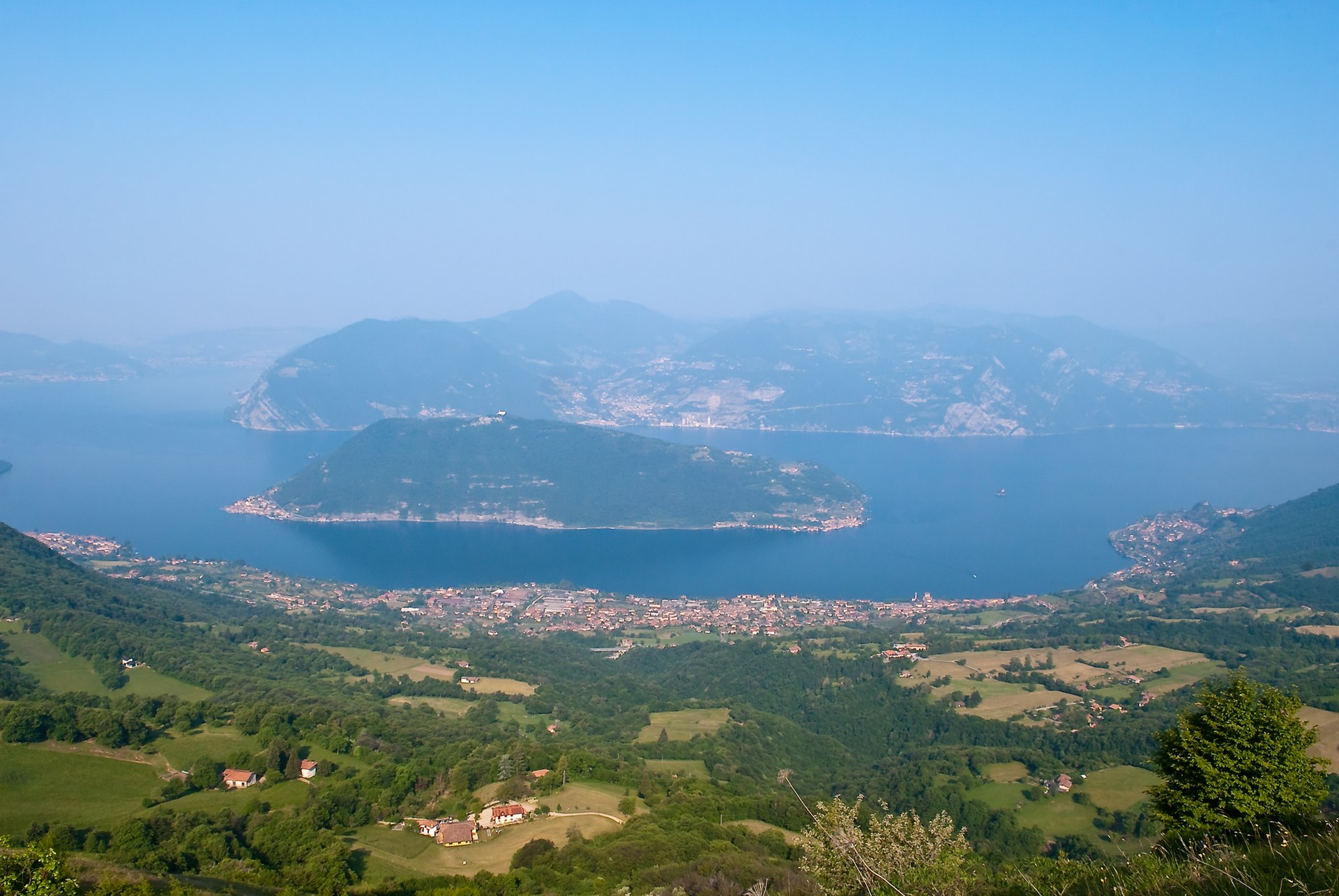
Sources: Monte Isola · Isola di Loreto · Monte Isola (isola) · Corna Trentapassi
Course
The race takes place in Lake Iseo, featuring a 1.8 km course around Loreto Island, starting from Marone.
How to get there
Airports: Bergamo Orio al Serio (50km), Milano Linate (90km). Train: Sulzano or Iseo station (Brescia-Iseo-Edolo line). Access: public ferry from Sulzano or Sale Marasino. Monte Isola is a restricted traffic zone; parking is available at the piers on the mainland. Travel on the island is limited to walking or cycling.
Giro Isola Loreto
Frequently asked questions
- Where does Giro Isola Loreto take place?
- Giro Isola Loreto is a lake swim. Location: Monte Isola, Lombardia, Italy.
- How do I register for Giro Isola Loreto?
- The reference page for registering for Giro Isola Loreto is https://www.nuotomasterbrescia.it/giro-isola-loreto.
Where to stay
Accommodations on Monte Isola range from intimate rooms in converted fishermen's houses to small, family-run guesthouses. Prices generally fluctuate between 80€ and 150€ per night depending on the proximity to the harbor. For those preferring mainland logistics, Marone and Sulzano offer boutique hotels overlooking the port and seasonal campsites situated directly along the shoreline, often ranging from 70€ to 130€ per night during the peak of the swimming season.
Things to do nearby
The weekend offers a dive into local traditions, such as sampling lake-caught fish prepared with local olive oil or visiting the site of the 2016 Floating Piers installation. Visitors can rent kayaks or stand-up paddleboards to explore the island's perimeter at a slower pace, or trek the steep paths leading up to the Madonna della Ceriola Sanctuary for a panoramic view of the race venue from above.
Swimmers
What to see around
1. Sanctuary of Madonna della Ceriola (island summit). 2. Torbiere del Sebino Nature Reserve. 3. Medieval village of Iseo. 4. Wine tasting in Franciacorta. 5. Bike excursion along the perimeter of Monte Isola.
Other races by this organiser
Similar races


Comments
Transparency: some links on this page (stays, flights, experiences, gear) are affiliate links — if you book or buy through them, Omniathlon may earn a commission from the partner at no extra cost to you. As an Amazon Associate we earn from qualifying purchases.