
Arctic Circle City Swim
- Aug 14, 2027
- Distances from 350m to 12.5km
At a glance
- Next edition date
- August 14, 2027
- Distances
- 350 m · 1.5 km · 4 km · 12.5 km
- Where
- River · Rovaniemi, Lapland, Finland
- Entry fee
- 30–200 €
- Registration
- napapiirin-uitto.webnode.fi
About the race
The Arctic Circle City Swim is an open water swimming race held in the river waters of Rovaniemi, Lapland, offering an encounter with northern Finland's historic log-driving waterways. Staged every August, the event features courses that range from an accessible 350-meter distance up to 1,500 meters, 4,000 meters, and an endurance route stretching to 12.5 kilometers along these historic timber-floating channels. The river current plays a decisive role in every stroke, demanding strategy and physical grit. In past editions, swimmers taking on the longer routes faced a demanding upstream battle of roughly 1.5 kilometers against the surging flow before swinging around to sweep downstream with the river. The event has even embraced quirky log-driving traditions with sprint formats like a 200-meter sprint that allowed fins, floats, and swimmers being towed by a partner in the manner of bundled timber rafts.
At the end of the swim, the finish line sits beside the sauna pier of the Local Heritage Museum. In past editions, the real Santa Claus stood waiting on the dock to place medals around the necks of arriving swimmers. The finish area brings everyone together for a post-race meal and a warming session in traditional saunas, with proceeds from the gathering directed to support local swimming activities for children and youth.
Kemijoki and Ounasjoki: Lapland's greatest river confluence
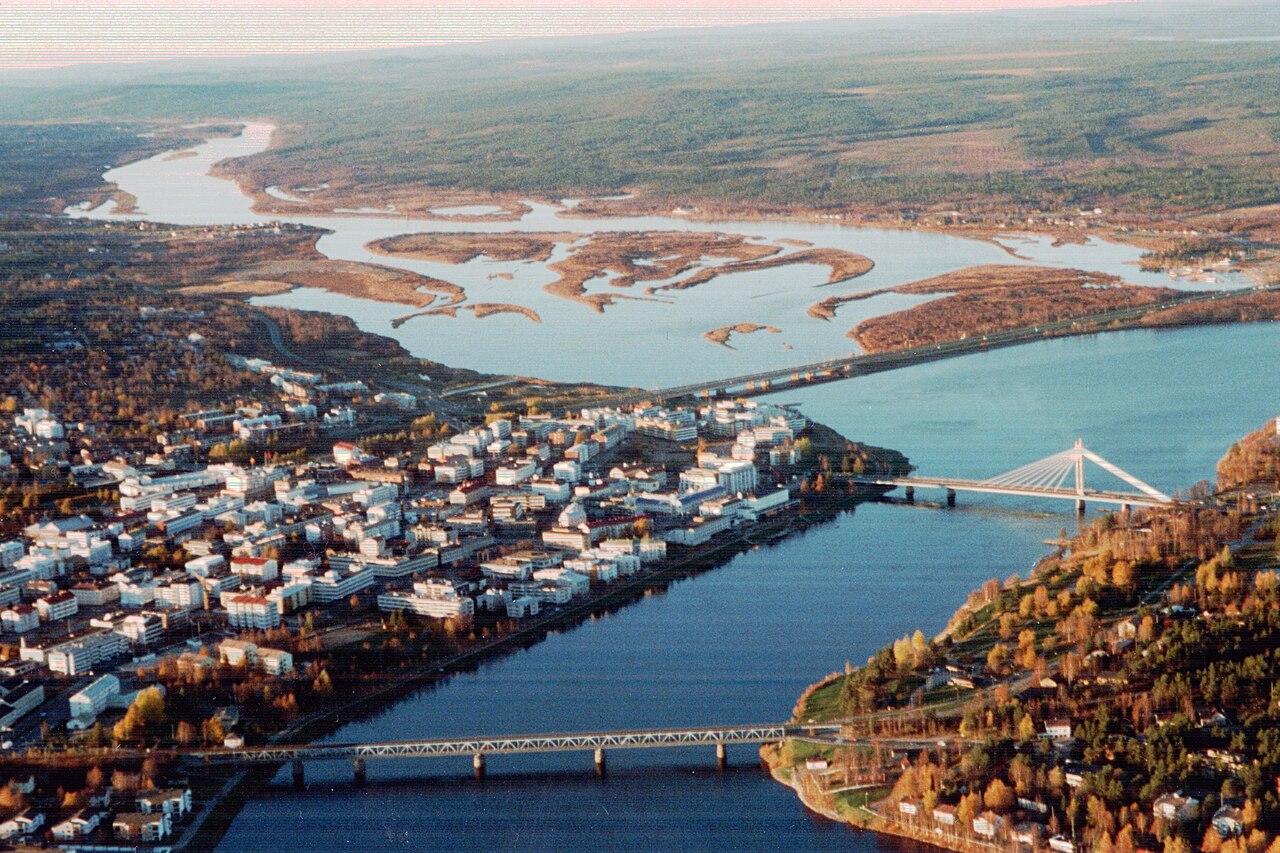
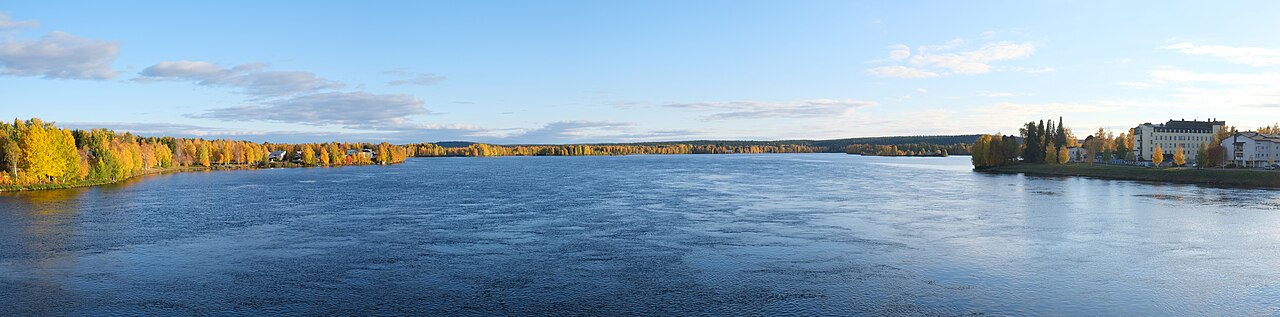
Measuring 550 kilometers, the Kemijoki is the longest river in Finland. It flows past Kemijärvi and courses through the center of Rovaniemi—where the vast Ounasjoki tributary joins its waters—before discharging into the Gulf of Bothnia at Kemi. That hydraulic force led to extensive development in the post-war era, beginning when the Isohaara hydroelectric plant was constructed between 1945 and 1949. Today, a total of 15 hydroelectric stations stand along the Kemijoki, regulating the immense volume of water that rolls out of Lapland's interior. Just a ten-minute boat trip from the city center, the island of Kotisaari sits anchored in the Kemijoki current.
From Lehtojärvi's Stone Age elk to ancient bog iron
Human passage across these northern waterways began millennia before the timber booms. At Lehtojärvi, archaeologists discovered an elk head carved from wood dating back to roughly 6000 BC—the oldest wooden sculpture ever unearthed in Finland—believed to have served as a ship's figurehead on prehistoric craft. Around 5500 BC, when the ancient freshwater Ancylus Lake gave way to the brackish Litorina Sea, the expanding river mouths provided abundant food supplies, turning seals and river salmon into vital staples for local inhabitants. Permanent settlements took root on the riverbanks across two distinct eras, spanning 2920–2690 BC and later from around 1700 BC to 300 AD. By two thousand years ago, local communities had learned to collect ore from nearby bogs and lakes at Sierijärvi and Kotijänkä. Smelted with charcoal inside primitive furnaces, these local waters yielded the iron that fueled Arctic life.
Harjulampi and Veitikanoja: urban wetland corridors
Directly connected to the Kemijoki, Harjulampi is a shallow pond with a maximum depth of around five meters, resting in its modern footprint for just over fifty years. Fed with fish from the main river, this protected water body has become one of Finland's top 100 birdwatching destinations, with 85 recorded avian species using its reeds and shallows. A dedicated birdwatching tower built in 1995 stands on the southeastern shore of the pond, looking out over teeming flocks where the black-headed gull is the most numerous breeder, gathering in colonies of up to 660 nesting pairs. This aquatic habitat is fed by Veitikanoja, a stream that tumbles from the Vennivaara summit northwest of the center. The stream flows across natural mires and pristine woodland before entering Veitikanlampi pond and continuing on into Harjulampi and the Kemijoki, creating a protected green ecological corridor linking wild northern forests directly to the city's riverbanks.
Ounaskoski beach, Jätkänkynttilä bridge, and riverside saunas
Modern summer life in Rovaniemi gravitates naturally to the river confluence, where water and northern daylight create a lively social scene. The premier gathering point along the shore is Ounaskoski beach, situated right in the city center. Swimmers on the sand look directly up at the iconic Jätkänkynttilä bridge—the Lumberjack's Candle bridge—which spans the water and provides panoramic views across the river and the city. Further along the water, the Ounaspaviljonki beach complex offers a bustling public marina alongside volleyball courts, children's play areas, and a floating stage that hosts events right on the river surface. For a true taste of Lapland's waterside culture, restaurant Kesärafla serves up charcoal-grilled meals beside a public sauna. Here, swimmers step from the heat of the sauna straight into the river for a restorative plunge.
Course
Previous editions
- 2026Aug 15, 2026
How to get there
Arctic Circle City Swim
Frequently asked questions
- When is Arctic Circle City Swim?
- Arctic Circle City Swim takes place on August 14, 2027.
- What distances does Arctic Circle City Swim offer?
- Arctic Circle City Swim offers 350 m, 1.5 km, 4 km, and 12.5 km.
- How much is the entry fee for Arctic Circle City Swim?
- The entry fee ranges from 30 € to 200 €. Registration details and pricing are managed via the online store link on the official website.
- Where does Arctic Circle City Swim take place?
- Arctic Circle City Swim is a river swim. Location: Rovaniemi, Lapland, Finland.
- How do I register for Arctic Circle City Swim?
- The reference page for registering for Arctic Circle City Swim is https://napapiirin-uitto.webnode.fi/en/.
Where to stay
Rovaniemi offers a range of stays, from modern hotels in the city center to traditional riverside cabins. Expect to find boutique design hotels near the riverfront, reflecting the city’s architectural heritage, alongside practical guesthouses. Prices generally range from €120 to €280 per night during the peak summer season, depending on the proximity to the riverbanks and the level of amenities offered.
Things to do nearby
Beyond the water, the area is defined by its Arctic nature and cultural history. Visitors can engage in guided hiking through the nearby taiga forests, or explore the regional museums focusing on northern traditions. Local activities often include kayak excursions on the river systems to observe the landscape from a different perspective, alongside culinary experiences featuring wild-caught fish and local forest berries.
Swimmers
Similar races


Comments
Transparency: some links on this page (stays, flights, experiences, gear) are affiliate links — if you book or buy through them, Omniathlon may earn a commission from the partner at no extra cost to you. As an Amazon Associate we earn from qualifying purchases.