
Aquaman Dubai
- Mar 29, 2026
- Last edition date
- Distances from 500m to 10km
At a glance
- Last edition date
- March 29, 2026
- Distances
- 500 m · 1 km · 1.5 km · 2 km · 5 km · 10 km
- Where
- Sea · Jumeirah Beach, Dubai, United Arab Emirates
- Entry fee
- 500 m: 45 USD · 1 km: 70 USD · 2 km: 80 USD · 5 km: 100 USD · 10 km: 120 USD
- Wetsuit
- Wetsuit use is listed as NO for most distances in technical info.
- Registration
- aquaman.co
About the race
AQUAMAN DUBAI is an open water swimming race held in the sea off the coast of Dubai in the United Arab Emirates. The event brings competitors together on the celebrated shoreline of Jumeirah Beach, a sweeping stretch of white sand facing the open water. Setting out from the sand into the clear sea gives swimmers an open perspective.
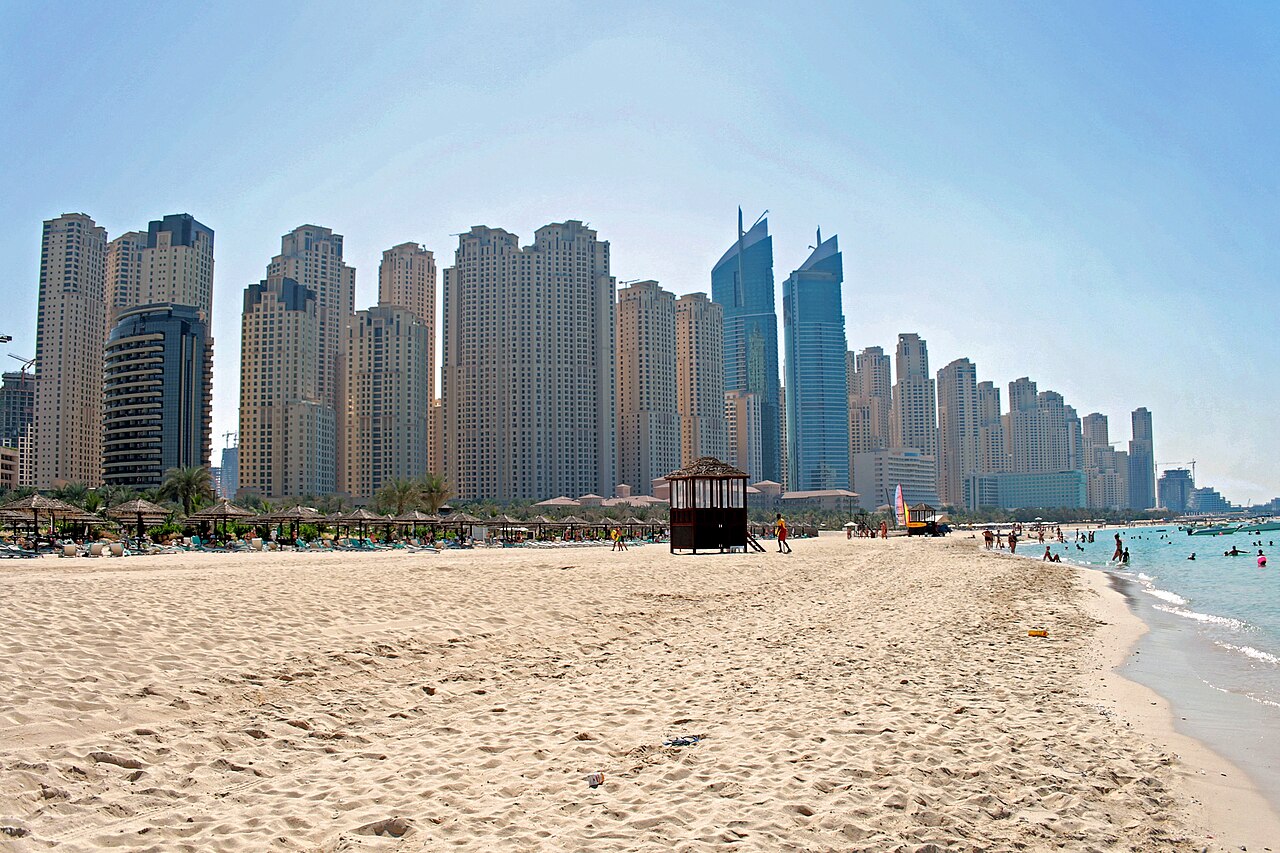
Kite Beach: the Aquaman circuits and sighting lines
The start and finish area for all races is pitched directly on the sand of Kite Beach right in front of the SALT eatery. Organized by Aquaman Open Water Swimming, the event presents a six-race programme engineered for every level of swimmer, spanning 500 meters, 1,000 meters, 1,500 meters, 2,000 meters, 5,000 meters, and a marathon distance of 10,000 meters. Race editions on the Dubai calendar are scheduled across March and October. Equipment rules are adapted to local sea conditions. Neoprene wetsuits and neoprene shorts are strictly prohibited across all distances, keeping the swim entirely skin-to-water. For safety and immediate patrol visibility, every competitor is required to tow a personal safety buoy throughout the swim.
Feeling the warm salt water on your shoulders at the starting arch makes for a clean and refreshing transition from the shore. For swimmers building an international open water journey, the organizer also hosts Aquaman Aswan, which can be completed during the same travel window. Swimmers take to the water, meeting the calm, glassy turquoise shallows of the Gulf off Kite Beach. The 1,500-meter course formed a wide rectangular circuit marked out by giant yellow inflatable pyramids, requiring swimmers to navigate outward swells and execute tight clockwise turns around each corner buoy. While outward rolling swells can test a swimmer's rhythm, the high salinity of the Gulf water delivers noticeable natural buoyancy that lifts the stroke, while sighting is made easy by aligning your head with the Kite Beach communications mast on shore or the soaring tower of the Burj Al Arab down the coast.
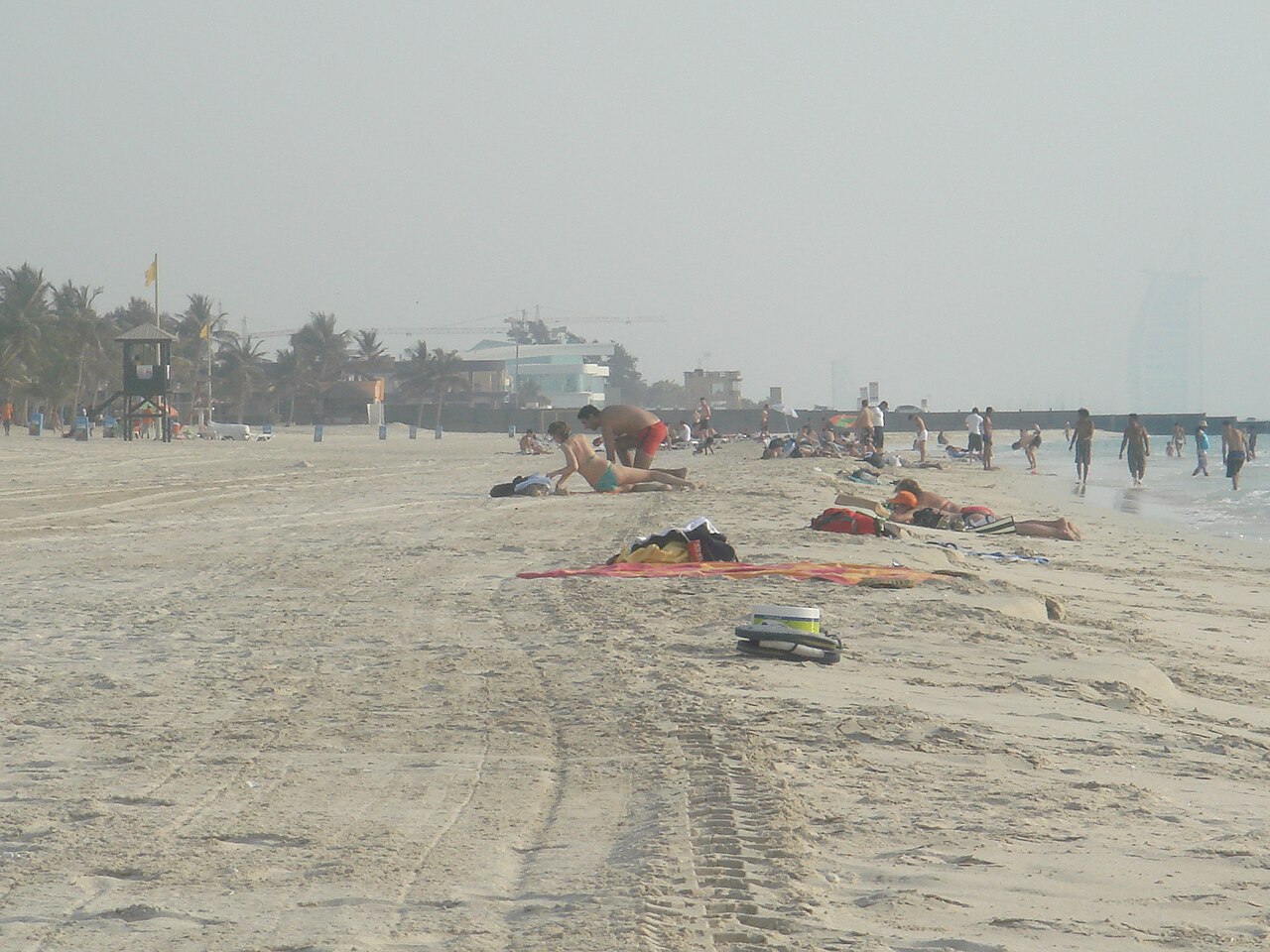
The Gulf off Jumeirah: waters and coastal shelf
The physical coastline of Dubai was formed roughly 5,000 years ago as the sea retreated inland. Competitors swim through the open sea of the Gulf, a regional basin linked directly to the broader Indian Ocean, lapping against clean white sand. Jumeirah Beach itself stretches from the Burj Al Arab hotel to the Jumeirah Beach Residences. The beach finally terminates between the southern boundary of the Jumeirah Beach Residence and the commercial port facilities at Jebel Ali. Over modern decades, major engineering works have significantly reshaped the coast, with land-reclamation projects extending Dubai's shoreline by more than 300 kilometres. Water engineering projects also touch the urban areas just behind the sea. About two kilometres from the race venue lies Safa Park, a green reserve containing three internal lakes and a scenic waterfall tumbling from a hill into the water below.
Pearling dhows, Chicago Beach and floating Kazzans
Centuries before competitive swimming arrived, the shoreline supported a thriving traditional maritime economy. In 1580, the Venetian merchant Gasparo Balbi documented the pearling fleet active in Dubai, recording the historic trade offshore. The open Gulf waters could occasionally turn harsh, as occurred during a destructive storm in 1908 that sank twelve pearling dhows and claimed the lives of more than a hundred seamen. Today, modern coastal observation, early morning starts, and dedicated safety personnel ensure calm, secure conditions for every entrant. Maritime trade flourished further along the coast as well. About eleven kilometres from the swim venue, the historic Al Bastakiya quarter extends along Dubai Creek for 300 meters. Wealthy merchant families from Bastak in southern Iran migrated across the Gulf to Dubai beginning around 1850, formally transferring their commercial shipping headquarters to Dubai's ports in 1920.
Their merchant vessels connected the Gulf from Bandar Lengeh to major regional ports including Bombay, Karachi, and Mombasa. About seven kilometres from the race area, the coastal sector where the Burj Al Arab now stands was originally known as Chicago Beach, named after the Chicago Bridge & Iron Company that welded floating oil storage structures along the shore. Oil was discovered offshore in Dubai's territorial waters at the Fateh field in 1966. Pioneering underwater storage tanks named Kazzans were assembled directly upon the beach sand and towed floating across 60 miles of open sea to anchor at the Fateh field.
Burj Al Arab and offshore artificial islands
Rising from the water about seven kilometres down the coast from the starting line, the Burj Al Arab stands upon an artificial island constructed 280 meters offshore from Jumeirah Beach. Its foundation is anchored by 230 concrete piles driven 40 meters into the seabed, shielded against wave erosion by an engineered honeycomb concrete matrix encasing heavy boulders. Inside the hotel, the Al Mahara restaurant houses a marine aquarium filled with approximately 990,000 liters of seawater. The hotel helipad perched high overhead has also hosted extreme sporting feats, including the highest kite surfing jump ever recorded. On an offshore island of reclaimed land stands the Jumeirah Beach Hotel, positioned opposite the former Chicago Beach.
The artificial islands of The World archipelago are separated by waterways averaging 100 meters across. Marine monitoring firm Penguin Marine was commissioned to evaluate coastal erosion and the natural silting occurring within these island channels. The master plan for the archipelago featured four primary transportation hubs interconnected by navigable channels, intending to route municipal utilities via submarine power cables from Dubai, although developers have operated using diesel generators. The islands were designed around innovative marine concepts, including an island in the Antarctic zone intended to host a pearling and marine entertainment venue, and the Heart of Europe development featuring an outdoor street engineered to generate artificial rain whenever temperatures climb past 27 degrees Celsius. The artificial Bluewaters Island carries the giant Ain Dubai observation wheel aloft above the Gulf.
Kite Beach, Madinat Jumeirah and the waterfront promenade
Once your race is finished, the coast offers a retreat. Near the Burj Al Arab and Jumeirah Beach Hotel, the Marsa Al Arab peninsula features private beach access alongside an 82-berth marina development. The waterfront of Jumeirah Beach Residence spans a 1.7-kilometer recreational shoreline facing the Gulf. The lively complex known as 'The Beach' covers the central section of this waterfront between the Hilton and Sheraton resorts, providing an inviting coastal promenade. After finishing the swim at Kite Beach and collecting your medal, you can walk directly off the sand to rest in the recovery village and take in the clear turquoise waters of the Gulf.
Sources: Dubai · مساكن شاطئ جميرا · Safa Park · Jumeirah Beach
Course
Awards
Award ceremony scheduled for 5:00 pm.
Aid stations
- Aid stations
- 2
Feeding points provided for 10KM (2) and 5KM (1) races.
How to get there
Aquaman Dubai
Frequently asked questions
- When was the last edition of Aquaman Dubai?
- The last edition of Aquaman Dubai took place on March 29, 2026.
- What distances does Aquaman Dubai offer?
- Aquaman Dubai offers 500 m, 1 km, 1.5 km, 2 km, 5 km, and 10 km.
- How much is the entry fee for Aquaman Dubai?
- Entry fees by distance: 500 m: 45 USD · 1 km: 70 USD · 2 km: 80 USD · 5 km: 100 USD · 10 km: 120 USD. Aquateams price is per person in a team of 3.
- Is a wetsuit required at Aquaman Dubai?
- Wetsuit use is listed as NO for most distances in technical info.
- Where does Aquaman Dubai take place?
- Aquaman Dubai is a sea swim. Location: Jumeirah Beach, Dubai, United Arab Emirates.
- How cold is the water at Aquaman Dubai?
- The organizer states a water temperature of 23 °C (73 °F).
- How do I register for Aquaman Dubai?
- The reference page for registering for Aquaman Dubai is https://www.aquaman.co/races-aquaman-dubai.
Where to stay
Accommodation in the Jumeirah district spans from high-end beach resorts and boutique hotels along the coastline to serviced apartments in the nearby Marina area. Budget-conscious travelers can find local guesthouses or standard hotel rooms slightly inland. Expect to pay between $150 and $450 per night, depending on proximity to the race venue at Kite Beach and the level of luxury.
Things to do nearby
Beyond the race, the area offers extensive options for water-based recreation, including kayak and SUP rentals along the Jumeirah beach. Visitors can explore the Jumeirah archaeological site to view Abbasid-era ruins, or engage in desert trekking experiences organized in the surrounding landscape. Cultural activities include traditional culinary tours focused on regional spices and coffee, as well as visiting local museums that document the historical transition from a pearling village to a global metropolis.
Swimmers
Other stages of this series
- Aquaman Britania IslandsSan Agustin, PH
- Aquaman AswanAswan, EG
- Aquaman Malaysia — LangkawiLangkawi, MY
- Aquaman MaltaMarsalforn, MT
- AQUAMAN ÖlüdenizÖlüdeniz, TR
- AQUAMAN France Saint-TropezSaint-Tropez, FR
Other races by this organiser
- Aquaman Open Water SomabaySomabay, EG
Similar races



Comments
Transparency: some links on this page (stays, flights, experiences, gear) are affiliate links — if you book or buy through them, Omniathlon may earn a commission from the partner at no extra cost to you. As an Amazon Associate we earn from qualifying purchases.