
Aquaman Aswan
- Apr 3, 2026
- Last edition date
- Distances from 500m to 8km
At a glance
- Last edition date
- April 3, 2026
- Distances
- 500 m · 1 km · 1.5 km · 2 km · 4 km · 8 km
- Where
- River · Nile River, Aswan, Egypt
- Entry fee
- 500 m: 35 USD · 1 km: 45 USD · 2 km: 65 USD · 4 km: 85 USD · 8 km: 95 USD
- Wetsuit
- Wetsuit rules TBC (To Be Confirmed).
- Registration
- aquaman.co
About the race
Gliding across the upper Nile beneath Philae revives a four-decade-old Egyptian open-water marathon tradition. Known as Aquaman Aswan, this open water swimming race takes place in the Nile River at Aswan, in southern Egypt. The event, organized by Aquaman Open Water Swimming, marks the revival of the historic International Nile Swim, bringing distance swimmers back to the dramatic waters facing the island temples. All courses start and finish right at the water's edge by the Aro Kato Hotel. Swimmers can choose from an array of challenges, including 500-metre sprint dashes, a 1,000-metre event with fins, 1,500-metre and 2,000-metre swims, longer 4,000-metre tests, and a premier 8,000-metre marathon, alongside a 3x500-metre team relay.
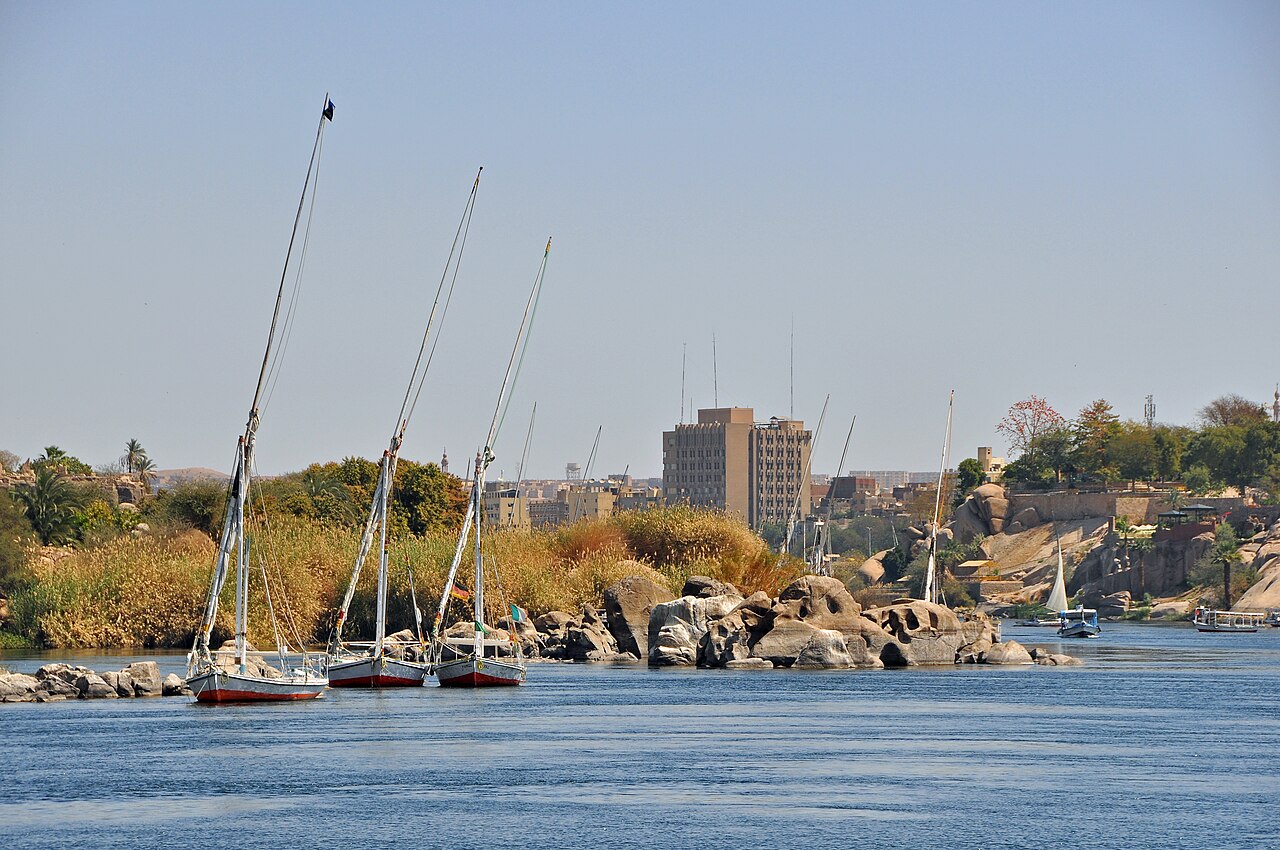
Over 1,000 competitors from more than 24 countries have taken to the Nile, cheered on by an equal number of spectators gathered along the banks. {{h2:Philae and Agilkia: temples saved from the river}} The original Philae Island sat near the First Cataract of the Nile, shaped naturally like a bird. When rising river waters threatened to submerge these sanctuaries permanently, engineers erected a massive cofferdam between 1974 and 1976. Every stone monument was dismantled and meticulously reassembled on Agilkia Island, leaving only the original island's highest rocky crown and parts of the cofferdam visible above the reservoir surface just three hundred metres away. Beneath the surface, the riverbed continues to yield ancient treasures: in July 2024, underwater surveys revealed submerged rock carvings and stelae dating from the Eighteenth Dynasty to the Late Period.
Elephantine Island: ancient nilometers and granite boulder shrines
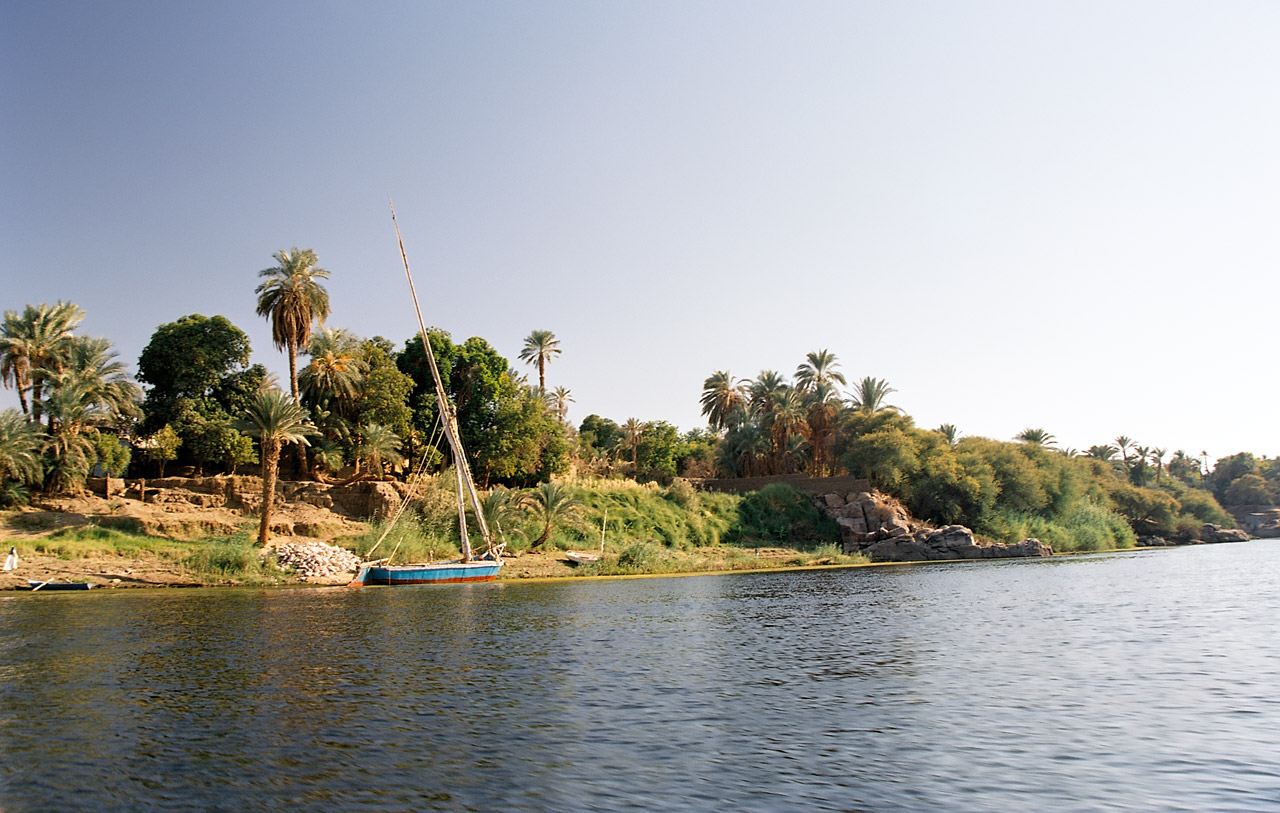
Just downstream of the first cataract lies Elephantine Island, an outpost that fortified Ancient Egypt's southern frontier as early as the First Dynasty around 3000 BC. For centuries, this rocky island served as a critical quarry across the kingdom. On its southern tip, an ancient step pyramid still stands parallel to the western shore, built from large hewn blocks held fast by a mortar of Nile mud and sand. Ancient belief held that the god Khnum guarded the Nile waters from hidden caves beneath Elephantine. Near these sacred waters, around 3200 BC, priests established the Temple of Satet, dedicated to the goddess personifying the annual Nile flood. Two ancient nilometers still remain on Elephantine to measure the seasonal rise of the river, including one with ninety stone steps carved with hieroglyphic, Roman, and Arabic numerals.
Qubbet el-Hawa: tombs and sand cliffs across the Nile
Directly across the Nile from Aswan rises Qubbet el-Hawa, a 130-metre rocky bluff cut into the western desert. The steep cliff face features rows of rock-cut tombs belonging to high-ranking provincial governors, set on artificial terraces overlooking the river. In 2019, archaeologists uncovered ten mummified crocodiles between 1.8 and 3.5 metres long inside burial chambers beneath a Byzantine dump, testifying to the river's ancient animal cults. Higher up the western hillside, the Aga Khan Mausoleum looks out across the river valley. Built from pink limestone and modeled after medieval Fatimid tombs, the structure sits above the winter villa where the Aga Khan III and Begum Om Habibeh once stayed.
The Aswan waterfront: Corniche, feluccas, and Kitchener's Island
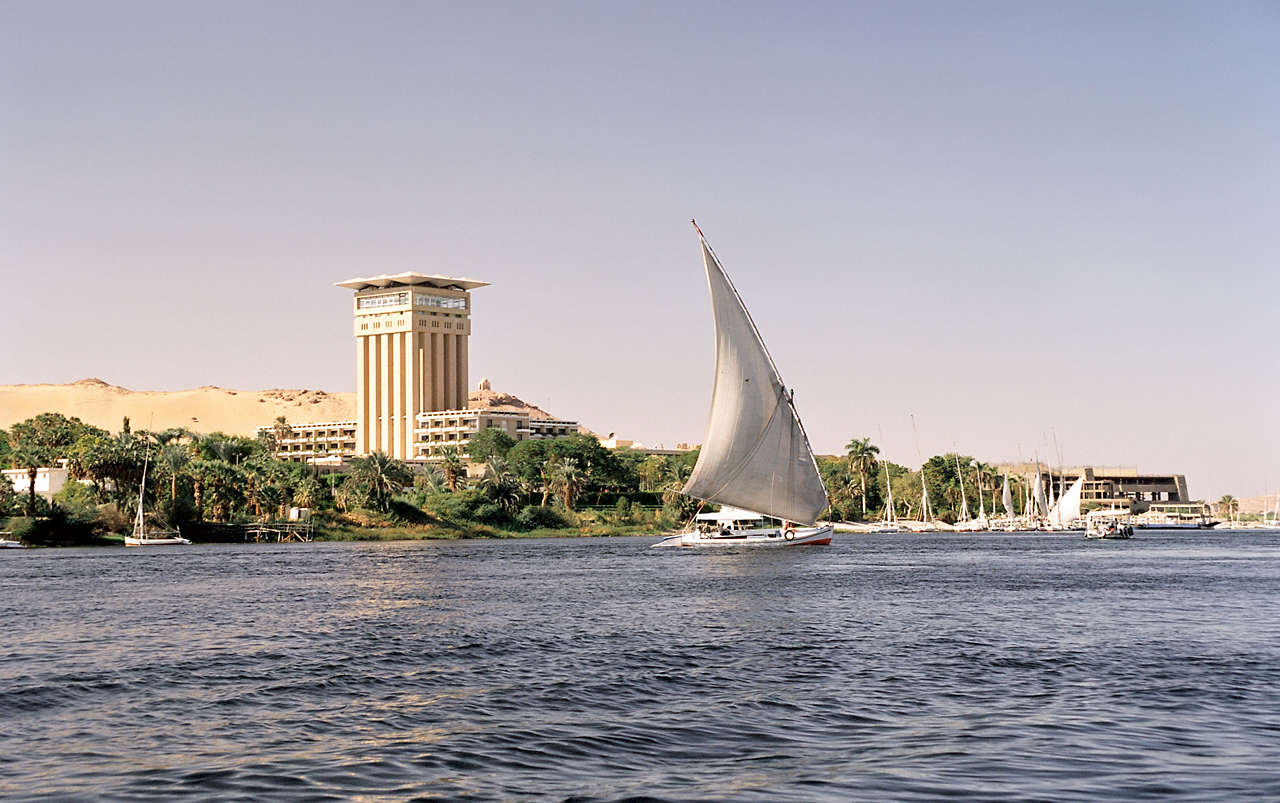
Above Aswan, the river widens to nearly 650 metres before setting off on an unobstructed 1,200-kilometre course toward the sea. Along the eastern shore, the Aswan Nile Corniche offers a multi-level glass promenade with panoramic views out over the islands. Traditional wooden feluccas ferry passengers out toward El Nabatat Island, an oval botanical haven measuring less than a kilometre in length. Gifted to Lord Kitchener during his tenure as Consul-General, the 750-metre island was planted with exotic trees and shrubs that create a lush tropical canopy in the middle of the river. The shoreline is anchored by the historic Old Cataract Hotel, where rooms in the Nile Wing feature balconies gazing directly across the river currents. After swimming the Nile, it completes an unforgettable pilgrimage to Egypt's eternal river.
Sources: Aswan · ضريح أغا خان · Elephantine · El Nabatat Island · Qubbet el-Hawa · Pyramid of Elephantine · Temple of Satet
Course
500M race starting and finishing at Aro Kato Hotel, around Philae Temple.
1KM race with fins, starting and finishing at Aro Kato Hotel, around Philae Temple.
3x500M team relay race starting and finishing at Aro Kato Hotel, around Philae Temple.
2KM race starting and finishing at Aro Kato Hotel, around Philae Temple.
4KM race starting and finishing at Aro Kato Hotel, around Philae Temple.
8KM race starting and finishing at Aro Kato Hotel, around Philae Temple.
Aid stations
Feeding points available for 8KM (2) and 4KM (1) races.
Useful info
Two-day event (April 3-4, 2026). Categories: 8km, 4km, 2km, 1km (fins), 500m (kids), 3x500m (team). Wetsuit policy to be defined. Safety buoy mandatory. Race kit included (tattoo, chip, cap, t-shirt, medal). Race pack collection at Aro Kato Hotel.
How to get there
Aswan International Airport (ASW) is 20km away. Aswan railway station is in the city center. For the race site: local taxis or Uber are the most efficient means of transport. Car rental is not recommended due to chaotic traffic; parking is limited at accommodation facilities along the Nile. Main travel is by land or via boats (feluccas).
Aquaman Aswan
Frequently asked questions
- When was the last edition of Aquaman Aswan?
- The last edition of Aquaman Aswan took place on April 3, 2026.
- What distances does Aquaman Aswan offer?
- Aquaman Aswan offers 500 m, 1 km, 1.5 km, 2 km, 4 km, and 8 km.
- How much is the entry fee for Aquaman Aswan?
- Entry fees by distance: 500 m: 35 USD · 1 km: 45 USD · 2 km: 65 USD · 4 km: 85 USD · 8 km: 95 USD. Aquateam price is per person in a team of 3.
- Is a wetsuit required at Aquaman Aswan?
- Wetsuit rules TBC (To Be Confirmed).
- Where does Aquaman Aswan take place?
- Aquaman Aswan is a river swim. Location: Nile River, Aswan, Egypt.
- How cold is the water at Aquaman Aswan?
- The organizer states a water temperature of 21 °C (70 °F).
- How do I register for Aquaman Aswan?
- The reference page for registering for Aquaman Aswan is https://www.aquaman.co/races-aquamanaswan.
Where to stay
Aswan provides a range of options, from historic colonial-era hotels along the riverfront to traditional Nubian guesthouses on the nearby islands. Boutique hotels with direct Nile access are common near the Corniche. Prices typically range from $60 to $250 per night, depending on the proximity to the water and the level of service. For a more immersive experience, many participants choose guesthouses on Elephantine Island, offering a quiet atmosphere and views of the river traffic.
Things to do nearby
The region is defined by its deep archaeological roots and river-based culture. Outside of race hours, visitors can take traditional felucca sailboats to navigate between the islands, or explore the granite quarries and the various temples dotting the riverbanks. Local markets in the city center offer a chance to experience regional commerce, while hiking trails on the west bank provide views of the desert meeting the river. Archaeological tours of the island ruins remain the primary activity for those visiting during the race weekend.
Swimmers
What to see around
1. Philae Temple (UNESCO site on an island). 2. Unfinished Obelisk. 3. Nubian Village (boat excursion). 4. Nubian Museum. 5. Kalabsha Temple. Experiences: sunset felucca ride on the Nile and visit to the Monastery of St. Simeon.
Other stages of this series
- Aquaman Britania IslandsSan Agustin, PH
- Aquaman DubaiDubai, AE
- Aquaman Malaysia — LangkawiLangkawi, MY
- Aquaman MaltaMarsalforn, MT
- AQUAMAN ÖlüdenizÖlüdeniz, TR
- AQUAMAN France Saint-TropezSaint-Tropez, FR
Other races by this organiser
- Aquaman Open Water SomabaySomabay, EG
Similar races


Comments
Transparency: some links on this page (stays, flights, experiences, gear) are affiliate links — if you book or buy through them, Omniathlon may earn a commission from the partner at no extra cost to you. As an Amazon Associate we earn from qualifying purchases.