
Across the Lagoon Open Water Swim
- Nov 29, 2026
- Distance: 4km
At a glance
- Next edition date
- November 29, 2026
- Distances
- 4 km
- Where
- Kraalbaai, West Coast National Park, Langebaan Lagoon, Langebaan, Western Cape, South Africa
- Entry fee
- 350 ZAR
- Registration
- racespace.co.za
About the race
The Across the Lagoon Open Water Swim is an open water swimming race held in the Langebaan Lagoon, starting from Kraalbaai in the West Coast National Park, Western Cape, South Africa. The course features a 4,000-meter crossing through scenic, protected lagoon waters, surrounded by preserved coastal nature reserves. In past editions, swimmers have completed the route from Kraalbaai across to Shark Bay, with the crossing serving as a community fundraiser to support the local National Sea Rescue Institute station at Mykonos. Held in late November, the event offers a continuous distance test across a uniquely calm saltwater basin.
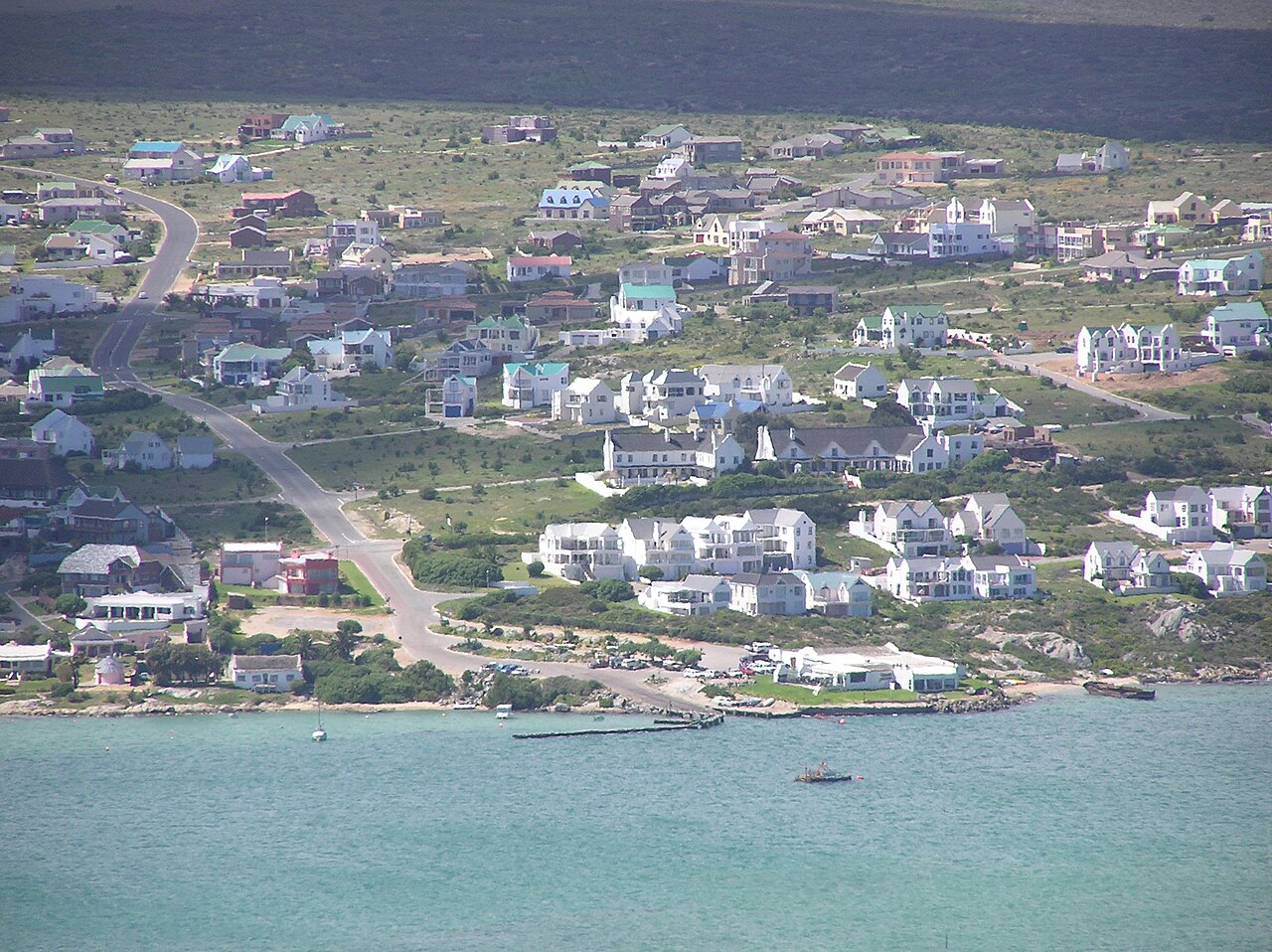
Langebaan Lagoon: pure seawater and prehistoric basins
Unlike typical coastal lagoons fed by river systems, the Langebaan Lagoon is an entirely marine body of pure salt water. Its formation was driven by prehistoric fluctuations in global sea levels rather than river runoff, leaving an oceanic basin completely free of freshwater inputs. Swimmers moving across the expanse experience the distinct buoyancy and clarity of seawater. The lagoon stretches southeastward for 14 kilometres from the inner reaches of Saldanha Bay, a vast natural harbour measuring 11 kilometres in length and 12 kilometres in width. To safeguard this delicate aquatic environment, the Langebaan Lagoon Marine Protected Area protects 65 kilometres of shoreline and 280 square kilometres of marine habitat. The water is divided into three distinct management zones, including a dedicated sanctuary zone in the south where all access is prohibited to ensure untouched conservation. Sea bamboo (Ecklonia maxima) flourishes across shallow water, sending long fronds upward to form a dense canopy that floats right at or just below the surface.
Swimming Langebaan Lagoon: temperature, tide and local routes
In an article by the Cape Long Distance Swimming Association, a swim-camp organiser puts Langebaan Lagoon at about 18 degrees at the back, 16 in the middle and 13 at the mouth. The Cape Long Distance Swimming Association describes Langebaan Lagoon as warmer and relatively sheltered, but exposed to great variances in tides. Big Bay Events director Derrick Fraser says that nowhere else in Cape Town do swimmers get the tidal changes found in the English Channel. The popular tidal-assisted route from Preekstoel to Pearlys falls between 6-7 km, short of an official Cape Long Distance Swimming Association swim. The Langebaan Express Swim, first organised on the same lagoon in 2019, includes a 12 km swim from Kraalbaai (Preekstoel) to Mykonos.
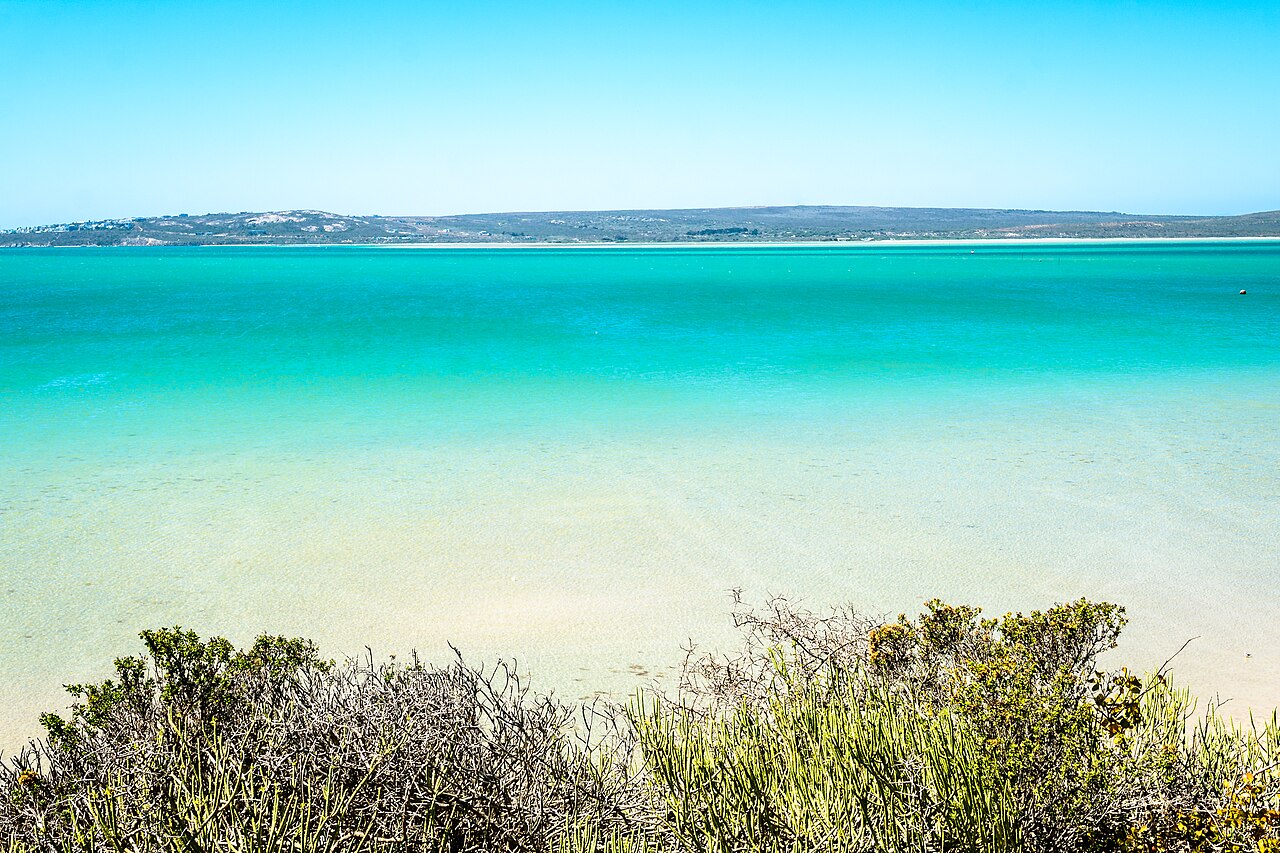
West Coast National Park: saltmarshes and seabird sanctuaries
The surrounding tidal basin encompasses an extraordinary wetland habitat, sheltering approximately 32% of all the saltmarshes in South Africa. In recognition of this rare ecological wealth, the lagoon was designated as a Ramsar wetland of international importance in 1988 before being officially proclaimed a marine protected area in 2000. These fertile salt flats sustain an immense wildlife population across the changing seasons. During the summer months, the lagoon waters provide refuge for around 55,000 water birds, with more than 300 avian species recorded across the coastal reserve. Out towards the mouth of the bay, the rocky offshore islands form critical nesting colonies: Jutten Island, situated about six kilometres away, rises with two low hills to 60 meters and shelters breeding pairs of African oystercatchers, Kelp gulls, Hartlaub's gulls, Swift terns, and three distinct species of cormorants.
About four kilometres from the race area, the flat plateau of Malgas Island supports a colony of roughly 20,000 breeding pairs of Cape gannets, representing a quarter of the world's population. Their seasonal arrival aligns with the spectacular spring wildflower season that carpets the nearby SAS Saldanha Nature Reserve in vivid blooms.
From Kraalbaai to Saldanha Bay: human dawn and colonial fleets
Kraalbaai is an archaeological site of profound significance, holding evidence from the very dawn of human history. In 1995, ancient footprints—known as Eve's footprint—were discovered preserved within the coastal sand-rock formations along Kraalbaai beach. Left in damp sand dunes tens of thousands of years ago, they are the oldest known fossilized footprints of an anatomically modern human, connecting this starting shore directly to early humanity. Centuries of seafaring exploration later shaped these same coastal waters. In 1601, the Dutch navigator Joris van Spilbergen sailed into the inlet, mistakenly believing he had reached the cape at Cape Town. Later, French voyagers used Schaapeneiland, which they named Isle à la Biche, as a coastal storehouse to process and stockpile whale oil and seal skins.
The waters of Saldanha Bay also retain the memory of historical shipwrecks. Near Jutten Island, the Dutch East India Company ship Merestein was wrecked on April 3, 1702. In 1781, a British naval squadron seized six Dutch East Indiamen that had taken shelter inside the bay. The five islands preserved within the West Coast National Park served historically as quarantine outposts during smallpox outbreaks, sealing camps, and guano extraction stations, where stone retaining walls, pathways, and an old landing jetty still stand on Malgas Island from operations in 1845.
Kraalbaai beach: the Preekstoel cliffs and moored houseboats
Kraalbaai beach rests between sculpted cliffs and tranquil water. Its most famous natural feature is Preekstoel, a weathered rock formation standing right along the edge of the lagoon. The calm shallows make the beach an inviting spot for visitors, with designated facilities for picnics and traditional open-fire braais along the coast. The sheltered lagoon surface also offers space for varied water sports, from paddling kayaks to recreational boating and water skiing. For swimmers who want to stay right at the race venue, permanently moored houseboats sit anchored in the cove of Kraalbaai, offering overnight stays floating on the lagoon before you step off onto the sand to swim.
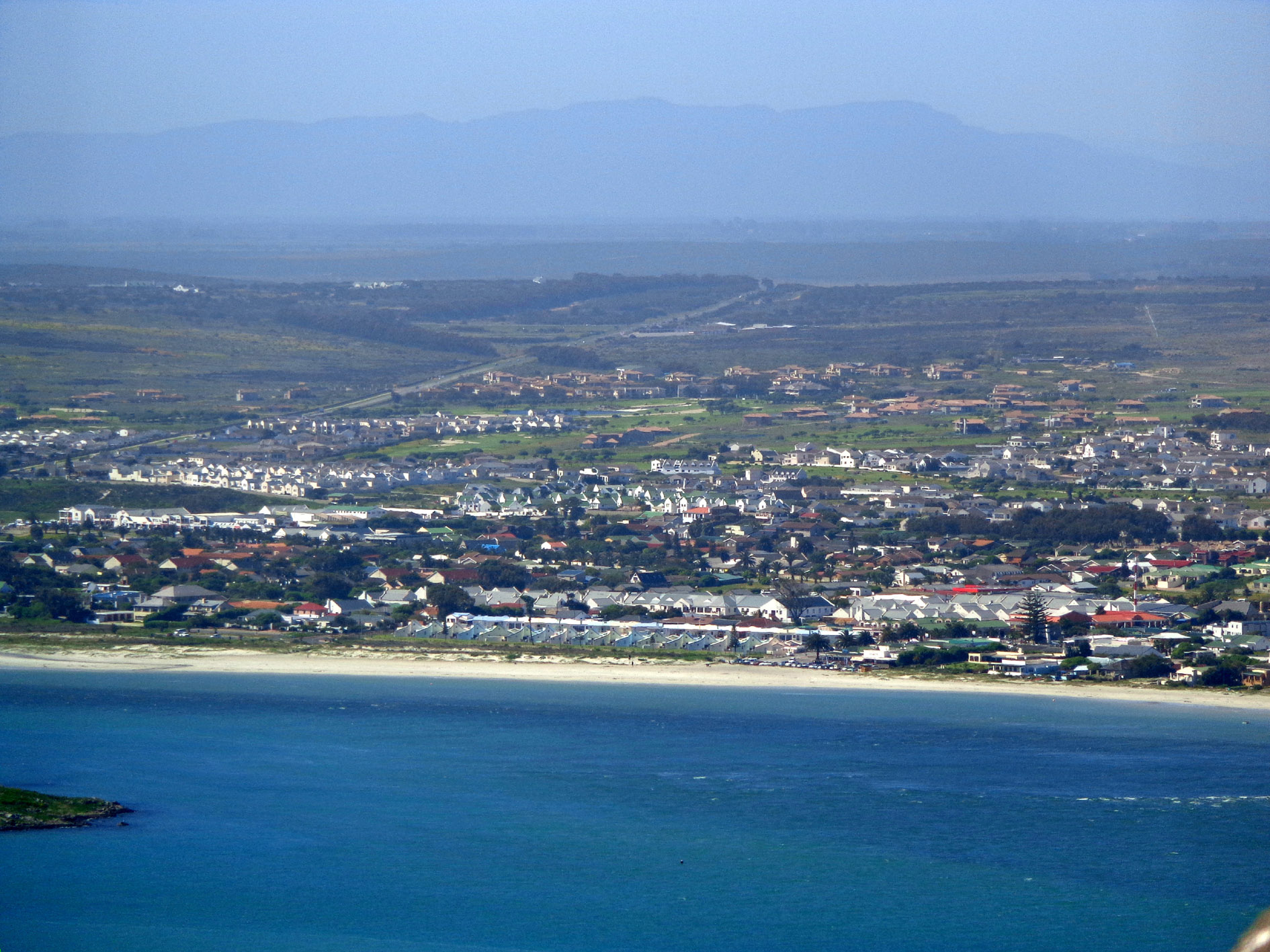
Sources: Langebaan · Saldanha Bay · Malgas Island · Jutten Island Marine Protected Area · Malgas Island Marine Protected Area
Course
How to get there
Across the Lagoon Open Water Swim
Frequently asked questions
- When is Across the Lagoon Open Water Swim?
- Across the Lagoon Open Water Swim takes place on November 29, 2026.
- What distances does Across the Lagoon Open Water Swim offer?
- Across the Lagoon Open Water Swim has a single distance: 4 km.
- How much is the entry fee for Across the Lagoon Open Water Swim?
- The entry fee is 350 ZAR. Prices listed are starting fees.
- Where does Across the Lagoon Open Water Swim take place?
- Location: Kraalbaai, West Coast National Park, Langebaan Lagoon, Langebaan, Western Cape, South Africa.
- How do I register for Across the Lagoon Open Water Swim?
- The reference page for registering for Across the Lagoon Open Water Swim is https://www.racespace.co.za/races/swimming.
Where to stay
Langebaan offers a range of options from self-catering beach cottages along the lagoon perimeter to boutique guesthouses in the harbor area. Camping is available within the West Coast National Park, providing direct access to the starting area at Kraalbaai. Expect to pay between 800 ZAR and 2,500 ZAR per night depending on the proximity to the water and the level of service provided by the local lodges.
Things to do nearby
The region is defined by its coastal geography and history. Visitors frequently engage in kayaking or SUP sessions to explore the shallower reaches of the lagoon. Trekking through the West Coast National Park allows for observation of local birdlife and spring wildflowers, while the town of Langebaan provides access to regional seafood tastings and historical tours focusing on the area’s whaling heritage and maritime archeology.
Swimmers
Similar races


Comments
Transparency: some links on this page (stays, flights, experiences, gear) are affiliate links — if you book or buy through them, Omniathlon may earn a commission from the partner at no extra cost to you. As an Amazon Associate we earn from qualifying purchases.