
Travesía Navidad - Playa del Postiguet
- Dec 21, 2025
- Last edition date
- Distances from 800m to 3km
At a glance
- Last edition date
- December 21, 2025
- Distances
- 800 m · 1.5 km · 3 km
- Where
- Sea · Playa de Postiguet, Alicante, Comunidad Valenciana, Spain
- Entry fee
- 20 €
- Wetsuit
- Specific document provided for 'Physical fitness and liability waiver WITHOUT WETSUIT'.
- Registration
- crono4sports.es
About the race
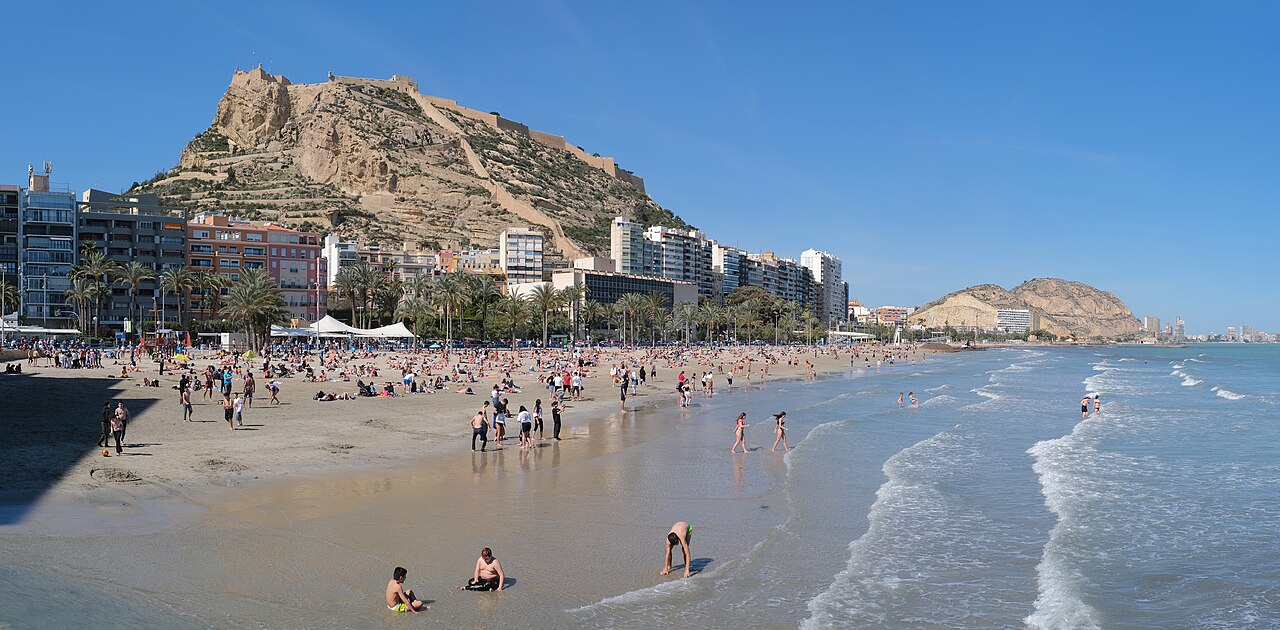
Rising 166 meters straight out of the Mediterranean shore, the limestone crag of Mount Benacantil casts its shadow over the sheltered curve of Playa del Postiguet. The Travesía Navidad - Playa del Postiguet is an open water winter swimming race held in the calm Mediterranean Sea along the city strand of Alicante, in the Valencian Community. Swimmers gather on the sand beneath the palm-lined city promenade for a festive December dip that combines competitive circuit swimming with local holiday tradition. The start and finish gates sit right in the sheltered El Cocó corner at the eastern end of the beach. Swimmers take on distances of 800, 1,500, or 3,000 meters, competing in the inaugural fixture of the Copa Alicante open water league and the municipal Alc-Nado sports circuit.
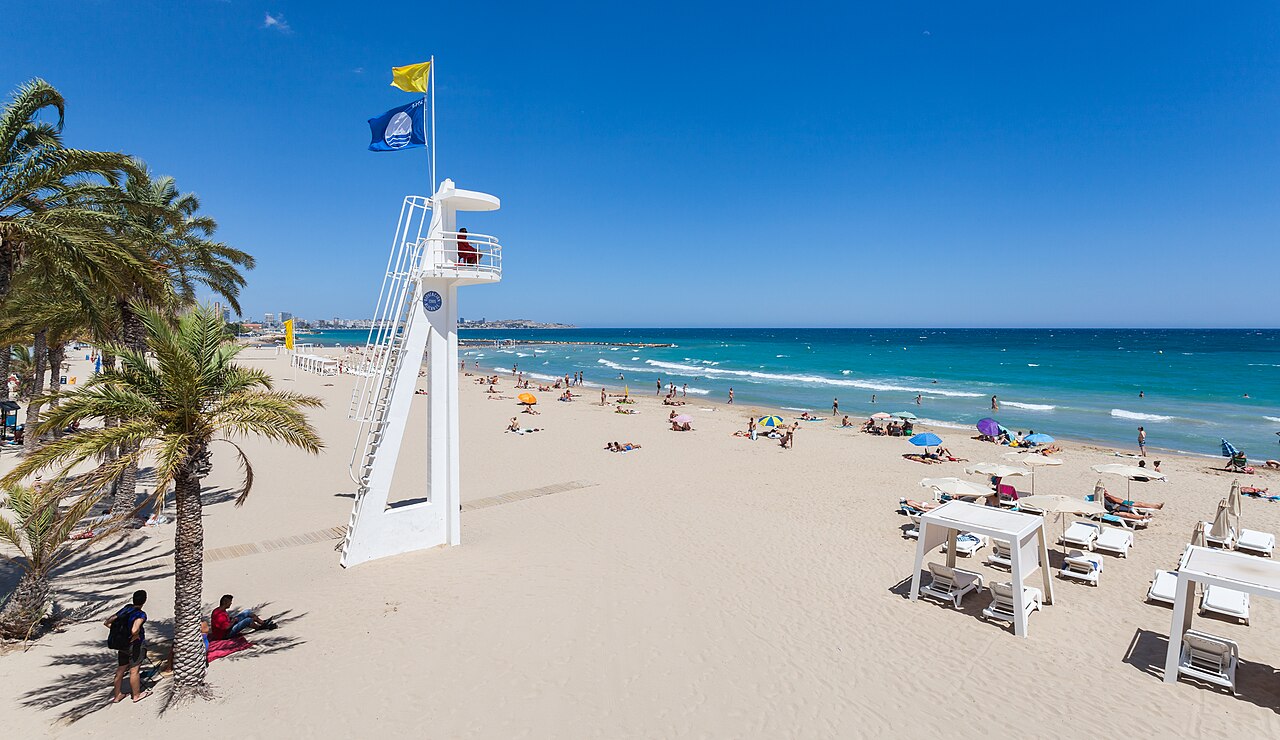
Safety is closely managed along the bay, with tow buoys strictly mandatory for every competitor slicing through the winter swells. While most participants pull on neoprene suits for thermal comfort, hardier swimmers can enter the traditional skin category with authorization and a signed liability declaration. A mass start off the sand can bring the usual frantic rush of jostling elbows and churning kickboards, but the pack quickly strings out into clear, open water. Even when the winter air feels sharp along the shore, the protected Mediterranean here remains remarkably gentle, and the sea temperature feels surprisingly manageable once your stroke settles into rhythm. Beyond the individual distances, the event features a popular solidarity relay whose proceeds go directly to ASPANION to support children with cancer across the region.
The atmosphere on the beach feels genuinely celebratory, with upbeat music, entertainment, and prize drawings for families bundled up along the tide line. Coming out of the surf, swimmers are welcomed with generous finish-line refreshments, including fresh seasonal fruit, sweet and savory local cocas, and cups of steaming hot chocolate that warm chilly fingers in minutes.
Playa del Postiguet and the waters of El Cocó
The race unfolds in the Mediterranean basin. At the eastern tip where swimmers enter the sea, a 178-meter L-shaped stone breakwater protects the El Cocó basin, replacing an older dike from the 1990s to buffer the cove against open-sea chop. It has not always looked like this modern urban beach. For centuries, this shore was a rugged bank of shingle and cobbles where the fishermen of the adjacent Raval Roig neighborhood hauled up their wooden boats after night shifts on the water. Only in the late nineteenth century was the shoreline reshaped with soft sand to accommodate newly fashionable maritime bathing customs, creating the broad strand enjoyed by open water swimmers today.
Mount Benacantil and the defenses of Santa Bárbara
Looming nearby stands Mount Benacantil, an elevation of 166 meters rising straight from the Mediterranean edge. Viewed from the sand of Postiguet, the craggy silhouette of the mountain mimics the profile of a human head, known locally as the Moor's face. High above, guarding the summit, sits the ancient stronghold of Santa Bárbara Castle, whose oldest surviving fortifications date back between the eleventh and thirteenth centuries. Deep archaeological digs across the surrounding slopes have uncovered artifacts spanning the Bronze Age, Iberian settlements, and Roman outposts. French warships bombarded the castle from the bay in 1691, and during the 1709 siege of the city, military engineers carved a chamber 29 meters into the rock face beneath the citadel, packing it with 55 tons of gunpowder.
The colossal detonation on March 3 collapsed a vast section of the cliff, devastating roughly 400 houses in the Raval Roig settlement below. In modern times, the historic void left by the 1709 mine explosion was repurposed in 1963 to house the elevator shafts that whisk visitors into the fortress. In 1873, the waters shook once more when the frigate Numancia unleashed its naval guns against the town.
The pine slopes and coastal flora of Benacantil
While the sheer south and west faces dropping toward Playa del Postiguet remain dry and rocky because of their steep incline, the wider slopes of Benacantil tell a story of careful environmental renewal. In 1930, an ambitious reforestation project planted 21,000 pine trees across the mountain, intermingled with stands of poplars and eucalyptus. Today, that mature green canopy offers an unexpected natural roofline right over the urban shoreline. Among the crags and limestone outcrops, endemic Mediterranean plants thrive in the dry sea air, including fragrant rock tea and pennyroyal. In earlier centuries, patches of saltwort were harvested commercially across these hillsides. The thick belt of woodland above the beach also sustains abundant wildlife, providing nesting branches for songbirds like robins, blackbirds, and European serins whose calls carry down toward the surf on quiet winter mornings.
Paseo del Postiguet and the historic seafront
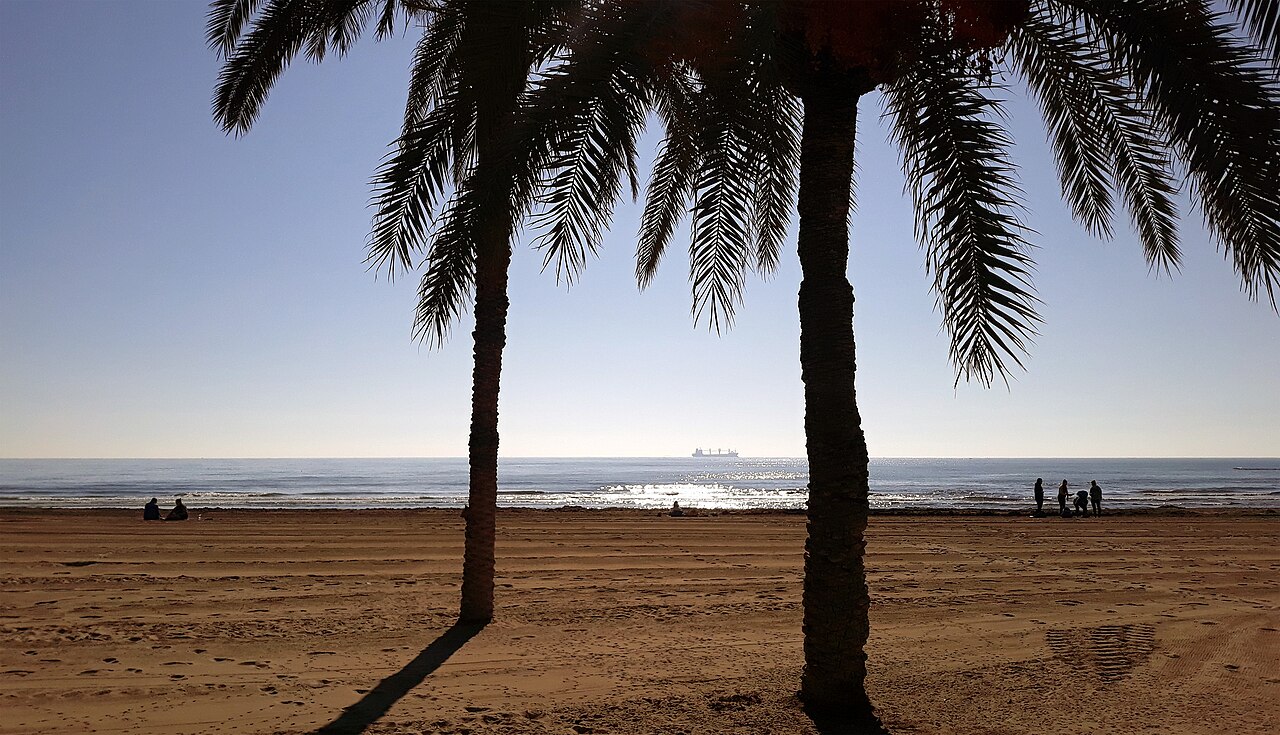
Directly framing the race arena runs the Paseo del Postiguet, stretching from the Puerta del Mar along the sand to the old La Marina railway station. The esplanade is distinguished by its vivid turquoise-blue cobblestones laid out in repeating hexagonal patterns, bordered by elegant garden plots and lines of date palms that match the trees scattered across the sand. A footbridge arcs directly from the sand toward the hillside terraces of Raval Roig, while the El Cocó spit transforms each summer into the firing ground for the midnight fireworks that conclude the famous Hogueras de San Juan festival. Running parallel to the docks lies Canalejas Park, designed in 1886 upon the grounds of the city's former shipyards.
Landmark maritime architecture constructed in the early twentieth century is preserved nearby. Here stands the Maritime Customs house, built between 1908 and 1912 by the Levante dock, and the 1908 Maritime Health building, which for decades inspected vessels, goods, and incoming passengers to safeguard the port. Together with the historic Fish Market, these pavilions form an evocative maritime quarter that anchors Alicante's seafaring life.
Sources: Alicante · Parque de Canalejas
Course
Start and finish at Playa del Postiguet (Cocó area).
Start and finish at Playa del Postiguet (Cocó area).
Start and finish at Playa del Postiguet (Cocó area).
Awards
- Age group awards
Categories include Junior, Senior, and Master A-E (Male/Female).
Previous editions
How to get there
Travesía Navidad - Playa del Postiguet
Frequently asked questions
- When was the last edition of Travesía Navidad - Playa del Postiguet?
- The last edition of Travesía Navidad - Playa del Postiguet took place on December 21, 2025.
- What distances does Travesía Navidad - Playa del Postiguet offer?
- Travesía Navidad - Playa del Postiguet offers 800 m, 1.5 km, and 3 km.
- How much is the entry fee for Travesía Navidad - Playa del Postiguet?
- The entry fee is 20 €. Price is 20 EUR for all distances. Registration closes on 18/12/2025.
- Is a wetsuit required at Travesía Navidad - Playa del Postiguet?
- Specific document provided for 'Physical fitness and liability waiver WITHOUT WETSUIT'.
- Where does Travesía Navidad - Playa del Postiguet take place?
- Travesía Navidad - Playa del Postiguet is a sea swim. Location: Playa de Postiguet, Alicante, Comunidad Valenciana, Spain.
- How do I register for Travesía Navidad - Playa del Postiguet?
- The reference page for registering for Travesía Navidad - Playa del Postiguet is https://www.crono4sports.es/info/2307/.
Where to stay
Alicante offers a diverse range of stays, from boutique hotels near the port that provide easy access to the race start, to traditional apartments in the historic center. For those seeking a local experience, small-scale rentals near the Santa Barbara slopes are common. Prices for a double room typically range from 70 to 150 EUR per night during the late December period, depending on proximity to the beachfront.
Things to do nearby
The area surrounding the port is ideal for exploring the maritime heritage of the Mediterranean. Visitors can engage in guided tours of the Santa Barbara Castle or participate in winter trekking routes along the coastal cliffs. The city is also known for its local gastronomy, with many establishments offering tastings of regional wines and almond-based sweets, which are traditional during the holiday season. Water-based activities like kayak excursions remain popular, allowing one to observe the coastal geography from a different perspective.
Swimmers
Similar races


Comments
Transparency: some links on this page (stays, flights, experiences, gear) are affiliate links — if you book or buy through them, Omniathlon may earn a commission from the partner at no extra cost to you. As an Amazon Associate we earn from qualifying purchases.