Travesía Fabio Guerzoni — Ramallo
- Mar 7, 2027
- Distances: 3km and 7km
At a glance
- Next edition date
- March 7, 2027
- Distances
- 3 km · 7 km
- Where
- Río Paraná, Ramallo, Buenos Aires, Argentina
- Entry fee
- 100,000 ARS
- Registration
- cnpr.com.ar
About the race
In Ramallo, the Río Paraná flows wide and powerful toward the delta, flanked by a maze of green river islands. The Travesía Fabio Guerzoni is an open water swimming race held in the freshwater currents of the Paraná River at Ramallo, in the northern reaches of Buenos Aires province, Argentina. Organized by the Club Náutico y Pescadores de Ramallo, the event brings hundreds of swimmers together at the end of the southern summer to experience the natural momentum of one of South America's most imposing waterways. The competition offers two distinct downriver courses: a competitive 7-kilometer swim and a 3-kilometer integration distance. Swimmers tackling the full 7 kilometers enter the water upstream in the industrial shipyard sector, while those registered for the shorter distance set off from the municipal beach, with both groups following the river current down to the finish line at the club headquarters.
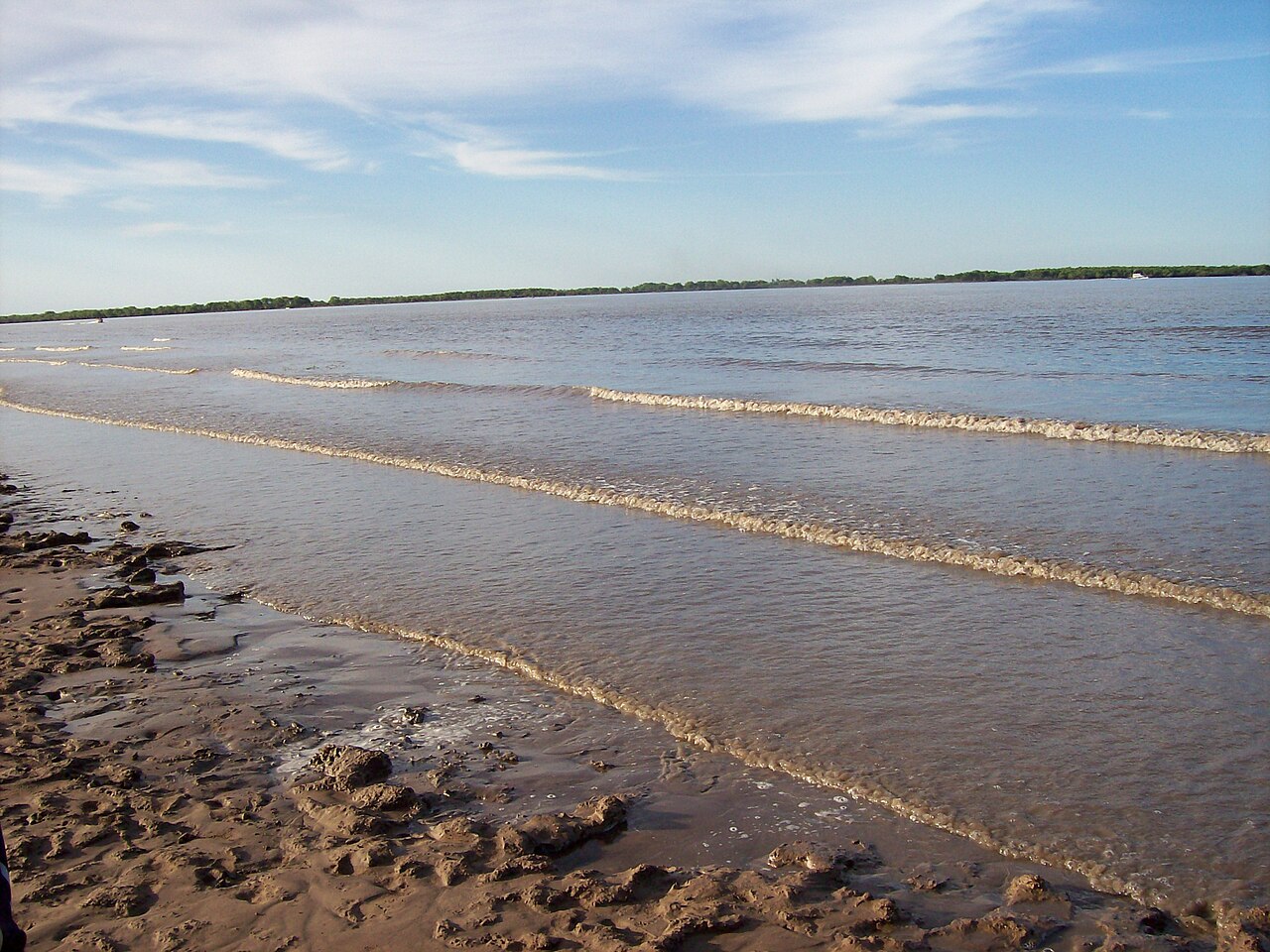
Entering the water among the slipways of Astilleros is a moving moment as the field spreads out in the wide brown channel, while the finish inside the cove of Club Náutico creates a thrilling conclusion, where swimmers funnel together and sprint elbow to elbow toward the ramp. Over nearly two decades the gathering has become a major fixture on the Argentine open water calendar, drawing around 600 swimmers in past editions, with nearly 400 taking on the 7-kilometer challenge and another 200 completing the shorter distance. Swimmers travel from across the country, arriving from Junín, La Plata, Buenos Aires city, and northern Santa Fe, welcomed by ideal late-summer weather and banks lined with cheering spectators.
To make the river crossing safe and seamless, the club coordinates closely with the local municipality and the Argentine Naval Prefecture. The race transforms the entire riverfront into a regional celebration, with athletes and their families arriving as early as Friday afternoon to fill the town's hotels, cabins, and restaurants. What began in 2008 as a modest 3-kilometer swim along the riverbank for 149 entrants has grown into an event embraced by the whole community.
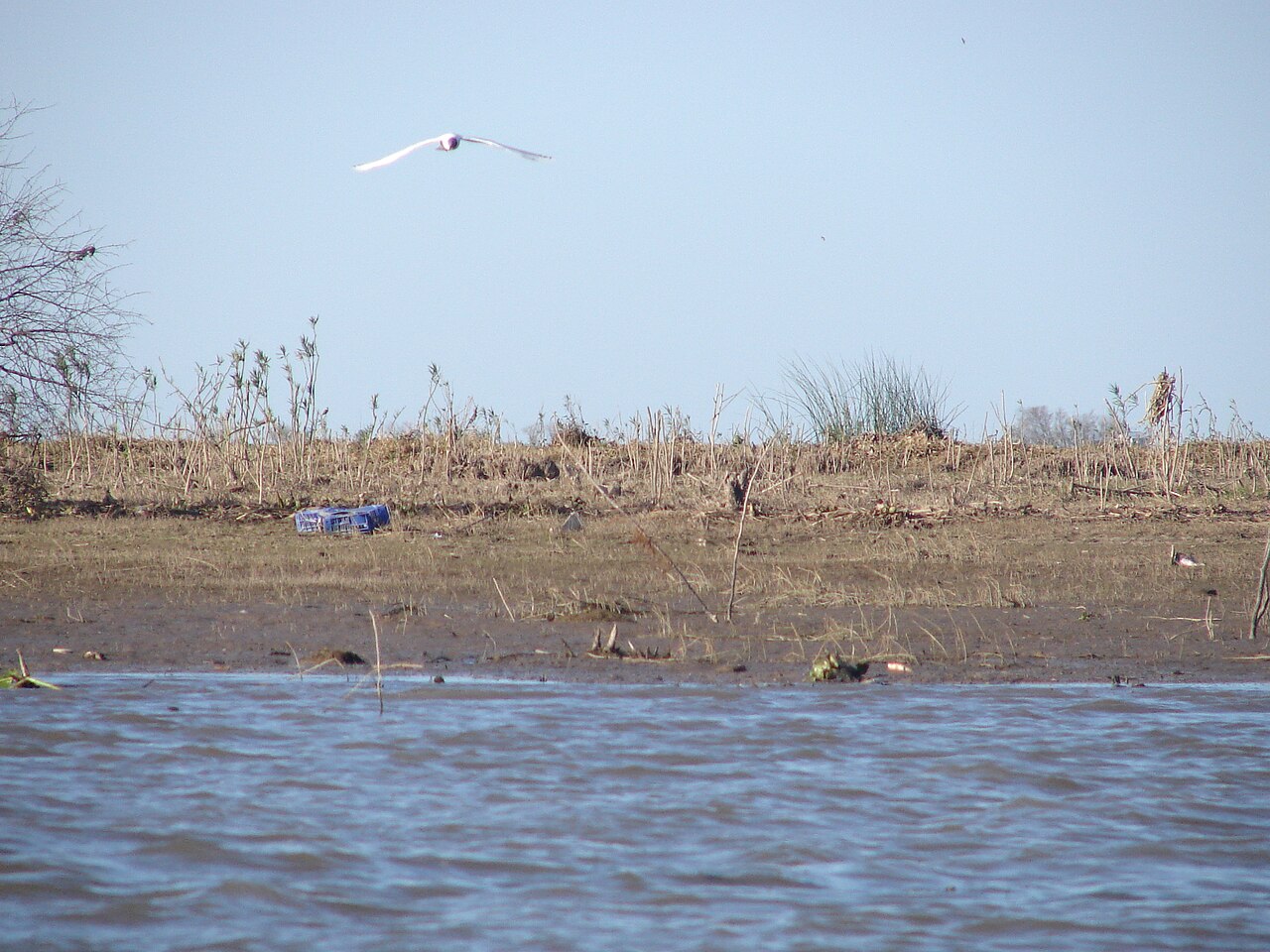
The lower Paraná at Ramallo: sandbars and high river bluffs
The Paraná is an ancient continental thoroughfare with centuries of riverine navigation behind it, explored by the Venetian navigator Sebastian Cabot in 1526 as the first European to journey up its waters. Long before reaching Ramallo, this massive river basin is shaped by monumental hydroelectric works high upstream, such as the Itaipu Dam, the third largest power plant in the world, whose reservoir flooded the famous seven cascades of Guaíra Falls in 1984. Further down, the Yacyretá Dam raised water levels and inundated the lower sections of Encarnación, illustrating the immense scale of the hydrological system feeding these downstream currents. At Ramallo, the river sweeps along its right bank through the deltaic section known as the Paraná de las Palmas.
Along the local shoreline, the Arroyo Ramallo cuts through the coastal terrain to mark part of the boundary between the Ramallo and San Nicolás districts. The Balneario Municipal is an extensive sandy beach that serves as the heart of summer recreation. About fourteen kilometres away, perched directly atop the steep bluffs overlooking the river, Castillo de Rafael Obligado commands a sweeping view over the water.
The Lechiguanas islands and the delta wetlands
Looking across the broad expanse of water from the Ramallo promenade, the view opens directly onto the Lechiguanas Islands, which spread across the left bank of the southern river branch. Downstream from the city of Diamante, the river splits into multiple branching arms in the Paraná Delta. The area forms a major destination for bird-watching enthusiasts, sheltering aquatic birdlife. Closer to Ramallo, the coastal wetland of El Tonelero preserves a unique natural ecosystem rich in riparian flora and fauna. Because the Paraná River serves as the primary intake for local drinking water supplies, the preservation of these shoreline ecosystems remains a subject of vital local care. Environmental advocates have raised questions regarding proposed industrial developments in the area, including a tank farm designed to store 65,000 cubic meters of fuels, biofuels, fertilizers, and vegetable oils.
Paso del Tonelero: artillery duels along the Paraná cliffs
The area surrounding Ramallo is steeped in nineteenth-century military history. On January 9, 1846, General Lucio Norberto Mansilla installed defensive artillery batteries at El Tonelero to contest Anglo-French warships attempting to navigate up the Paraná River. On December 17, 1851, this very stretch of river became the site of the Battle of the Tonelero Pass, fought along the west bank of the Paraná near the cliff of Acevedo, between Ramallo and San Nicolás, about eight kilometres from the race venue. General Mansilla led an Argentine force of 2,000 soldiers with 16 artillery pieces to defend the pass against a squadron of warships sailing up the Paraná. The opposing fleet consisted of eight vessels, including four steam corvettes, two sailing corvettes, and a brig, attempting to force the narrow river passage under heavy fire.
During a ferocious one-hour engagement, the artillery on the heights fired over 450 cannon rounds down onto the passing ships. Despite sustaining damage, the Brazilian squadron forced its way past the bluffs and successfully landed troops upstream at Diamante in Entre Ríos province. Following the intense exchange, the Argentine commander was forced to abandon his position, leaving the artillery and equipment behind on the cliffs. Today, drifting down the middle of the Paraná, the echo of nineteenth-century cannonades gives way to the rhythmic splash of open water swimming.
Course
Awards
- Age group awards
Results are categorized by age groups for both distances.
Previous editions
- 2026Mar 1, 2026
How to get there
Travesía Fabio Guerzoni — Ramallo
Frequently asked questions
- When is Travesía Fabio Guerzoni — Ramallo?
- Travesía Fabio Guerzoni — Ramallo takes place on March 7, 2027.
- What distances does Travesía Fabio Guerzoni — Ramallo offer?
- Travesía Fabio Guerzoni — Ramallo offers 3 km and 7 km.
- How much is the entry fee for Travesía Fabio Guerzoni — Ramallo?
- The entry fee is 100,000 ARS. 2026 edition price ($100,000 ARS until February 20, 2026). Includes insurance, obligatory floating buoy, T-shirt, snacks, transfer to start points, hydration, and finisher medal.
- Where does Travesía Fabio Guerzoni — Ramallo take place?
- Location: Río Paraná, Ramallo, Buenos Aires, Argentina.
- How do I register for Travesía Fabio Guerzoni — Ramallo?
- The reference page for registering for Travesía Fabio Guerzoni — Ramallo is https://www.cnpr.com.ar/.
Where to stay
Accommodations in Ramallo reflect its identity as a riverfront community. Options range from modest riverside bungalows and private apartments—often favored by families and groups for their proximity to the water—to mid-range hotels located closer to the town center. Camping facilities near the beach area provide a more direct connection to the event venue, popular among participants who prefer a minimalist approach. Expect to pay between $40 and $90 USD per night for standard double occupancy, depending on the proximity to the riverfront and the level of amenities offered.
Things to do nearby
The weekend in Ramallo is defined by its deep connection to the Paraná. Beyond the competition, visitors often explore the riverfront via kayak or stand-up paddleboard, which provides a different perspective on the local wetlands and the vast scale of the delta. The area also hosts a tradition of 'asado' at local clubs, where the regional culinary culture is centered around outdoor fire-grilling. For those interested in regional history, the nearby town of Villa Ramallo offers a glimpse into the local railway heritage and the quiet pace of northern Buenos Aires province life.
Swimmers
Similar races


Comments
Transparency: some links on this page (stays, flights, experiences, gear) are affiliate links — if you book or buy through them, Omniathlon may earn a commission from the partner at no extra cost to you. As an Amazon Associate we earn from qualifying purchases.