
Thomond Swim — Limerick City
- Jun 13, 2026
- Last edition date
- Distance: 1.8km
At a glance
- Last edition date
- June 13, 2026
- Distances
- 1.8 km
- Where
- River · River Shannon, Limerick, Munster, Ireland
- Entry fee
- 30 €
- Registration
- swimireland.ie
About the race
The Thomond Swim is an open water river race held in the River Shannon, right through Limerick City in Munster. Organized by Swim Ireland, the course launches from the slipway of St Michael’s Rowing Club along Clancy’s Strand. Swimmers stroke upriver into the urban waters toward the bridge and castle before turning back along the embankments to complete the loop. Taking place in June, the event gathers crowds to cheer on the waves of swimmers. In past editions, swimmers have cut through the Shannon under bright summer skies with spectators lining Clancy's Strand from start to finish. For those who love the feel of racing through living civic history, the fast water and ancient architecture offer a rare urban river perspective.
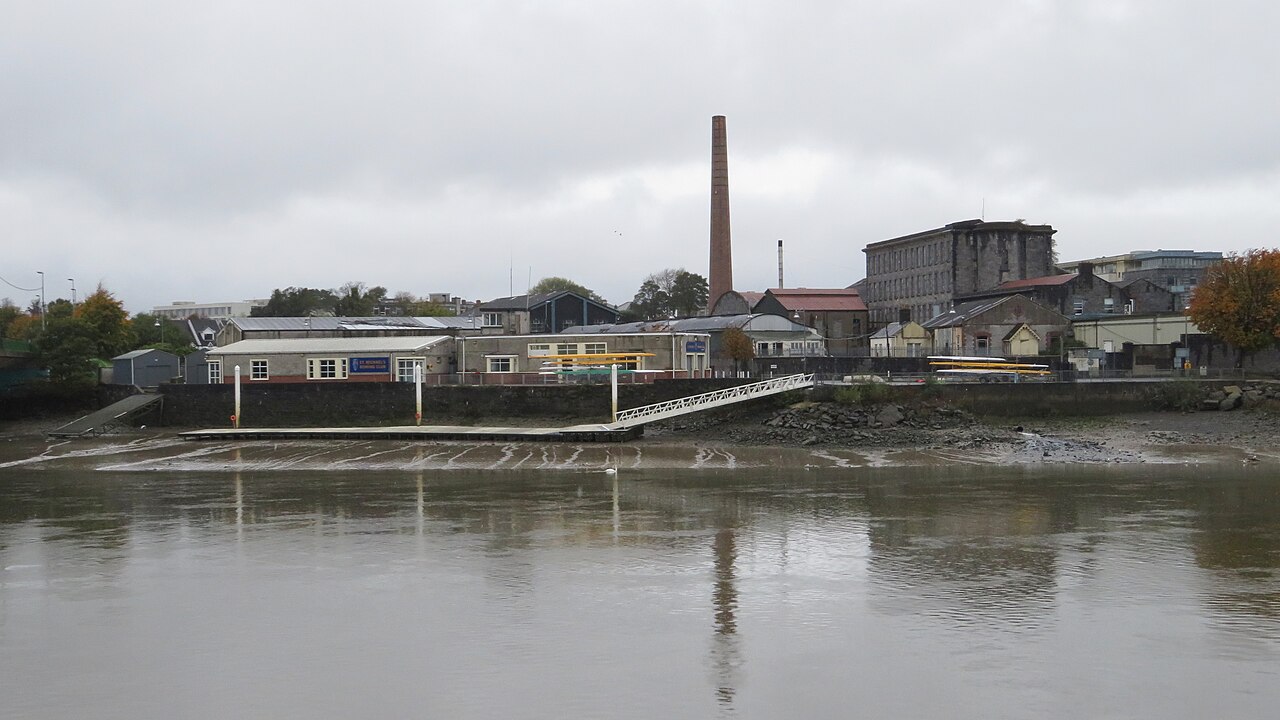
The course from slipway to turning buoy
The Thomond Swim runs upriver from the slipway of St Michael's Rowing Club to a turning buoy above the Curragower Falls near Thomond Bridge. From the turning buoy the Thomond Swim route continues along the walls of King John's Castle, then back under Sarsfield Bridge past Shannon Rowing Club to finish at St Michael's Rowing Club. The Thomond Swim covers an overall distance of 1,800 m in the largest estuary in Ireland. For spectators at the Thomond Swim, the best viewing points are Sarsfield Bridge, Clancy Strand and O'Callaghan Strand near the start and finish. The Thomond Swim first took place in the early 1950s, when the course started at St Michael's Rowing Club and went up the Abbey River to finish at Athlunkard Boat Club.
The River Shannon: from the Shannon Pot to the tidal estuary
Measuring 360 kilometres from source to sea, the River Shannon is the longest river in Ireland. Its waters rise far to the north from the Shannon Pot, a small circular pool tucked into the slopes of Cuilcagh Mountain in County Cavan. Along its middle reaches, the river spreads into the Shannon Callows, lowland areas along the river protected as a Special Area of Conservation. The Shannon is tidal east of Limerick up to the connection with the Ardnacrusha canal. At the city itself, the river broadens into the Shannon Estuary, a 102-kilometre marine inlet that carries the freshwater out into the Atlantic Ocean.
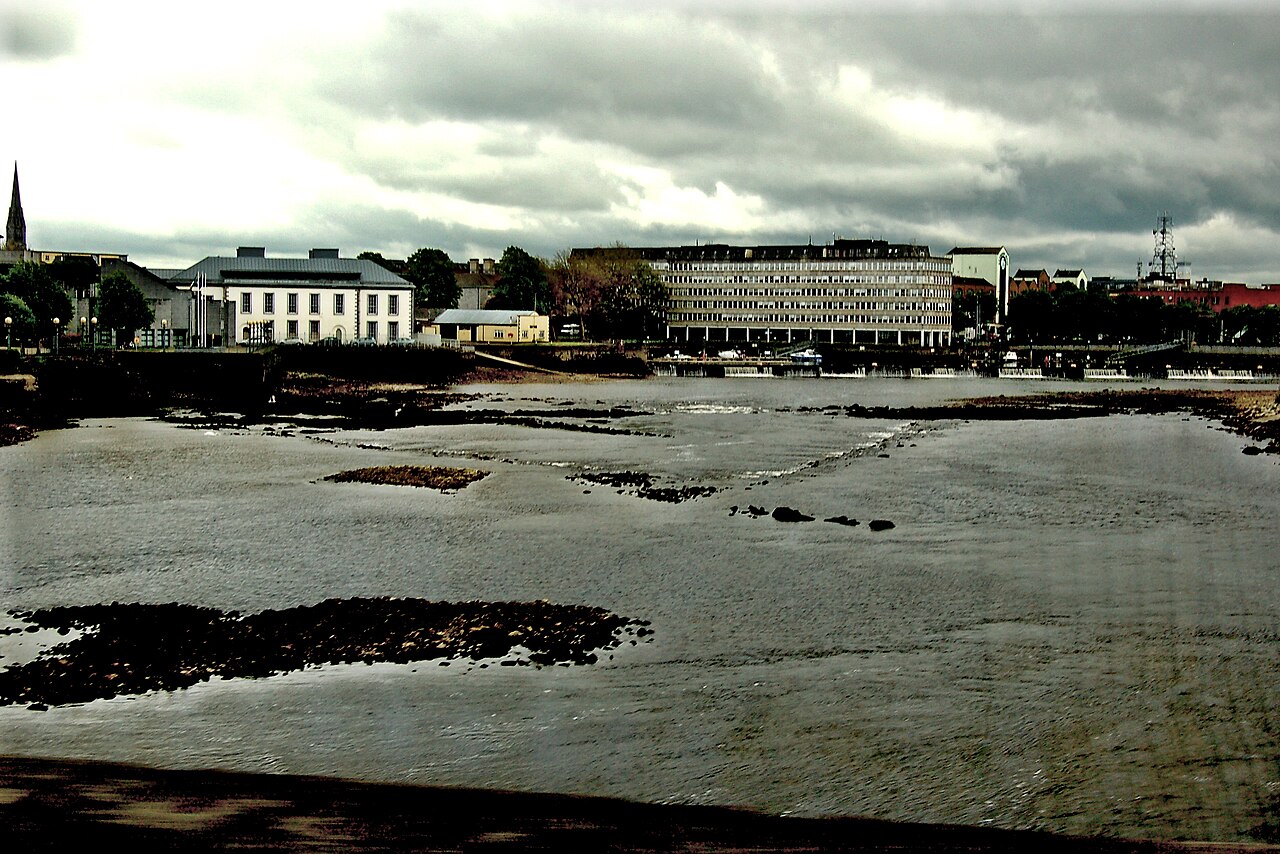
King's Island and the Abbey River: Viking longships and dredged relics
The historic heart of Limerick sits upon King's Island, bounded on one side by the main Shannon and on the other by the Abbey River. The Abbey River, named after a Franciscan friary that once stood on its bank, branches off from the Shannon and loops around the island before reuniting with the main channel at Hellsgate Island. Hellsgate Island itself remains hidden beneath the water for much of the day, appearing only as the river tide recedes. Known as Inis Sibhtonn before the Viking era, the island offered natural watery defences that early seafarers quickly exploited. In 812, Viking raiding parties rowed their longships up the Shannon, pillaged the settlement, and burned nearby Mungret Abbey.
The Norse raiders established a fortified ship encampment at a river ford known as Athlunkard. By 937, the Limerick Vikings were powerful enough to wage open river warfare, clashing with rival Dublin Vikings in a naval battle on Lough Ree. Centuries of maritime life remained buried in the mud until the Abbey River was temporarily drained in the early 2000s. During the archaeological excavations of the exposed riverbed, workers uncovered a bronze artefact from the Viking Age, heavy iron mortar bombs from the 1690s, and a medieval civic port seal.
Sieges of Thomond Bridge: the 1691 river crossing and the Treaty Stone
During the Siege of Limerick in 1691, Dutch General Godert de Ginkel bombarded the city, battering a breach in the walls of English Town. His Williamite troops charged and captured the earthen defensive works that guarded the western approach to Thomond Bridge. In the desperate fighting at the bridgehead, approximately 800 Irish defenders were killed or pushed into the swift currents of the River Shannon when the city gate was closed against them. Right by the water on Clancy Strand, just steps from the race start, stands the Treaty Stone mounted upon a public pedestal. This block was traditionally used as a mounting block for horses. It remains an evocative landmark while preparing your goggles and waiting for the horn.
Downstream fortresses: Bunratty, Carrigogunnell, and the naval estuary
Downriver from Limerick, the Shannon Estuary widens between dramatic strongholds that once guarded maritime access from the Atlantic. About thirteen kilometres from the race course stands Bunratty Castle, positioned where the Ratty River meets the estuary waters. Built with a 130-metre protective fosse in the late thirteenth century, the castle grounds were historically bordered by salt marshes that flooded during every high tide. In 1646, Rear-Admiral Penn anchored a Parliamentarian fleet of seven frigates and a hoy off Bunratty to blockade sea passage toward Limerick. The ships came under sustained bombardment from Confederate artillery stationed along the shore. Battered by cannon fire, the English fleet was forced to retreat, and the garrison surrendered the fortress, abandoning all their cannons, horses, and supplies.
Roughly eight kilometres away, the ruins of Carrigogunnell perch high atop a volcanic trap rock overlooking the Shannon. In the seventeenth century, the fortress grounds supported a productive salmon fishery, before Godert de Ginckell ordered the castle blown up following the 1691 campaign. Folklore names the crag the 'rock of the candle', recalling the legend of the hag Grana, who lit an enchanted candle that brought death to anyone who looked at it. A massive erratic stone named Clough-a-Regaun is said to be the boulder the hag hurled at an escaping hero.
The quays of Clancy Strand: Georgian trade and rowing clubs
During the late eighteenth century, Limerick transformed into a major trading hub, exporting agricultural produce from the fertile Golden Vale to ports across Britain and North America. At the meeting point of the Shannon and the Abbey River, stands the Custom House. Built between 1765 and 1769 from local Irish limestone, the elegant building features arcaded wings designed for merchants, ship captains, and shipping clerks. The dockside lease had granted the right to collect quayage fees on incoming merchant vessels, and customs officers later used the site to monitor port duties and intercept river smuggling. By the nineteenth century, the city turned to the Shannon for recreation and sport. Swim Ireland welcomes club members and those holding special day memberships to take on its competitive open water races. For swimmers planning an extended summer journey along Ireland's wild waterways, the Coleman Electronics Swim 2026 — Enniscrone Sligo takes place on the western coast just seven days later and makes an ideal pairing in the same trip.
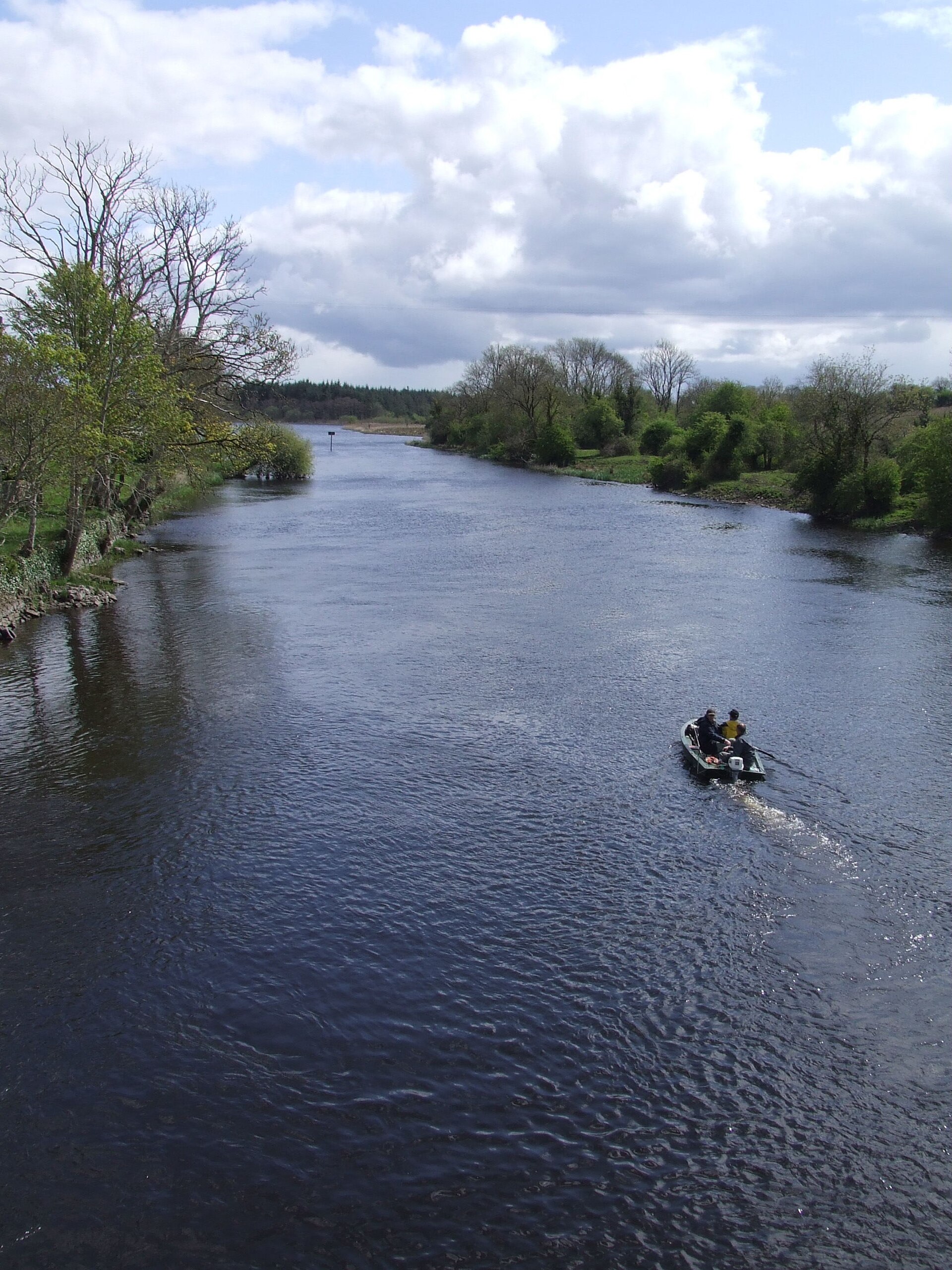
Sources: River Shannon · Limerick · Siege of Limerick (1691)
Course
Previous editions
- 2026results
How to get there
Thomond Swim — Limerick City
Frequently asked questions
- When was the last edition of Thomond Swim — Limerick City?
- The last edition of Thomond Swim — Limerick City took place on June 13, 2026.
- What distances does Thomond Swim — Limerick City offer?
- Thomond Swim — Limerick City has a single distance: 1.8 km.
- How much is the entry fee for Thomond Swim — Limerick City?
- The entry fee is 30 €. + booking fee
- Where does Thomond Swim — Limerick City take place?
- Thomond Swim — Limerick City is a river swim. Location: River Shannon, Limerick, Munster, Ireland.
- How do I register for Thomond Swim — Limerick City?
- The reference page for registering for Thomond Swim — Limerick City is https://swimireland.ie/open-water/.
Where to stay
Limerick offers a range of options, from historic boutique hotels overlooking the river near the city center to cozy, modernized townhouses once associated with the riverside trading quarters. The medieval core near King's Island provides a unique stay within walking distance of the start. Expect prices to range from €120 to €220 per night, depending on the proximity to the Shannon banks and the level of service. There are also several well-equipped guest houses located within a short drive of the city center.
Things to do nearby
Beyond the water, you can explore the 12th-century ramparts of the local fortress or visit the museums detailing the city's military past. For those who prefer being on the water, kayaking tours are available to explore the lower reaches of the Shannon. The surrounding countryside offers extensive trails for trekking and cycling, while the nearby villages are known for their traditional culinary scene, featuring local river-caught produce and craft beverages at historic pubs.
Swimmers
Similar races


Comments
Transparency: some links on this page (stays, flights, experiences, gear) are affiliate links — if you book or buy through them, Omniathlon may earn a commission from the partner at no extra cost to you. As an Amazon Associate we earn from qualifying purchases.