
The Lagoon Race
- Nov 28, 2026
- Distances from 100m to 1km
At a glance
- Next edition date
- November 28, 2026
- Distances
- 100 m · 500 m · 1 km
- Where
- Moorea, Moorea-Maiao, Iles du Vent, French Polynesia
- Entry fee
- 100 m: 500 XPF · 500 m: 1000 XPF · 1 km: 1000 XPF
- Registration
- mooreanatation.com
About the race
Temae lagoon hosts The Lagoon Race, an open water swimming event set on the island of Moorea in French Polynesia. Moorea Natation launched the event on the sands of Temae Beach, designing a course that stays entirely within the protected lagoon. The competition features distances of 100 metres, 500 metres, and 1,000 metres laid out along compact 250-metre loops marked by turning buoys. In past editions, around sixty competitors have gathered on the sand, bringing together seasoned island athletes alongside young swimmers from the local club in an unhurried, community-rooted morning.
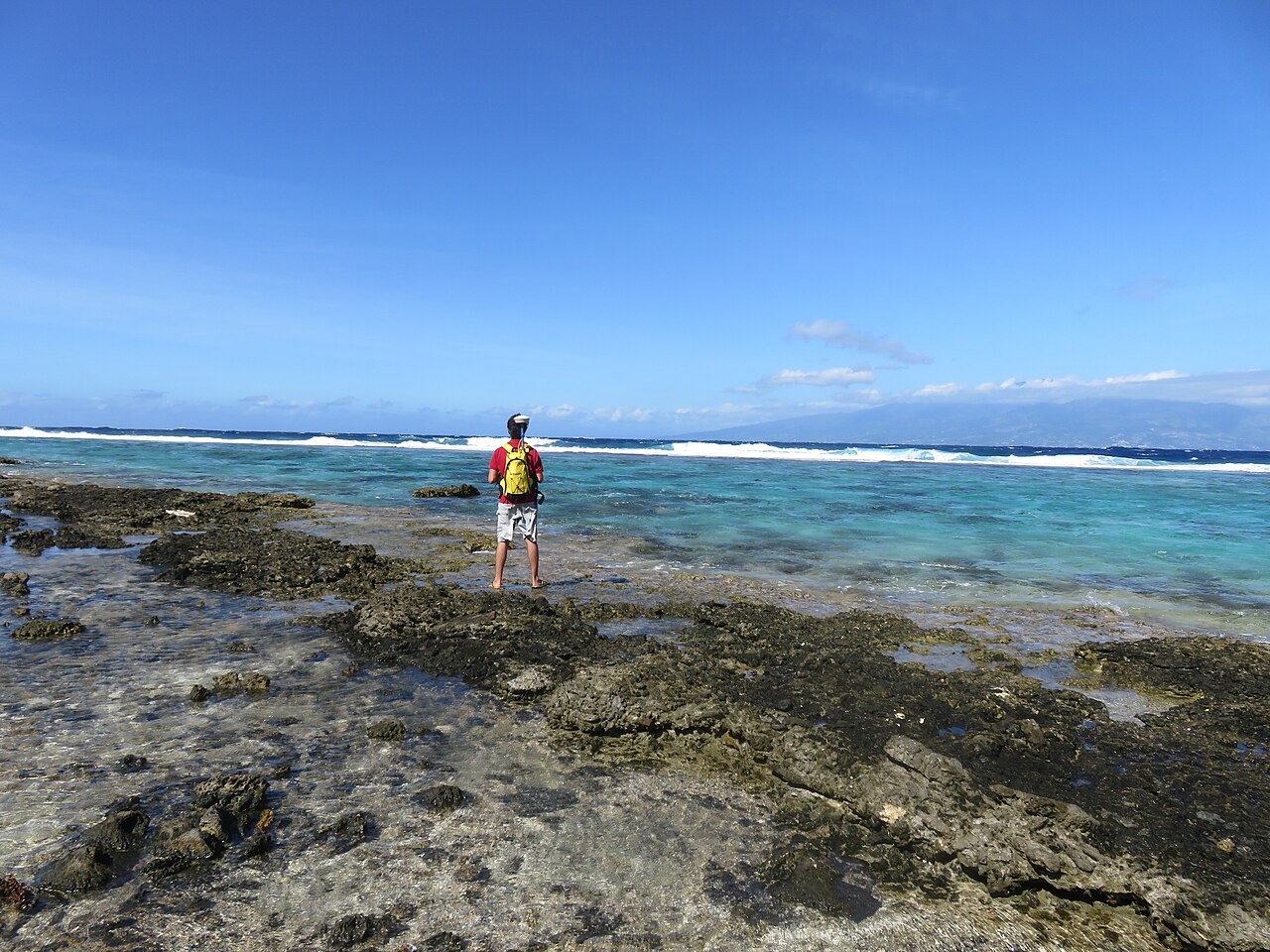
The Lagoon Race at Temae: first edition and the lagoon
The first Lagoon Race was held on Temae beach on Moorea on 8 November 2025. The programme listed three races, 1 km/1 km relay, 500 m and 100 m, plus an activity for children. After the races the beach made way for the swimmers of the Tahiti–Moorea crossing, and the first to arrive was a Moorea team. Temae beach is edged by a shallow, sandy lagoon, and about 30 to 40 yards from the beach the seabed starts to be covered with scattered coral. A snorkelling guide to Temae notes that the lagoon is, most of the time, crossed by a north/south current, running left to right when you stand on the beach facing the ocean. A Moorea travel guide gives the lagoon water a constant temperature of around 26°C (79 °F).
Moorea's volcanic shield and the coral barrier reef
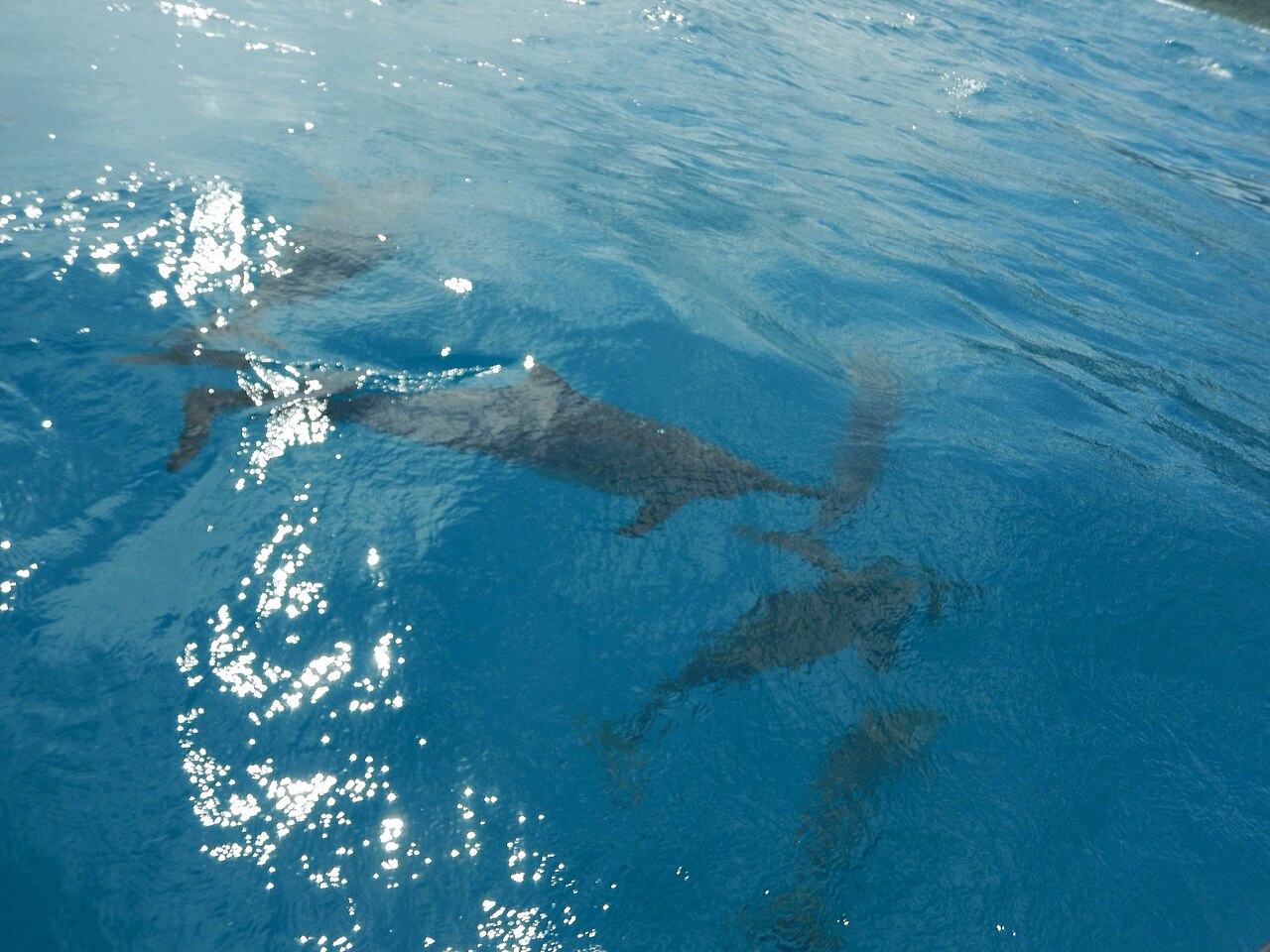
Moorea is a high volcanic island formed between 1.5 and 2.5 million years ago by an active mantle hotspot, rising alongside volcanic neighbors like Tahiti. A continuous coral reef wraps around the volcanic core, sheltering a narrow strip of turquoise water along the entire perimeter. When Charles Darwin looked across from the high peaks of Tahiti, he noted the outer breaker line and famously described the encircling reef as looking like a picture in a frame. Today, the Moorea lagoon is protected as a designated wetland site under the Ramsar Convention. The marine life thrives in these warm channels, where researchers even discovered Patagurus rex, an unusual shell-less hermit crab.
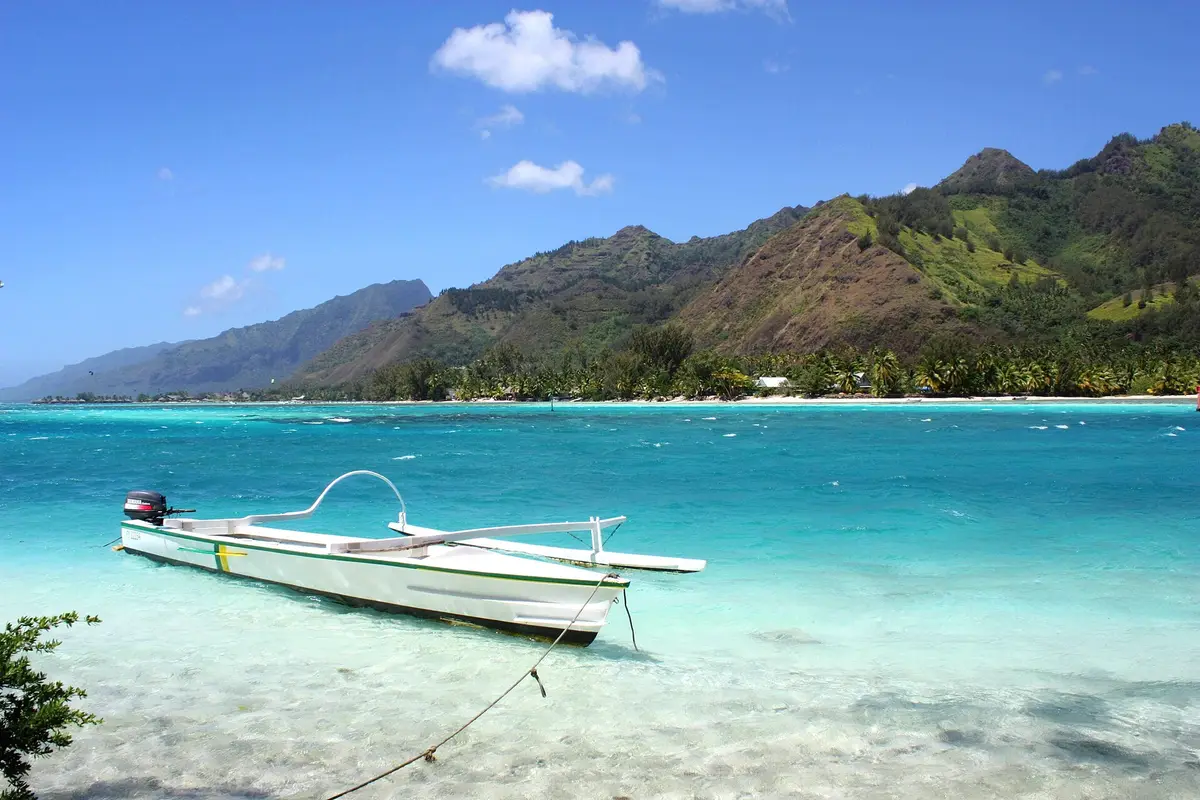
Cook's Bay and Opunohu Bay: deep waters and anchorages
Around the northern coast, two deep marine inlets cut into the volcanic relief: Cook's Bay and Opunohu Bay, separated by the steep central spine of Mount Rotui. Cook's Bay stretches three kilometres inland beneath the green ridges, while Opunohu Bay carves its own three-kilometre fjord four kilometres farther west. Opunohu plunges to a water depth of 80 metres at its mouth. Strong winds channel through the mountain gap, driving surface currents and local upwellings through the middle of the bay. On September 30, 1777, Captain James Cook brought his ships into Opunohu Bay. An escalating dispute over a stolen goat led Cook's landing parties to burn local houses and war canoes along the water's edge. Two centuries later, marine research took root on these same banks; the University of California, Berkeley operates on the western shore of Cook's Bay.
The beaches of Moorea from Temae to Ta'ahiamanu
Moorea stands apart from Tahiti's dark volcanic coast thanks to broad ribbons of white coral sand, none more striking than Temae Beach. Here on the east side of the island, the public shore drops gently into translucent shallows where you can wade out straight from the sand with a mask to watch the reef life before race morning. On the north coast between Cook's Bay and Opunohu, Ta'ahiamanu public beach offers deep white sand, shady trees, and food trucks right along the roadside. Farther west, the Tiahura area draws paddleboarders and swimmers to a long beach and a wide, shallow sandbar. The water shifts across different shades of cyan, where inquisitive stingrays glide regularly across the rippled sand beneath you.
For an easy evening after swimming, Cook's Bay offers a lively scene around the village of Pao Pao, where seaside hotels and small dining tables sit right over the water. Just past Mount Rotui, Opunohu Bay trades restaurants for a quieter valley wrapped in pineapple fields. High above the inner shore, the Tropical Garden juice bar serves fresh fruit drinks on an open terrace looking out across the quiet blue of the bay.
Sources: Cook's Bay (Moorea) · Moʼorea · Windward Islands (Society Islands)
Course
How to get there
The Lagoon Race
Frequently asked questions
- When is The Lagoon Race?
- The Lagoon Race takes place on November 28, 2026.
- What distances does The Lagoon Race offer?
- The Lagoon Race offers 100 m, 500 m, and 1 km.
- How much is the entry fee for The Lagoon Race?
- Entry fees by distance: 100 m: 500 XPF · 500 m: 1000 XPF · 1 km: 1000 XPF. Prices based on 2025 edition list for The Lagoon Race (Moorea Natation). Pre-sale price was 1000 XPF for 500m and 1000m (2000 XPF on race day), and 500 XPF for 100m.
- Where does The Lagoon Race take place?
- Location: Moorea, Moorea-Maiao, Iles du Vent, French Polynesia.
- How do I register for The Lagoon Race?
- The reference page for registering for The Lagoon Race is https://www.mooreanatation.com/.
Where to stay
Moorea offers a diverse range of stays, from secluded bungalows built in the traditional style of local fishermen to intimate boutique hotels tucked away along the harbor. For those preferring a direct connection with the environment, several campgrounds provide sites fronting the lagoon. Budgeting for a comfortable stay typically ranges from $150 to $400 per night, depending on the proximity to the water and the level of amenities chosen. You can explore options for your stay in our dedicated accommodation section.
Things to do nearby
Beyond the race, the island serves as a hub for marine and terrestrial exploration. Visitors can take advantage of the calm lagoon waters for kayaking or stand-up paddleboarding, or venture inland for guided treks through the lush volcanic valleys. The area is rich in archaeological significance, with ancient marae sites offering a glimpse into pre-colonial life. For a more relaxed afternoon, local producers offer tastings featuring island-grown pineapple and vanilla, providing a authentic connection to the local land. Discover more about these activities in our curated experiences guide.
Swimmers
Similar races


Comments
Transparency: some links on this page (stays, flights, experiences, gear) are affiliate links — if you book or buy through them, Omniathlon may earn a commission from the partner at no extra cost to you. As an Amazon Associate we earn from qualifying purchases.