
Goa Swimathon
- Nov 14, 2026
- Distances from 250m to 10km
At a glance
- Next edition date
- November 14, 2026
- Distances
- 250 m · 1 km · 2 km · 5 km · 10 km
- Where
- Sea · Bambolim Beach, Goa, Bambolim, Goa, India
- Entry fee
- 250 m: 600 INR · 1 km: 2250 INR · 2 km: 2800 INR · 5 km: 4750 INR · 10 km: 6250 INR
- Registration
- endurosportsgoa.com
About the race
The Goa Swimathon unfolds at Bambolim Beach in Goa, India, an open water swimming event held in the open sea. Organized by Enduro Sports Goa, the meeting invites swimmers into an unusual marine setting where a natural indentation forms a protective bay within a bay. This unique geographic feature shields the swimming courses from turbulent offshore seas, creating a calm sanctuary for distance racing. Swimmers need not fear predatory wildlife either, as these coastal Goan waters harbor no sharks. The competition spans a full weekend in November, well after the churning monsoon season from June to September has passed and left the waters placid and inviting once again. Saturday's schedule is dedicated to shorter courses, staging sprints of 250 meters, 1 kilometer, and 2 kilometers, giving newcomers and fast-paced competitors a chance to test their speed.
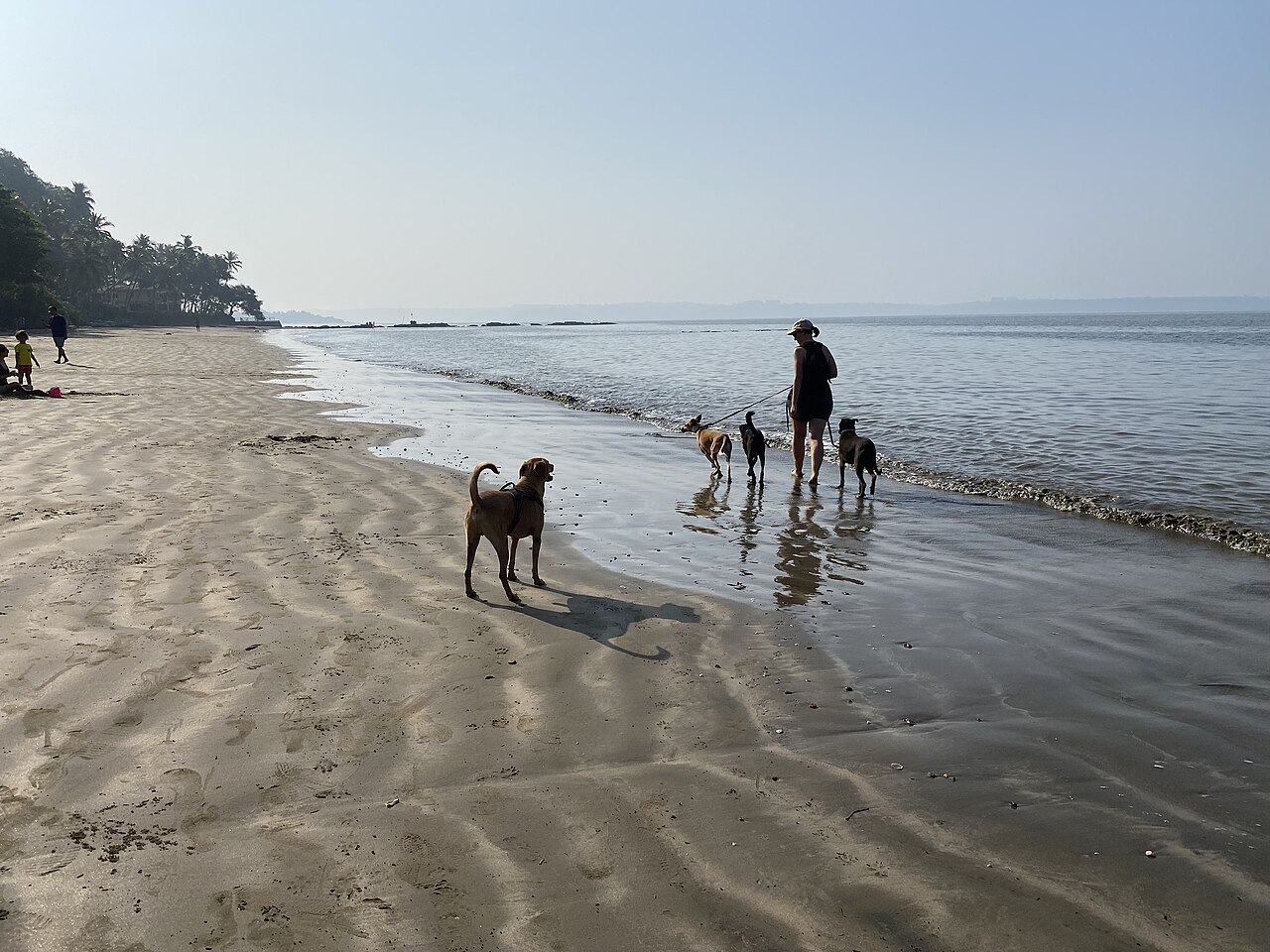
On Sunday, the marathon tests take over with 5-kilometer and 10-kilometer courses stretching out across the bay. In past editions, long-distance racers, including model Milind Soman tackling his first sea swim at the distance, have gathered at the shoreline at first light to set off. Starting at dawn takes advantage of the sea at its most glass-like state, when the water surface remains flat with barely noticeable waves before afternoon winds stir up any chop. Hydrodynamically, Bambolim's dual-bay enclosure prevents dangerous outward rips, generating instead lateral currents that flow parallel to the sand. Swimmers still encounter an engaging navigational test out on the course, as the incoming tide pushes steadily across the line of buoys, challenging each participant to adjust their sighting and hold a true line.
Bambolim Beach: quiet shores and swaying coconut palms
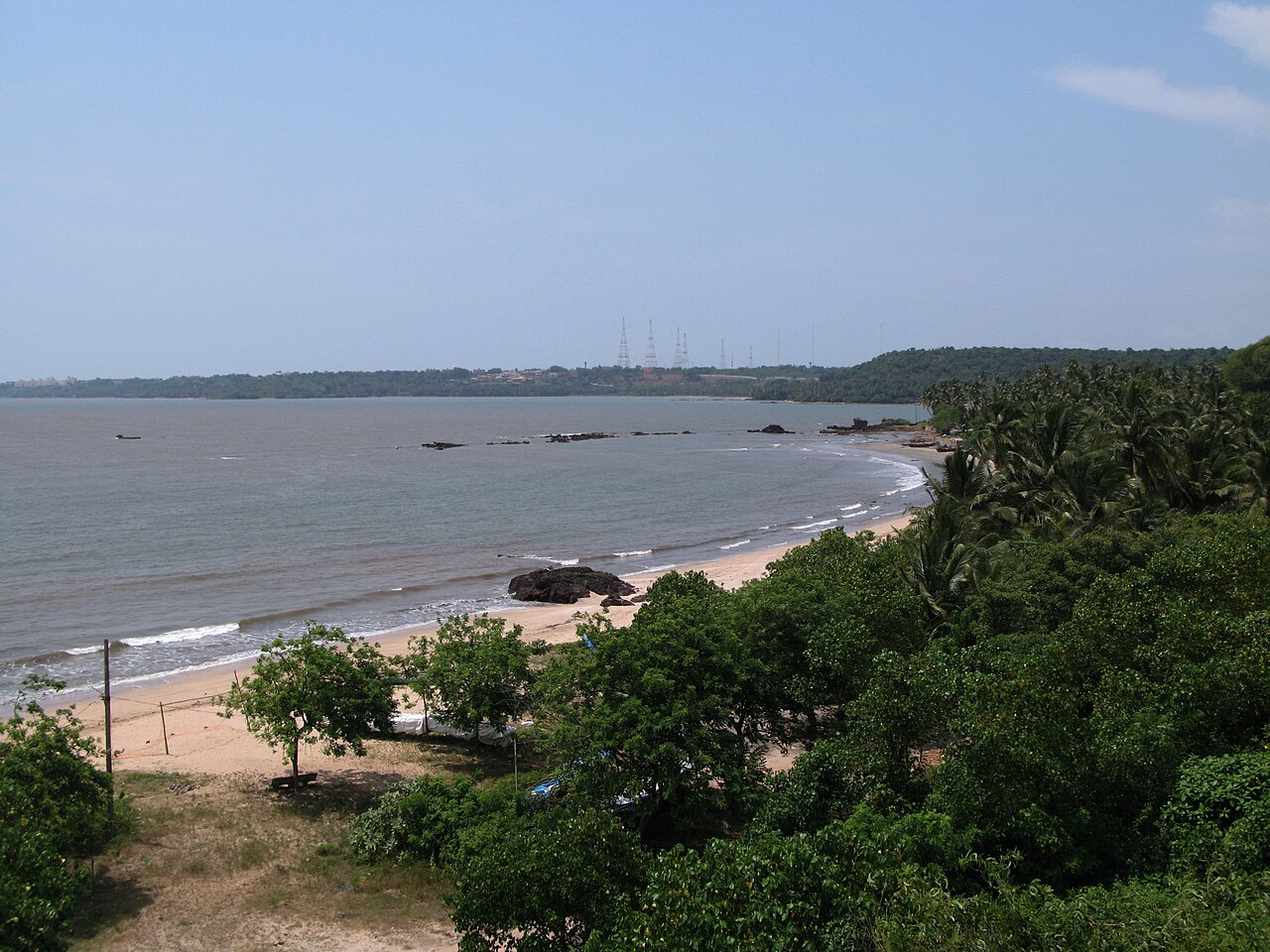
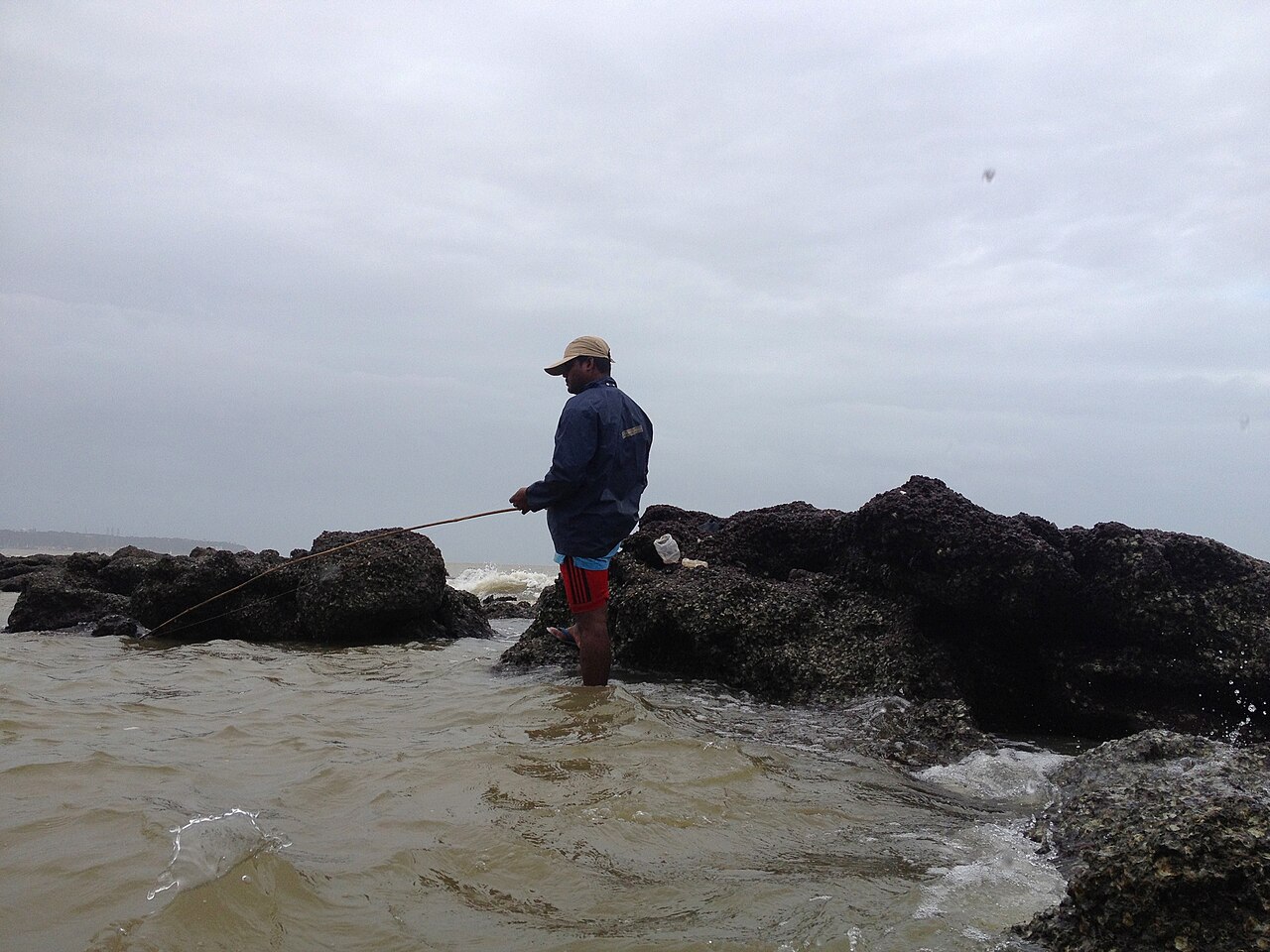
Bambolim Beach itself offers an unhurried, serene departure from the bustling tourist hubs of the state. It remains a secluded stretch of sand and rocks, framed on the landward side by rows of swaying coconut palms that rustle in the coastal breeze. Unlike many of Goa's busier shores, Bambolim is completely uncrowded, free from intrusive rows of commercial shacks and noisy vendors. Stepping out onto the sand in the morning cool, swimmers find a peaceful arena where the rhythm of the ocean takes center stage. Daily life along this shoreline follows a quiet, local routine. The beach is a favorite haunt for university students who come down to unwind by the water after lectures, being the closest shoreline to the University of Goa. Both artisanal and dedicated fishermen work these shallows. When the tide retreats, it leaves behind broad, firm flats of hard-packed sand, creating an ideal setting for a barefoot run before or after plunging into the bay.
Zuari and Mandovi: mangrove forests of the dual estuaries
The Mandovi and Zuari rivers converge toward Cabo Aguada to form the expanse of Mormugao harbour, linked inland by the Cumbarjua Canal, an artificial waterway dug to facilitate iron ore transport between the two systems. Within the mouth of the Zuari estuary rests the island of São Jacinto, where a historic lighthouse erected during the era of Portuguese administration still looks out over the tidal channels. The western tip of Chorão shelters the Salim Ali Bird Sanctuary, a 178-hectare estuarine reserve dominated by low mangrove forests. A paved walkway winds through thick stands of red mangrove, *Rhizophora mucronata*, and Indian mangrove, *Avicennia officinalis*, keeping the fragile mudflats accessible. Beneath the canopy, the brackish shallows teem with specialized intertidal creatures, including amphibious mudskippers, fiddler crabs, and the crustacean *Teleotanais indianis*, a species originally described from specimens collected right inside this estuarine sanctuary.
Fort Aguada and Mormugao: historic sentinels of the headlands
Guarding the mouth of the Mandovi River, about ten kilometres from the race area, stands Fort Aguada, built in 1612 by the Portuguese to ward off the Dutch navy and provide safe anchorage for arriving merchantmen. The fortification's lower terrace offered sheltered mooring, while massive cisterns capable of storing 2,376,000 gallons of drinking water replenished ocean-going vessels, making it one of the largest watering depots in Asia at the time. The fort also features the Aguada lighthouse, constructed in 1864 as the oldest installation of its kind on the continent. On the southern headland of the Zuari mouth, about eight kilometres away, lies Mormugão Fort. Begun in 1624 to defend the bar of South Goa, the citadel was laid out in a rectangular perimeter measuring 330 by 88 meters. A sharp V-shaped curtain wall anchored by a circular bastion was engineered to command the channel entrance. The stronghold fell when the Marathas invaded and seized control of the strategic promontory in 1737.
Mormugao Harbour: the wartime raid of Operation Creek
Just outside Bambolim's quiet waters, Mormugao harbour was the scene of an audacious World War II naval action, roughly seven kilometres from where swimmers race today. On the night of March 9 to 10, 1943, a covert British boarding party slipped into the anchorage under cover of pitch darkness, taking advantage of an unlit harbour buoy and an inoperative lighthouse. They stormed the interned German merchant vessel *Ehrenfels*, whose crew promptly opened the ship's seacocks to scuttle the vessel rather than surrender it. Seeing the *Ehrenfels* founder, the crews of three neighboring Axis ships—the *Drachenfels*, *Braunfels*, and Italian vessel *Anfora*—followed suit and scuttled their own ships to send their hulls to the bottom.
The mariners abandoned ship and swam through the dark waters to shore, where Portuguese authorities took them into custody and detained them at Aguada jail. The scuttled freighters remained submerged on the harbour floor until 1951, when the Mormugao Port Trust raised and salvaged the rusted wrecks with the help of a former German crewman who had settled in Goa.
Course
How to get there
Goa Swimathon
Frequently asked questions
- When is Goa Swimathon?
- Goa Swimathon takes place on November 14, 2026.
- What distances does Goa Swimathon offer?
- Goa Swimathon offers 250 m, 1 km, 2 km, 5 km, and 10 km.
- How much is the entry fee for Goa Swimathon?
- Entry fees by distance: 250 m: 600 INR · 1 km: 2250 INR · 2 km: 2800 INR · 5 km: 4750 INR · 10 km: 6250 INR. Tariffe standard per l'edizione 2026. Sconto Early Bird del 12,5% applicabile dal 1 al 5 settembre 2026.
- Where does Goa Swimathon take place?
- Goa Swimathon is a sea swim. Location: Bambolim Beach, Goa, Bambolim, Goa, India.
- How do I register for Goa Swimathon?
- The reference page for registering for Goa Swimathon is https://www.endurosportsgoa.com/goa-swimathon.
Where to stay
Bambolim and the surrounding Tiswadi area offer a range of stays, from high-end boutique resorts overlooking the Mandovi estuary to modest, family-run guesthouses. Many visitors opt for heritage villas that reflect the colonial architecture of the region. Expect to find double-room rates ranging from $60 in local guesthouses to over $200 per night for upscale beachside hotels during the mid-November season.
Things to do nearby
Beyond the water, the region is defined by its deep history and ecological diversity. You can spend the weekend exploring the ruins of the Old Goa archaeological site, or take a river cruise to visit the bird sanctuaries on the nearby islands of Chorão and Divar. Kayaking through the backwaters and salt marshes is a popular way to see the low-lying geography from a different perspective, often paired with traditional feni tasting sessions in local village taverns.
Swimmers
Similar races


Comments
Transparency: some links on this page (stays, flights, experiences, gear) are affiliate links — if you book or buy through them, Omniathlon may earn a commission from the partner at no extra cost to you. As an Amazon Associate we earn from qualifying purchases.