
Channel Race
- Nov 14, 2026
- Distance: 5.5km
At a glance
- Next edition date
- November 14, 2026
- Distances
- 5.5 km
- Where
- Sea · Uturoa, Iles Sous-le-Vent, French Polynesia
- Entry fee
- 3000 XPF
- Registration
- ftnatation.odoo.com
About the race
Between the sister islands of Taha'a and Raiatea there is no open ocean, but a transparent lagoon channel sheltered by a continuous barrier reef. The Channel Race is an open water swimming competition organized by the Fédération Tahitienne de Natation across this protected marine passage, stretching from the shores of Taha'a to the town of Uturoa on Raiatea, in the Leeward Islands of French Polynesia. Held in November over an official distance of approximately 5.5 kilometers, the race leads competitors directly across the calm blue waters that unite both islands. The event maintains open regulations, allowing participants to swim either standard stroke or with equipment. Over the course of its history, the race has grown into an established gathering on the local swimming calendar.
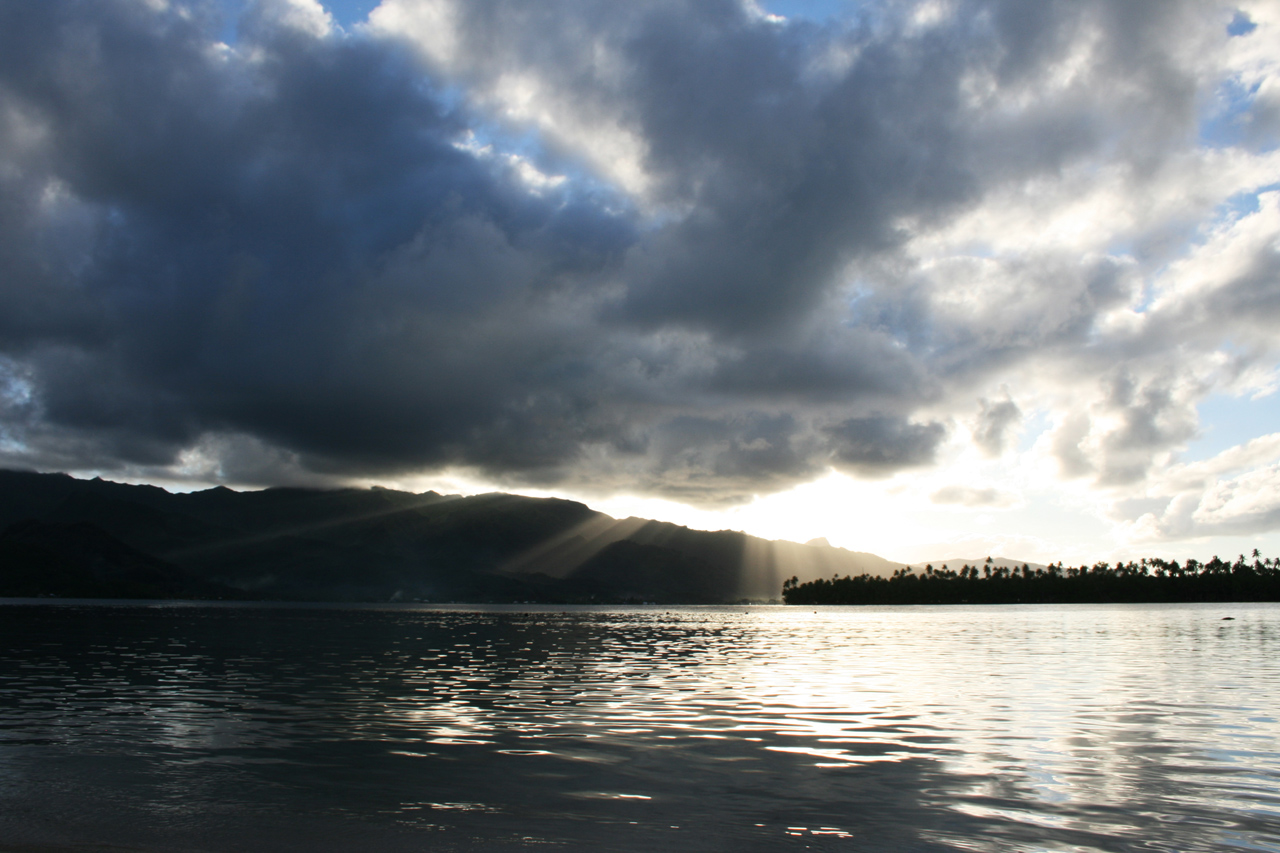
Before swimmers enter the water off Taha'a, the morning opens in island tradition with a communal prayer and a ceremonial blessing delivered by the local mayors. Once the starting horn echoes over the lagoon, the initial field packs tightly together. In the opening kilometer of the race, the water is crowded and churned with arms and kick foam, making it a test of patience to establish a clean rhythm and find clear water. As the pack stretches out into the wider channel, the sea floor offers a vivid visual journey through pristine Polynesian water. Swimmers move through a color spectrum shifting from deep blue-green waters tinted by microscopic phytoplankton to bright stretches of white sandy bottom studded with coral heads.
Yet approaching the coast of Raiatea, the open passage brings subtle tactical obstacles, with side swells and crosscurrents nudging swimmers off their line. In previous editions, the final approach towards the reef has proved demanding due to wave action breaking near the coral before swimmers finally cross the finish line set along the townfront of Uturoa.
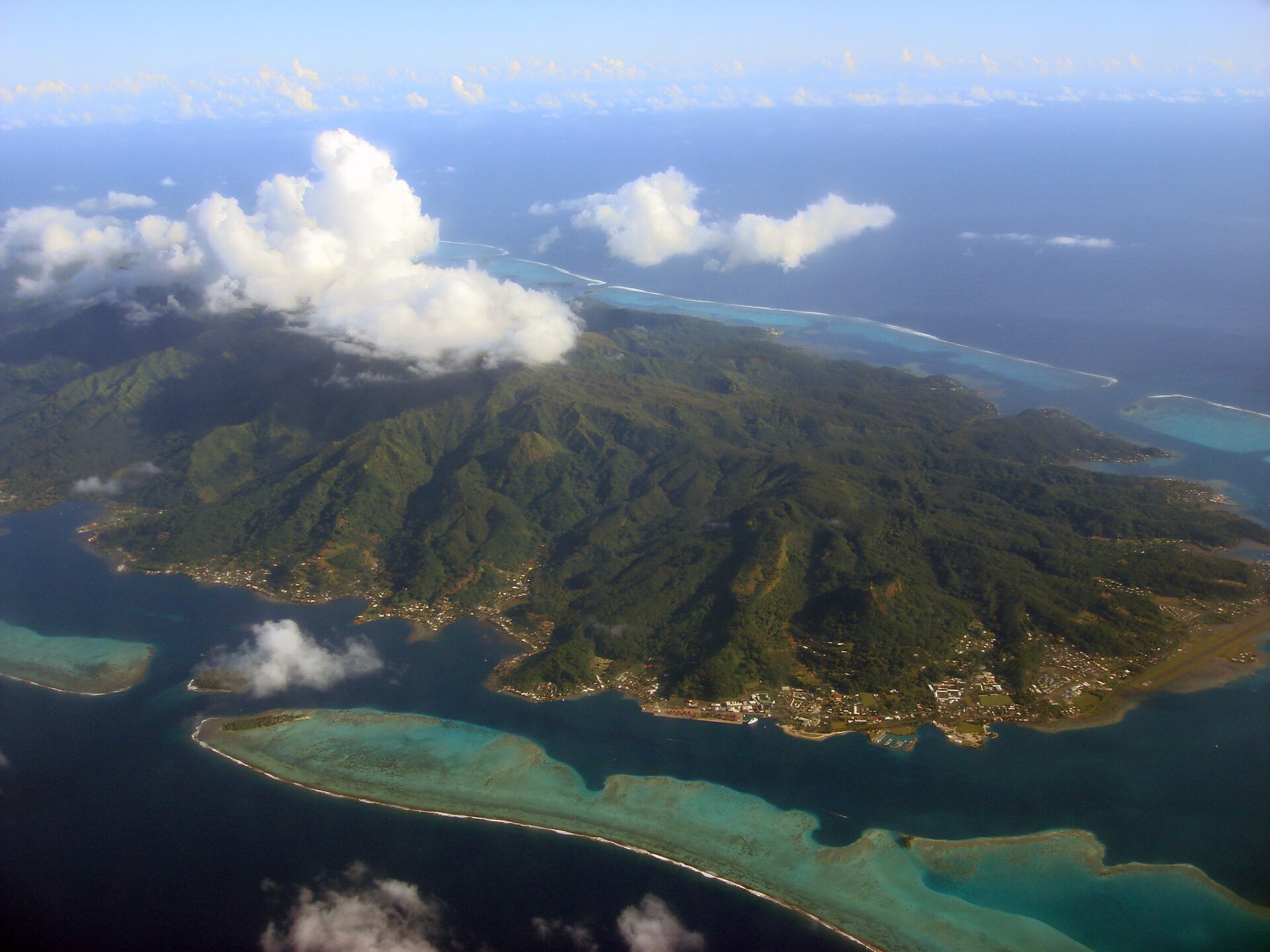
The shared coral barrier reef of Taha'a and Raiatea
The Society Islands form an ancient volcanic archipelago created as the Pacific Plate moved steadily across a deep-seated hotspot, with island ages spanning from five million years at Maupiti to contemporary activity at Mehetia. Taha'a sits directly across the narrow strait to the north of Raiatea, encircled by the very same barrier reef that wraps around both islands. This continuous coral rampart suggests that the two islands once formed a single volcanic landmass before erosion and subsidence drowned the connecting ground. According to tradition, the lagoon channel separating Taha'a and Raiatea was torn open by the thrashing tail of an enormous eel possessed by the spirit of a princess. Looking back towards the shores from the water, the dramatic landscape reveals deeply indented bays and steep volcanic valleys that drop sharply into the sea.
The octopus grotto and coral heads of the channel
The outer reef system that shelters the channel is dotted with several small sandy islets known as motu, including the privately held islet of Moie. Beneath the channel waters between Raiatea and Taha'a lies a celebrated underwater cavern known to local divers as the octopus grotto. In addition to larger marine life, the lagoon current sustains an abundant population of brightly colored nudibranchs that cling to the submerged rocks and coral heads. In rock fishing, stones tied firmly to long ropes are beaten into the surface to guide schools of lagoon fish straight toward the shallows and the waiting shore.
Taputapuātea and the ancient voyagers across the lagoon
Polynesian voyagers first arrived on these islands around 1000 AD. European navigation reached the region centuries later, beginning when the Portuguese explorer Pedro Fernandez de Quirós sailed to Uturoa in 1606. About fourteen kilometers from the channel race area, on a low peninsula extending into Raiatea's lagoon, stands Taputapuātea marae, inscribed as a UNESCO World Heritage site. Along the water's edge, a ceremonial white stone named Te Papatea-o-Ru'ea rests on the beach near the marae structures. In ancient times, this sacred marae operated as the spiritual and intellectual capital for open-ocean voyagers who gathered here to share intricate navigation lore, while local lore recalls that the people of Ao-tea fled the island through the barrier reef passage of Te Ava-rua.
In 1863, a Chilean slave-hunting ship ran aground and wrecked near the settlement of Tiva. Further along the northeast coast of Raiatea, the wreck of the Danish trimotor vessel Nordby lies at a depth of about twenty meters, having sunk beneath the waves around the year 1900. Inland from the coast, the Apoomau River winds into the interior as the only navigable river in Polynesia, explored by small boats depending on the river level.
The Uturoa waterfront: market, marina, and lagoon fish
The finish town of Uturoa is located right near an active reef break, giving its waterfront a direct connection to the sea. Rising behind the shoreline, the peak of Mount Tapioi reaches 294 meters in height and serves as a natural vantage point for observing the entire lagoon. Down along the water, the town itself is flat and compact, making it simple for swimmers and spectators to stroll between the quay and the commercial district. Unlike many tropical destinations, the main island of Raiatea has no natural sandy beaches of its own, meaning that anyone looking for sand must take a boat out to the barrier motu, although some beaches around Uturoa feature dark black sand born of volcanic ash.
The outer coasts around Uturoa even shelter a rare frog species found exclusively in this coastal pocket. Near the maritime station, a small marina welcomes private charter catamarans and ocean cruisers, allowing immediate access to the heart of the settlement. At the covered municipal market, local vendors display tropical produce, fresh fish, and handmade Polynesian crafts, keeping island traditions alive. Along the seafront, relaxed dining terraces sit directly over the water, serving traditional Polynesian meals built around fresh lagoon catches steeped in rich coconut milk. As late afternoon softens into evening, locals and visiting swimmers wander to the water's edge at "la piscine," where the sun sets across the lagoon with a view reaching all the way to the sharp silhouette of Bora Bora.
Course
A 5.5 km open water crossing between the islands of Taha'a and Raiatea in French Polynesia. The course takes place in turquoise waters and can be completed solo or in a relay team of up to two swimmers.
Awards
Refer to the 'Règlement sportif' document linked on the official website for detailed award categories.
How to get there
Channel Race
Frequently asked questions
- When is Channel Race?
- Channel Race takes place on November 14, 2026.
- What distances does Channel Race offer?
- Channel Race has a single distance: 5.5 km.
- How much is the entry fee for Channel Race?
- The entry fee is 3000 XPF. Prices in XPF (Pacific Franc). Registration via Google Forms link provided on the official website.
- Where does Channel Race take place?
- Channel Race is a sea swim. Location: Uturoa, Iles Sous-le-Vent, French Polynesia.
- How do I register for Channel Race?
- The reference page for registering for Channel Race is https://ftnatation.odoo.com/presentation-tsd.
Where to stay
Uturoa and the surrounding coast of Ra'iātea offer a variety of stays ranging from traditional Polynesian-style bungalows and family-run guesthouses to small waterfront boutique hotels. Camping options are limited, so most participants opt for local lodges near the port. Budget roughly $120–$250 per night for a standard double room, depending on proximity to the water and the level of service provided. Find your base in Uturoa.
Things to do nearby
The weekend centers on the intersection of maritime heritage and island life. Beyond the race, you can explore the ancient stone platforms of the UNESCO-listed marae, or take to the water with a kayak or SUP to navigate the shallow reefs that are inaccessible by boat. Local markets in Uturoa are ideal for sampling tropical fruits and traditional delicacies, while guided mountain treks offer a bird's-eye view of the channel you just crossed. Discover local island activities.
Swimmers
Similar races


Comments
Transparency: some links on this page (stays, flights, experiences, gear) are affiliate links — if you book or buy through them, Omniathlon may earn a commission from the partner at no extra cost to you. As an Amazon Associate we earn from qualifying purchases.