
Swim Miami
- Apr 11, 2027
- Distances from 183m to 10km
At a glance
- Next edition date
- April 11, 2027
- Distances
- 183 m · 366 m · 800 m · 1.6 km · 5 km · 10 km
- Where
- Sea · Miami Marine Stadium, Miami, Florida, United States
- Entry fee
- 800 m: 70 USD · 1.6 km: 80 USD · 5 km: 90 USD · 10 km: 105 USD
- Registration
- endurancecui.active.com
About the race
The protected salt basin offers flat sea waters framed directly by the dramatic cantilevered grandstand of the Miami Marine Stadium and the high-rise silhouette of downtown Miami. Swim Miami is an open water swimming event staged in these calm marine waters in Miami, Florida. Swimmers step into a sheltered saltwater arena that feels separated from the city rush, with sweeping views stretching across the urban skyline. The event traces its roots back to 1989, when it was originally founded by Jimmy Woodman. After running through 1998, the competition was revived in 2005 by Jonathan Strauss and is organized today by the H2Os Foundation. Over more than two decades, the gathering has grown into an established meeting on the South Florida calendar, welcoming both seasoned long-distance specialists and casual open water swimmers.
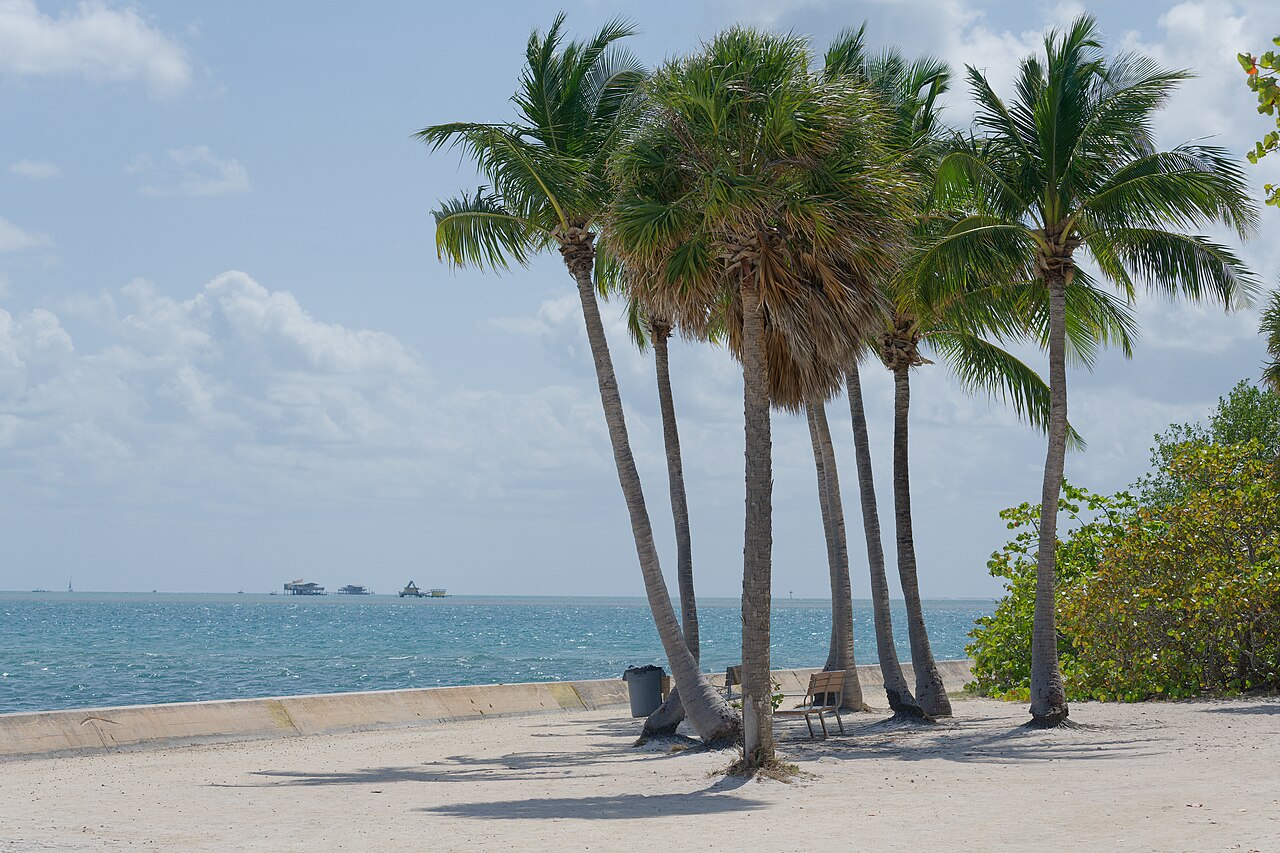
The race schedule provides multiple courses tailored to different goals and experience levels. Participants can enter the Corporate 800 Meter Swim, which navigates a single circuit around the stadium basin. Those stepping up to the Miami Mile also tackle a one-lap course, while endurance racers take on multi-loop challenges, completing three laps for the 5-kilometer event and six full laps for the 10-kilometer marathon. Alongside the traditional swimming divisions, the event stages the K9-Krawl World Championships, a 200-yard swim followed by a 400-yard run. Race day features an in-water start where swimmers line up directly in the calm basin, followed by a sprint up onto the sand for a beach finish.
The water remains clear and tranquil, sheltered from open-ocean swells, with warm, tropical conditions that make swimming without a wetsuit comfortable throughout the morning. That welcoming environment fosters a laid-back, festive community atmosphere on the sand, even as intense tactical racing plays out around the buoys. Over the years, the basin has welcomed some of the most decorated pool and open water racers in the world. Notable competitors who have lined up here include Gary Hall, Jr., Anthony Ervin, Nathan Adrian, and Milorad Čavić. World-class talents such as George Bovell, Ricardo Monasterio, Ed Moses, Tiffany Cohen, and Robert Strauss have also tested their speed across these protected laps.
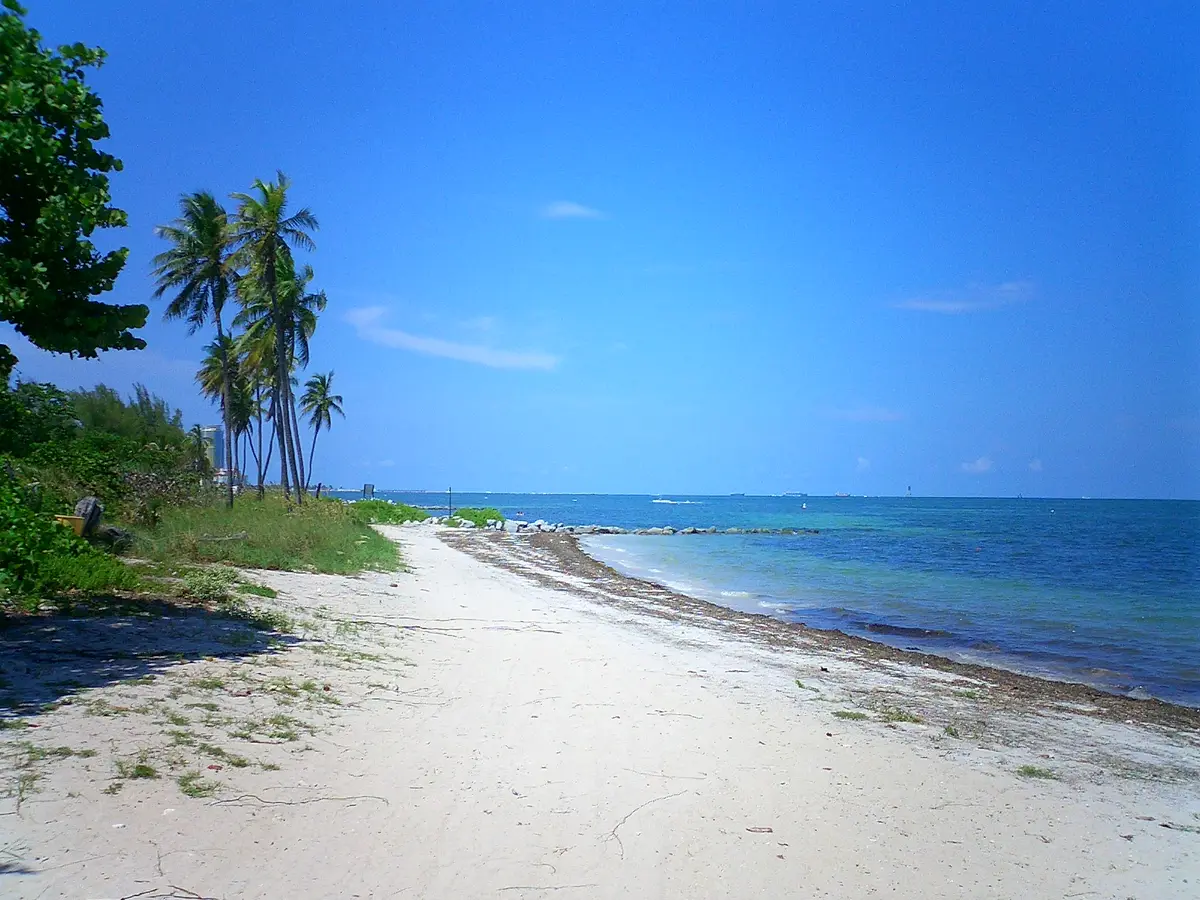
Virginia Key and Bear Cut: mangroves carved by Atlantic hurricanes
Major Atlantic hurricanes in 1835 and 1838 breached the coastline and cut open Norris Cut, severing Virginia Key from what is now Fisher Island. In 1849, Frederick H. Gerdes of the United States Coast Survey named the newly formed island. Before modern roads and facilities arrived, the island was blanketed predominantly by dense mangrove forests rooted in tidal shallows. Today, Virginia Key Beach Park safeguards Florida's largest surviving mangrove wetland, preserving a thick coastal habitat. Virginia Key is separated from Key Biscayne by Bear Cut.
The Miami River mouth: Tequesta history and the Miami Circle
In its original natural state, the Miami River flowed directly out of the Everglades, cascading over a rocky limestone ledge four miles upstream to create a series of churning freshwater rapids. These rich waters sustained human communities for thousands of years. The Tequesta Native Americans established a major coastal settlement on the north bank right where the river meets the bay. The Miami Circle is an extraordinary archaeological monument composed of 24 distinct basins cut into the limestone bedrock. Estimated to be between 1,700 and 2,700 years old, the circular foundation is believed to have supported a structure raised on wooden pilings to protect against frequent flooding. The excavations around the circle uncovered a culture tied intimately to the surrounding sea and wetlands.
The Tequesta were skilled maritime hunters who pursued alligators in the Everglades, shaping shell tools and shark teeth for daily utility. Beneath the limestone sockets, researchers discovered ceremonial deposits that included a five-foot shark skeleton, a dolphin skull, and a massive sea turtle shell.
Bear Cut reef: the sunken German yacht Half Moon
Built in Germany as the racing schooner Germania, the yacht was later brought to South Florida and renamed the Half Moon, finding an entirely new role along the Miami waterfront. Moored off the local shores, it operated as a floating restaurant and lively offshore dance hall. Its festive run came to an abrupt close in 1930, when the ship foundered and sank in the shallow waters near Key Biscayne.
The Biscayne Bay shoreline from Virginia Key to South Pointe
The architectural heart of the race remains the Miami Marine Stadium itself, designed with a dramatic cantilevered folded-plate roof and angled columns that frame the water without blocking the view. The calm basin before its grandstand incorporates a 1,500-meter rowing channel marked out with seven lanes for competitive training. Swimmers and spectators enjoy uninterrupted panoramas across the water, looking straight toward the skyscrapers of the business district and the surrounding barrier islands. Government Cut separated Fisher Island from the sand spit that once connected it directly to South Beach. About five kilometres from the race venue, at the tip of South Beach, stands South Pointe Park, overlooking the entrance channel where local ocean tides are measured. The park offers expansive lookouts over the Atlantic, Biscayne Bay, and Fisher Island, linked by limestone walkways and a 159-meter wooden boardwalk tracing the last natural sand dune in Miami Beach.
Sources: Miami Marine Stadium · Virginia Key · Crandon Park
Course
A one-lap course in the pristine waters of Miami Marine Stadium, ideal for beginners and younger swimmers.
A one-mile race featuring a one-lap course, providing a competitive yet enjoyable experience.
A three-lap course designed to test endurance and speed.
A six-lap course designed for seasoned open water swimmers aiming for a marathon-distance challenge.
Previous editions
Since 1989
How to get there
Swim Miami
Frequently asked questions
- When is Swim Miami?
- Swim Miami takes place on April 11, 2027.
- What distances does Swim Miami offer?
- Swim Miami offers 183 m, 366 m, 800 m, 1.6 km, 5 km, and 10 km.
- How much is the entry fee for Swim Miami?
- Entry fees by distance: 800 m: 70 USD · 1.6 km: 80 USD · 5 km: 90 USD · 10 km: 105 USD. Prices listed are standard rates; increases scheduled. K9-Krawl Championship available for $25.00.
- Where does Swim Miami take place?
- Swim Miami is a sea swim. Location: Miami Marine Stadium, Miami, Florida, United States.
- How do I register for Swim Miami?
- The reference page for registering for Swim Miami is https://endurancecui.active.com/new/events/97348012/select-race?_p=24913408124393266.
Where to stay
Accommodations in the area offer a mix of high-end boutique hotels along the port and various lodging options on Key Biscayne, ranging from $250 to over $500 per night during the spring season. For a more proximity-focused stay, many participants opt for rentals on Virginia Key or within the Brickell district, which provide easy morning access to the Marine Stadium. Budget-conscious travelers often find a wider range of hotel inventory in central Miami, though booking well in advance is advised for race weekend.
Things to do nearby
The weekend offers a variety of ways to explore the coastal environment beyond the race itself. Participants often head out for kayak and SUP tours through the mangrove trails of Biscayne Bay to observe local marine life, or visit the historic sites near the mouth of the Miami River. For those looking to recover, the area features diverse culinary districts offering fresh local seafood and Latin-inspired tastings, while the nearby state parks provide extensive trails for light trekking and coastal cycling.
Swimmers
Similar races


Comments
Transparency: some links on this page (stays, flights, experiences, gear) are affiliate links — if you book or buy through them, Omniathlon may earn a commission from the partner at no extra cost to you. As an Amazon Associate we earn from qualifying purchases.