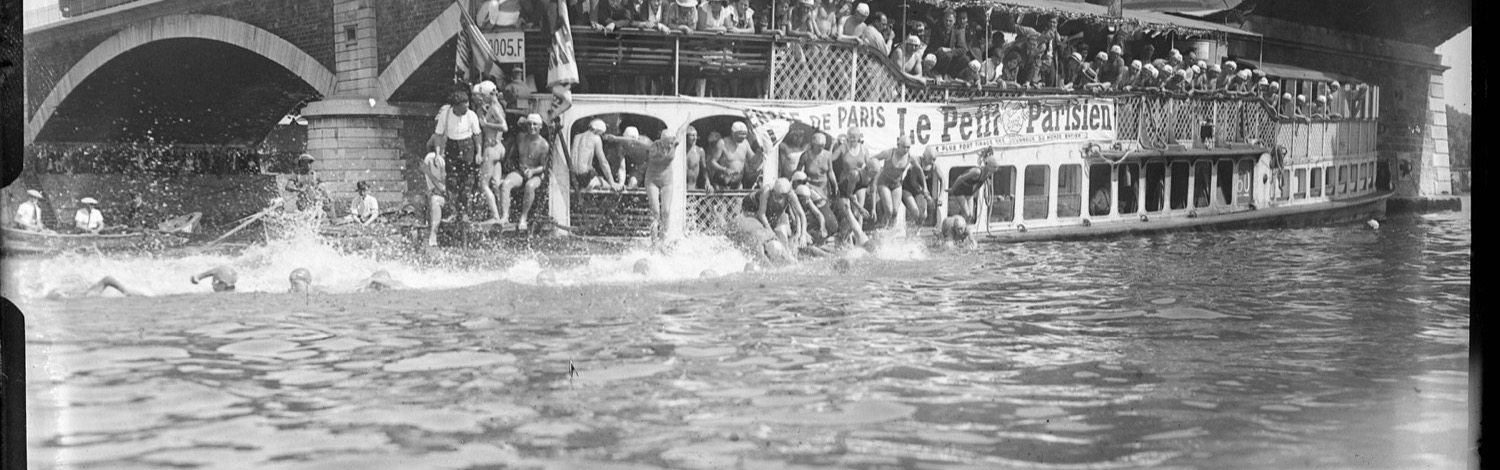
There is a massive historical anomaly in how we view swimming today. We are so accustomed to chlorinated pools, floating lane lines, and blue tiles that we have forgotten a fundamental detail: swimming began as open water swimming.
Before the modern era, standardized public pools simply did not exist. The very first modern Olympic Games, Athens 1896, were held in the open sea, in the Bay of Zea, braving waves and currents in water estimated at 12-14 °C. The following edition, Paris 1900, took place directly in the murky waters of the Seine. The bond between swimming and the concrete pool only took root later, becoming so dominant that open water was literally lost.
Today we use the acronym OWS (Open Water Swimming) to differentiate it from "normal" swimming. In reality, the correct definition should be the exact opposite: Open Water is the original form of swimming. The pool version should be called "closed water swimming." It will be almost impossible to turn back the wheels of linguistics (it is no coincidence that our own project is called Omniathlon OWS to be found by the public), but it is essential to remember how we lost our relationship with the water.
Because closing off a river, or banning swimming in a harbor, means taking away public space; and whoever reopens it decides, ultimately, who the city belongs to.
It is on this principle that Swimmable Cities is founded, the most important global alliance for the reclamation of blue spaces. Born as a civic movement before the Paris 2024 Games, incubated in Canada and hosted in Australia, it has transformed into a true political pressure machine. As of July 1, 2026, it counted 255 organizations and 121 signatory cities in thirty-eight countries. Their stated goal is called «3 by '30»: to have thirty "lighthouse cities" and three thousand global signatories by 2030, working on measurable targets. They do not just sign petitions: they meet at global operational summits (such as in Rotterdam in 2025 or Basel in 2026, an event that concluded with a collective swim in the Rhine) to exchange the engineering technologies necessary to purify the water. For them, access to urban rivers is not a sporting whim, but a human right.
When metropolises lived in the water
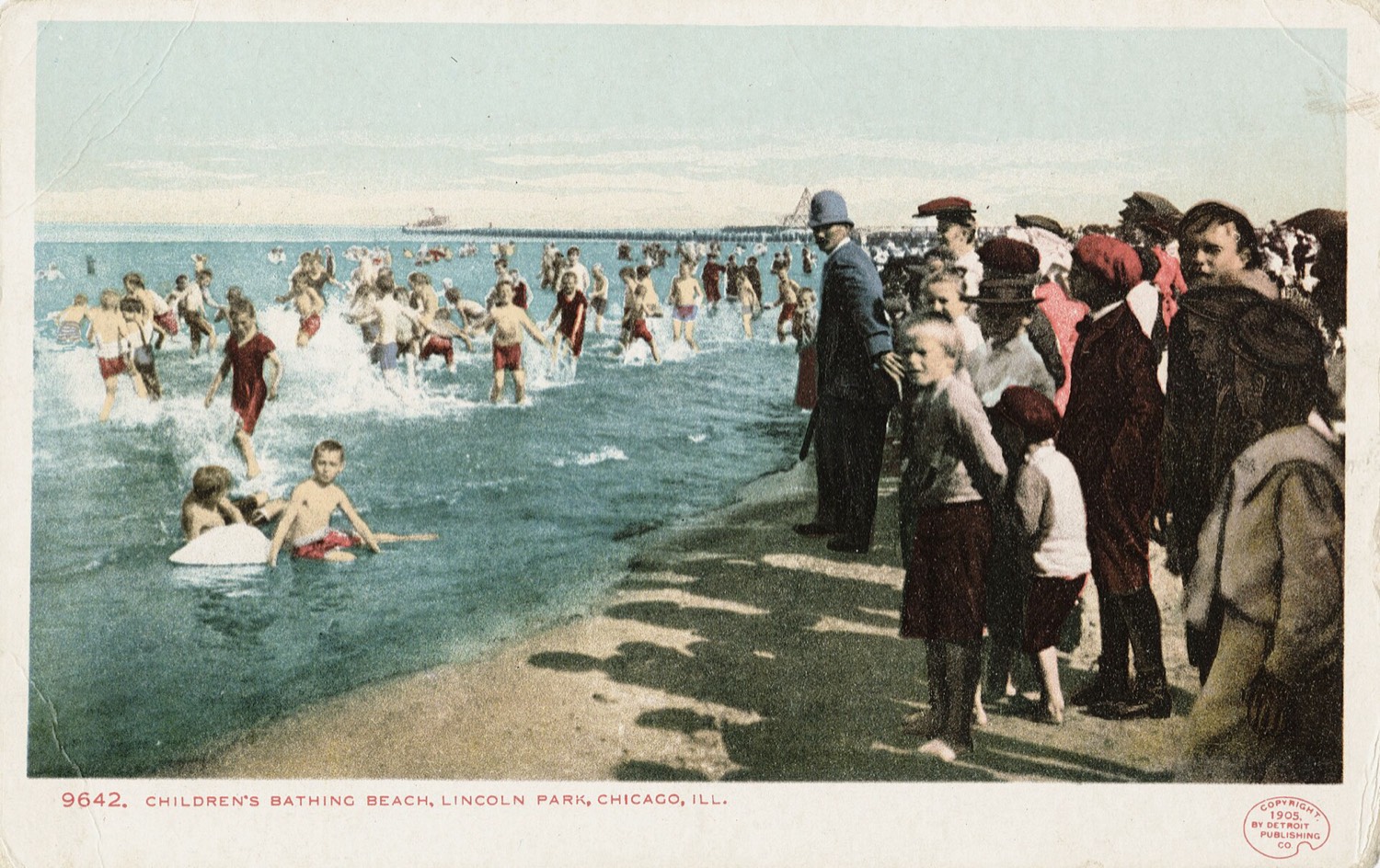
Until not long ago, urban water was a living, turbulent, and visceral space. In the United States, at the turn of the 19th and 20th centuries, city water was a refuge for the masses. In 1870, the first public floating baths opened in New York on the Hudson and East Rivers: massive barges equipped with wooden-slat tanks that allowed the river water to flow through freely. In 1911, they recorded the incredible figure of 1,818,721 bathers. In Chicago, public beaches created in the heart of the metropolis on Lake Michigan, such as the bustling one in Lincoln Park, recorded thousands of visitors per day.
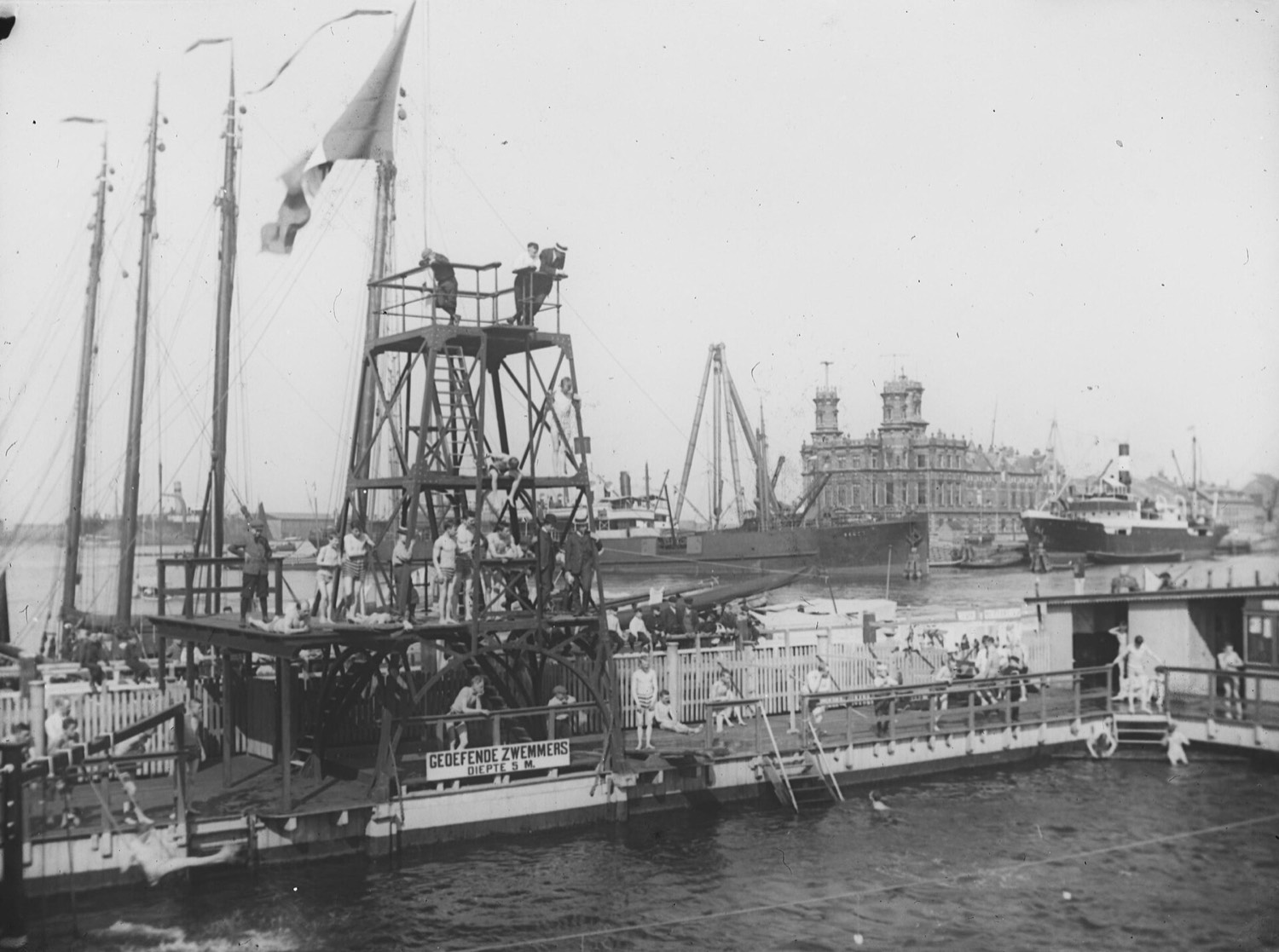
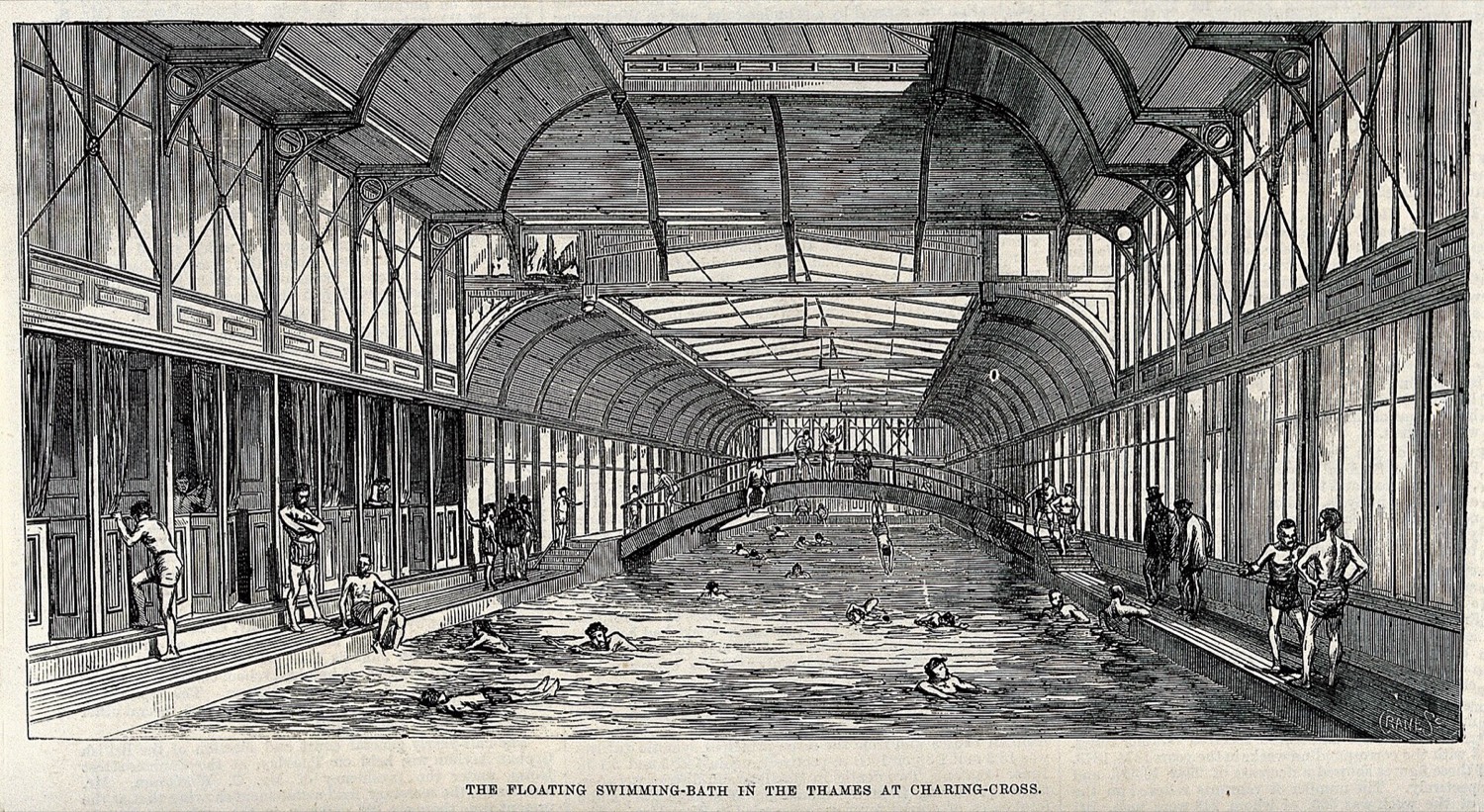
In Europe, the capitals were no different. In the Netherlands, a nation that has always been symbiotic with its canals, Amsterdam's historic Obelt floating establishment on the IJ welcomed swimmers and divers daily. In London, the Lords and Commons race was born in 1877 to challenge swimmers over 5 miles in the Thames, with the cup paid for by none other than Parliament.
In Italy, we were on exactly the same wavelength. On the banks of the Po in Turin, or on the Tiber in Rome (before the construction of the Umbertine walls), the bathing barges were the nerve center of summer. Even provincial streams like the Brembo or the Serio, in the Bergamo area, hosted river beaches teeming with families, and in the center of Bergamo, people cooled off in the Morla.
In Milan, the history of competitive swimming is literally carved into the canals, but a clear distinction must be made between the two great Milanese traditions. On one hand, there is the Cimento Invernale (Winter Plunge), born as early as 1895: 150 m of grueling swimming in the Navigli during the freezing "days of the blackbird," a ritual that began with seven daredevils and which still today attracts over a hundred fearless souls. On the other hand, there is the legendary Gran Fondo del Naviglio, a summer marathon (of 24 km) that for decades saw athletes race from the province to the Darsena, drawing crowds of people along the towpaths.
Lord Byron and the Grand Canal: water to build one's ego
But the supreme proof of how much urban water was considered an extension of one's ego (and not a sewer to be avoided) is given to us by Lord George Gordon Byron.
As documented in the letters collected in "Letters and Journals of Lord Byron", on May 6, 1818, in the Venetian salon of Marina Querini Benzon, Byron challenged his friend Alexander Scott and Angelo Mengaldo, a veteran of the Napoleonic campaigns, to a swim. Mengaldo, the war hero, retired exhausted before the entrance to the Grand Canal; Scott exited the water defeated at the Rialto Bridge. Byron completed the entire canal alone, swimming like a man possessed among the palaces. He arrived at Santa Chiara at 8:15 PM, after 3 hours and 45 minutes of swimming. And since at the time city water was a matter for braggarts, three years later (in an 1821 letter) Byron would shamelessly falsify the numbers to inflate the feat, declaring a time of four hours and twenty minutes to humiliate his rivals.
In September 2025, two tourists dove into the San Vidal gondola station. The Municipality applied a fine of 350 € each and an urban ban (Daspo). Clearly, no one today is proposing to turn the Grand Canal into a giant municipal pool: the dynamics of modern water traffic would make it suicide. But the cultural shift is ruthlessly evident: we have gone from poets showing off in the water to traffic police with ticket pads.
They killed the race (for the rice paddies)
But how and why did cities take the rivers away from us? We often tell ourselves it was "because of pollution." A half-truth that has become a formidable alibi, fueled by phobias and bacteriological superstitions (as we will reveal in our dossier on coliform bacteria hoaxes and sewage hypocrisy). The reality is that, under the guise of safety and civil liability, administrations have preferred to lock down the water to avoid problems or favor other interests. This attitude has solidified a psychological disgust: the ingrained idea that diving into the "murky" waters of one's own urban river is a crazy act.
Take the aforementioned Gran Fondo del Naviglio in Milan. The last edition was held on September 9, 2023. Then it had to stop because of heavy stone barriers, placed at water level by the Consorzio Est Ticino Villoresi. These barriers are used to raise the level of the canal and irrigate 90,000 hectares, mostly rice, in times of drought. The problem is that they make the banks a death trap with no handholds, physically blocking the passage of rescue dinghies.
Pollution has little to do with it here, but the result is still the death of a wonderful historic race (today the Gran Fondo's internet domain sadly hosts an online casino).
The triumph of the Seine and the Copenhagen model
Fortunately, in many parts of the world, surrender was never signed and the wheels of history are turning in reverse.
The most exceptional and titanic redevelopment work of recent decades was carried out by France. For decades, the Seine was declared unswimmable; the historic races (such as the Traversée de Paris) had died in 1945, replaced by the state's "mille piscines" plan which relegated swimming to indoors, triggering enormous social disparities for lower-income groups. Then, for the Paris 2024 Games, the political miracle: the State spent 1.4 billion € to clean up the river, building immense underground storage basins to hold sewage runoff.
During the Olympics, the world media made jokes about coliform bacteria and races postponed due to torrential rains. But net of the physical limits of a centuries-old water system (which physiologically goes haywire during anomalous cloudbursts), the Parisian effort is wonderful and should be celebrated. It is an unprecedented technological achievement. It is crushing proof that we are finally trying to correct the distortions of urban planning, demonstrating that even in such a complex and populous metropolis, one can return to swimming.
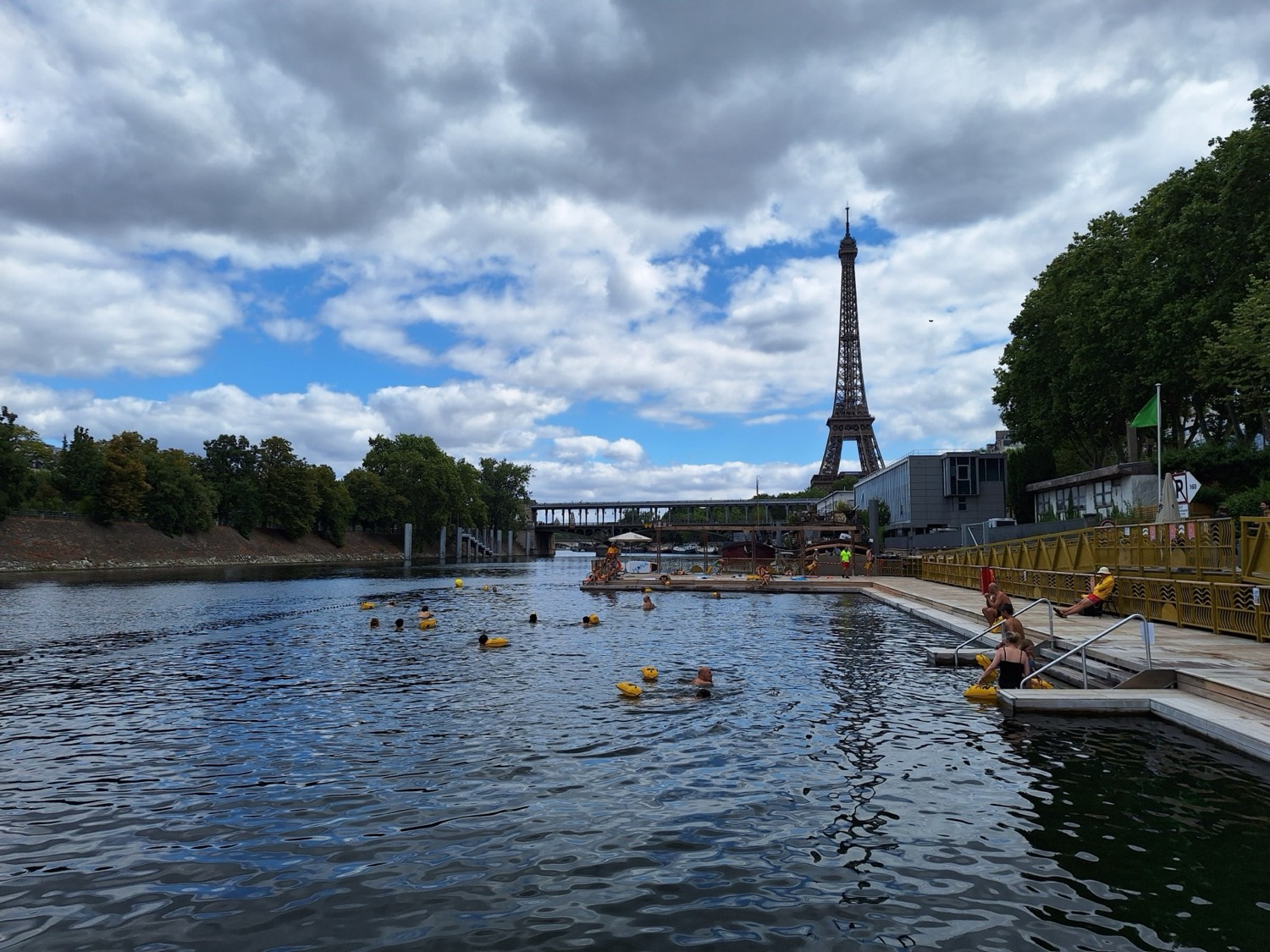
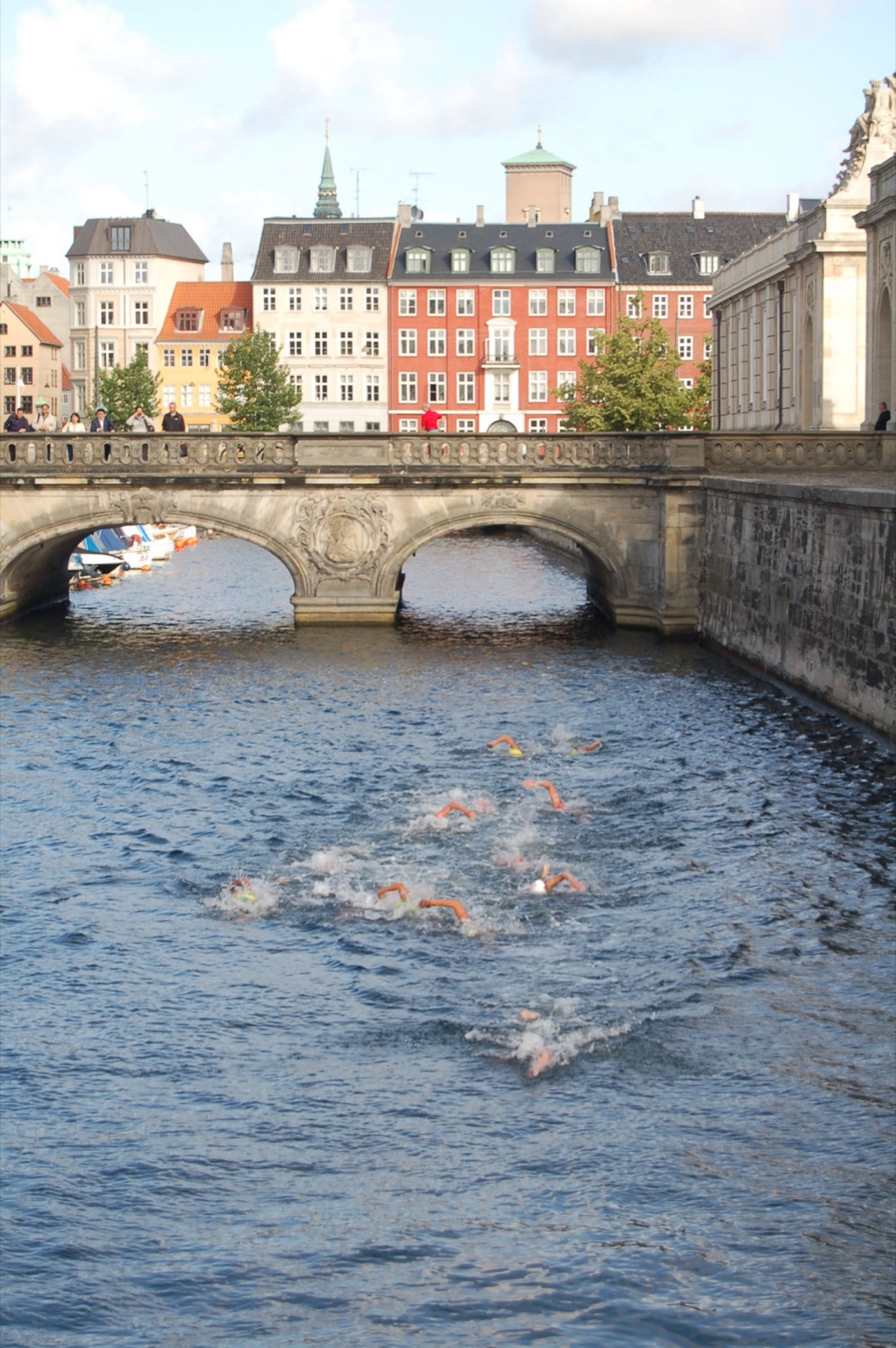
Today this system, highly monitored and conscious of its own limits, has set a precedent. In Copenhagen, they have been doing it sublimely since 2002: they cleaned up the harbor canals by connecting them to underground basins where an algorithm blocks diving by closing access only in the event of sewage overflows. On normal days, people dive in without fear, and in the summer of 2025, 475,298 bathers swam there safely.
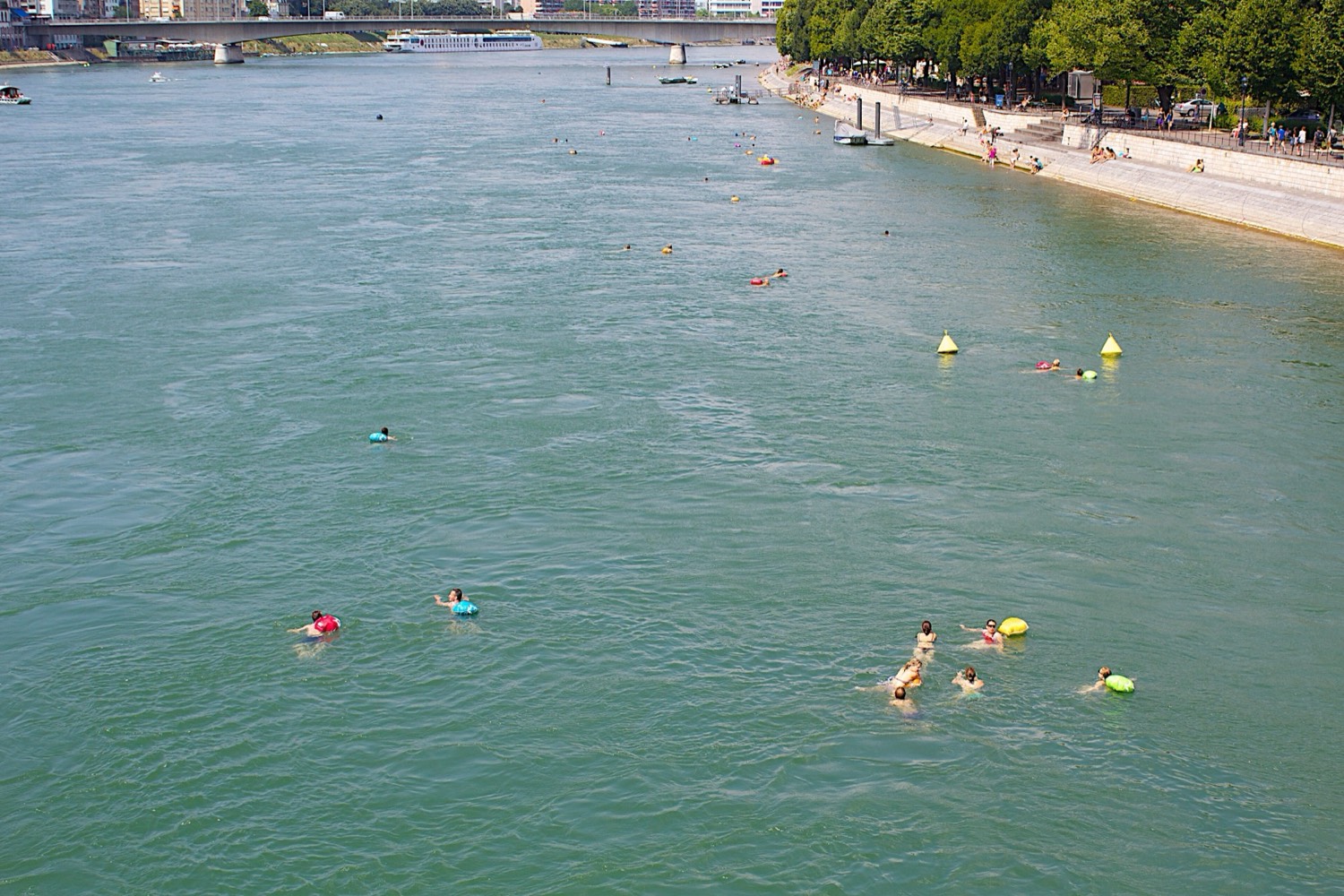
In Zurich, entry to the historic river baths is totally free: in the 2025 season, the summer baths in the river recorded more than 2.39 million entries. In Basel, swimmers daily float down the current of the Rhine using the Wickelfisch (a waterproof bag for clothes), and in Wuhan, China, every July 16, over 2,000 swimmers brave the imposing waters of the Yangtze.
Reopening city water is not an aesthetic whim, nor a nostalgic caprice. It means stopping the acceptance that our cities must remain suffocated by concrete. It means returning a blue, essential, and free space to those who would otherwise remain irremediably cut off from the fundamental right to learn how not to drown.