
Plivački maraton Jelsa
- Distances: 1.5km and 3km
At a glance
- Distances
- 1.5 km · 3 km
- Where
- Sea · Jelsa harbour bay, island of Hvar, Jelsa, Splitsko-dalmatinska županija, Croatia
- Entry fee
- 20 €
- Registration
- kdpsplit.hr
About the race
Starting from Lučica beach, swimmers in Jelsa head out toward the beacon of the Iga lighthouse. The Plivački maraton Jelsa is an open water swimming race held in the sea within Jelsa harbour bay, set on the northern coast of the island of Hvar in Split-Dalmatia County, Croatia. Organized by KDP Split, the event forms part of the Dalmatian Open Water Swimming Cup, an island competition series dedicated to promoting sport and an active outdoor lifestyle in coastal Dalmatia. The event welcomes swimmers across two official race distances, featuring a 1,500-metre course alongside the longer 3,000-metre challenge. The 3,000-metre competition departs directly from Lučica city beach, steering swimmers straight across the bay toward the Iga lighthouse.
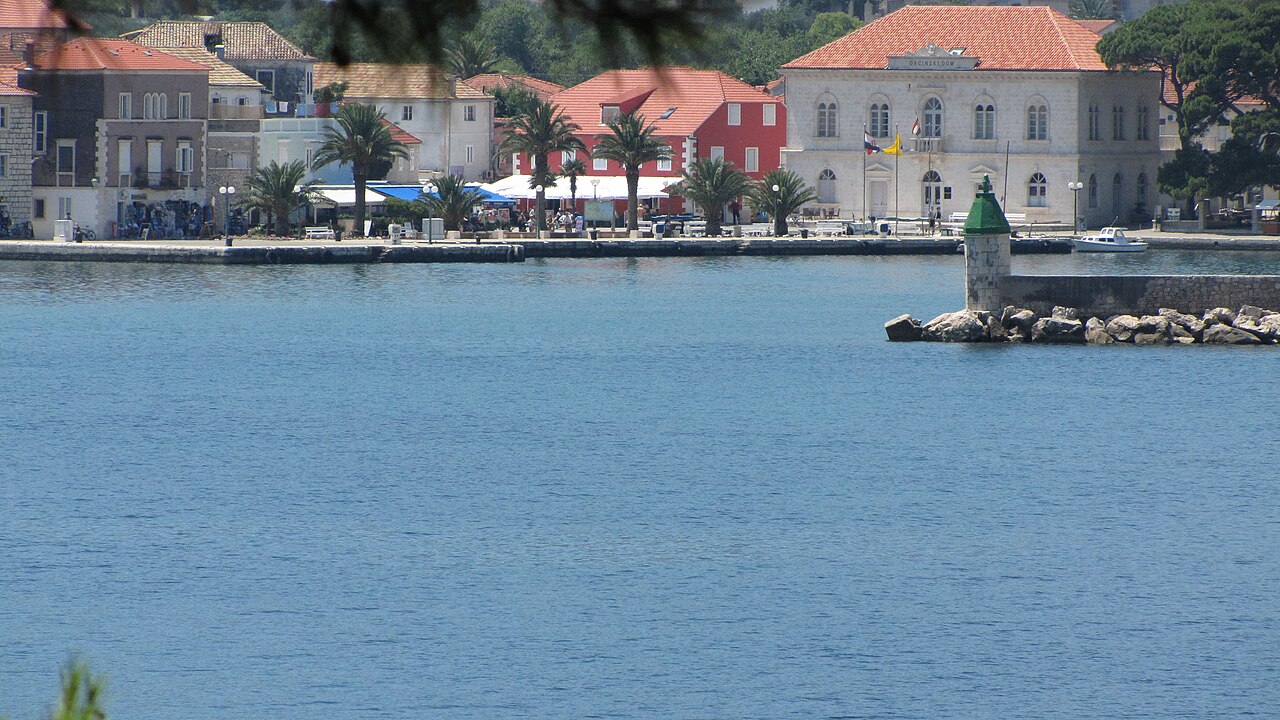
Navigating the course requires completing two full laps of the bay, turning around four course buoys and keeping each marker on the left shoulder throughout the swim. Swimmers establish their rhythm, sighting regularly as the distance unfolds. In past editions of the marathon, experienced competitors have challenged the bay's waters.
Gradina peninsula and the ancient freshwater haven of Jelsa
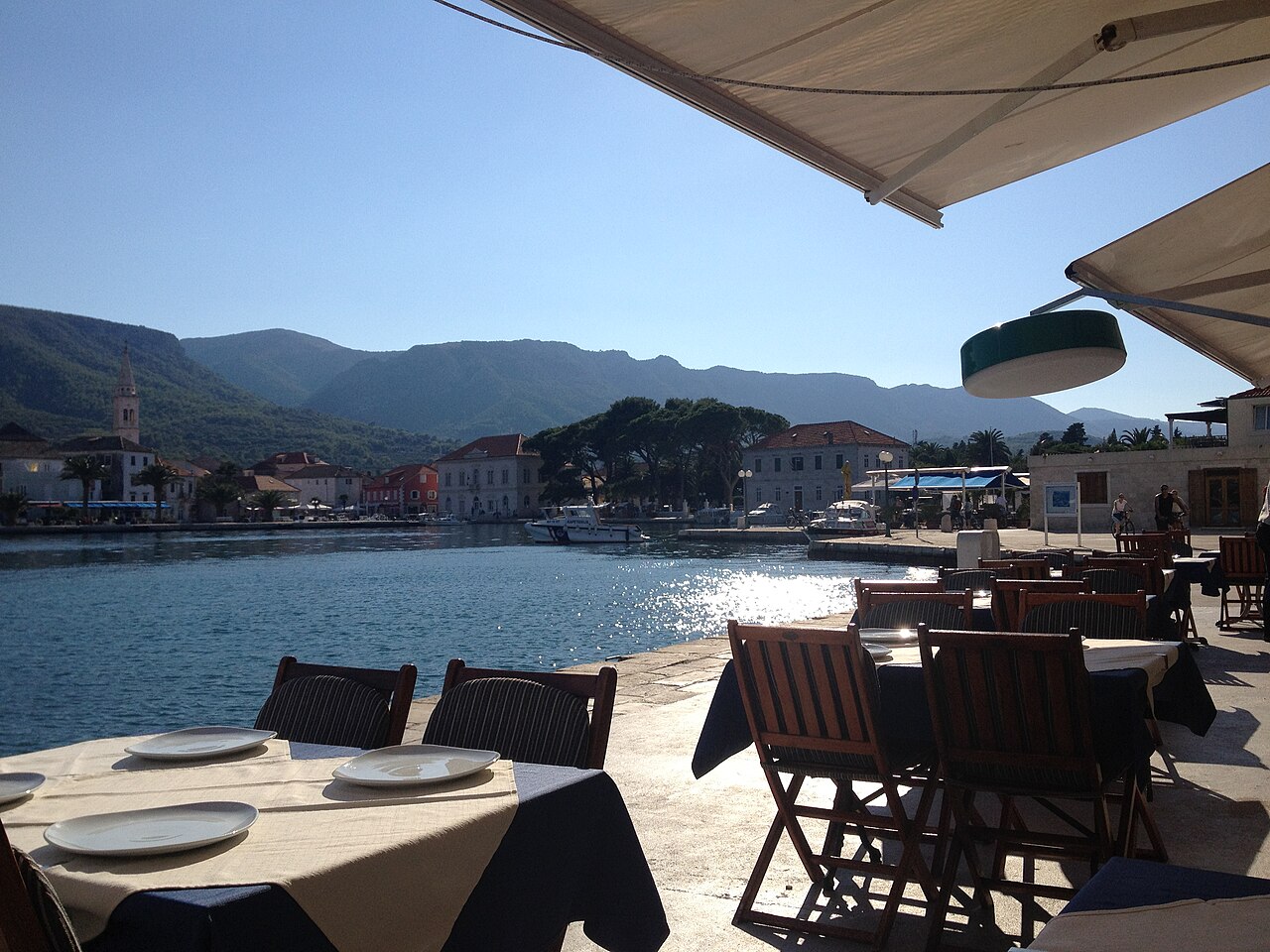
What sets Jelsa apart from every other settlement along the coast of Hvar is its unique hydrology: it is the only location on the entire island with an abundance of natural fresh water. Out on the western edge of the Gradina peninsula, which forms the outer arm enclosing the harbour waters, visible stone remnants of an ancient defensive wall still survive from the Civitas Vetus Ielsae. By the fourteenth century, Jelsa was officially established to serve as the maritime port for the inland settlement of Pitve. The modern contours of the harbour took definitive shape around 1830, when local builders began constructing protective stone breakwaters and reclaimed the low-lying marshy shore to create the municipal park.
Zečevo islet and the sea caves of Kabal peninsula
Beyond Jelsa's harbour along the northern shoreline lies Zečevo, an islet situated in the Adriatic Sea within the Hvar Channel near the coastal village of Vrboska. Covering a surface area of 113,288 square metres with a coastline measuring 1,539 metres, the uninhabited islet has held official status as a protected landscape since 1972. Because no permanent human settlement exists on Zečevo, human impact on the local flora and vegetation remains strictly limited. The preserved scrub and quiet rocky terrain provide an undisturbed sanctuary for a notably high population of wild rabbits. The surrounding marine corridor forms the Hvar Channel, a strait of the Adriatic Sea located between the islands of Brač and Hvar.
The shape and length of Zlatni Rat continually shift under the influence of marine tides, currents, waves, and dominant winds, especially the south-easterly Jugo and the westerly Maestral. Bordering Zlatni Rat, a coastal pine grove shelters the ancient ruins of a Roman villa rustica that once featured its own private swimming pool. At the western limit of the Hvar Channel, the boundary of the strait is marked by a line running from Zamorski rat on Brač across to Cape Kabal on Hvar's Kabal peninsula. The peninsula is shaped like elongated fingers reaching into the sea, forming an intricately branched coastline indented with quiet, sheltered coves. Cape Kabal itself rises as an eighty-metre wall of sheer rock marking the entrance to Stari Grad Bay, with underwater sea caves concealed directly beneath the cliffs. Today, the entire Kabal peninsula is designated as a protected natural area, safeguarding valuable habitats for indigenous animal and plant species across secluded inlets such as Žukova bay.
Šćedro Channel: Roman villas, sea battles, and offshore wrecks
Along the southern coastline of Hvar, the open waters enter the Šćedro Channel, a marine strait bordered by Hvar to the north and the island of Šćedro to the south. The island of Šćedro is separated from Hvar by this strait and from the island of Korčula by the Korčula Channel. Since ancient times, the natural inlets of Šćedro have provided safe ports and secure anchorages for vessels navigating the Dalmatian coast. On the northern shore of Šćedro, the small settlement of Lovišće sits tucked deep inside the sheltered waters of Lovišće bay. In 49 BC, a major naval battle between the fleets of Pompey and Julius Caesar took place in the waters surrounding Šćedro, leaving underwater traces that remain resting on the sea floor to this day.
In Raka bay, the submerged remains of an ancient Roman maritime villa lie preserved at the bottom of the cove. On the southern side of Šćedro, underwater explorers can locate the wing of a downed World War II aircraft, while its fuselage lies deeper down in the sea. Approximately three kilometres west of Šćedro, the Korčula Channel contains the uninhabited Lukavci islets, positioned about three kilometres off the southern shore of Hvar near the village of Sveta Nedjelja. The larger islet, Lukavac Veli, covers an area of 0.027 square kilometres, with a coastline of 650 metres and a maximum elevation of four metres above the sea. About 600 metres to the southwest lies the smaller islet, Lukavac Mali, which rises three metres high with an area of 0.017 square kilometres and a coastline measuring 480 metres.
This smaller rocky islet features an active lighthouse that flashes a red light signal every three seconds, visible across a nominal range of five nautical miles. Further along Hvar's southern coast, the historic Dubovica estate has been documented in written records as far back as the thirteenth century as the property of the Grivičić family. A sixteenth-century architectural drawing of the property, titled Vigna Bertuzzi, shows a fortified coastal wall and a small watchtower standing right by the beach.
Waterfront life in Jelsa: Burkovo hill, pine forests, and Mina bay
Back inside Jelsa's harbour basin, open water swimmers enjoy calm conditions protected from northern winds by the shielding rise of Burkovo hill. The surrounding shores are wrapped in Mediterranean pine forests, cultivated vineyards, and sand pockets that drop gently into the sea. Right at the entrance to the town, the municipal park laid out in 1870 provides a broad natural haven of shade, functioning as an expansive outdoor cooling retreat during hot summer afternoons. Jelsa's coastline is deeply indented with capes and quiet coves, providing a diverse mix of sand, gravel, and smooth limestone slabs that offer effortless water entry for swimming. At nearby Mina bay, swimmers can dry off under pine trees or grab a cold drink at the Naturo Beach Bar right beside the shallows.
The town has welcomed visiting seaside travellers since modern tourism began here with the opening of Hotel Jadran in 1911. After finishing your laps past the Iga lighthouse, you can float in the transparent Adriatic shallows and soak in the timeless calm.
Sources: Jelsa, Croatia
Course
Awards
Awards are typically presented based on the Dalmatian Open Water Swimming Cup (DKDP) regulations.
Previous editions
Since 2022
How to get there
Plivački maraton Jelsa
Frequently asked questions
- What distances does Plivački maraton Jelsa offer?
- Plivački maraton Jelsa offers 1.5 km and 3 km.
- How much is the entry fee for Plivački maraton Jelsa?
- The entry fee is 20 €. Standard online registration fee is 20 EUR for both distances; registration on the day of the race costs 30 EUR.
- Where does Plivački maraton Jelsa take place?
- Plivački maraton Jelsa is a sea swim. Location: Jelsa harbour bay, island of Hvar, Jelsa, Splitsko-dalmatinska županija, Croatia.
- How do I register for Plivački maraton Jelsa?
- The reference page for registering for Plivački maraton Jelsa is https://kdpsplit.hr/.
Where to stay
Jelsa offers a range of options, from traditional stone-walled apartments in the heart of the old town to modern boutique hotels overlooking the harbor. For those who prefer direct contact with the sea, several campsites are located within walking distance of the race start. Prices fluctuate significantly depending on the season, with modest apartments typically ranging from €70 to €150 per night, while harbor-front boutique rooms can exceed €200 during the peak summer months.
Things to do nearby
Beyond the race, the island of Hvar invites exploration through its ancient landscapes and subterranean history. Visitors can hike to the Neolithic Grapčeva Cave near Humac to witness traces of habitation dating back to 6000 BC, or traverse the nearby UNESCO-protected Stari Grad Plain to see the ancient Greek agricultural grid. The coastline is ideal for kayak and SUP excursions, allowing you to discover hidden coves, while local wineries offer tastings of indigenous Hvar grapes that define the island’s culinary culture.
Swimmers
Similar races


Comments
Transparency: some links on this page (stays, flights, experiences, gear) are affiliate links — if you book or buy through them, Omniathlon may earn a commission from the partner at no extra cost to you. As an Amazon Associate we earn from qualifying purchases.