Marnaton Begur
- Jun 6, 2026
- Last edition date
- Distances from 1.5km to 7km
At a glance
- Last edition date
- June 6, 2026
- Distances
- 1.5 km · 3 km · 3.5 km · 7 km
- Where
- Sea · Begur, Girona, Begur, Cataluña, Spain
- Entry fee
- 50–80 €
- Registration
- marnaton.com
About the race
Along the indented shoreline of Begur, maritime pine forests cling directly to steep cliffs, plunging down into crystalline Mediterranean bays. MARNATON eDreams Begur by Zoggs is an open water swimming race held in the Mediterranean Sea along the coast of Begur, in the province of Girona in Catalonia. Organized by MARNATON, the competition immerses swimmers in a dramatic coastal landscape where headlands drop vertically into exceptionally transparent waters. It draws endurance athletes and coastal sprinters alike to a wild stretch of Spanish shoreline. The centerpiece of the event is the 7-kilometer long-distance crossing, which sets off from the sheltered waters of Cala d'Aiguablava and charts a course northward along the cliffs to finish at Sa Riera.
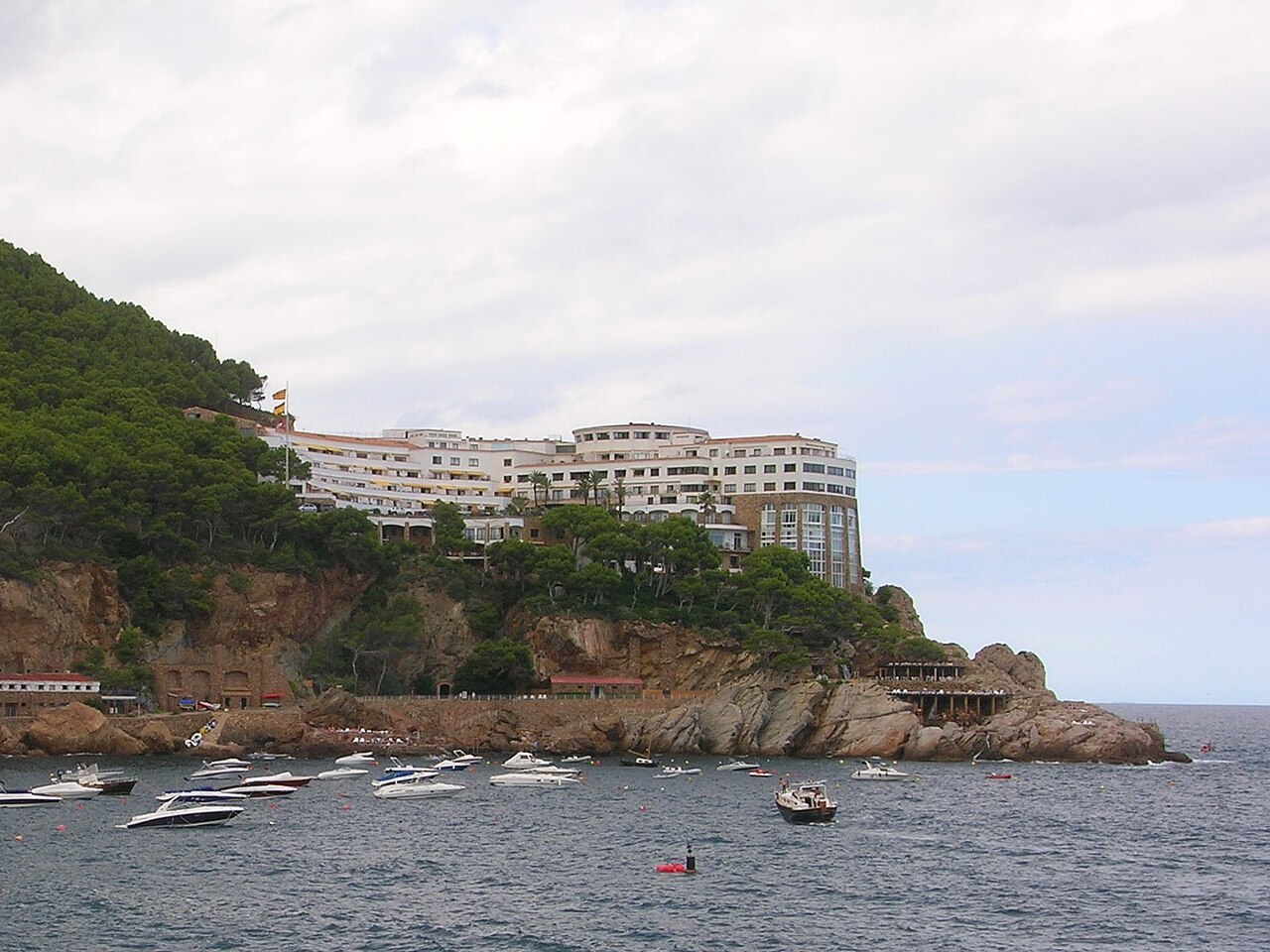
Swimmers take to the water from the cove and follow the contours of the jagged shore, sighting off towering pine-topped bluffs and rocky points throughout the journey. Past editions of the Begur event have showcased this demanding 7-kilometer test, challenging open-water specialists. For swimmers seeking shorter distances, MARNATON provides multiple courses along the same shoreline. A 1.5-kilometer course departs from Playa de Pals to the north, running south toward Sa Riera while skirting the prominent sea stack of Illa Roja. Children can also take part in dedicated kids races over distances of 50, 100, 200, and 400 meters, completing a festival of coastal swimming.
Cala d'Aiguablava and the rocky coves of Fornells
This stretch of coastline embodies the landscape that gave the region its modern identity. In 1908, the journalist Ferran Agulló i Vidal coined the name Costa Brava to describe the rugged, wild nature of this shoreline, where steep rock faces and dense pine woods plunge straight down into the sea. Cala d'Aiguablava sits south of the village of Fornells de Mar and forms a broad, turquoise basin. Its sheltered conditions make it a beloved anchorage for cruising sailboats and motor vessels throughout the warm months. High above the starting cove, perched dramatically on the edge of the headland overlooking the bay, stands the Parador de Aiguablava. From its clifftop vantage point, the hotel surveys the entire marine amphitheater.

Taking the first strokes out of the cove, the water is extraordinarily clear, revealing rocky shelves and sandy patches deep beneath the surface before the bottom drops away into the deep blue of the open Mediterranean. The small marine basin of Port d'Aiguablava provides 61 moorings tucked beside the hamlet of Fornells. The shoreline then fractures into an intricate sequence of natural inlets and coves, including Cala d’en Malaret, Cala Port de ses Orats, Cala n’Estasia, and Cala Port d’Esclanyà.
Iberian settlements from Cape San Sebastián to Castell
About six kilometres south of the race area, the mountain of Cape San Sebastián rises sharply above the Mediterranean to an altitude of 156 meters. At its summit lies the Poblado íbero de San Sebastián de la Guarda, an Iberian settlement dating between the 5th and 1st centuries BC, with archaeological finds extending back to the 6th century BC. Another significant ancient outpost stands about eleven kilometres south of the Begur race area at the Poblado íbero de Castell. Inhabited by the Iberian Indigetes tribe between the 6th century BC and the 1st century AD, this settlement was constructed on a 35-meter-high promontory jutting straight out into the sea. Natural fractures in the rock face led to ancient landslides down the western slopes, yet the inhabitants skillfully adapted the geography to their seafaring needs.
At Cala Foradada, at the base of the Castell settlement, the Indigetes modified a natural rock breakwater to create a protected harbour for shipping merchandise along the Catalan coast. High on the promontory, two rock-hewn cisterns stored rainwater for the settlement, while a temple was constructed at the summit to serve as a prominent navigational beacon for boats sailing along the coast.
Naval battles and pirate waters around the Medes Islands
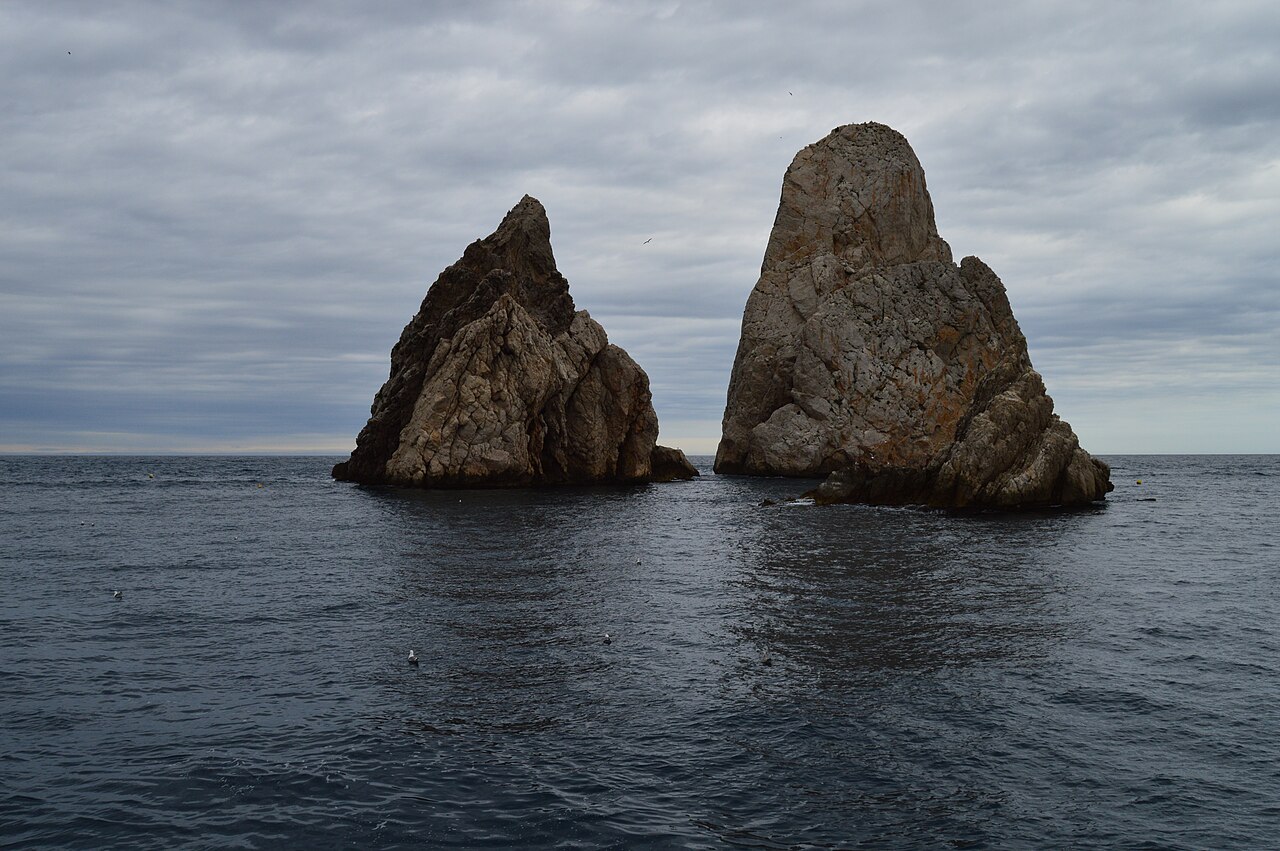
Located three miles offshore from Palamós lies the small archipelago of the Formigues Islands. These bare islets consist of calcareous rock carved with underwater caves and crags, surrounded by water depths ranging from 9 down to 45 meters, where rough seas frequently sweep clean over the low rocks. A solitary lighthouse stands atop Formiga Gran, marking the hazardous site where the naval Battle of Les Formigues was fought in 1285. About eleven kilometres north of Begur rise the seven rugged islets of the Medes Islands, positioned off the mouth of the Ter River. In June 2010, the Medes archipelago was declared a protected national natural park, establishing a marine reserve of over 2,000 hectares that protects the seabed and its thriving colonies of red coral.
Sa Riera beach and the coastal footpaths of Begur
All race routes converge at Sa Riera, a historic fishing village set within a deeply sheltered cove that opens onto the bay. The beach remains well protected from incoming waves, providing calm waters for swimmers to sight the finish arch and sprint across the sand. Sa Riera retains its authentic maritime atmosphere, where the pine-clad hillsides drop down to the water edge. The historic village of Fornells de Mar similarly preserves its fishing traditions and maritime roots. Linking these coves on land is the GR 92 long-distance Mediterranean trail, which runs directly along the Begur shoreline. The coastal path crosses the beach at Cala d'Aiguablava, winding north along the water to the port of Fornells and south through fragrant pine and cork oak woodlands toward the village of Tamariu.
Swimmers planning a racing getaway can also take advantage of nearby events; the OncoSwim takes place just 11 kilometers away, a week before the Begur crossing, making it possible to experience two premier open-water courses during the same trip. The Begur event unfolds in June, when the Mediterranean settles into ideal early-summer conditions, welcoming swimmers to the dramatic cliffs, hidden coves, and clear waters of the Costa Brava.
Sources: Costa Brava · Fornells de Mar · Sa Riera
Course
Open water course in the Mediterranean (Costa Brava) with distances of 7 km, 3.5 km, and 1.5 km. Starts scheduled from different coves (Aiguablava, Sa Tuna, and Pals) with the finish at Platja de Sa Riera. Environment characterized by cliffs and crystal-clear waters.
Useful info
Online registration at rockthesport.com (opens January 15, closes 10 days before). Wetsuits allowed. Categories: Absolutos, Juniors, +18, +30, +40, +50, +60, +70, and 'No Wetsuit' category. Includes race pack (swim cap, t-shirt), refreshments, insurance, and bag drop service.
How to get there
Girona Airport (GRO) at 55km or Barcelona (BCN) at 135km. Nearest train station: Flaçà (25km). From Girona, take the SARFA bus to Begur. By car: AP-7 motorway exit 6, then C-66 and C-31. Parking available near the beaches (Sa Riera/Aiguablava), but a local shuttle is recommended due to high traffic.
Marnaton Begur
Frequently asked questions
- When was the last edition of Marnaton Begur?
- The last edition of Marnaton Begur took place on June 6, 2026.
- What distances does Marnaton Begur offer?
- Marnaton Begur offers 1.5 km, 3 km, 3.5 km, and 7 km.
- How much is the entry fee for Marnaton Begur?
- The entry fee ranges from 50 € to 80 €.
- Where does Marnaton Begur take place?
- Marnaton Begur is a sea swim. Location: Begur, Girona, Begur, Cataluña, Spain.
- How do I register for Marnaton Begur?
- The reference page for registering for Marnaton Begur is https://marnaton.com/begur/.
Where to stay
Begur offers a blend of historic charm and coastal accessibility. Visitors often choose between traditional 'casas de pescadores' in the lower coves, boutique hotels housed in renovated colonial-style villas in the town center, or well-equipped camping sites near the beaches. Expect nightly rates ranging from €120 for guesthouses to over €350 for premium coastal hotels during the early summer season. Find your base near the race start.
Things to do nearby
The weekend in Begur is as much about the terrain as the water. Beyond the race, you can explore the network of 'camins de ronda'—coastal paths—that offer dramatic trekking views of the cliffs. The region is renowned for its wine-tasting experiences, particularly the Empordà D.O. labels. For active recovery, kayak and SUP rentals are readily available to explore the hidden 'calas' that are inaccessible by foot. Discover local activities and history.
Swimmers
What to see around
1. Camí de Ronda: scenic coastal hiking trail. 2. Begur Castle: medieval ruins with 360° views. 3. Medes Islands Marine Reserve: world-class snorkeling/diving. 4. Medieval villages of Pals and Peratallada: historic architecture 10km away. 5. Aiguablava and Sa Tuna beaches: iconic coves for swimming in crystal-clear waters.
Other races by this organiser
- Marnaton FormenteraFormentera, ES
- Marnaton SitgesSitges, ES
- Marnaton Sant FeliuSant Feliu de Guíxols, ES
- Marnaton CadaquésCadaqués, ES
- COPA MARNATON eDreamsIbiza, ES
Similar races



Comments
Transparency: some links on this page (stays, flights, experiences, gear) are affiliate links — if you book or buy through them, Omniathlon may earn a commission from the partner at no extra cost to you. As an Amazon Associate we earn from qualifying purchases.