
Kona Swim
- Jul 4, 2027
- Distance: 3.9km
At a glance
- Next edition date
- July 4, 2027
- Distances
- 3.9 km
- Where
- Sea · Kailua Pier, Kailua Bay, Kailua-Kona, HI, United States
- Registration
- oceanswimhawaii.com
About the race
From the sand beside Kailua Pier, the Pacific stretches outward across Kailua Bay with open-ocean clarity and water resting near 26 degrees. Kona Swim is an open-water swimming race held in the ocean at Kailua Bay in Kailua-Kona. Organized by Hawaiian Swimming, the event takes place in April, offering swimmers the chance to take on the ocean course purely as a swim race, without bikes, running shoes, or triathlon crowds.
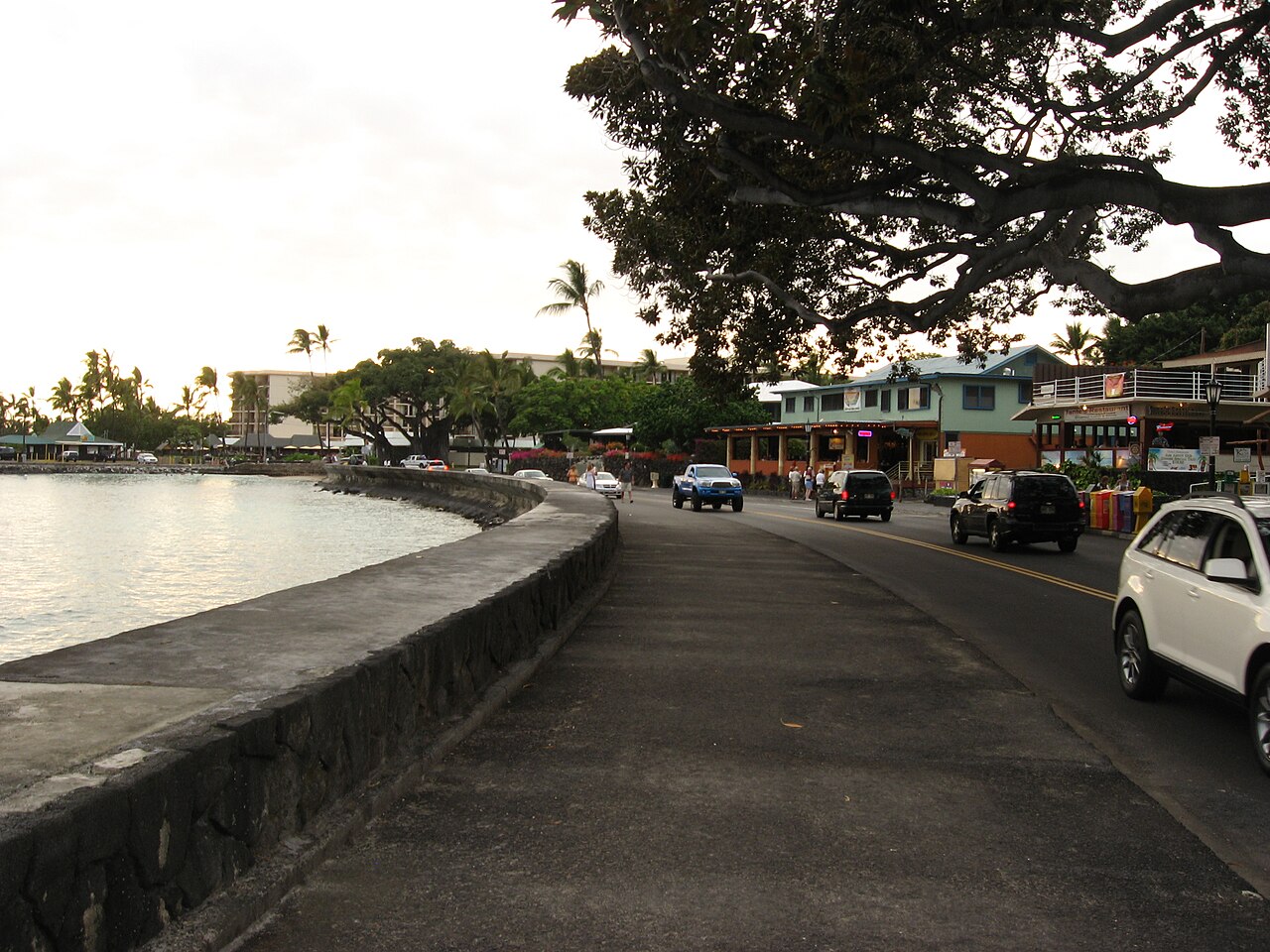
The 2.4-mile course from Kailua Pier into Kailua Bay
Swimmers enter the Pacific beside Kailua Pier and the small stretch of sand often referred to as Dig Me Beach, a name born from the posturing that surrounds triathlon week, though locals do not use the term. Kailua Pier is celebrated as the official start and finish location for the Ironman Triathlon World Championships held annually each October. The Ho'ala Swim also takes place at Dig Me Beach on the weekend before the championship, letting competitors experience this exact 3.86-kilometre layout in the ocean. The route covers the full distance of 2.4 miles, which translates to 3,862 metres in the open waters of Kailua Bay. The event gets underway with an in-water mass start. Swimmers navigate through deep oceanic swells, tracking the turning buoys against the broad horizon. Keeping a steady sighting line on Kailua Pier helps maintain a direct path back to the finish line.
Race morning at Kailua Pier
Swimmers self-seed according to their ability and expected finish time, and wear the provided race swim cap with their race number marked on the body. In 2026 the top Hawaiian Swimming male and female swimmers in the race qualify to represent Hawaii in the open water competition at the Oceania Swim Meet, held in Fiji in May. On the Ironman World Championship course from Kailua Pier, buoys are set about every 200 yards and lead out to a turnaround at 1.2 miles, according to a Hawaii Life guide to island swimming spots. Hawaii Life's guide also calls Kailua Pier the island's most popular place to train, where swim partners can usually be found during morning swims.
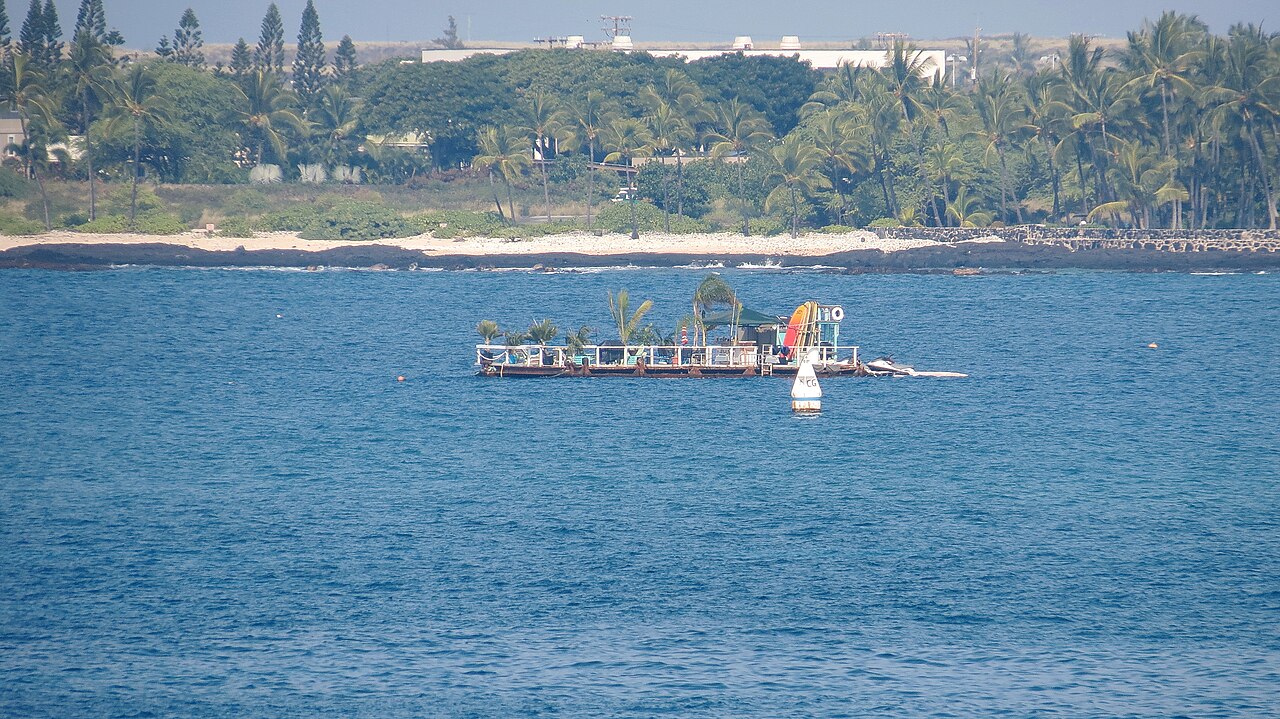
Under the lee of Hualālai: sheltered waters and lava fields
The town of Kailua-Kona sits along the shoreline of Kailua Bay, extending up the southern slope of Hualālai volcano. Due to its geographic position on the leeward side of the volcanic mountain, the bay is sheltered from wind and rain. The town is bordered to the west by the Pacific Ocean, spanning from Kailua Bay in the south to Honokōhau Bay in the north. Between 1800 and 1801, an eruption from Hualālai sent fluid basalt lava flows surging into the ocean, destroying an entire native village and an ancient three-mile-long fishing pond along the coast. The 1801 Huʻehuʻe flow reached the sea and created Keahole Point, where the Kona International Airport operates today.
Beneath the surface of the Pacific, the volcano's western flank hides an immense underwater collapse known as the North Kona slump, formed by submerged beaches and scarps that sit between 2,000 and 4,500 metres below the waterline. The seismic forces of the region remain active, as Kailua-Kona was the closest major settlement to the epicenter of the Kiholo Bay earthquake in 2006. Coastal resorts built along the western shoreline, including the Kona Village Resort and Four Seasons Resort roughly fifteen kilometres away, also suffered physical damage from the 2011 tsunami.
Kamakahonu: the royal cove and the sea of the god
Kailua Bay was historically known to native Hawaiians as Kaiakeakua, which translates to the sea of the god. The cove of Kamakahonu takes its name from a natural rock formation shaped like a turtle that was once located to the left of the beach. That original turtle rock was covered over when the modern Kailua Pier was constructed out into the bay. Looking seaward toward the northern boundary of the cove, the headland is named Kūkaʻilimoku, where the Kailua lighthouse stands today overlooking the coastal water. On April 4, 1820, the first American Christian missionaries landed on a rock at Kamakahonu. That historic arrival site became known as the Plymouth Rock of Hawaii, preserving the cove's place in the history of cultural transformation across the islands.
Marine life of Kailua Bay: mantas, pods, and green turtles
Below the surface, the waters at Kailua Pier feature vibrant coral reefs and thriving tropical fish. Swimmers may encounter wild dolphins, manta rays, and various other reef species moving through the bay. The open clarity of the bay provides swimmers with constant views of life traversing the blue beneath them. Along the coast near Hualālai, the marine environment is also home to the green sea turtle as well as coastal birds such as the black-winged stilt. Further south at Kahaluʻu Bay, ancient inhabitants set up sacred stone monuments known as kuʻula, dedicated to celebrating the abundance of reef fish and green turtles found in the bay.
Kaloko-Honokōhau and Aliʻi Drive: royal stonework and surf breaks
Roughly five kilometres from the swim area, the coastal territory was historically referred to as lands without water because of its arid lava rock terrain. Here, Kaloko-Honokōhau National Historical Park protects ancient Hawaiian rockwall fishponds built across a natural coastal embayment, structures that once formed the cultural hub of unified Hawaiian society. The seawall of the Kaloko fishpond is an engineering marvel measuring over 750 feet long, 30 feet wide, and six feet high. Within the same park, the Aiopio fishtrap encompasses a 1.7-acre pond created by an ancient stone wall aligned with the natural curve of the bay. The trap operated with clever narrow openings that allowed juvenile fish to swim inside, holding them trapped as they grew larger or when the tide receded.
Nearby, the Aimakapā fishpond provides a wetland sanctuary for native birds, including the Hawaiian duck, Hawaiian coot, Hawaiian stilt, and black-crowned night heron. Ali'i Drive is an oceanfront roadway featuring archaeological structures that have endured for centuries. At Kahaluʻu Bay, an ancient breakwater known as Pa o ka menehune was constructed in Ancient Hawaii and may have originally enclosed the whole bay. At Hōlualoa Bay, the Kamoa Point complex preserves Haleʻaʻama Heiau, a temple dedicated specifically to surfers, alongside an ancient sports complex with a terraced grandstand built to view surfing contests. King Kamehameha I likely learned to surf in these waters during his youth. On the northern end of Hōlualoa Bay, an exposed lava ridge produces the well-known surf break called Banyans.
Continuing along the coastline about nine kilometres from the pier, the Kāneaka Hōlua Slide once sent riders sledding down a track of pāhoehoe lava slabs covered in fine ash all the way to the water at Heʻeia Bay. The original course spanned over 5,280 feet, though seismic settling over time and development by a golf course and vacation homes have left approximately 2,600 feet of track, with visible remnants still touching the rocky shoreline where ocean waves crash. Just beyond at Keauhou Bay, about ten kilometres from the race start, sits the historic battlefield of Lekeleke, situated on the boundary between Keauhou and Honalo, where a small cannon was once mounted onto a double canoe during fighting, beside the bay and point of Kuamoʻo. All along this storied coast, the ocean invites swimmers to experience Hawaii's raw volcanic beauty stroke after stroke.
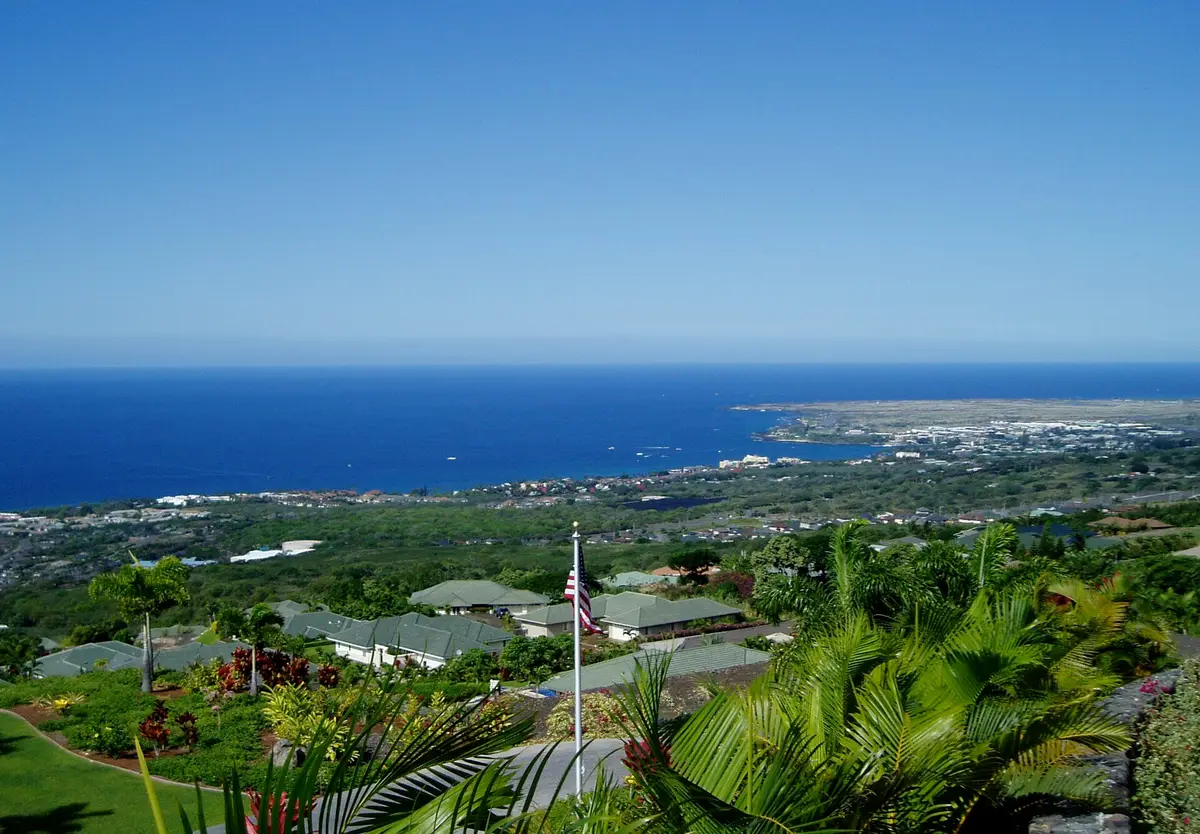
Sources: Hōlualoa Bay · Kailua-Kona, Hawaii
Course
The course follows the famous 2.4-mile Kailua Bay ocean swim route. Swimmers can expect to see diverse marine life including dolphins, eagle rays, and various fish species in the clear waters of Kailua Bay.
Awards
Top male and female swimmers qualify to represent Hawaii in the open water swimming competition at the Oceania competition.
Previous editions
- 2026Apr 12, 2026
- 2024results
How to get there
Kona Swim
Frequently asked questions
- When is Kona Swim?
- Kona Swim takes place on July 4, 2027.
- What distances does Kona Swim offer?
- Kona Swim has a single distance: 3.9 km.
- Where does Kona Swim take place?
- Kona Swim is a sea swim. Location: Kailua Pier, Kailua Bay, Kailua-Kona, HI, United States.
- How do I register for Kona Swim?
- The reference page for registering for Kona Swim is https://oceanswimhawaii.com/.
Where to stay
Kailua-Kona offers a mix of modest plantation-style lodges and modern boutique hotels perched directly above the harbor. Staying near the pier allows for easy walking access to the race start. You will find a range of options from local guesthouses starting at $150/night to oceanfront resorts that can exceed $400/night during peak season. Camping is limited, so booking well in advance is essential for the April race date.
Things to do nearby
Beyond the water, the area is rich in cultural history. A short distance from the pier, you can visit the Sadie Seymour Botanical Gardens to see the remains of the Kealakowaʻa Heiau, an ancient ritual site used for canoe blessing ceremonies. For a more active recovery, the coastline is perfect for outrigger canoeing or SUP, allowing you to view the volcanic cliffs from the water. Local coffee farms in the uplands provide excellent afternoon tours for those interested in the region's agricultural heritage.
Swimmers
Similar races


Comments
Transparency: some links on this page (stays, flights, experiences, gear) are affiliate links — if you book or buy through them, Omniathlon may earn a commission from the partner at no extra cost to you. As an Amazon Associate we earn from qualifying purchases.