
Hamilton Island Ocean Swim
- Nov 22, 2026
- Distances from 350m to 2km
At a glance
- Next edition date
- November 22, 2026
- Distances
- 350 m · 750 m · 2 km
- Where
- Sea · Catseye Beach, Hamilton Island, Queensland, Australia
- Entry fee
- 350 m: 30 AUD · 750 m: 90 AUD · 2 km: 90 AUD
- Wetsuit
- Non-wetsuit event. Swim skins are permissible, but any device aiding buoyancy or propulsion is prohibited.
- Registration
- hamiltonisland.com.au
About the race
Along the central northern shore of Hamilton Island in Queensland, the Hamilton Island Ocean Swim is an open water sea competition organized by Hamilton Island in the waters of the Great Barrier Reef. Swimmers assemble on the sand for a mass start on a Sunday morning in November, looking out across the gentle swell of the bay. The morning schedule offers three distances tailored to different ages and experience levels, beginning with a 350-metre dash. Swimmers looking for a longer challenge can step up to the 750-metre course or tackle the premier 2-kilometre ocean swim across the open expanse of the bay. To enter either the 750-metre or 2-kilometre events, competitors must be at least 13 years old.
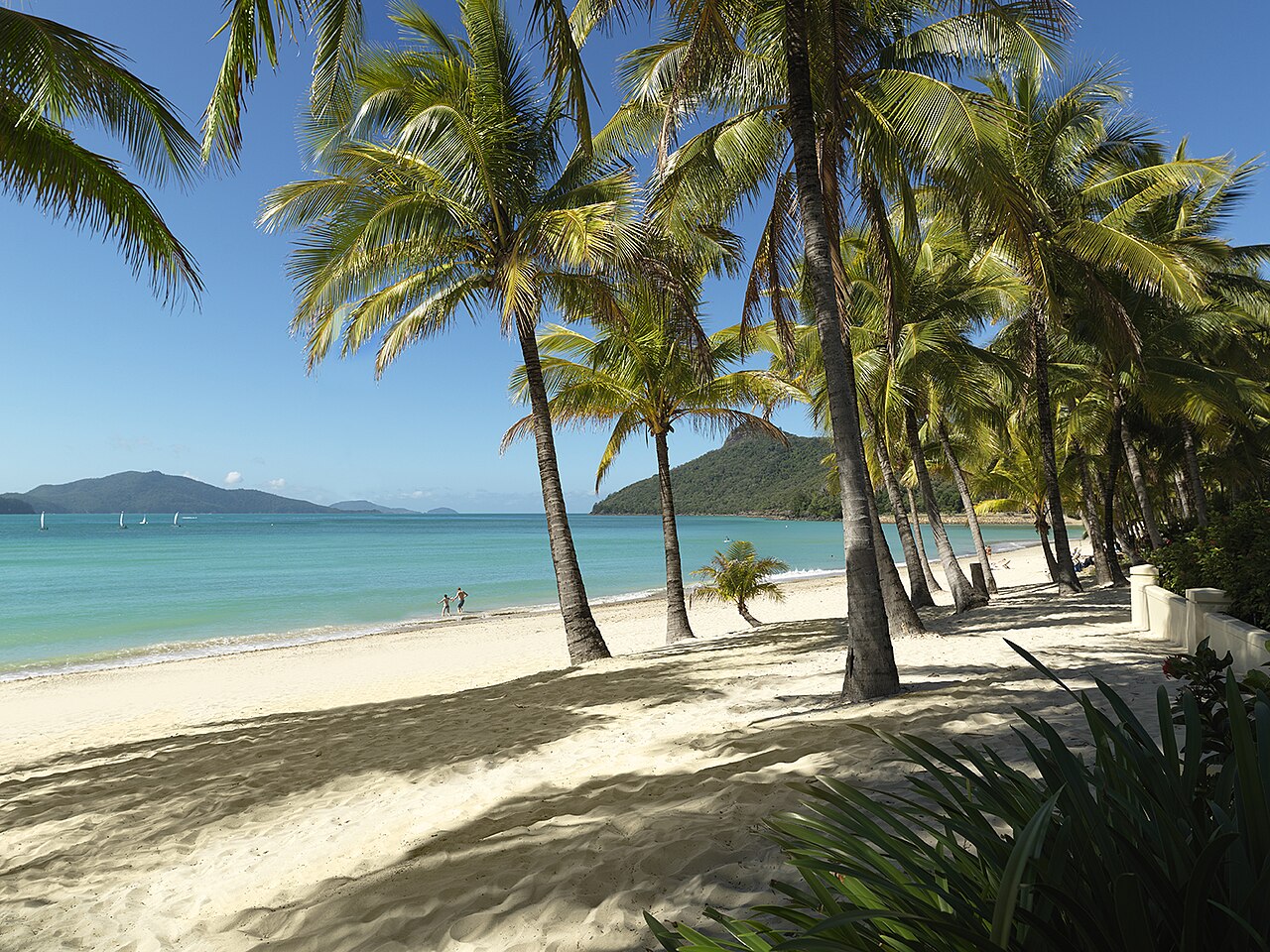
This is strictly a traditional non-wetsuit event held in tropical water that sits around 23 degrees. While textile swim skins are permissible, athletes are barred from wearing neoprene or using any artificial buoyancy or propulsion aids. That pure open water ethos has made the race a celebrated fixture of the Great Australian Ocean Swim Series, which connects the Whitsundays to events on the Gold Coast, in Sydney, and at Byron Bay. Olympic gold medalist Mack Horton competed in the 2-kilometre swim in 2016 and won the race.
Hamilton Island waters: drowned peaks and coral beds
Hamilton Island was formed when ancient sea levels rose along the Queensland coast, drowning mountain ranges and leaving only their higher elevations exposed above the sea. Today it stands as the largest inhabited island of the Whitsunday group, relying on an undersea cable from the mainland for electricity. Its drinking water is supplied by an island desalination plant that draws seawater through vertical turbine pumps on a jetty, processes it via reverse osmosis, and discharges brine back into the ocean. In the wider regional waters around neighboring Whitsunday Island, the seas are clear, warm, shallow, and rich in nutrients, driven by powerful tidal currents. The northern bays of that nearby island shelter expansive beds of seagrass that support diverse underwater life.
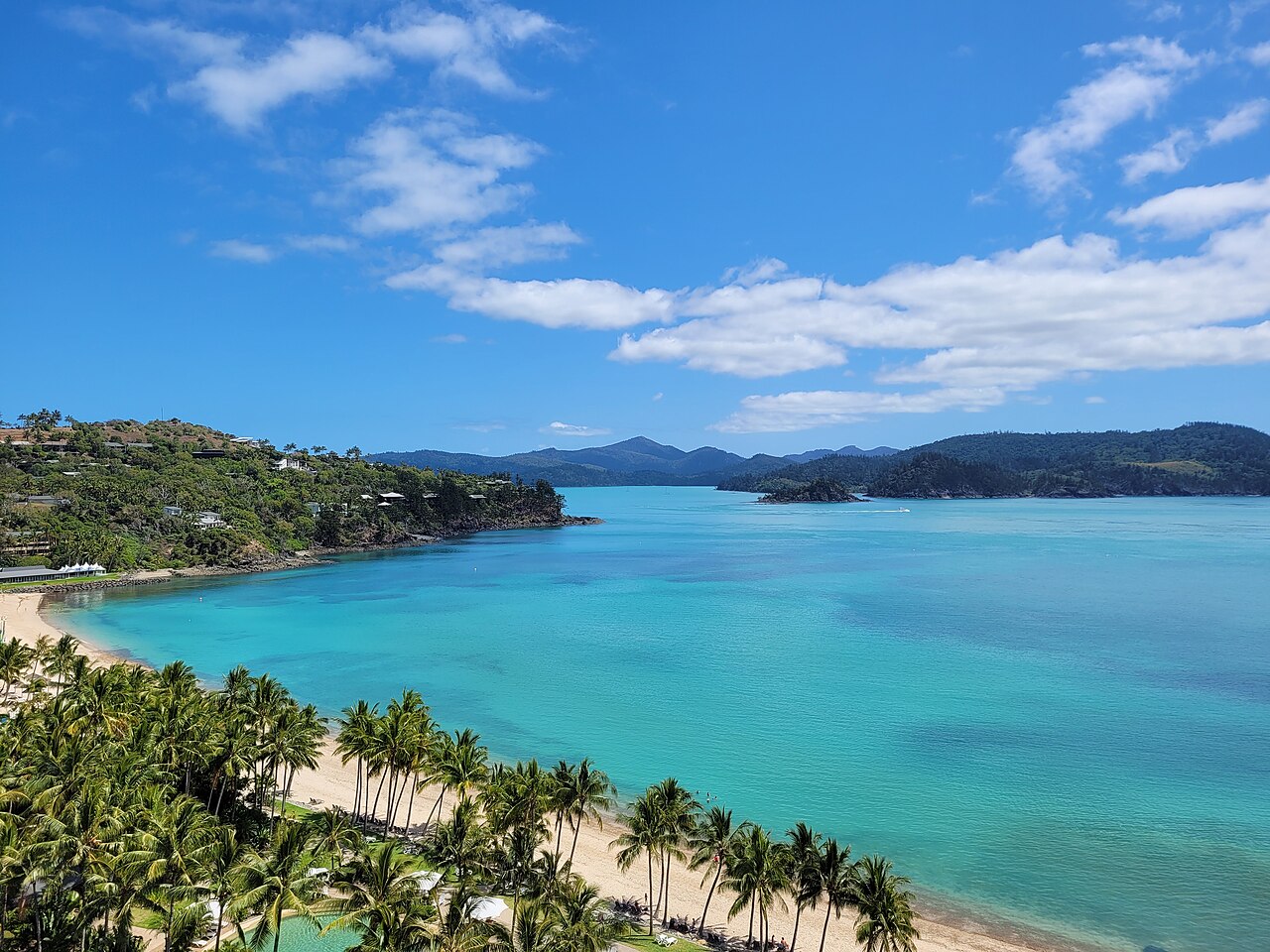
Across the waters at Chalkie's Beach on the western shore of Haslewood Island, a fringing coral reef provides a natural sanctuary where green turtles and hawksbill turtles graze on the lush marine plants. Lindeman Island, formed by the submergence of a volcanic range, now anchors a national park encompassing 14 separate islands. Long Island stretches nine kilometres in length while narrowing to just 400 metres at its widest point, set one kilometre from the mainland with 2,500 acres of tropical rainforest and an offshore coral reef 150 metres out.
The Ngaro waterways across the Whitsunday Islands
Before European ships charted these passages, the Ngaro people inhabited Whitsunday Island for roughly 8,000 years. On Lindeman Island, the Ngaro maintained their traditional fishing life in the surrounding waters until approximately 1900. In 1861, European presence increased when a logging camp was established on Whitsunday Island to harvest hoop pine timber. Maritime friction escalated in 1878 when Ngaro people attacked the vessel Louisa Maria on a western beach of Whitsunday Island, resulting in the ship being completely destroyed by fire. Whitsunday Island is also famous for the waterway of Gulnare Inlet, the natural anchorage of Cid Harbour, and the sweeping shoreline of Whitehaven Beach, which was named in 1879 by Staff Commander E.P. Bedwell. Whitehaven Beach is renowned for its remarkable sand composed of 98% pure silica, which does not retain heat and allows visitors to walk comfortably barefoot under the tropical sun. Although Cyclone Debbie caused severe erosion and damage to the sands in 2017, the bay has hosted its own 2-kilometre ocean swimming competition every November since 2009, known as the Whitehaven Beach Open Water Swim. Captain James Adderton established sheep shearing facilities on Lindeman Island in 1905, while Chalkie's Beach on Haslewood Island was historically called Stockyard Beach because sheep were penned in stockyards there during the 1920s and 1930s. Lindeman Island later welcomed airborne travelers when Barrier Reef Airways initiated flying boat services in 1952, though its resort ultimately closed in 2012 following the impact of Cyclone Yasi.
Dent Island: the 1879 lighthouse across the passage
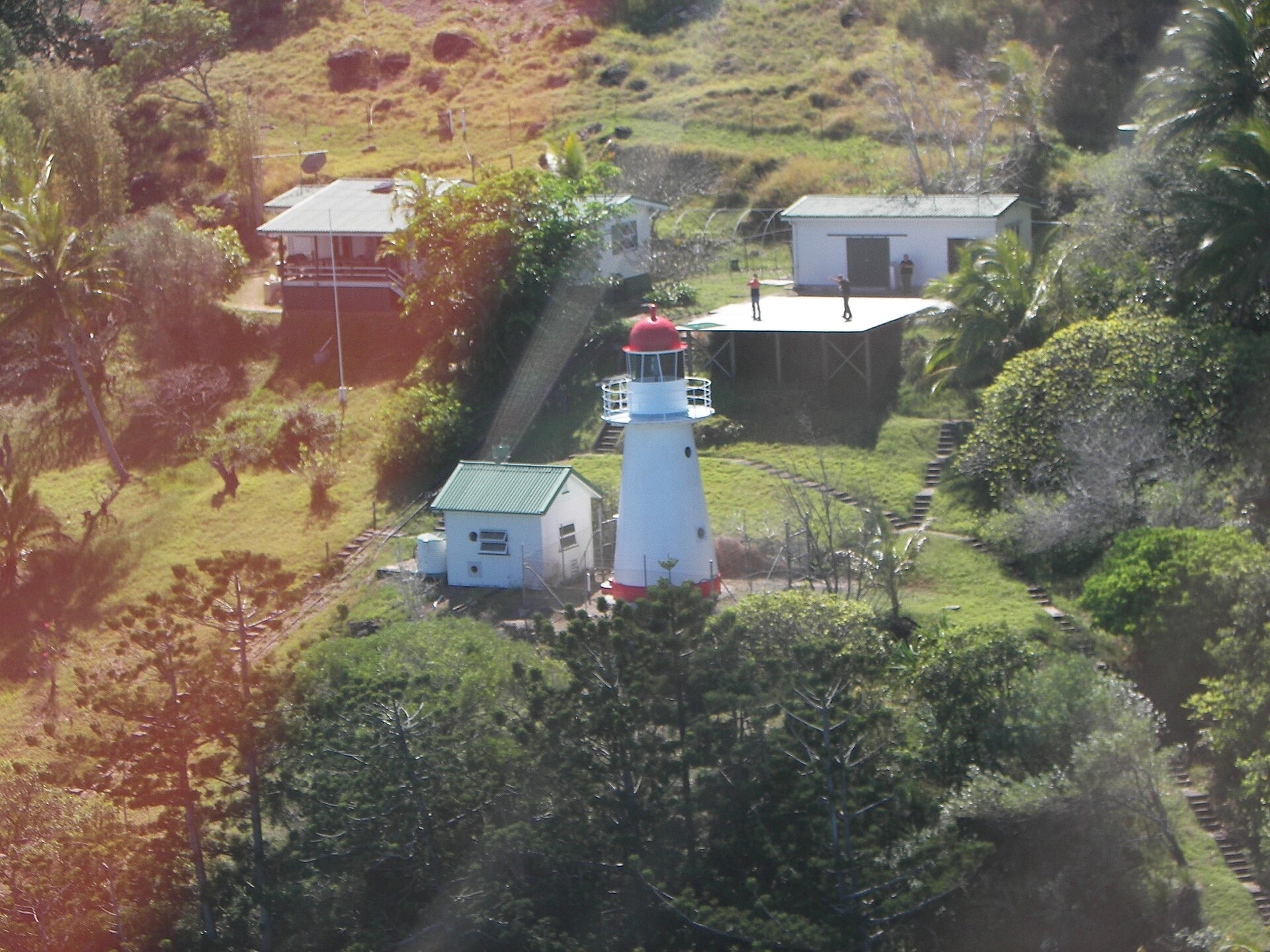
Just across the narrow waterway from Hamilton Island lies Dent Island, home today to a championship golf course. Dent Island was long considered connected to Hamilton Island until an 1866 hydrographic survey by Commander G. S. Nares proved it was a separate landmass. To guide shipping through the channels of the Whitsundays, a coastal navigation program oversaw the construction of a lighthouse on the southwest tip of Dent Island, completed in December 1879. The tower stands six metres high, built from an enduring timber frame clad with galvanized iron plates. The structure is topped by a precision lantern room manufactured by the Chance Brothers. The historic installation was converted to solar power between 1981 and 1983, and its light has functioned automatically since keepers ceased staffing the station in 1987.
Catseye Beachfront: tidal flats, palm trees and bay dining
Catseye Beach is a man-made beach situated on the island's central northern shore, framed by tropical palms that sway gently in the prevailing sea breeze. The shoreline features patches of soft sand alongside natural sections where the surface is mixed with pebbles. The character of the bay changes dramatically with the movement of the tide. At low tide, the sea recedes far across the sandy floor, allowing visitors to walk far out into the bay over the exposed flats. When the high tide floods back in, the bay fills with tranquil sea water, making it a bustling center for kayaking, stand-up paddleboarding, and snorkeling. Along the upper beach, sunlounges line the palm fringe, offering quiet vantage points for reading, resting tired shoulders, and watching the bay. Nearby, a fine dining restaurant sits perched above the sand, serving meals accompanied by wide views across the water. Sitting by the waterfront as the afternoon breeze rustles the palms provides a relaxed finish.
Sources: Dent Island (Queensland) · Dent Island Light · Hamilton Island (Queensland)
Course
Junior race held at Catseye Beach.
Ocean swim course in the waters of Catseye Beach.
Ocean swim course in the waters of Catseye Beach.
Awards
- Age group awards
Open place getters are not eligible for age group prizes. Minimum of 5 participants required per category.
Previous editions
- 2025Nov 16, 2025
- 2024results
How to get there
Hamilton Island Ocean Swim
Frequently asked questions
- When is Hamilton Island Ocean Swim?
- Hamilton Island Ocean Swim takes place on November 22, 2026.
- What distances does Hamilton Island Ocean Swim offer?
- Hamilton Island Ocean Swim offers 350 m, 750 m, and 2 km.
- How much is the entry fee for Hamilton Island Ocean Swim?
- Entry fees by distance: 350 m: 30 AUD · 750 m: 90 AUD · 2 km: 90 AUD. Prices in AUD. Online entries close 13 November 2026 at 5pm AEST. Race entries are capped.
- Is a wetsuit required at Hamilton Island Ocean Swim?
- Non-wetsuit event. Swim skins are permissible, but any device aiding buoyancy or propulsion is prohibited.
- Where does Hamilton Island Ocean Swim take place?
- Hamilton Island Ocean Swim is a sea swim. Location: Catseye Beach, Hamilton Island, Queensland, Australia.
- How do I register for Hamilton Island Ocean Swim?
- The reference page for registering for Hamilton Island Ocean Swim is https://www.hamiltonisland.com.au/endurance-series/ocean-swim.
Where to stay
Hamilton Island offers a spectrum of stays ranging from luxury boutique hotels nestled near the marina to self-catering holiday apartments ideal for families. Most competitors gravitate toward the Reef View Hotel for its proximity to the beach and dedicated event-weekend discounts. Prices during the peak November season generally range from 250 to 550 EUR per night, depending on the proximity to the water and the level of service.
Things to do nearby
Beyond the race, the Whitsundays are a hub for marine exploration. Visitors can book guided sea kayak expeditions to reach hidden coves, or take scenic flights to see the Great Barrier Reef from above. The island itself features an extensive network of nature trails through dense tropical bushland, leading to panoramic lookouts. For a slower pace, you can arrange sunset sailing trips or visit the local yacht club for tastings of regional Australian wines.
Swimmers
Similar races


Comments
Transparency: some links on this page (stays, flights, experiences, gear) are affiliate links — if you book or buy through them, Omniathlon may earn a commission from the partner at no extra cost to you. As an Amazon Associate we earn from qualifying purchases.