
Challenge Barcelona Triathlon - Open Water Swim
- Oct 24, 2026
- Last edition date
- Distances: 1.9km and 3.8km
At a glance
- Last edition date
- October 24, 2026
- Distances
- 1.9 km · 3.8 km
- Where
- Sea · Barcelona, Catalonia, Spain
- Entry fee
- 53–63 €
- Registration
- inscripcion.wefeelevents.com
About the race
The Challenge Barcelona Triathlon - Open Water Swim is an open water swimming event held in the Mediterranean Sea off the coast of Barcelona, Catalonia, Spain. Organized by Fasttriatlon as part of the city's broader triathlon weekend, the race invites swimmers into a dynamic urban setting where protected sea courses meet a world-class sporting waterfront.
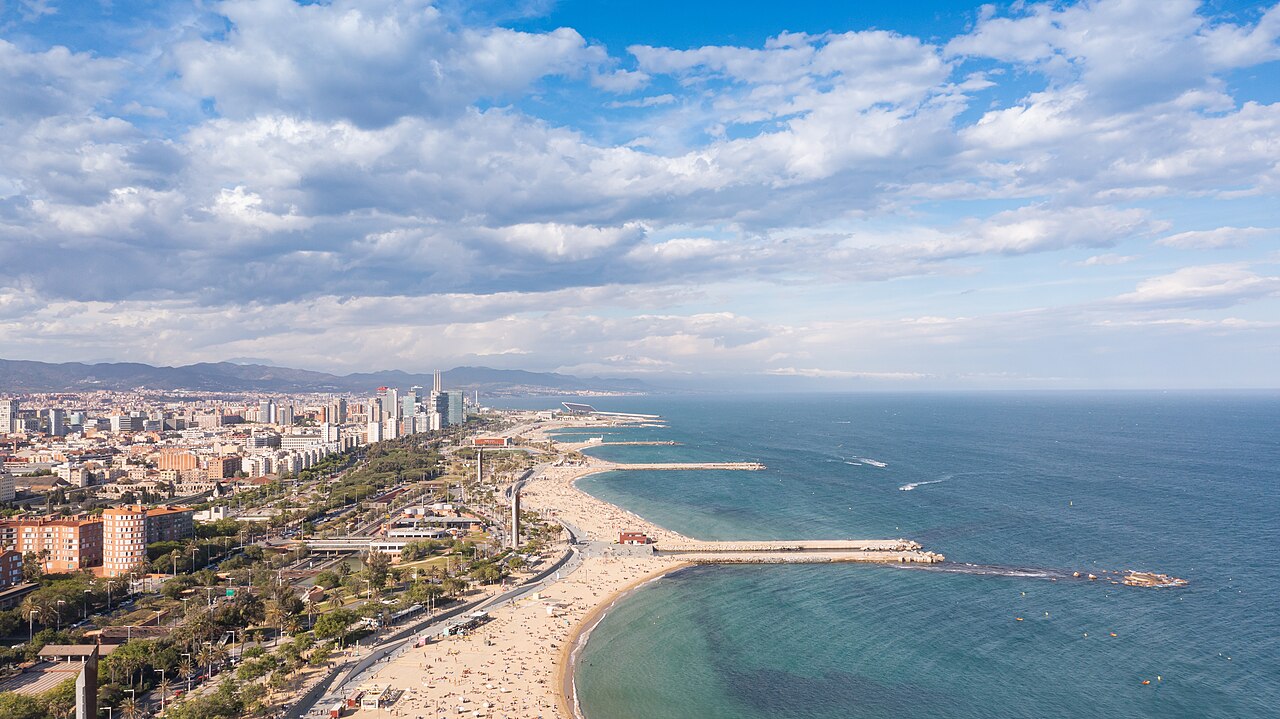
Playa Mar Bella: the course along the breakwaters
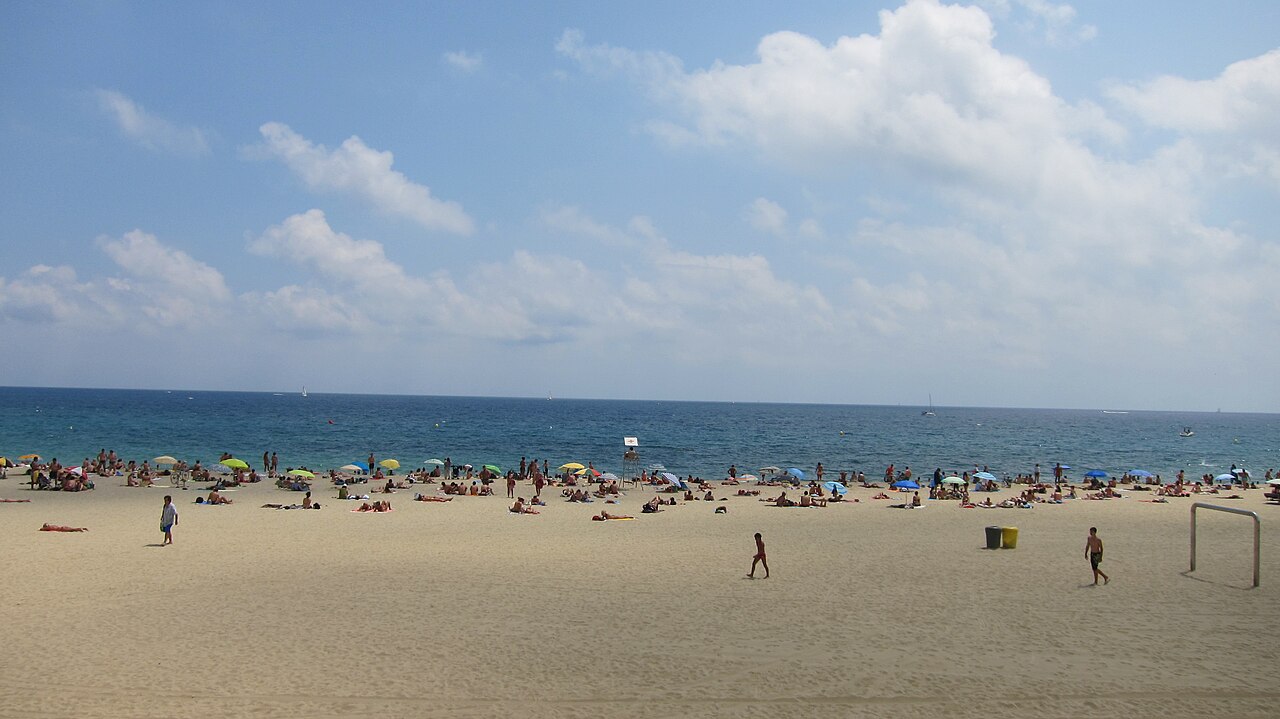
Held in late October, the competition centers on the sands of Playa Mar Bella, offering individual sea races over distances of 1,900 meters and 3,800 meters. The course takes advantage of the extensive coastal breakwaters that shelter Mar Bella beach from open-sea swells, providing manageable water conditions for sustained rhythm. While sighting along the buoys, swimmers enjoy clear views across the city skyline, framed by the Port Olímpic marina and Parc del Fòrum. Swimmers launch into the Mediterranean through a rolling start format designed to keep the field moving smoothly. Lining up in six rows, athletes enter the water in groups of six every five seconds straight from the beach. This staggered release eliminates the congestion of a traditional mass start, giving each swimmer immediate space to settle into their stroke, read the current, and steer comfortably along the breakwater line.
Mar Bella in late October: past editions and water temperature
The 2024 Challenge Barcelona Triathlon was scheduled for Sunday 3 November on Mar Bella beach. The Barcelona city council expected the 2024 Challenge Barcelona Triathlon on Mar Bella beach to exceed 3,500 competitors. Time Out Barcelona put the usual water temperature around Mar Bella beach at 18 degrees for late October, when it covered a 750 m triathlon swim there in 2020.
Drassanes and Port Vell: the historic harbour and medieval shipyards
Barcelona was established along the Mediterranean coast between the mouths of the Llobregat and Besòs rivers. Around the fourth century BCE, the Iberian Laietani tribe inhabited this littoral corridor, with the earliest documented port activity developing on the northern flank of Montjuïc during the first century CE. At the historic Royal Shipyards, modern excavations uncovered the remains of an ancient Roman cemetery. By 1241, King James I of Aragon acted to preserve naval operations by prohibiting any construction along the coastline between the city walls and the shipyard docks. The shipyard itself was built using materials gathered directly from the surrounding coastline, incorporating stone ashlar from Montjuïc mountain and sand scooped from the beach outside its gates.
Anchoring ships along this coast was fraught with danger for centuries, as vessels moored between the city and the shipyards were completely exposed to fierce storms that caused frequent shipwrecks. Harbour construction in the fifteenth century subsequently redirected local sea currents and pushed the shoreline landward, leading to repeated flooding inside the medieval shipyard basins. Despite these shifting waters, the facility achieved legendary status when it constructed the royal galley *Real*, which sailed out of Barcelona as the flagship of the Holy League at the Battle of Lepanto in 1571. A permanent, sheltered anchorage only began to materialize in 1477, when engineers linked the mainland to Maians Island with a sturdy breakwater.
Over the following centuries, the newly built dike trapped prevailing sand drifts along its eastern edge, gradually accumulating enough sediment to create the peninsula that now forms the Barceloneta district, where a historic beacon was erected at the Moll de Pescadors dock in 1772.
Somorrostro to Port Olímpic: the Olympic reclamation of the coast
What is now Somorrostro Beach, measuring 522 meters in length and 89 meters in width, was completely covered for generations by an impoverished shanty town containing over 2,000 slums right on the shoreline. The municipal government dismantled these informal beachfront dwellings between the 1960s and 1980s, laying the groundwork for a comprehensive recovery of Barcelona's maritime facade that began in the late 1980s. Somorrostro officially recovered its historical name in 2010, transitioning from a crowded shantytown into an expansive public beach of fine golden sand, gentle shallows, and welcoming water. The crown jewel of this coastal regeneration was the Port Olímpic marina, which opened its gates in 1991 directly east of the commercial harbour. Built to host the sailing competitions for the 1992 Summer Olympics, the modern marina went on to serve as the main venue for the 2024 America's Cup. Adjacent shores include Bogatell beach, extending across 700 meters of recovered sand, and the artificial Levante beach.
Sant Sebastià and Barceloneta: the city's swimming culture
South of the Olympic marina, Barceloneta stands as the city's oldest and most iconic beach, thoroughly remodeled ahead of the 1992 Olympic Games. Alongside San Sebastián and Sant Miquel beaches, this uninterrupted 1,100-meter golden shoreline offers wide stretches of sand and shallow inshore depths that make entering the sea exceptionally easy. Sant Sebastià is Barcelona's longest single beach and has long served as the heart of local aquatic life, drawing affluent bathers as early as the nineteenth century. It remains home to some of Catalonia's most prestigious marine sports clubs, a deep athletic tradition commemorated in 2004 by a public sculpture installed on the beach and dedicated to swimming sports.
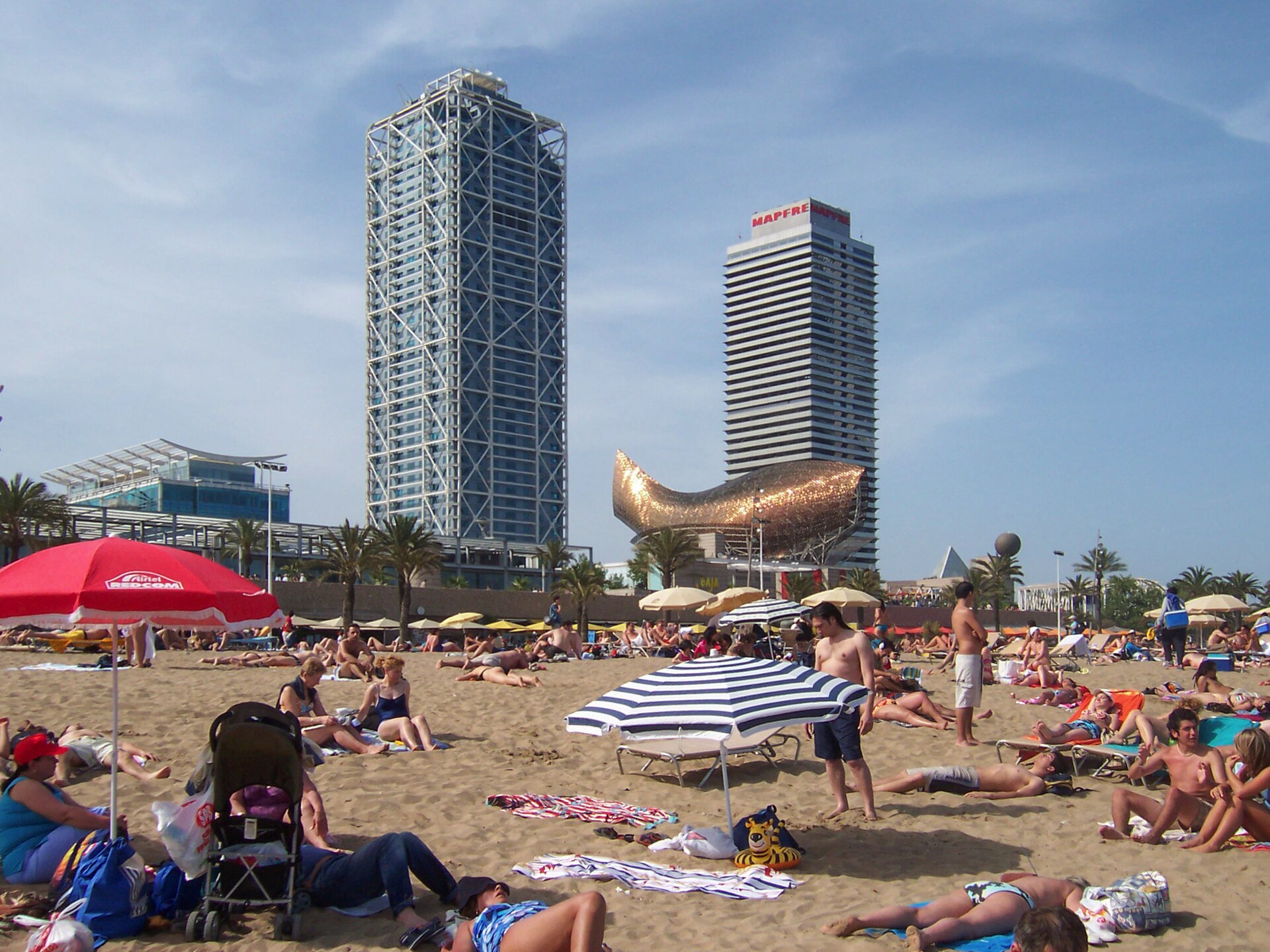
Rebecca Horn's stacked steel sculpture *La estrella herida*, known locally as 'the cubes', anchors the sand at Sant Miquel, while the distinctive sail shape of the W Barcelona hotel terminates the skyline at the far tip of Sant Sebastià, where it has stood since 2009. For visiting swimmers looking to extend their stay, the city maintains four dedicated open-water swimming lanes marked with buoys off Barceloneta, San Sebastián, Mar Bella, and Nueva Mar Bella. Swimmers can also venture just beyond the race course to the Forum Baths, a unique bathing area created for the 2004 Forum of Cultures that features an entirely sand-free, paved perimeter giving direct access into the sea.
Sources: Barcelona · Playa de la Barceloneta · Port Vell · Sant Sebastià · Somorrostro
Course
Previous editions
How to get there
Challenge Barcelona Triathlon - Open Water Swim
Frequently asked questions
- When was the last edition of Challenge Barcelona Triathlon - Open Water Swim?
- The last edition of Challenge Barcelona Triathlon - Open Water Swim took place on October 24, 2026.
- What distances does Challenge Barcelona Triathlon - Open Water Swim offer?
- Challenge Barcelona Triathlon - Open Water Swim offers 1.9 km and 3.8 km.
- How much is the entry fee for Challenge Barcelona Triathlon - Open Water Swim?
- The entry fee ranges from 53 € to 63 €.
- Where does Challenge Barcelona Triathlon - Open Water Swim take place?
- Challenge Barcelona Triathlon - Open Water Swim is a sea swim. Location: Barcelona, Catalonia, Spain.
- How do I register for Challenge Barcelona Triathlon - Open Water Swim?
- The reference page for registering for Challenge Barcelona Triathlon - Open Water Swim is https://inscripcion.wefeelevents.com/es/evento/challenge-barcelona-triatlo-2026.
Where to stay
Barcelona offers a dense range of options, from historic boutique hotels in the Gothic Quarter and renovated apartments in the former fishermen's district of La Barceloneta to high-end seaside resorts along the waterfront. Budget-conscious travelers often look toward hostels in the city center or seasonal camping facilities located slightly further along the coast. Expect prices to fluctuate significantly based on proximity to the port and the tourist season, typically ranging from €120 to over €350 per night for standard to premium double rooms during the triathlon weekend.
Things to do nearby
The race weekend allows for exploration of the city's maritime and cultural heritage. Visitors can engage in kayaking and SUP sessions in the calm waters of the inner harbor or hike the trails of Montjuïc, which provide elevated views over the swim course and historical fortifications. The area is also known for its local markets and wine-tasting experiences, offering access to regional Catalan gastronomy. For those interested in history, the medieval sites and the legacy of the 1992 Olympic development offer extensive walking routes throughout the urban landscape.
Swimmers
Similar races



Comments
Transparency: some links on this page (stays, flights, experiences, gear) are affiliate links — if you book or buy through them, Omniathlon may earn a commission from the partner at no extra cost to you. As an Amazon Associate we earn from qualifying purchases.