
Beach 2 Beach Swim
- Apr 4, 2027
- Distances: 2.6km and 5km
At a glance
- Next edition date
- April 4, 2027
- Distances
- 2.6 km · 5 km
- Where
- Sea · Kingston Beach, Kingston, Tasmania, Australia
- Entry fee
- 2.6 km: 45 AUD · 5 km: 75 AUD
- Registration
- kingstonbeachslsc.com.au
About the race
Between the golden sands of Blackmans Bay and the sheltered shores of Kingston Beach, the open water swim glides over swaying kelp beds where the River Derwent estuary meets the sea. The Beach 2 Beach Swim is an open water sea swimming race held at Kingston Beach in Tasmania. The event stands as the grand finale of the Tasmanian Ocean Swim Series. The classic 2.6-kilometre point-to-point course launches from the beach at Blackmans Bay and tracks the coastal fringe to Kingston Beach. For endurance swimmers seeking a longer test, the 5-kilometre Kingston 5 option extends the journey. Competitors complete the initial 2.6-kilometre crossing from Blackmans Bay and immediately transition into an additional 2.4-kilometre loop laid out along Kingston Beach. Held in April, the race marks the crisp transition into early southern autumn. On the sand, the event is organized by the Kingston Beach SLSC.
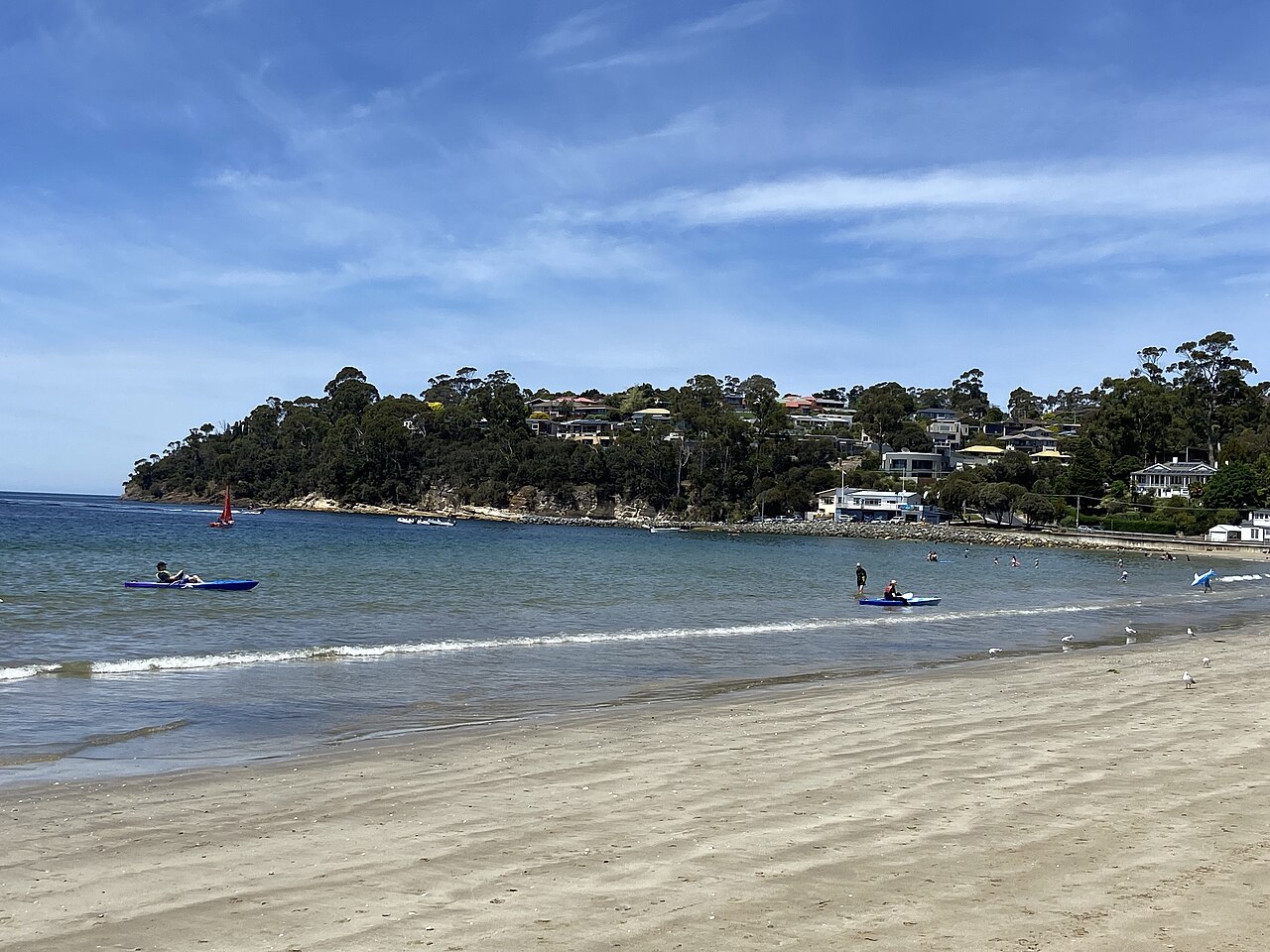
The finish beach, the buoys and the Kingston 5 loop
Kingston Beach, where the swim finishes, faces east-southeast and receives waves travelling up the Derwent estuary that average about 0.5 m and break across a low-tide terrace 30 to 50 m wide. On the Beach2Beach course swimmers keep the first buoy on their left and every other buoy on their right, then pass between two red buoys before running up the beach to the finish. The second leg of the Kingston 5 is a clockwise course around a rhomboid off the northern end of Kingston Beach. The Kingston 5 option was launched in 2025 and the club has scheduled it to run again in 2027. The club's report on the 2015 Beach2Beach thanks 83 participants for giving the swim a go. The cut-off for the Beach2Beach section, the first 2.6 km, is 1.5 hours.
Browns River and the Derwent estuary waters
The Browns River descends 464 metres over a 12-kilometre course from its source, making its way into Halfmoon Bay within the D'Entrecasteaux Channel. Long before European mapping, the river was called promenalinah by the local Indigenous population. In the 1850s, colonial residents simply referred to the entire surrounding shoreline as Browns River Beach. Botanist Robert Brown collected botanical specimens along these banks in 1804. The D'Entrecasteaux Channel region was home to the Nuenonne people for over 34,000 years, who built bark canoes to travel across the waterways for hunting, fishing, and trade. European vessels entered in April 1792 when a French expedition led by Bruni d'Entrecasteaux anchored in the bay to collect fresh water.
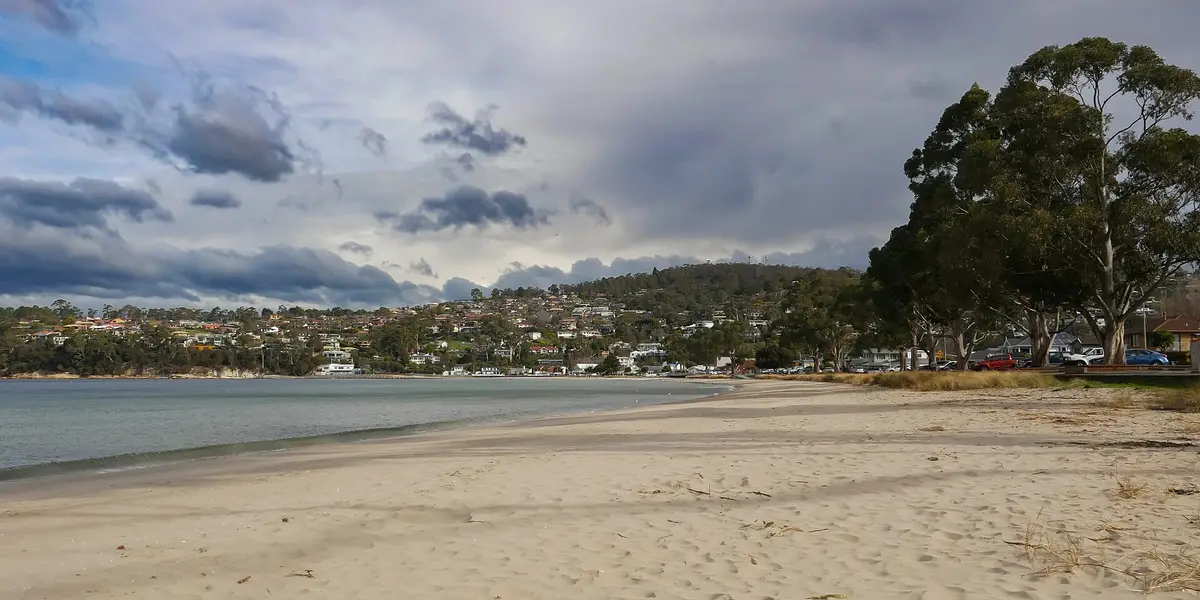
The first settlement in the state was originally attempted at Risdon Cove in 1803, before authorities relocated the settlement to Sullivans Cove on February 21, 1804. The original landing was made via a rocky outcrop known as Hunter Island, which has since been connected to the mainland shore. The cove today operates as Hobart's primary port facility at Macquarie Wharf.
The Alum Cliffs coastline and ancient shell middens
The shoreline transforms into the striking geology of the Alum Cliffs. These sheer rock escarpments rise straight out of the water to heights between 50 and 100 metres, extending across a 2-kilometre stretch of coast from Tyndall Beach to Hinsby Beach at Taroona. Hinsby Beach itself extends for 250 metres, facing waves with an average swell of 0.5 metres. Visible along the foreshores of Long Beach and Blinking Billy Point are volcanic rock formations dating back 26 million years. Charles Darwin examined these same volcanic deposits during his survey of the area in 1836.
Human efforts to protect the foreshore began with a timber seawall built in 1908. In the 1970s, a basalt seawall was erected to curb foreshore erosion, permanently dividing what was once a single continuous beach into Long Beach and Nutgrove Beach. The Mouheneener people occupied the land for up to 35,000 years prior to British colonization. They established a permanent coastal settlement known as kreewer at Long Beach and neighboring Nutgrove Beach. Along the foreshores around Taroona, ancient shell middens were left by the Mouheneener people.
Marine life of the Derwent: handfish, kelp and whales
The estuary environment provides a sanctuary for specialized benthic species, including the native smooth spotted shore crab. It is also the exclusive home of the critically endangered spotted handfish, a rare marine creature that lives only within the Derwent estuary and its immediately adjoining waters. The wider waters of the estuary historically served as a major calving nursery for southern right whales. Australian fur seals also occasionally visit the beaches along this stretch of coast. Those who linger by the water after dark may encounter another distinctive natural feature of the estuary. The waters along the beach occasionally display bioluminescence, produced by blooms of microscopic plankton that illuminate the waves breaking along the sand. It provides a quiet nighttime counterpart to the rugged cliffs and kelp-lined courses navigated by swimmers during the race.
Sources: Kingston Beach
Course
A point-to-point swim from Blackmans Bay to Kingston Beach, passing rugged cliffs and kelp forests.
Includes the full 2.6km point-to-point course followed by an additional 2.4km loop along Kingston Beach.
Awards
The event emphasizes participation over podiums.
Previous editions
How to get there
Beach 2 Beach Swim
Frequently asked questions
- When is Beach 2 Beach Swim?
- Beach 2 Beach Swim takes place on April 4, 2027.
- What distances does Beach 2 Beach Swim offer?
- Beach 2 Beach Swim offers 2.6 km and 5 km.
- How much is the entry fee for Beach 2 Beach Swim?
- Entry fees by distance: 2.6 km: 45 AUD · 5 km: 75 AUD. Registration link requires free account registration on the official website.
- Where does Beach 2 Beach Swim take place?
- Beach 2 Beach Swim is a sea swim. Location: Kingston Beach, Kingston, Tasmania, Australia.
- How do I register for Beach 2 Beach Swim?
- The reference page for registering for Beach 2 Beach Swim is https://www.kingstonbeachslsc.com.au/beach-to-beach-swim/.
Where to stay
The area around Kingston Beach features a mix of self-contained holiday apartments and traditional weatherboard cottages, many within walking distance of the start line. For a more elevated stay, boutique guesthouses on the slopes of Bonnet Hill offer panoramic views of the estuary. Camping options are available in nearby coastal reserves. Prices typically range from $150 to $350 per night depending on proximity to the shoreline.
Things to do nearby
Visitors often spend the weekend exploring the local geology, such as the fossil-rich tracks near Blackmans Bay, or taking a short drive to the summit of Mount Wellington for a view of the entire coastline. The region is well-regarded for its cool-climate vineyards and cellar door tastings. For those preferring time on the water, the sheltered bays of the Derwent are popular for sea kayaking and stand-up paddleboarding.
Swimmers
Similar races


Comments
Transparency: some links on this page (stays, flights, experiences, gear) are affiliate links — if you book or buy through them, Omniathlon may earn a commission from the partner at no extra cost to you. As an Amazon Associate we earn from qualifying purchases.