
Arica Open Water
- Oct 25, 2026
- Last edition date
- Distances: 1.5km and 3km
At a glance
- Last edition date
- October 25, 2026
- Distances
- 1.5 km · 3 km
- Where
- Sea · Arica, Arica y Parinacota, Chile
- Registration
- aricaopenwater.cl
About the race
Under the pale desert sky of the Arica Bend, the coast of northern Chile offers a dramatic setting for sea swimming. The Arica Open Water is an open water swimming event held in the Pacific Ocean along the coast of Arica, in the Arica y Parinacota Region of Chile. Set right in front of the sheer rock bluffs of the Morro de Arica, the race stages its inaugural edition in the Ex Isla Alacrán sector, organized by Kiwi Producciones and Aqua Norte Arica. Swimmers take to the sea in the spring month of October, with courses laid out over distances of 1,500 meters and 3,000 meters. Navigating these ocean waters means respecting the rhythm of the Pacific. Race organizers monitor the coastal conditions, prepared to modify course distances if the open sea swell demands adjustments on the day of the swim.
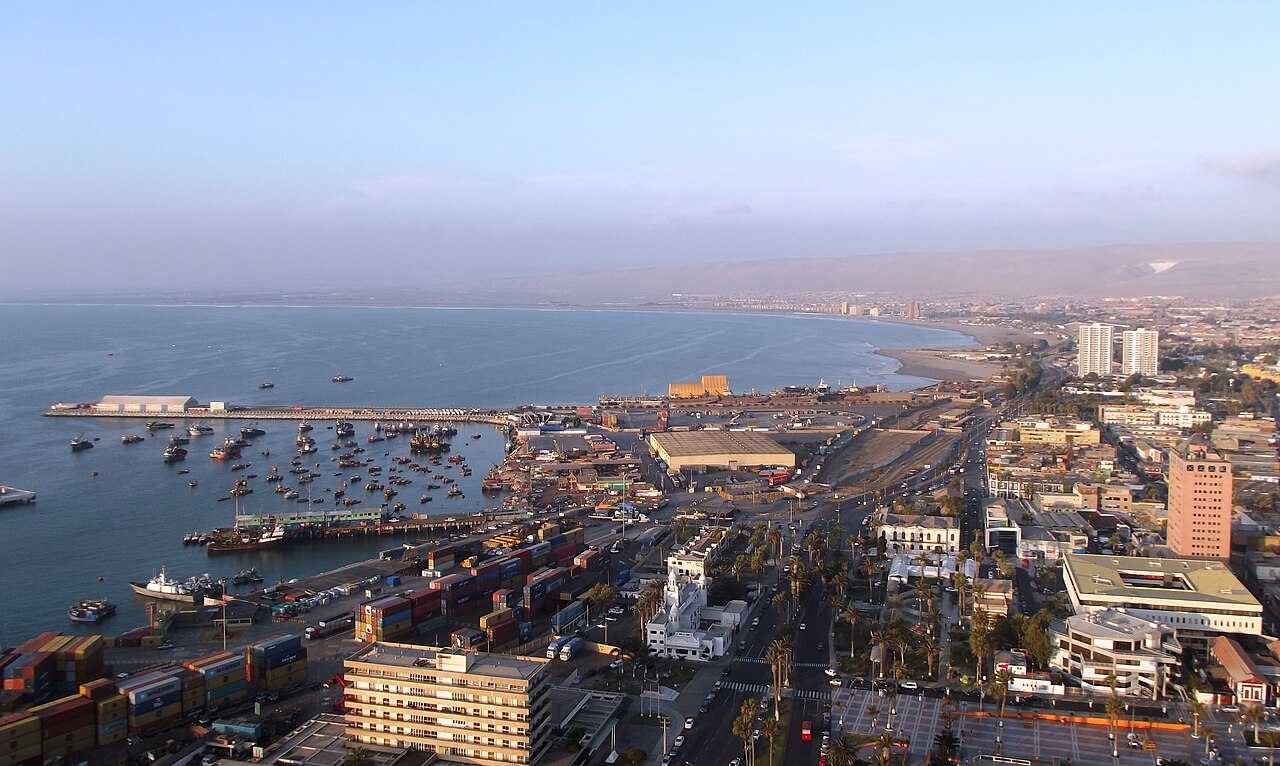
Ex Isla Alacrán: from prehistoric shellfishing to coastal fortress
After the 1866 Hispano-South American War, the Peruvian government reinforced the site by constructing an artillery fort armed with eight cannons. Later, during the War of the Pacific, Colonel Leoncio Prado Gutiérrez installed a torpedo boat unit on the island to defend the coastal waters. Today, swimmers stroke through waters that were once an open sea passage, rounding the rocky contours of the peninsula under the gaze of the headland above.
The Alacrán peninsula and the October water at Arica
Chile turned the island of Alacrán into a peninsula in 1964 by building an artificial road that joined it to the mainland. Before the artificial road, the island of Alacrán lay 460 metres off the coast of Arica. Today the Alacrán peninsula holds the Club de Yates de Arica on its north side and the playa del Alacrán on its south side. The Alacrán peninsula is reached by Avenida Comandante San Martín from the south. In October the sea at Arica averages 17 °C (63 °F), with a range from 15 °C (59 °F) to 20 °C (68 °F), according to historical records.
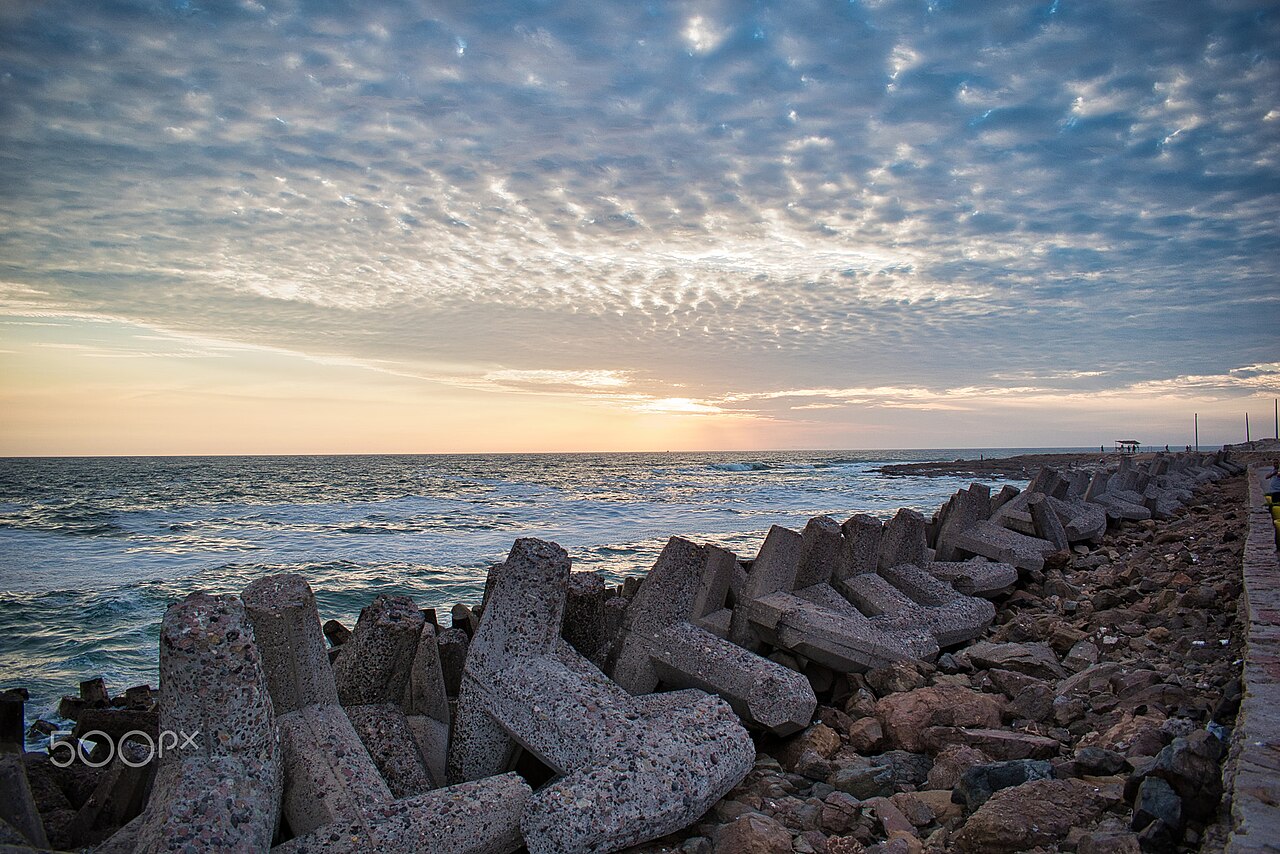
The Arica Bend: desert climate and the 1868 tsunami
Arica sits directly at the striking geographic elbow where the western coastline of South America bends sharply, known as the Arica Bend. Destructive tremors have reshaped the bay over the centuries, including a catastrophic earthquake and tsunami in November 1604. The daily climate along the coast is remarkably mild and stable, earning Arica its reputation as the city of the eternal spring. The regional climate is desert-like, with average maximum temperatures reaching 27.4°C (81 °F) and nighttime minimums around 13.2°C (56 °F), accompanied by heavy coastal cloud banks and almost zero rainfall.
On August 13, 1868, a massive earthquake with an estimated magnitude of 8.0 to 9.0 generated a colossal tsunami that crossed the entire Pacific basin, registering measurable surges in Hawaii, Japan, and New Zealand. In Arica, the incoming wave swept the American naval vessel USS Wateree far inland. Today, along the 10,580 meters of coastline that form Playa Chinchorro, the rusted boilers of the Wateree remain embedded in the sand, standing as an enduring open-air monument to the power of the Pacific.
Playa El Laucho and Playa La Lisera: calm waters and natural pools
Arica features more than 20 kilometres of varied ocean beaches spanning across the northern coastal range, celebrated for powerful surf breaks. On the exposed southern flank of the Alacrán peninsula, ocean waves reach heights of four meters, with the famous break known as toro viejo rearing up to four meters and the wave called la isla rolling between 1 and 2.5 meters. Further north, Playa Las Machas—named after the edible clam once plentiful here—extends from Chinchorro to the mouth of the Lluta River. Las Machas offers popular surf at high tide and quiet camping in its northern sector, though its strong coastal currents make it unsuitable for swimming. By contrast, the embayments nestled just south of the urban center provide tranquil water.
Playa El Laucho, bordering the Alacrán peninsula, is naturally protected from coastal winds and features white sand, temperate water, and very gentle waves. Because surrounding rocks restrict the swimming channel to a zone of a few meters, the beach provides an exceptionally safe haven, making it one of only two beaches in Arica authorized for bathing 365 days a year. Nearby lies Playa Arenillas Negras, the only beach in the area with dark black sand, pigmented by natural oil dampening the grains. Continuing southward, swimmers encounter Playa La Lisera, an enclosed circular cove measuring 150 meters long that forms a peaceful natural pool completely free of waves. Equipped with play areas for families, it was the first beach in town to feature coconut palms. The cove takes its name from the abundance of lisa fish swimming through its calm shallows, while the perimeter rock pools provide an ideal environment for snorkeling and gathering shellfish.
The shore below El Morro: cevicherías, sea lions and Anzota caves
Towering directly over the race area stands the Morro de Arica, an almost vertical rock promontory rising 139 meters above sea level. This imposing coastal hill holds deep pre-Columbian roots: the prehistoric Chinchorro culture occupied its northern slope for more than 5,000 years, establishing living quarters and extensive cemeteries while living by fishing and harvesting marine resources. The headland also became the stage of fierce conflict during the War of the Pacific, when the Battle of Arica unfolded on June 7, 1880, involving hand-to-hand combat that cost the lives of 1,500 Peruvian soldiers. Declared a Historical Monument in 1971, the summit is crowned by the Christ of Peace statue, engineered to resist wind pressures equal to 100 tons at that elevation.
At sea level, the waterfront below the Morro is filled with places to unwind after a race. Along Avenida Comandante San Martín, tree-lined alamedas lead past monuments toward local cevicherías serving fresh seafood caught along the coast. Playa El Laucho at the base of the Morro comes alive with pubs, eateries, and nightclubs right beside the sand. A short journey leads to the Cuevas de Anzota, an impressive system of sea caves and cliffs.
Sources: Playa Chinchorro · Arica · Morro de Arica
Course
Awards
Awards ceremony for all categories.
Aid stations
Hydration and nutrition included.
How to get there
Arica Open Water
Frequently asked questions
- When was the last edition of Arica Open Water?
- The last edition of Arica Open Water took place on October 25, 2026.
- What distances does Arica Open Water offer?
- Arica Open Water offers 1.5 km and 3 km.
- Where does Arica Open Water take place?
- Arica Open Water is a sea swim. Location: Arica, Arica y Parinacota, Chile.
- How do I register for Arica Open Water?
- The reference page for registering for Arica Open Water is https://aricaopenwater.cl/.
Where to stay
Arica offers a range of options, from boutique hotels situated directly on the harborfront to functional apartments near the city center. You will find several coastal guesthouses that cater to those seeking proximity to the swimming venues. During the pre-summer season, nightly rates for standard double rooms typically fluctuate between $60 and $110 USD. For those traveling with equipment or seeking quieter surroundings, the outskirts near the Lluta valley provide surf-oriented lodges and small-scale guesthouses, which often serve as a base for athletes during the competition window. Find local lodging options here.
Things to do nearby
Beyond the water, the region offers distinct desert and maritime activities. You can explore the agricultural heritage of the Azapa Valley through local olive oil tastings, or utilize the coastal winds for SUP and sea kayaking around the base of the Morro. The area is also home to significant archaeological sites, including the remains of ancient coastal civilizations that predated colonial arrival. If you prefer land-based exploration, the arid trails providing panoramic views of the Pacific are accessible within a short drive from the city center. Discover weekend activities in Arica.
Swimmers
Similar races


Comments
Transparency: some links on this page (stays, flights, experiences, gear) are affiliate links — if you book or buy through them, Omniathlon may earn a commission from the partner at no extra cost to you. As an Amazon Associate we earn from qualifying purchases.