
aQuellé Ocean Racing Series
- Oct 5, 2026
- Last edition date
- Distances from 400m to 3km
At a glance
- Last edition date
- October 5, 2026
- Distances
- 400 m · 1 km · 2 km · 3 km
- Where
- Sea · Hobie Beach, Nelson Mandela Bay, Gqeberha, Eastern Cape, South Africa
- Entry fee
- 150 ZAR
- Registration
- easyentry.africa
About the race
Hobie Beach in Nelson Mandela Bay, set against the coastal city of Gqeberha in South Africa's Eastern Cape, is the stage for the aQuellé Ocean Racing Series. What began in January 2006 has grown into one of the largest family beach gatherings in Africa, holding regular Sunday morning sea races throughout the southern hemisphere's spring and summer. Organized by Zsports Events SA, it brings together seasoned ocean swimmers and newcomers on the open water of the coast. Swimmers can line up for four distinct open water courses: a short 400-metre sprint, a 1-kilometre distance, a 2-kilometre loop, or a full 3-kilometre challenge. The swimming course leads competitors into the bay through a circuit demarcated by large turn buoys.
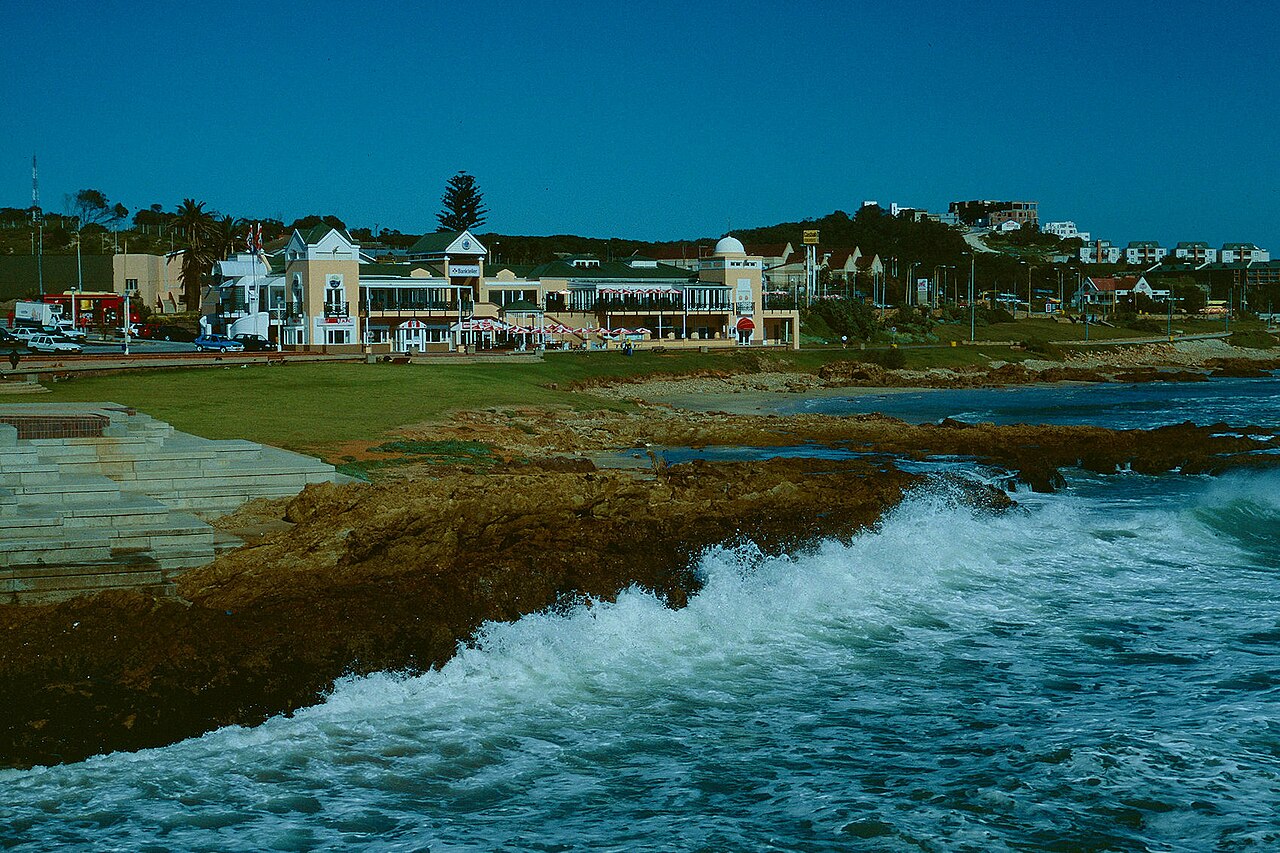
Out on the course, swimmers learn to navigate the shifting swell and often tuck in behind lead packs to draft off one another. Past race days have shown conditions that simply cannot be replicated inside a standard home training pool. Gale-force winds can lash the coast the day before, only to yield to moderate westerly breezes by race morning that leave the bay smoothed out into ideal swimming water. Wading into the surf, swimmers find a rhythm between the shore break and the steady pull of the open ocean.
Hobie Beach: sea temperature, rock pools and Shark Rock Pier
Hobie Beach lies off Marine Drive in the seaside hub of Summerstrand in Gqeberha, with picnic spots, a large children's playground and lifeguards during the summer season. South African Tourism gives Hobie Beach average sea temperatures of 16 to 22 degrees Celsius. At low tide, the Shark Rock Pier side of Hobie Beach has plenty of sheltered rock pools with inter-tidal life, from starfish to octopus. Shark Rock Pier also serves as a vantage point for spotting dolphins and whales. Hobie Beach also has waves and a big shore break that long- and short-boarders ride.
Cape Recife: where the Agulhas Current rounds Algoa Bay
Gqeberha sits on the western flank of Algoa Bay along the southeastern coast of South Africa, where ocean currents dictate the mood of the water. Cape Recife takes its name from the Portuguese word for reef because of the many ships that once ran aground on its jagged underwater ledges. To guide navigators safely past those perilous rocks, a historic lighthouse was erected on the headland in 1849, its beam keeping watch over the approaches to the bay. The surrounding shoreline was further protected in 1973 with the creation of the Cape Recife Nature Reserve, an area of 366 hectares safeguarding the coastal dunes and promontory.
Algoa Bay: from Khoekhoe shell middens to Portuguese navigators
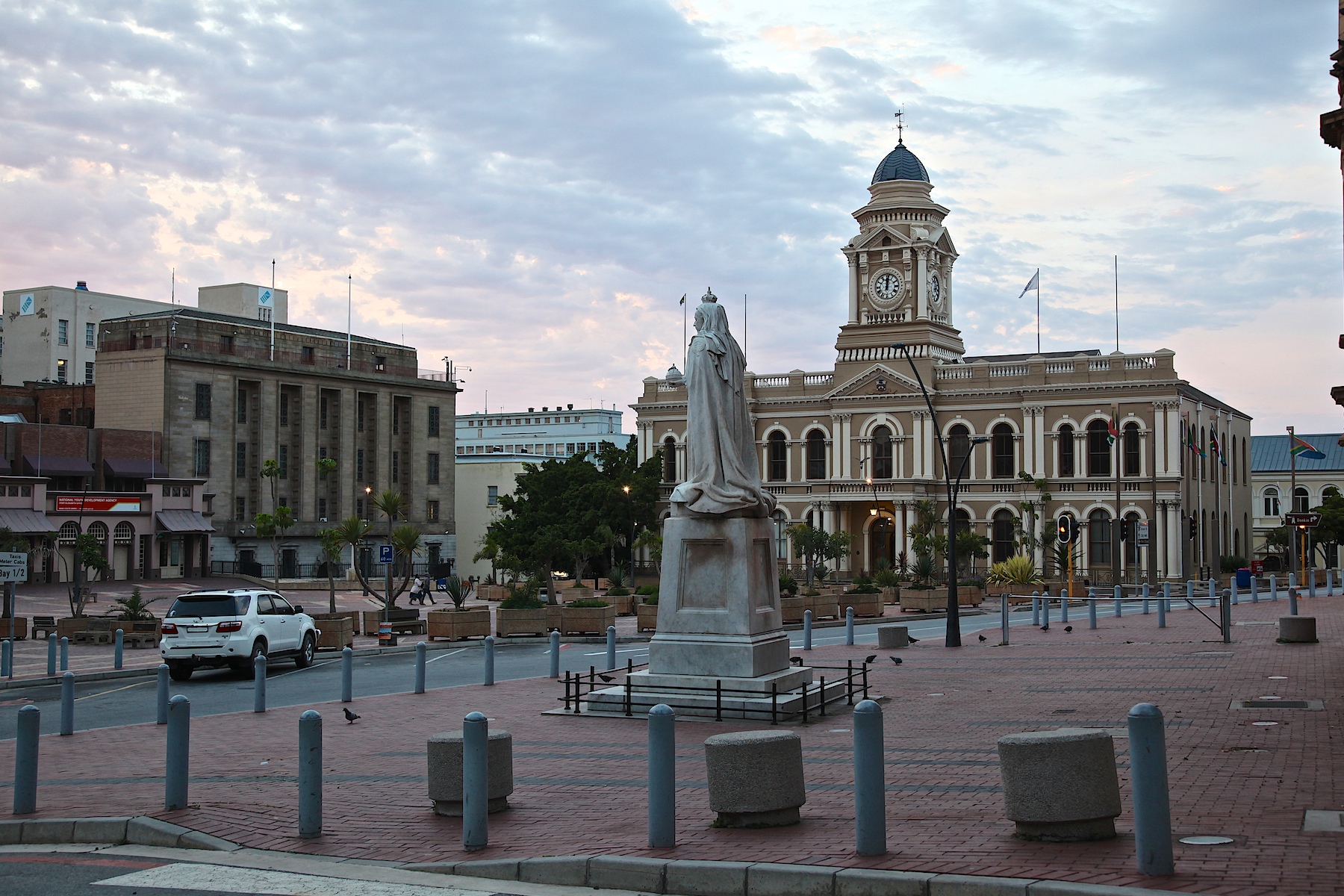
The modern city of Gqeberha itself preserves the ancient Xhosa and Southern Khoe name for the river running through the urban landscape. Portuguese explorer Bartolomeu Dias anchored off St Croix Island within Algoa Bay in 1488, followed nine years later by Vasco da Gama, who noted the presence of Bird Island in 1497.
Baakens and Swartkops: the river mouths shaping the coastline
The hydrology of the bay is anchored by the Baakens River, which runs 23 kilometres from its inland catchment area down to its outlet in Algoa Bay. Before 1690, Khoekhoe pastoralists knew the waterway as Kragga Kamma, an indigenous descriptive term meaning rocky creek. The final two kilometres of the lower river were eventually canalized, filling in its historic coastal lagoon. The Baakens Valley has also felt the power of inland downpours over time, with severe historical flooding documented in 1867, 1897, 1908, 1968, 1981, and 2006. Further along the coast, the Swartkops River flows down into the Indian Ocean. The river originates high in the terrain near Cockscombe Mountain, fed on its descent by its two main tributaries, the Kwa-Zunga and Elands rivers. The broader watershed of the Swartkops sits within the Uitenhage Artesian Basin, an extensive subterranean hydrological reserve. Upstream along its flow stands the Groendal Dam, an engineering structure constructed in 1933 to impound the freshwater runoff.
Sardinia Bay: the sandstone reefs and kelp forests
About fourteen kilometres down the coast from Hobie Beach lies the Sardinia Bay Marine Protected Area, offering an untouched glimpse of the local ocean realm. Stretching across seven kilometres of coastline and extending one nautical mile seaward, the reserve encompasses nearly thirteen square kilometres of ocean within the warm temperate Agulhas inshore marine bioregion. Here, the shoreline transitions through varied rocky and sandy tidal and subtidal zones. The seabed is shaped by ancient sandstone rocks that break into deep crevices and towering submarine profiles, sculptured by the movement of the tides.
Sources: Gqeberha
Course
Ocean swim event held at Hobie Beach, Nelson Mandela Bay.
Ocean swim event held at Hobie Beach, Nelson Mandela Bay.
Ocean swim event held at Hobie Beach, Nelson Mandela Bay.
Ocean swim event held at Hobie Beach, Nelson Mandela Bay.
Previous editions
- 2025results
How to get there
aQuellé Ocean Racing Series
Frequently asked questions
- When was the last edition of aQuellé Ocean Racing Series?
- The last edition of aQuellé Ocean Racing Series took place on October 5, 2026.
- What distances does aQuellé Ocean Racing Series offer?
- aQuellé Ocean Racing Series offers 400 m, 1 km, 2 km, and 3 km.
- How much is the entry fee for aQuellé Ocean Racing Series?
- The entry fee is 150 ZAR. Non-members pay R250 for swims/R100 for beach events on race day. Members pay R150 for swims and free entry for beach events. Premier/Series memberships available for season.
- Where does aQuellé Ocean Racing Series take place?
- aQuellé Ocean Racing Series is a sea swim. Location: Hobie Beach, Nelson Mandela Bay, Gqeberha, Eastern Cape, South Africa.
- How do I register for aQuellé Ocean Racing Series?
- The reference page for registering for aQuellé Ocean Racing Series is https://easyentry.africa/.
Where to stay
Gqeberha offers a range of stays near the beachfront, from self-catering apartments used by families to boutique guesthouses overlooking the bay. In the Humewood and Summerstrand areas, you will find modern hotels and smaller bed-and-breakfasts within walking distance of Hobie Beach. Expect to pay between R1,200 and R2,800 per night depending on the proximity to the ocean and the level of service.
Things to do nearby
The weekend provides opportunities to explore the city's maritime heritage or visit the local nature reserves. Activities range from walking the Donkin Heritage Trail to viewing the bronze sculptures at the Horse Memorial. For those interested in the water beyond the race, the coastline supports various kayak and SUP rentals, while the nearby Van Stadens Wild Flower Reserve offers inland trekking through indigenous Eastern Cape vegetation.
Swimmers
Other races by this organiser
- Kool-a-Sun Marina MileJeffreys Bay, ZA
- 3-Beaches Swim Challenge (Nelson Mandela Bay)Nelson Mandela Bay, ZA
Similar races


Comments
Transparency: some links on this page (stays, flights, experiences, gear) are affiliate links — if you book or buy through them, Omniathlon may earn a commission from the partner at no extra cost to you. As an Amazon Associate we earn from qualifying purchases.